
Europe · The Empire · 1454 CE
The Empire — Rival Realms and Imperial Roads
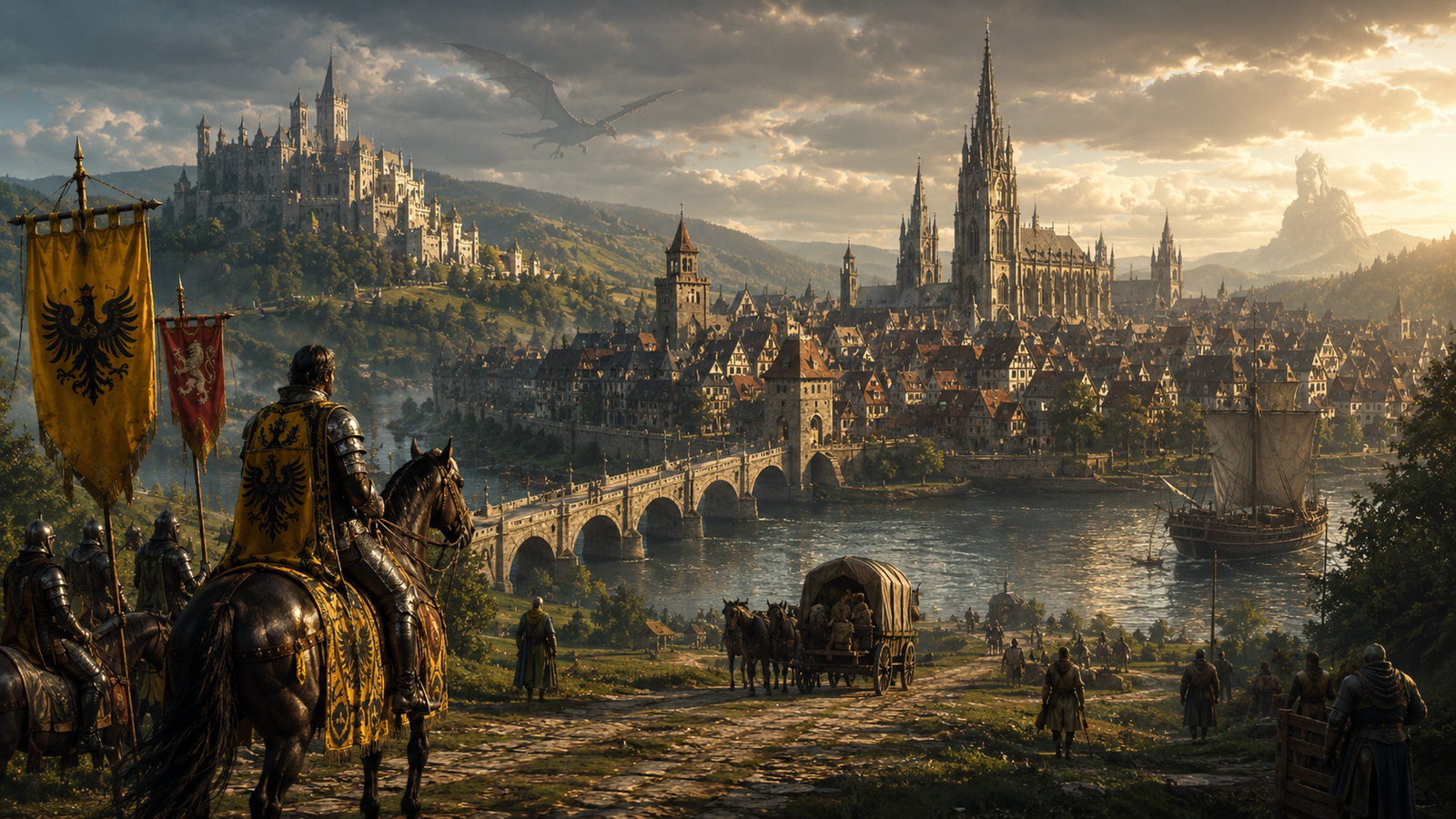
In 1454 the Empire is not one realm divided into provinces. It is a scattering of kingdoms, principalities, duchies, counties, lordships, Free and Imperial Cities, sacred territories, villages and stranger jurisdictions held inside one imperial framework. Emperor Frederick III wears the crown, but he is an inept unifier whose commands compete with local charters, inherited rights, old feuds and rulers who are accustomed to governing their own worlds. Cross a bridge and the law, ruler, coin, language, sacred customs, magical practice and enemies may all change before sunset.
The Crisis Is Already Here
One year has passed since the Ninefold Dominion seized Constantinople. What once sounded like a distant eastern war now affects merchants, rulers, scholars and soldiers inside the Empire. News moves along the Danube and Rhine; displaced experts and manuscripts arrive westward; artillery specialists find new patrons; and every court argues about who should supply money, troops and transport.
Frederick III and the leading powers of the Empire face the same practical problem from different positions: external defence requires cooperation, yet cooperation immediately raises questions about taxation, military command, privilege and reform. Imperial assemblies therefore become markets of politics as much as councils of defence. Envoys bargain, cities protect exemptions, princes measure rivals, and military entrepreneurs look for contracts.
The north-east is unstable as well. War around the Teutonic and Prussian lands disrupts Baltic routes and feeds demand for mercenaries, weapons and credit. The Hell Knights are a power of the Teutonic States rather than a general Imperial police force, but their wars, enemies and contracts can draw adventurers out of Brandenburg and the Hanseatic coast.
Closer to the centre, the wounds of the First Margrave War remain fresh in Franconia. In the Upper Rhine, movable-type workshops and clandestine presses make information easier to reproduce and harder to contain. A forged proclamation, copied map or forbidden spell diagram can now travel farther than the person who first wrote it.
Frederick III and the Seven Electors
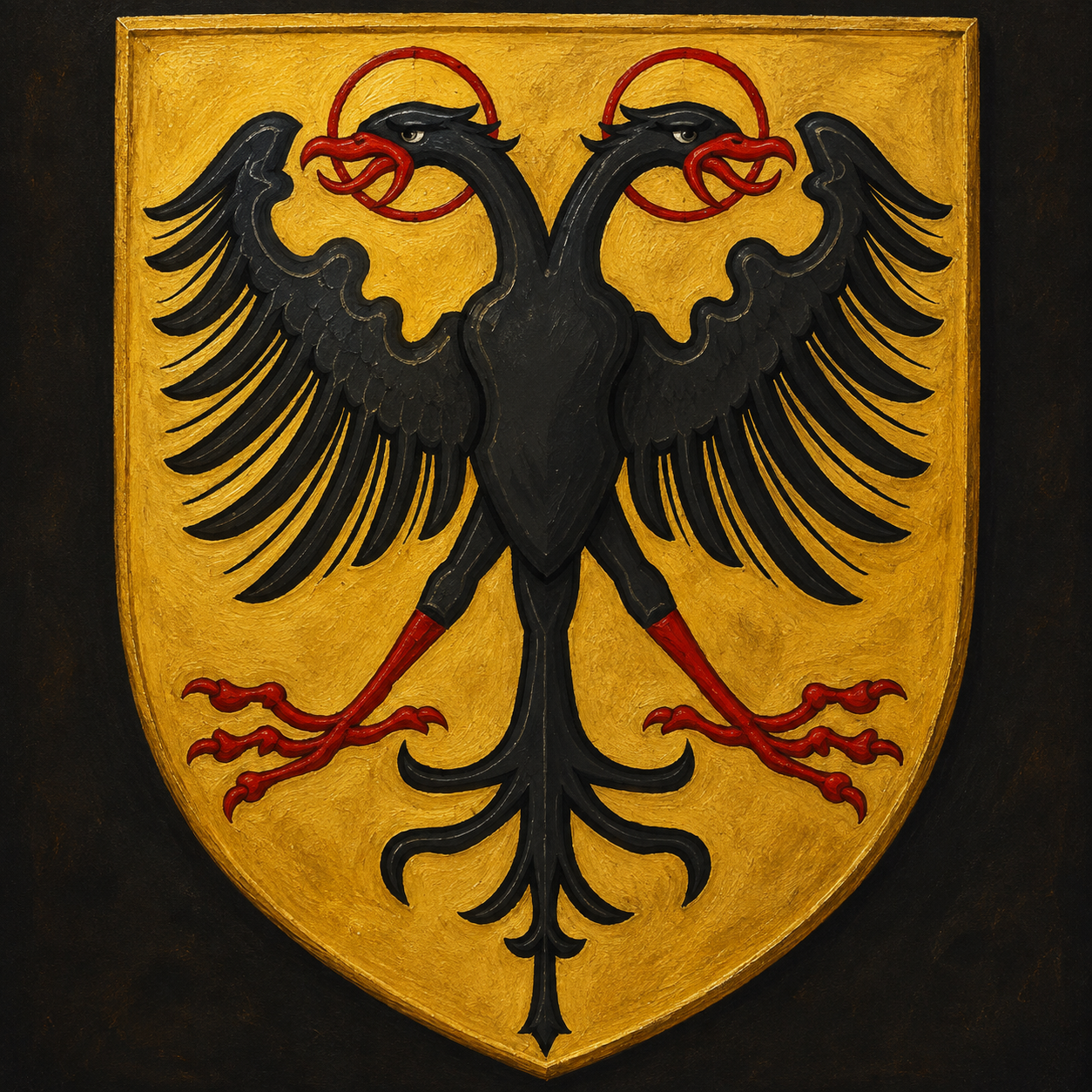
Frederick III has been king of the Romans since 1440 and emperor since 1452. He is not a capable central ruler of the Empire. His authority is real, his seals and courts still matter, and the imperial dignity carries enormous prestige, but he lacks the reach, money and political ability to make hundreds of rulers behave like governors of one country. He acts through hereditary Habsburg lands, documents, courts, negotiated support and dynastic relationships, while local rulers continue to govern their own realms.
The Golden Bull fixes seven electoral powers at the heart of succession. Their support is essential to making an emperor, but the electors are not a single political party. Each has regional interests, neighbours, clients and disputes of its own.
| Electoral power | 1454 holder | Campaign significance |
|---|---|---|
| Mainz | Dietrich Schenk von Erbach | Rhine politics, imperial negotiation and the new printing economy. |
| Trier | Jakob I von Sierck | Western diplomacy, reform politics and control of a major Rhine–Moselle corridor. |
| Cologne | Dietrich II von Moers | A powerful Rhenish electorate beside one of the Empire’s greatest cities. |
| Bohemia | Ladislaus Posthumous | A young king, recent Hussite conflict and George of Poděbrady’s enormous practical influence. |
| Electoral Palatinate | Frederick I “the Victorious” | His assumption of electoral dignity is politically effective but contested by the emperor. |
| Saxony | Frederick II “the Gentle” | Central-eastern roads, mining wealth and Wettin power. |
| Brandenburg | Frederick II “the Iron” | Eastern approaches, ambitious towns and routes toward the Baltic war zone. |
How Imperial Power Works
Charters matter
Rights to hold markets, collect tolls, mint coin, judge crimes, maintain walls or grant safe-conduct can be more important than a neat border on a map.
One place can contain several authorities
A city and a neighbouring sacred principality may share a name without sharing a government. Regensburg, Strasbourg, Utrecht and Verden all demonstrate why the same geographic name must not be treated as one political entity.
Cities can be powers
Free and Imperial Cities control walls, courts, markets, militias and diplomatic relationships of their own. Merchants and guilds can therefore matter as much as minor nobles.
The emperor remains useful
An imperial judgment, privilege or commission can alter a local dispute—but only if the parties recognise it, the document is genuine, and somebody can enforce what it says.
Hundreds of Realms, Not Provinces
The imperial title does not erase the political identity of the lands beneath it. Bavaria, Nuremberg, Württemberg, a tiny knightly lordship and an Imperial village can all belong to the Empire while being radically different places to live. One ruler may tolerate witches, another licenses them, another prosecutes particular practices. One town trusts dwarven assayers; another gives a guild monopoly to human masters. One valley pays in a local coin, another reckons debts in foreign silver, and a third accepts merchant credit more readily than either.
Micro-realms
Some communities are so small that a village, abbey, castle or collection of farms can possess unusual direct privileges and operate almost like a miniature realm.
Pledged rights
A ruler may pledge a town, tax, court or toll to a creditor. The person collecting revenue today may not be the person who claims ultimate lordship.
Shared lordship
One authority may own the mill, another judge serious crimes, a sacred estate hold the fields and a city collect the bridge toll.
Appeal upward
Even a weak emperor can matter when a community produces an old imperial privilege or takes a dispute to an imperial court to escape a stronger neighbour.
Roads, Tolls, Safe-Conduct and Jurisdiction
Travel inside the Empire is gameplay. A road can remain physically continuous while the law beneath the wagon wheels changes repeatedly. Bridge tolls, market dues, weapon restrictions, guild privileges and rights of pursuit can all end at a boundary that is invisible until somebody demands payment.
- Safe-conduct: a respected seal may protect a party on one ruler’s lands and mean nothing beyond them.
- Weapons: a sword carried openly on the road may have to be surrendered, peace-bound or declared at a city gate.
- Warrants: authority to arrest a fugitive does not automatically cross into the next lordship. Criminals, debtors, accused witches and political agents deliberately exploit borders.
- Feud letters: private enemies can turn a grievance into declared warfare. A properly announced feud may make an attack politically arguable where an identical ambush without notice would be simple robbery.
- Guild privilege: selling enchanted work, armour, medicines or copied texts can require local sponsorship.
- Monster trophies: hides, horns, relics and alchemical organs can become disputed property if the creature was killed on somebody else’s hunting ground.
- The dead: a Red Death revenant can turn an inheritance into a legal crisis when the deceased returns with memory, documents or a claim to property already redistributed.
- Imperial outlawry: being placed under serious ban can strip away protections, frighten allies and turn property, travel and hospitality into immediate problems even when local enforcement remains uneven.
The Via Imperii, the Rhine, the Danube and the major alpine passes are therefore more than movement corridors. They are chains of jurisdictions, markets and opportunities.
Living in the Empire
The Empire is easiest to understand through the things people carry and recognise. A sword may help on a forest road, but a seal, witness or correctly worded charter may matter more at the next gate.
Seals, Charters and Safe-Conduct
Wax seals, signet rings, copied privileges, toll exemptions, letters of passage and commissions are everyday instruments of power. Forging one can redirect soldiers or ruin a merchant; proving one genuine can save a party from arrest.
Coins, Credit and Fairs
There is no convenient universal Imperial coin. Local and foreign money circulates beside merchant credit, bills and negotiated exchange. Money-changers, assayers and trusted scales matter most when a fair floods a city with strangers.
Languages
There is no spoken Common. Dialects can change dramatically across the Empire, while Czech, Dutch, Low German, French, Italian and neighbouring languages appear along their own frontiers. Latin remains useful among scholars, diplomats and legal specialists without becoming ordinary street speech.
Heraldry and Livery
Banners and badges work like moving road signs. The imperial eagle, an elector’s arms, a city colour, a guild mark or a mercenary captain’s livery can tell travellers whose men are approaching before a word is spoken.
Gates, Bells and Watch Calls
City gates behave like border posts: wagons queue, weapons are declared, unusual cargo draws questions and wanted notices are checked. Bells and horns mark markets, curfew, fire, muster and supernatural alarm.
News and Rumour
Official messengers carry authority; merchants carry prices; boatmen carry road news; soldiers carry military rumours; printers multiply everything. Magic can move information faster still, but at greater cost and with its own risks.
The Imperial Regalia at Nuremberg
The physical treasures associated with imperial legitimacy are entrusted to Nuremberg. That is a perfect symbol of the Empire itself: the emperor possesses the crown, but an autonomous Imperial City safeguards the objects that make the crown visible. A thief, sorcerer, claimant or foreign agent who threatens those treasures creates a political crisis far beyond one city wall.
Peoples, Learning and Magic
A Human-Majority Empire, Not a Human-Only One
Most subjects of the Empire are human, but non-human peoples are part of ordinary economic and urban life where local history supports them. Dwarves appear in mining, metallurgy, assaying, engineering, guild networks, holds and enclaves. Halfling families work river traffic, carriers’ routes, farms, markets and inns. Gnomes are prominent in precision craft, alchemy, mechanisms, engraving, artillery and printing. Elves are less common and are more likely to be encountered as merchants, scholars, envoys or travellers than as the population of an Imperial territorial state.
Citizenship, guild standing, sworn protection, household affiliation and local reputation usually matter more than a simple human/non-human divide. The Free Imperial City of Strasbourg is a useful example of how mixed communities operate inside an Imperial city without requiring a separate fantasy kingdom inside the Empire.
Magic Is Learned in Many Places
Magic is studied as natural philosophy wherever scholars can observe repeatable supernatural effects, but no single Imperial institution controls magical learning. Universities, civic schools, noble households, sacred colleges, private circles, guild workshops and master-apprentice traditions overlap.
A student may study law at Prague or Vienna, medicine and astronomy under one master, alchemy through an apothecary, magical notation from a private tutor, and practical spellcraft through years of apprenticeship. The University of Rostock, Prague, Vienna, Strasbourg and other learned centres concentrate expertise without monopolising it.
There Is No Universal Magic Shop
Routine magical services may be commissioned from alchemists, physicians, apothecaries, guild specialists, sacred practitioners or private masters. Powerful enchanted objects are more likely to move through patrons, inheritance, brokers, workshops and diplomatic gifts than to sit on an unrestricted shelf with a fixed Empire-wide price.
Sacred Authority Is Territorial Too
Temple estates, sacred colleges, consecrated lordships, shrine networks and divine patrons can hold land, income and jurisdiction. Bishoprics, archbishoprics, abbeys and provostries remain important territorial identities, but their inhabitants live within the Empire’s many divine traditions rather than beneath a single universal church.
Powers That Cross Borders
Hanseatic League
The Hansa ties northern merchants and towns into a commercial network stronger than many political frontiers. Membership and privilege are specific, however: Brandenburg’s towns were forced out in 1442, while Breslau’s connection is looser than that of Lübeck or Hamburg.
Vehmic Court
Westphalia and the Rhineland give the secretive court fertile ground wherever ordinary jurisdictions overlap, fugitives cross boundaries and communities believe formal law cannot reach a crime.
Guilds and Merchant Houses
Most economic power is local or networked rather than Empire-wide. Armourers, miners, printers, carriers, river merchants and money-handlers can enforce standards through contracts and exclusion even when rulers disagree.
Dynasties and Courts
Habsburg, Wittelsbach, Wettin, Hohenzollern and other houses connect distant territories through inheritance, marriage, credit and patronage. An apparently local quarrel can therefore pull in a court hundreds of miles away.
Red Death and Older Claims
The recurring Red Death has left more than graves. Abandoned estates, sealed plague houses, missing heirs and revenants complicate property law across the Empire. Supernatural beings can also hold claims older than the current charter: a spirit may demand a road-toll predating the nearby castle, a dragon may possess a recognised hunting compact, or a returned noble may carry an imperial grant everyone else believed destroyed.
That is why monsters here are rarely just random encounters. They become political when they control a road, mine, ford, forest, ruin, sacred boundary or inheritance that somebody else also claims. The World Bestiary provides the creature reference; individual regional pages determine which beings belong in a particular landscape.
The Empire Under Pressure
The Empire as a whole is not fighting a single formal external war in 1454, but it is not peaceful. Several wars burn around its edges, private feuds continue inside it, the Red Death has left dangerous remnants, and supernatural powers exploit the same fractures that make Imperial politics so difficult to control.
Who Is at War in 1454?
| Power or region | 1454 position | What it means inside the Empire |
|---|---|---|
| The Empire collectively | No single declared Imperial war | Frederick III is trying to turn fear of the eastern crisis into money, troops and cooperation, but the realms still bargain over command, cost and privilege. |
| State of the Teutonic Order | At war in the Baltic sphere | The conflict draws in Poland, merchants, mercenaries, arms dealers and the Hell Knight power-base, disrupting northern routes. |
| Kingdom of Poland | At war with the Teutonic State | Eastern diplomacy and military contracting increasingly matter to Brandenburg and the Hanseatic coast. |
| Wallachia | At war with the Ninefold Dominion | Dracula’s increasingly undead state blocks one south-eastern route of expansion while terrifying the neighbours it is indirectly protecting. |
| Ninefold Dominion | Fighting on several fronts | Its possession of Constantinople reshapes trade, intelligence, artillery demand and every serious discussion of eastern defence. |
| Habsburg lands | Armed dynastic tension | Austria, Bohemia and Hungary remain bound together by dangerous claims, guardianships and rival interests even when no neat border war is declared. |
| Franconia and Upper Germany | No single major war | The First Margrave War is recent enough that veterans, damaged estates, unpaid obligations and private feuds still shape daily security. |
The Dead Have Not Entirely Gone
The Empire is not presently overrun by the dead, yet no community has forgotten what a Red Death outbreak can become. Plague pits, sealed graveyards and abandoned villages may still hold dormant or contained undead, while a fresh epidemic can turn burial grounds into battlefields again. Local authorities therefore treat suspicious deaths, disturbed graves and uncontrolled corpse magic with immediate seriousness.
Some Wars End Politically, Not Supernaturally
Battlefields, execution yards, prisons, collapsed mines, plague houses and burned settlements can retain supernatural wounds long after the soldiers leave. A peace treaty can end a feud while the terror created by it continues to replay as a haunt.
Gods and Spirits Guard Their Claims
Divine powers rarely replace mortal politics, but they can make particular places impossible to treat as ordinary property. River spirits remember old tolls, sacred patrons defend shrines, and gods may intervene where mass graves, oath-breaking, grave robbery or reckless exploitation offend interests they have recognised for centuries. Mortal rulers remain responsible for their choices even when supernatural powers take sides.
Gaia is one example of a great power whose interests can touch burial, earth and the treatment of the dead.
Outsiders Exploit Cracks
Devils prefer contracts, debts and institutional corruption; demons thrive where violence is already escalating; daemons profit from plague, famine and mass death; stranger powers enter damaged dreams and places. They need not have caused a mortal crisis to make it worse. Their greatest successes often look like ordinary political decisions until the price becomes visible.
Identity Is Politically Dangerous
The Empire depends on recognising heirs, messengers, witnesses, guild members and officials. Revenants, domination, possession and shapeshifters therefore threaten law as much as they threaten individual lives. A convincing impostor can redirect an inheritance, military order or city vote without ever drawing a sword.
Guns Break Walls; Printing Breaks Secrecy
Artillery is changing which fortifications can survive a determined patron, while movable type is changing how quickly an accusation, map, spell diagram or political argument can spread. A small realm can hire a bombard; a small group can reproduce a message hundreds of times. In 1454 both technologies are beginning to unsettle older balances of power at once.
Strasbourg shows how printing, guild politics and magical scholarship intersect.
Thin Places and Dangerous Memories
The plague years, ruined dynasties and repeated wars have left some places spiritually crowded. On the Ethereal Plane, unresolved dead and damaged crossings can cling to plague districts, battlefields and abandoned houses. On the Astral Plane, courts and occult scholars search for routes, thought-forms and preserved memories that may contain evidence no surviving archive can provide. A disputed charter can therefore become a planar problem as easily as a legal one.
Faces of 1454
The Empire is too fragmented for one court to control the age. These are some of the people whose decisions, inventions, grudges and reputations can alter a campaign far beyond the boundaries of their own household or city.
Frederick III
The emperor possesses a prestigious office, valuable courts and seals, but little talent for turning the Empire’s hundreds of rulers into one political instrument. His weakness creates room for princes, cities and ambitious intermediaries to act.
Eleanor of Portugal
The empress brings dynastic connections, court patronage and another centre of influence to Frederick’s household. Foreign envoys or petitioners who find the emperor cautious or inaccessible may discover that the imperial court contains more than one route to power.
George of Poděbrady
One of the strongest practical political operators in Bohemia. Where Ladislaus possesses the crown, George possesses networks, judgement and the ability to make government function amid the still-living consequences of the Hussite wars.
Ladislaus Posthumous
A young ruler whose titles link Bohemia, Hungary and Habsburg politics. His person is therefore more than an individual life: guardianship, marriage, succession and access to him can shift the balance of several realms at once.
Philip the Good
The Burgundian duke commands wealth, prestige and territories that straddle French and Imperial political worlds. He can be partner, rival, creditor, patron or threat depending on which question is being asked and which of his lands is involved.
Vlad III Dracula
Already secretly a vampire, Vlad is building Wallachia into a state so brutal that invasion becomes synonymous with horror. He is not interested in the Empire’s territory; his war is against the Ninefold Dominion, while his deepest political anger is reserved for Hungary’s failure to support him.
Johannes Gutenberg
A technical innovator whose work is changing the speed at which information can be reproduced. In a world governed by charters, proclamations, magical diagrams and political reputation, printing is not merely a craft revolution: it is a new form of power.
Johannes Mentelin
A notary, calligrapher and clandestine printer whose broadsheets defend urban liberties, attack unlawful tolls and expose mercenary abuses. His network turns Strasbourg and Sélestat into laboratories for political information warfare.
Heinrich Kramer
A formidable investigator of forbidden supernatural practice. He can expose genuine possession, necromancy or hostile pacts, but certainty, political pressure and bad evidence can also make his investigations destructive. In the Empire, even a correct accusation raises the question of who has the right to judge it.
Beyond the Empire: Allies, Rivals and Common Enemies
The Empire does not end at one clean modern border. Some neighbouring powers are clearly foreign kingdoms; others sit partly inside the imperial legal world while behaving with enormous independence. Friendship is equally untidy. There is no permanent alliance bloc: a ruler who is useful against one enemy may be dangerous in the next dispute.
Kingdom of France
A recovering and increasingly organised western monarchy. French money, soldiers and diplomacy matter around Lorraine, Burgundy and the Upper Rhine.
Burgundian State
Philip the Good’s possessions straddle French and Imperial political worlds. Burgundy is wealthy enough to be ally, rival, creditor and power-broker at the same time.
Low Countries
Mostly Imperial fiefs increasingly gathered under Burgundy, with rich towns whose commercial interests can outweigh distant constitutional loyalties.
Union of Midgard
The Scandinavian kingdoms matter through North Sea and Baltic trade, Danish interests around Schleswig-Holstein and rivalry with the Hansa.
State of the Teutonic Order
A north-eastern military state and Hell Knight sphere now under severe pressure from war. Its problems feed mercenary demand, refugees and disrupted trade into the Empire.
Kingdom of Poland
A major eastern power deeply involved in the Baltic conflict and therefore central to diplomacy, military contracts and routes beyond Brandenburg.
Kingdom of Hungary
The critical south-eastern neighbour. Hungary is expected to absorb pressure from the Carpathians and Danube, but its failure to support Vlad adequately has created a dangerous grievance in Wallachia.
Wallachia
Vlad III Dracula already rules Wallachia in 1454. Few beyond his closest circle know that he has become a vampire. He has no designs on the Empire; his war is against the Ninefold Dominion, and his bitterness is reserved above all for Hungary, whose failure to support him he has not forgiven. Vlad answers invasion with terror. Each year his reprisals grow harsher, his undead hosts larger, and Wallachia more dreadful to approach. The policy is deliberate: make the country so costly to invade that every neighbour chooses to leave it alone.
Ninefold Dominion
The hobgoblin power holding Constantinople is the great south-eastern strategic danger of 1454. It is a state with its own armies, trade and political aims, not a synonym for every hobgoblin community.
Ottoman Dynastic Power
The Ottoman human polity remains separate from the Ninefold Dominion: no shared sovereignty, no common state and no automatic alliance. Its rulers can oppose, bargain with or exploit the Dominion according to their own interests.
Principality of Moldavia
A Carpathian buffer where larger powers compete for influence and rulers must decide what to resist, what to pay and whom to play against whom.
Serbian Despotate
A surviving Balkan state on the routes between Hungary, the Danube and the war zone. Its forts, diplomacy and survival matter directly to south-eastern defence.
Kingdom of Bosnia
A mountainous kingdom with strong magnates and difficult internal politics, capable of becoming ally, buffer or battleground as outside pressure rises.
Principality of Zeta
A small Adriatic and mountain power whose roads and ports can matter far beyond its size.
Albanian League
Skanderbeg’s coalition demonstrates how fiercely independent lords can cooperate militarily against a common enemy without surrendering their local autonomy.
Ragusa
A small maritime republic with disproportionate value as neutral meeting ground, intelligence market and commercial intermediary across the Adriatic and Balkans.
Italian Powers
Venice, Milan, Genoa, Florence and other powers provide money, ships, armour, engineers, mercenaries and information while pursuing their own rivalries.
Swiss Confederacy
Increasingly autonomous Alpine communities remain part of the wider Imperial constitutional shadow in 1454 rather than a simple foreign kingdom.
When Rivals Band Together
Humans can and do form emergency coalitions against a non-human or supernatural power when the threat is large enough, but the cause is danger, not species. The Empire contains non-human subjects and trades with non-human peoples. A dwarf guild, halfling family or hobgoblin merchant under safe-conduct is not an enemy simply for being non-human; a Dominion army, an expanding undead host, a demon occupation or an orc invasion is a military problem because of what it is doing.
Even an existential coalition remains political. Princes argue over command, cities over money, merchants over supply contracts and allies over what they receive after victory. Burgundy may offer artillery, Venice shipping, dwarven communities engineers, cities cash and princes soldiers—then spend the entire campaign fighting over precedence and payment.
Human Threats Without Borders
For a level-5 company, the most immediate enemy is often not a foreign kingdom or a monster. It is a human organisation with weapons, money, a grievance and just enough legal cover to make the situation difficult.
Robber Knights & Private Feuds
Castle-holding nobles and retainers can seize wagons, demand ransom or enforce dubious tolls while insisting they are conducting a lawful feud rather than banditry.
Mercenary Companies & Flayer Remnants
Professional soldiers remain dangerous when a contract ends before their need for food, horses and pay. Alsace still remembers the Écorcheurs, and former soldiers, deserters, guides and fences remain in circulation.
Bandits, Highwaymen & River Raiders
Trade corridors attract organised violence. Some gangs are criminals; others are displaced soldiers, retainers or local families protected by people who profit from them.
Predatory Lords & Corrupt Officials
The hardest enemy may have a castle, thirty retainers and an old document giving him at least part of the right he claims. Extortion can wear a seal.
Smugglers, Fences & Forgers
Magical materials, stolen relics, arms, untaxed goods, false charters and counterfeit seals cross borders constantly. Printing makes a convincing lie easier to reproduce.
Secret Courts & Investigators
The Vehmic Court, commissioned witch-hunters and territorial investigators may be allies, rivals or enemies depending on whose jurisdiction they recognise and what evidence they believe.
The defining human threat of the Empire: the enemy may not be outside the law. He may be standing inside one interpretation of it.
Outsiders, Witch-Hunters and Forbidden Practice
Outsiders possess significant influence in the Empire, but usually from the edges of mortal institutions rather than from open thrones. Scholars study the planes; courts employ exorcists and planar specialists; rulers and merchants may bargain with extraplanar powers; cults hide inside households, guilds and companies; and possession or magical domination can turn a legitimate official into somebody else’s instrument. Direct rule by a powerful outsider is rare enough to be a regional emergency.
Contact Is Not the Crime
Calling, summoning, divination, spirit-work and negotiation with outsiders are not automatically forbidden. Neither is witchcraft. Neither is worship of another recognised god. The Empire has no single magical law and no single inquisitorial authority capable of imposing one code on every realm.
What People Call Heresy
“Heresy” is often a political or popular word for practices a local authority believes cross an unacceptable line. The legal offence is usually more specific. What matters is harm, unlawful allegiance, coercion or the surrender of recognised rights—not whether somebody belongs to a particular spellcasting tradition.
Maleficium
Deliberate harmful magic: murder, destructive curses, manufactured disease, crop-blight or other supernatural injury.
Hostile outsider compact
Knowingly granting souls, territory, captives, political authority or permanent access to a hostile extraplanar power.
Possession and domination
Taking or surrendering control of another person, especially a ruler, magistrate, officer or other public authority.
Sentient sacrifice
Killing thinking beings to empower a rite, gate, patron or supernatural bargain.
Necromantic violation
Enslaving souls, raising unwilling dead, stealing corpses or exploiting Red Death victims in ways that deny recognised claims of the dead and living.
Unlawful planar breach
Opening persistent gates, calling dangerous beings or conducting major planar work without the consent of the authority that controls the place.
False sacred authority
Forging divine signs, fabricating miracles, impersonating supernatural messengers or claiming a god authorised an act when it did not.
Local prohibitions
A realm may impose additional restrictions on particular rites, magical trades, summoned beings, corpse use or public spellcasting. Crossing the next border can change the rule.
What Is a Witch?
“Witch” is a social and investigative label, not proof of guilt and not a rules class. A healer, midwife, diviner, weather-worker, spirit intermediary or charm-maker may be entirely legitimate in one realm and heavily regulated in another. Witch-hunters are therefore supposed to investigate forbidden supernatural crimes, not merely the existence of witches.
That does not make witch-hunters harmless. An investigator can uncover a genuine possession one month and destroy an innocent household through bad evidence, prejudice or political pressure the next. Universities, civic magistrates, sacred authorities, guild experts, territorial courts and the Vehmic Court may all disagree about what happened and who has the right to judge it.
Choose Your Part of the Empire
For ease of travel and exploration, the Empire can be approached through broad geographic regions. These are not provinces: each contains many separate realms that may differ sharply in law, language, coinage, sacred practice, magical regulation, military custom, allies, enemies and treatment of outsiders.
Bavaria & the Danube
River trade, rival Wittelsbach lands, Regensburg jurisdictions, salt routes and the road toward the eastern crisis.
Franconia & Main
Recent war damage, Nuremberg wealth, Ansbach rivalry, veterans, feuds and contested roads.
Brunswick, Lower Saxony & Hanseatic Coast
Salt, river transport, territorial princes and northern merchant cities tied to the Baltic economy.
Saxony, Thuringia & Harz
Electoral politics, mines, Imperial Cities and roads into the Bohemian sphere.
Brandenburg, Pomerania & Baltic Approaches
Eastern politics, Hansa tensions, ports and routes toward the Teutonic war zone.
Swabia, Upper Danube & Black Forest
The great jurisdictional maze: tiny states, powerful cities, sacred holdings, guilds and dangerous uplands.
Rhineland, Alsace, Lorraine & Hesse
Electors, Rhine tolls, Strasbourg, printing, free cities and fast-moving information.
Lower Rhine, Westphalia & Low Countries
Dense cities, sacred and secular rulers, merchant traffic and the shadow of the Vehmic Court.
Austria & Inner Austria
Frederick III’s hereditary base, imperial diplomacy and the south-eastern military horizon.
Bohemian Crown Lands & Silesia
Prague politics, the Hussite aftermath, Ladislaus and George of Poděbrady, and roads toward the Carpathians.
Swiss Confederacy & Alpine Approaches
The Eight Cantons, allied communities, hard passes and strong traditions of local compact.
Burgundian & Western Imperial Lands
Wealthy western courts, trade, diplomacy and public promises of action against the eastern danger.
Imperial Roads & Cross-Regional Routes
For campaigns built around travel, tolls, escorts, fugitives, charters and changing jurisdiction.
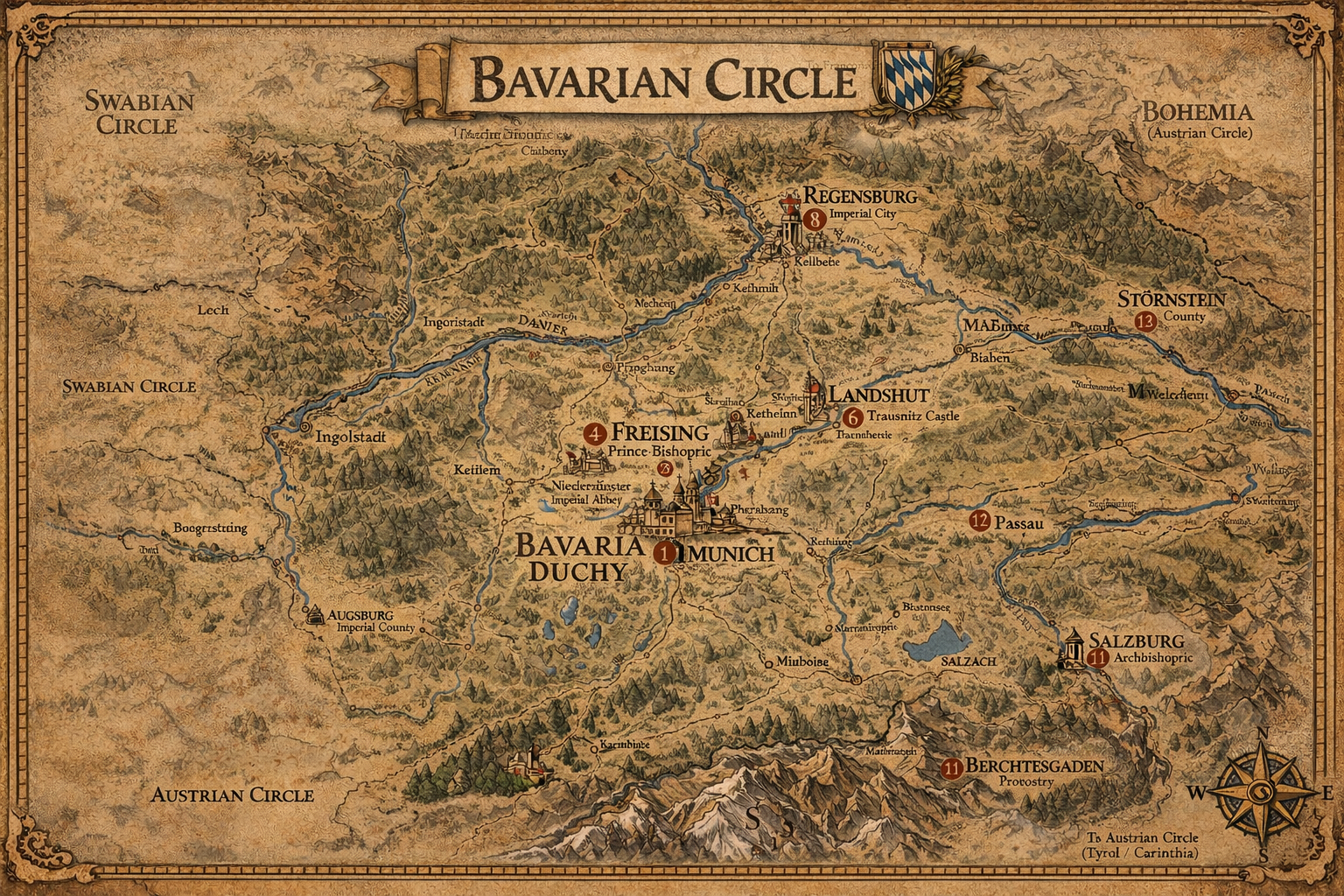
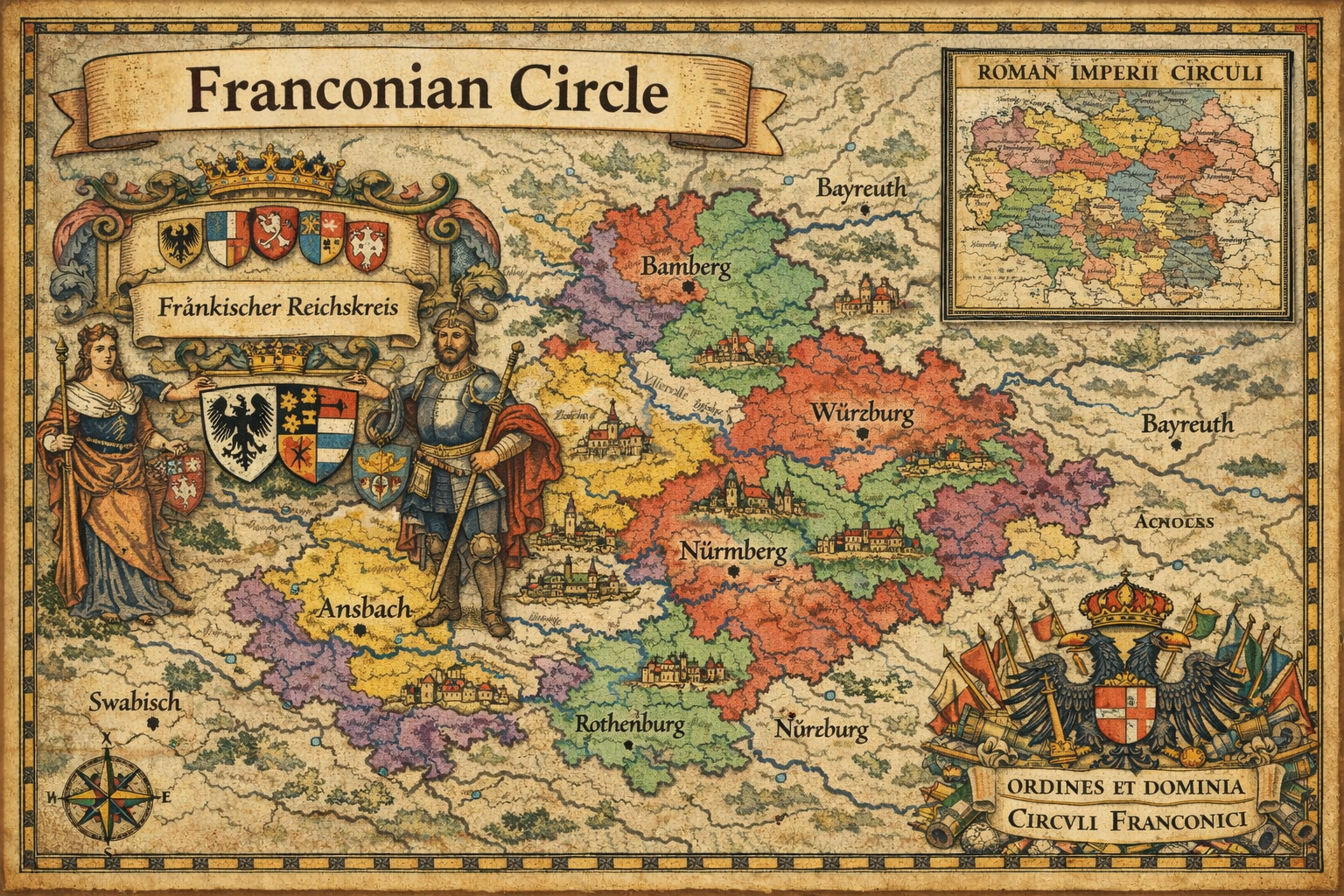
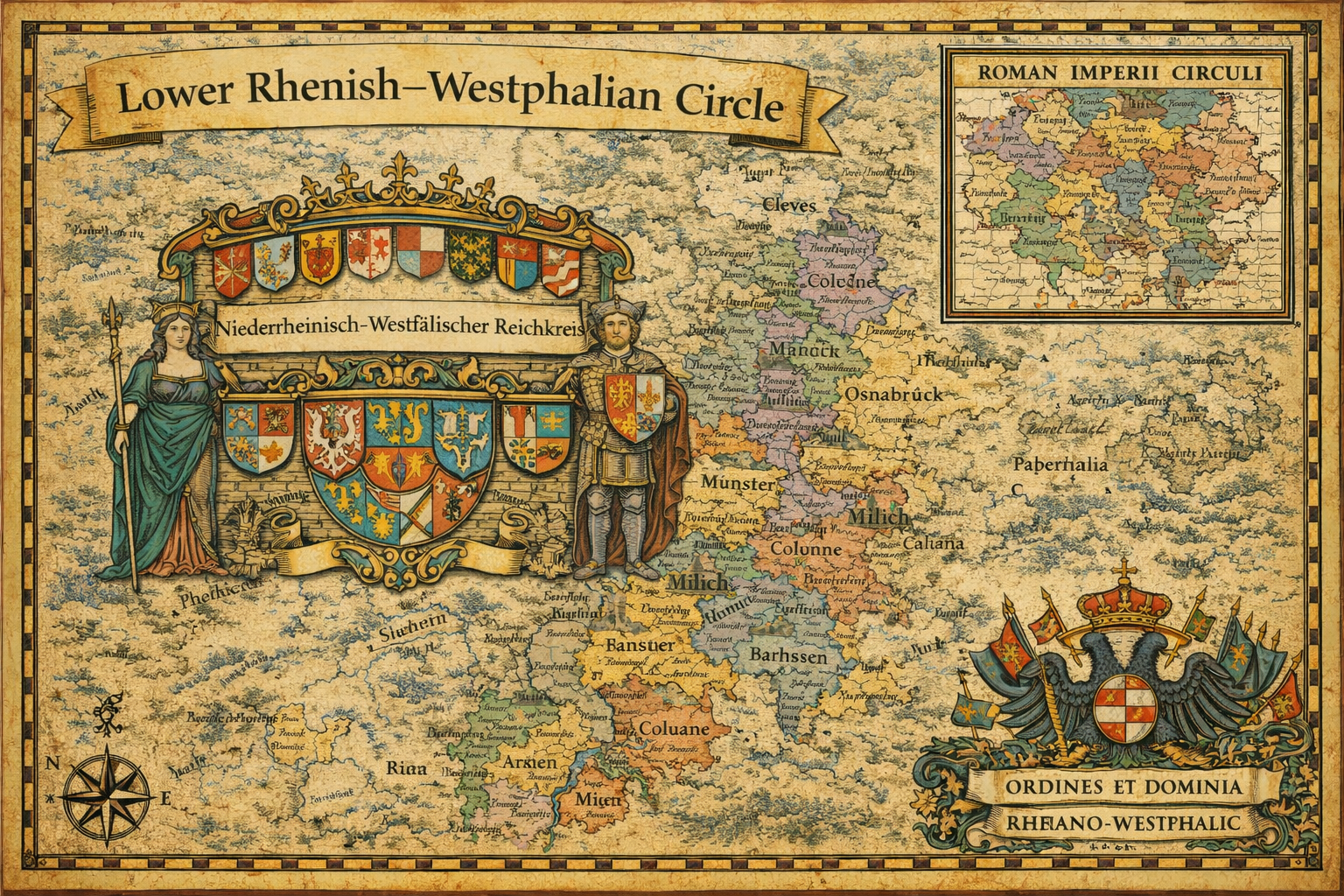
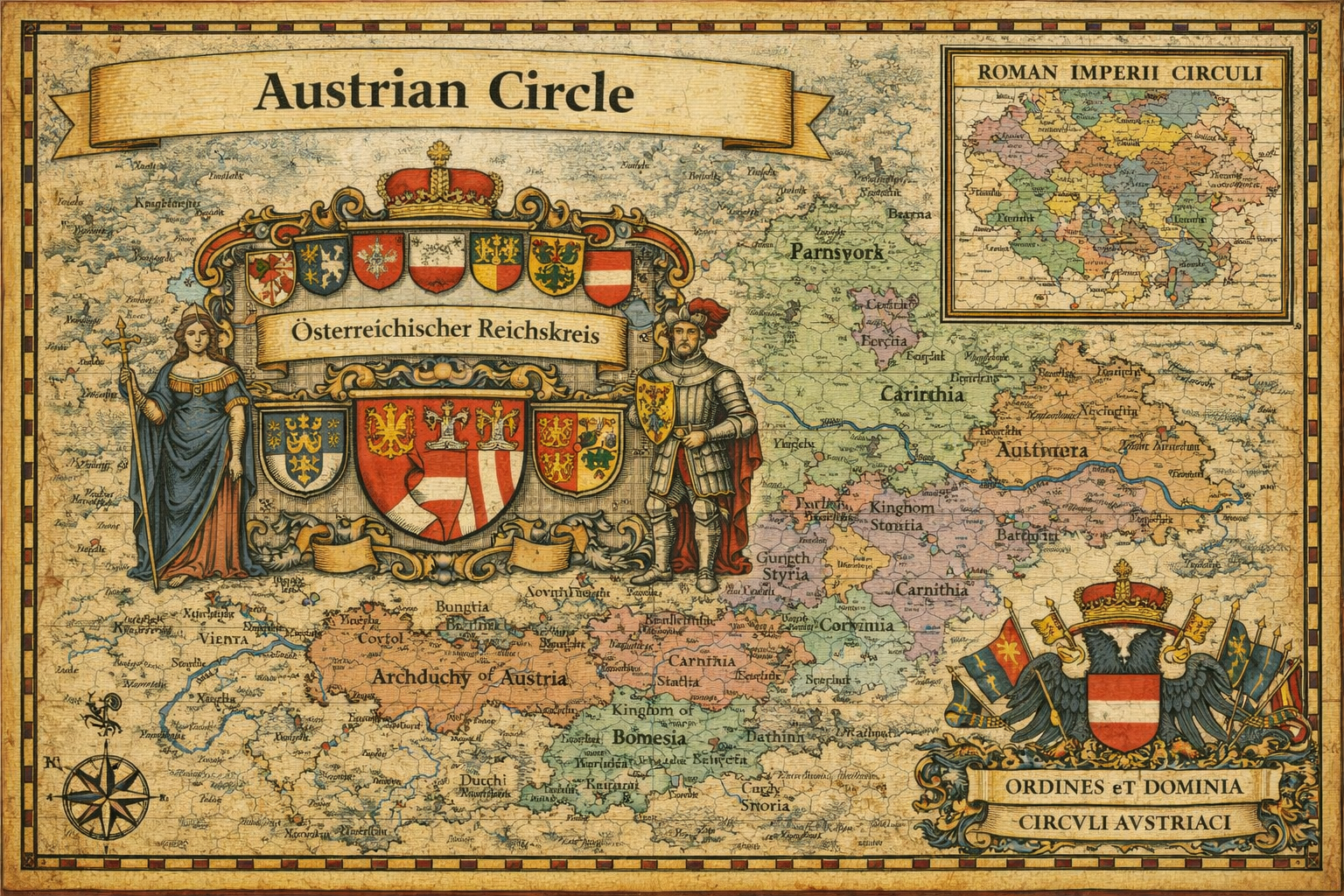
Later Imperial Circle Reference Maps
These eight maps show the later Imperial Circle system and are useful for locating major regions of the Empire. Their Imperial Circle labels belong to the reform period after 1454, not to the political structure described here. They are therefore best read as later regional reference maps; the 1454 atlas gives the contemporary status of places where the later map differs.
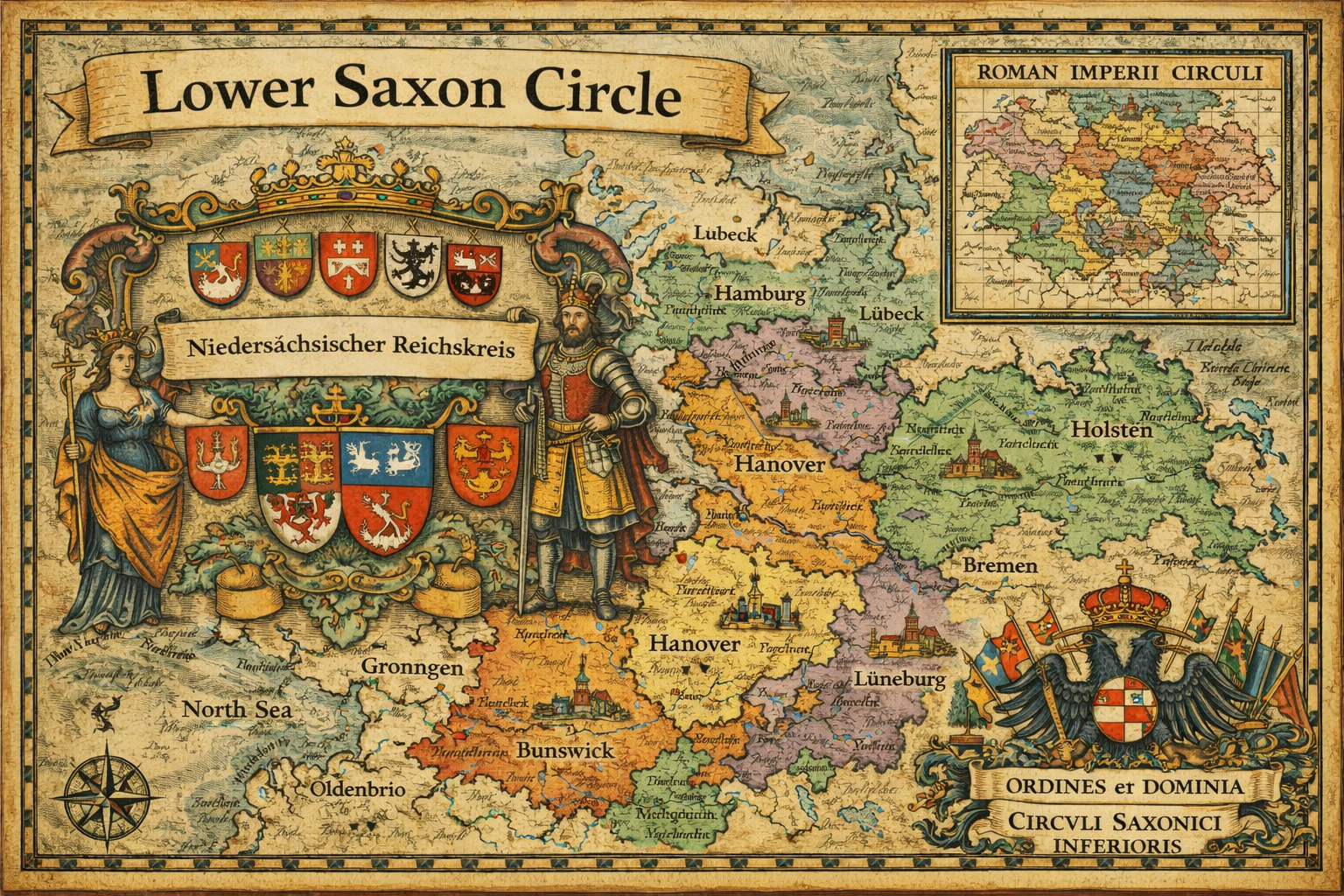
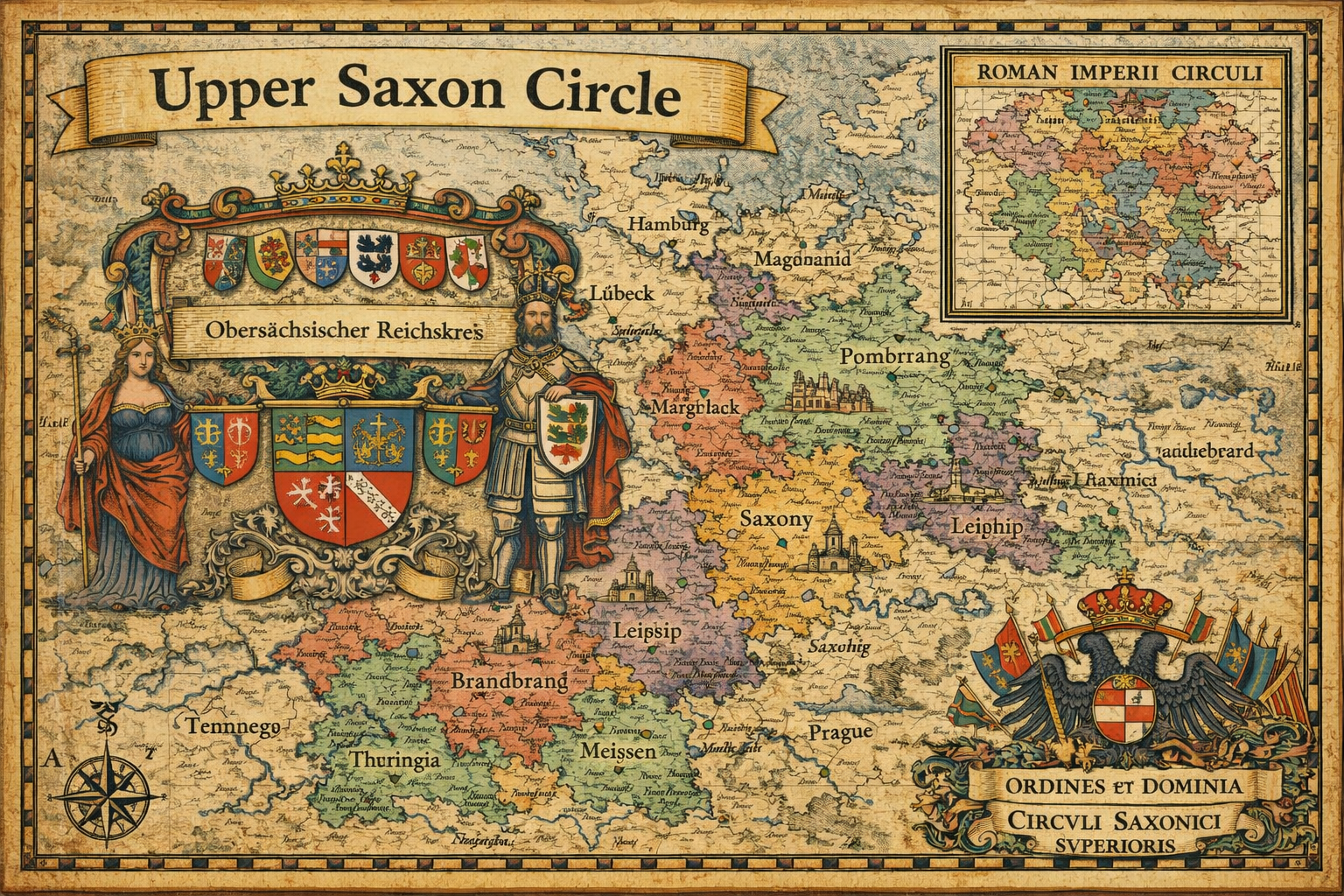
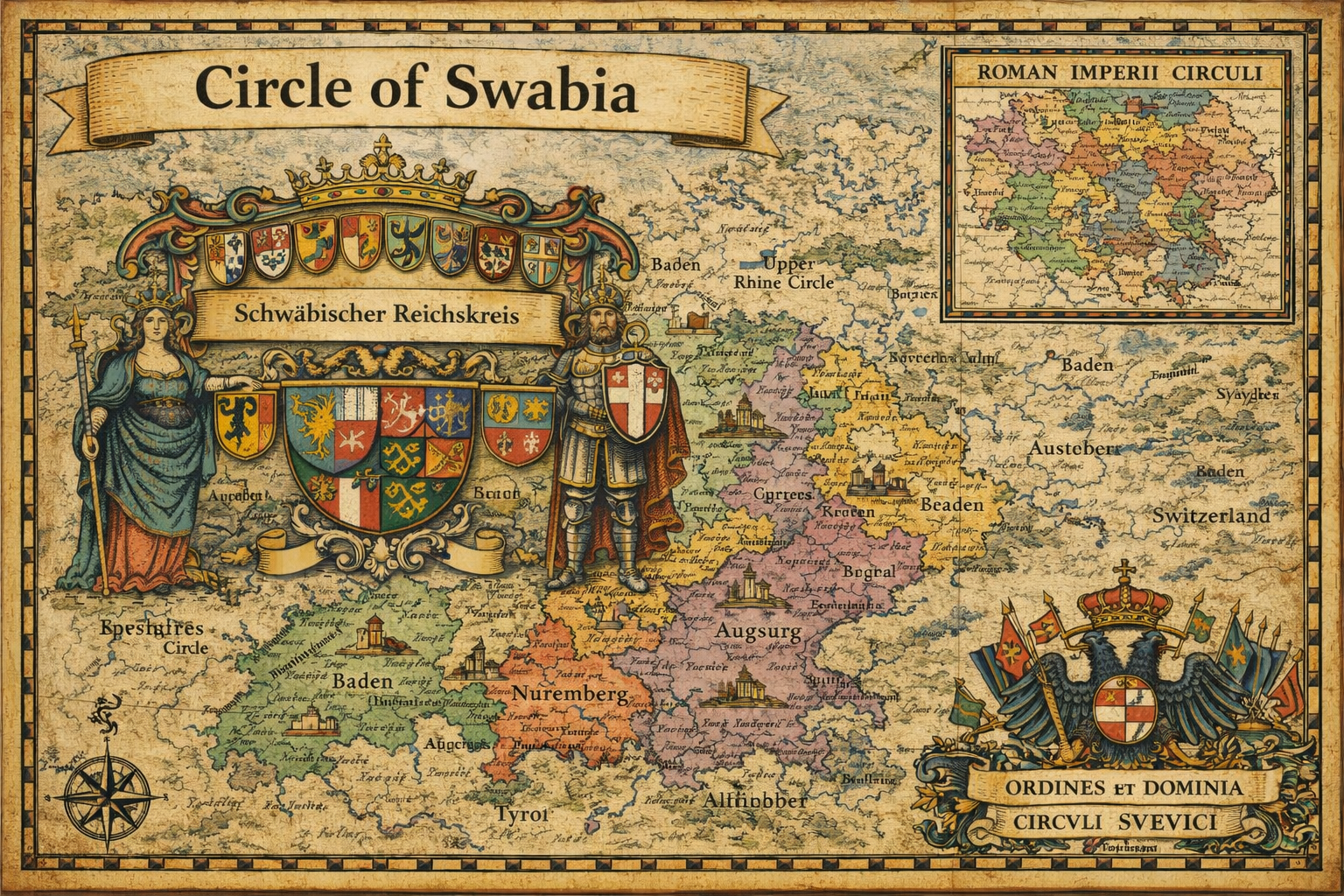
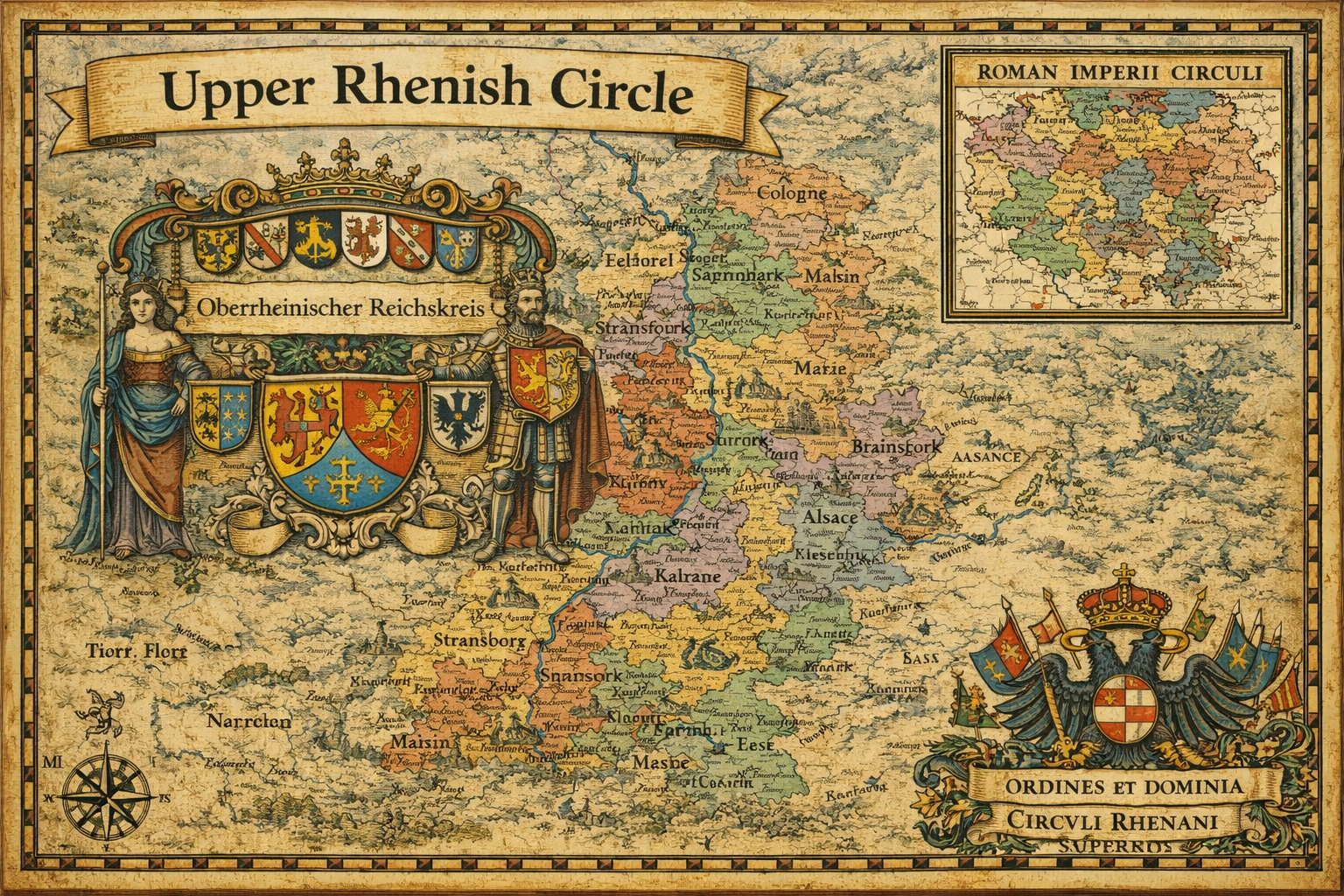
The Empire Atlas
The atlas gathers the Empire’s realms, cities, sacred territories, wildernesses and routes by geographic region. Some familiar names belong to states that arose after 1454; where that happens, the contemporary status is noted beneath the later name.
Bavaria & the Danube 15 destinations
River traffic, Wittelsbach rivalry, wealthy towns, salt and alpine routes make this the main southern corridor toward the Empire’s eastern crisis. Regensburg is especially useful because city, sacred estates and neighbouring princely rights overlap in one place.
- Bavaria Duchy
- Bavaria-Landshut
- Berchtesgaden Provostry
- Chiemsee Bishopric
- Freising Prince-Bishopric
- Imperial County of Ortenburg
- Munich Capital City
- Niedermünster Imperial Abbey
- Obermünster Imperial Abbey (College)
- Regensburg BishopricA separate jurisdiction from the Imperial City.
- Regensburg Imperial City
- Saint Emmeram’s Abbey
- Salzburg Archbishopric
- Störnstein CountyIn 1454: Lordship of Störnstein; later county.
- Trausnitz Castle
Franconia & Main 15 destinations
The First Margrave War ended only a few years ago. Nuremberg, Ansbach and their neighbours still live with fortified roads, veterans, confiscated goods, unpaid obligations and feuds that peace agreements have not fully erased.
- Ansbach Principality
- Bamberg Prince-Bishopric
- Bayreuth PrincipalityIn 1454: Brandenburg-Kulmbach; Bayreuth is the later identity.
- County of Wertheim
- Eichstätt Prince-Bishopric
- Hohenlohe County (Principality)
- Kulmbach Capital City
- Nuremberg Imperial City
- Rothenburg ob der Tauber Imperial City
- Schweinfurt Imperial City
- Seinsheim County
- Weißenburg Imperial City
- Wiesentheid CountyThe immediate county belongs to a later period.
- Windsheim Town
- Würzburg Sacred Principality
Brunswick, Lower Saxony & Hanseatic Coast 31 destinations
Salt, grain, river routes and Baltic commerce tie inland principalities to powerful merchant cities. The Hanseatic network matters here, but city privilege and territorial lordship rarely line up neatly.
- Blankenburg (Capital City)
- Bremen Prince-Archbishopric
- Bremen Free Hanseatic City
- Brunswick Capital City
- County of Blankenburg
- County of Holstein
- County of Regenstein
- Dithmarschen Peasants’ Republic
- Duchy of Brunswick-Lüneburg
- Duchy of Mecklenburg-Schwerin
- Duchy of Saxe-Lauenburg
- Gandersheim Royal Women’s Abbey
- Gandersheim Town
- Goslar Imperial City
- Halberstadt Bishopric
- Hamburg (Free and Hanseatic City)
- Hanover City
- Hildesheim Bishopric
- Lübeck BishopricA separate jurisdiction from the Free and Hanseatic City.
- Lübeck Free and Hanseatic City
- Lüneburg Hanseatic TownThe Hanseatic town and the Principality of Lüneburg are distinct political communities.
- Principality of Brunswick-Wolfenbüttel
- Principality of Calenberg
- Principality of Grubenhagen
- Principality of Lüneburg
- Ratzeburg Bishopric
- Rostock Hanseatic City
- Stade Hanseatic City
- University of Rostock
- Vörde Town
- Wismar Hanseatic City
Saxony, Thuringia & Harz 18 destinations
Electoral politics, mines, fortified towns and roads toward Bohemia dominate this broad central-eastern belt. The Harz and Thuringian uplands also give local rulers recurring problems that law alone cannot settle.
- Anhalt Principality
- Barby County
- Free Imperial City of MühlhausenMühlhausen is a Free Imperial City, not a county.
- Erfurt Hanseatic City
- Hohnstein County
- Magdeburg (Hanseatic city)
- Magdeburg Prince-Prelacy
- Mansfeld County
- Nordhausen
- Quedlinburg Princess-Abbacy
- Querfurt PrincipalityIn 1454: Lordship of Querfurt; later principality.
- Reuss CountyIn 1454: Reuss lordships; comital title is later.
- Saxony Electorate
- Schwarzburg County
- Schönburg County
- Stolberg County
- Walkenried Abbey and Waterworks
- Wernigerode County
Brandenburg, Pomerania & Baltic Approaches 14 destinations
Brandenburg’s elector watches ambitious towns and eastern roads while Pomeranian ports connect the Empire to Baltic trade. The north-east also opens toward the Teutonic States and the violence of 1454.
- Anklam Hanseatic Town
- Berlin Capital City
- Brandenburg Margraviate
- Cammin Bishopric
- Demmin Hanseatic Town
- Frankfurt an der OderBrandenburg’s cities left the Hanseatic League in 1442.
- Greifswald Hanseatic Town
- Kolberg Hanseatic Town
- Pasewalk Hanseatic Town
- Pomerania Duchy
- Rügenwalde Hanseatic Town
- Stettin Hanseatic Town
- Stolp Hanseatic Town
- Stralsund Hanseatic Town
Swabia, Upper Danube & Black Forest 73 destinations
This is the Empire’s jurisdictional maze: Imperial Cities, counts, lordships, sacred estates, guilds and wilderness can succeed one another within a short ride. It is ideal for contracts, toll disputes, fugitives and adventures where crossing a boundary changes the rules.
- Aalen Imperial City
- Augsburg Imperial City
- Augsburg Prince-Bishopric
- Baar Wilderness
- Baden-BadenIn 1454: part of the undivided Margraviate of Baden; later separate state.
- Baindt Imperial Abbey
- Biberach an der Riss Imperial City
- Black Forest
- Bopfingen Town
- Buchau Imperial Abbey
- Buchau Imperial City
- Comburg Imperial Abbey
- Constance Prince-Bishopric
- County of Eberstein
- County of Furstenberg
- County of Hohengeroldseck
- County of Kaisheim
- Dinkelsbühl Imperial City
- Elchingen Imperial Abbey
- Esslingen Imperial City
- Gengenbach Imperial Abbey
- Gengenbach Town
- Giengen Imperial City
- Gundelfingen Town
- Guntenzell Imperial Abbey
- Heggbach Imperial Abbey
- Heilbronn Imperial City
- Irsee Town
- Isny Imperial City
- Kaufbeuren Imperial City
- Kempten Imperial City
- Kempten Prince-Abbacy
- Kinzigtal Lordship
- Klettgau Landgraviate
- Leutkirch Imperial Town
- Lindau Imperial City
- Margraviate of Baden
- Memmingen Imperial City
- Meßkirch Lordship
- Nördlingen Imperial City
- Ochsenhausen Prince-Abbacy
- Offenburg Imperial City
- Petershausen Prince-Abbacy
- Pfullendorf Imperial City
- Ravensburg Imperial City
- Reutlingen Imperial City
- Rot an der Rot Prince-Abbacy
- Rothenfels County
- Rottweil Imperial City
- Salem Prince-Abbacy
- Schussenried Prince-Abbacy
- Schwäbisch Gmünd Imperial City
- Schwäbisch Hall Imperial CityA Swabian Imperial City on the Kocher.
- St George in Isny Prince-Abbacy
- Staufen Lordship
- Stühlingen Landgraviate
- Swabian Alps
- Swabian Austria Landgraviate
- Tettnang Lordship
- Thannhausen Lordship
- Ulm Imperial City
- Ursberg Prince-Abbacy
- Waldburg Archstewardship
- Wangen Imperial City
- Weil Imperial City
- Weingarten Prince-Abbacy
- Weißenau Prince-Abbacy
- Welzheim Imperial City
- Wettenhausen Prince-Provostry
- Wimpfen Imperial City
- Württemberg County
- Zell am Harmersbach Imperial City
- Überlingen Imperial City
Rhineland, Alsace, Lorraine & Hesse 52 destinations
The Rhine is a road made of water. Electors, Free Imperial Cities, the Alsatian city league, printing workshops, merchants and fortified crossings make information and money move quickly while authority remains intensely local.
- Basel Imperial City
- Basel Prince-Bishopric
- Colmar Imperial City
- Electorate of Mainz
- Frankenstein Castle
- Frankfurt am Main Imperial City
- Friedberg Imperial City
- Fulda Prince-Abbacy
- Gelnhausen Imperial City
- Haguenau Imperial City
- Heitersheim PrincipalityIn 1454: Hospitaller territory; princely status is later.
- Hersfeld Abbacy
- Hesse Landgraviate
- Kaysersberg Imperial City
- Königstein County
- Landau Imperial City
- Leiningen-Dagsburg County
- Leiningen-Westerburg County
- Lorraine Duchy
- Mensfelden Lordship
- Metz Imperial City
- Metz Prince-Bishopric
- Munster Imperial City
- Nomeny Margraviate
- Obernai Imperial City
- Odenheim Provostry
- Olbrück Lordship
- Prüm Abbacy
- Reipoltskirchen Lordship
- Rosheim Imperial City
- Salm-Badenweiler County
- Sayn-Wittgenstein County
- Sayn-Wittgenstein-Berleburg CountyLater partition; in 1454 use the parent Sayn-Wittgenstein polity.
- Solms-Braunfels County
- Solms-Lich County
- Speyer Imperial City
- Sponheim County
- Strasbourg Imperial City
- Strasbourg Prince-BishopricA separate jurisdiction from the Free Imperial City.
- Sélestat Imperial City
- The Odenwald
- Toul Imperial CityThe Imperial City and the Bishopric are separate jurisdictions.
- Toul Prince-BishopricThis entry is the Bishopric of Toul.
- Turckheim Imperial City
- Verdun Imperial City
- Verdun Prince-Bishopric
- Waldeck County
- Wartenberg County
- Wetzlar Imperial City
- Wissembourg Imperial CityThe Imperial City and the Abbey of Wissembourg are distinct institutions.
- Wissembourg AbbeyThe abbey is distinct from the neighbouring Imperial City.
- Worms Imperial City
Lower Rhine, Westphalia & Low Countries 76 destinations
Crowded cities, territorial princes, sacred lordships and merchant roads create a dense legal landscape. Westphalia is also natural ground for the Vehmic Court, especially where ordinary jurisdiction is disputed or distrusted.
- Aachen Imperial City
- Anholt LordshipAnholt is distinct from the Principality of Anhalt.
- Bedburg Town
- Bentheim County
- Berg Duchy
- Blankenheim-Gerolstein County
- Bouillon Duchy
- Brakel Imperial and Free Hanseatic City
- Breda
- Burtscheid Imperial Abbey
- Cambrai Prince-Bishopric
- Cambray Imperial City
- Cleves Duchy
- Cologne Imperial City
- Corvey Prince-Abbacy
- Delmenhorst County
- Diepholz CountyIn 1454 this territory is the Lordship of Diepholz.
- Dortmund Imperial City
- Duisburg Imperial City
- Düren Imperial City
- East Frisia CountyIn 1454: East Frisian lordships under Cirksena ascendancy; Imperial county from 1464.
- Echternach Prince-Abbacy
- Electorate of Cologne
- Gemen Lordship
- Gronsveld Lordship
- Herford Imperial City
- Herford Prince-Abbacy Nunnery
- Holzappel CountyA later successor state; it does not yet exist in 1454.
- County of HoyaThe County of Hoya is the contemporary territorial identity.
- Jülich Duchy
- Kerpen and Lommersum Lordship
- Kerpen Town
- Kornelimünster Prince-Abbacy
- Lemgo Imperial City
- Lingen CountyIn 1454: still within the Tecklenburg complex; separate county emerges later.
- Lippe Lordship
- Liège Prince-Bishopric
- Luxemburg Duchy
- Manderscheid CountyIn 1454: Lordship of Manderscheid; elevated to county in 1457.
- Mark County
- Minden City
- Minden Prince-Bishopric
- Moers County
- Myllendonk Lordship
- Münster Contested Prince-Bishopric
- Nassau-Diez CountyLater branch; not a separate 1454 state.
- Nassau-Dillenburg County
- Nivelles
- Oldenburg County
- Osnabrück Prince-Bishopric
- Paderborn Prince-Bishopric
- Pyrmont CountyThe linked territory is the Principality of Pyrmont.
- Ravensberg County
- Reckheim CountyIn 1454: lordship/barony; county status is later.
- Reichenstein Lordship
- Rietberg County
- Sayn County
- Schaumburg County
- Schaumburg-Hesse CountyLater partition; in 1454 use the parent County of Schaumburg.
- Schaumburg-Lippe CountyLater partition; in 1454 use the parent County of Schaumburg.
- Schleiden County
- Soest Imperial Hanseatic City
- Spiegelberg County
- Stavelot-Malmedy Prince-Abbacy
- Tecklenburg County
- Thorn Prince-Abbacy
- Utrecht CityThe city is politically distinct from the Bishopric.
- Utrecht Prince-Bishopric
- Verden Imperial CityThe city is politically distinct from the Prince-Bishopric.
- Verden Prince-Bishopric
- Virneburg County
- Warburg Imperial City
- Werden Prince-Abbacy
- Wesel Imperial City
- Lordship of WickrathIn 1454 Wickrath is a lordship.
- Wied County
Austria & Inner Austria 13 destinations
Frederick III’s hereditary lands place the imperial court close to the Danube and the south-eastern approaches. Envoys, military contractors, dynastic agents and rumours from the Carpathians all move through these valleys.
Bohemian Crown Lands & Silesia 3 destinations
Ladislaus Posthumous wears the Bohemian crown, but George of Poděbrady holds enormous practical influence. The political and military memory of the Hussite wars is recent, and roads toward Silesia and the Carpathians matter more every month.
- Breslau (Wrocław)Loosely associated with the Hanseatic network; avoid treating it as a full Hansa city in 1454.
- Kingdom of Bohemia
- Prague Capital City
Swiss Confederacy & Alpine Approaches 18 destinations
The Eight Cantons and their associates control difficult approaches through mountains where local compacts, valley communities and old rights matter more than distant claims. Appenzell is connected to the Confederacy but is not yet a full canton.
- Alps
- AppenzellAssociated with the Confederacy in 1454; full canton membership comes later.
- Canton of Bern
- Canton of Glarus
- Canton of Lucerne
- Canton of Schwyz
- Canton of Unterwalden
- Canton of Uri
- Canton of Zug
- Chur Prince-Bishopric
- Diessenhofen
- Disentis Imperial Abbey
- Half-Canton of Nidwalden
- Half-Canton of Obwalden
- Lake Geneva
- Lake Zurich
- Tarasp Lordship
- Zurich
Burgundian & Western Imperial Lands 3 destinations
The western Imperial world sits close to Burgundian wealth, court politics and major trade routes. Public promises of action against the eastern crisis can coexist with private bargaining over command, money and advantage.
Imperial Roads & Cross-Regional Routes 1 destination
The Via Imperii is not a single blanket of imperial law. A traveller may cross several jurisdictions in a day, each with its own tolls, warrants, weapon rules, escort rights and claims over cargo.
Level-5 Adventure Starts
- The second safe-conduct. A fugitive crosses a bridge into a neighbouring lordship three minutes before the party catches him. Their arrest warrant ends at the waterline; the local ruler will issue another only in exchange for a dangerous service.
- The revenant claimant. A noble declared dead during a Red Death outbreak returns with memories and a seal. His heirs have divided the estate, sold part of it to a city and pledged another part as collateral.
- The printed order. Two identical imperial proclamations circulate in the Upper Rhine, each carrying a convincing seal and giving contradictory instructions. One is false; neither side can agree which.
- The Franconian debt. Veterans from the Margrave War seize a merchant wagon as payment for wages owed since 1450. The merchant has a city charter declaring the seizure unlawful and enough money to hire the party.
- The feud begins in three days. A noble household receives a formal feud letter. The attack has not started yet, which leaves exactly enough time to negotiate, evacuate, expose a forgery or discover that the intended target is not the person named.
- The dragon’s toll. A valley lord wants an old dragon removed from a trade road. The dragon produces a genuine charter recognising its toll-rights from an earlier ruler.
- The Carpathian courier. An exhausted envoy carries intelligence about the Ninefold Dominion toward the imperial court. Three factions want the message, and at least one can legally demand to inspect it.
- Dracula’s border. Hungarian agents want proof that Wallachia’s undead forces are expanding. Vlad’s officers will permit observers only if they first accompany an undead patrol against a Dominion incursion.
- The mine beneath three borders. A dwarven engineering company breaks into a rich new seam whose underground course passes beneath three rival territories. Nobody agrees who owns the silver—or the ancient chambers below it.
- The missing elector’s man. An electoral envoy vanishes between two jurisdictions. Recovering him is simple; proving which court had the right to detain him is where the real adventure begins.
- The possessed magistrate. The city’s chief judge appears sane, signs genuine documents and can answer personal questions—but a planar specialist insists something else is speaking through him. Arresting him without proof may itself be treason.
- The harmless witch. A commissioned hunter demands custody of a village healer. The healer is innocent of maleficium, but somebody in the same valley really is feeding victims to an outsider and is using the investigation as cover.
Videos: Historical Structure and RPG Use
For readers who want additional context, the first video explores why the Empire’s fragmented politics work so well in roleplaying games, while the second gives a broad historical introduction to the Holy Roman Empire. Both range beyond the specific realities of SpiralWorlds in 1454.
Witches, Guns, and Steel
A useful game-design discussion of the historical Empire’s fragmented politics, warfare and worldbuilding potential. Its historical religious framing is inspiration, not SpiralWorlds canon.
Holy Roman Empire Explained
A broad historical explanation of why the Empire was a hierarchy of many political entities rather than a conventional centralised state. Use it for background, not for later events as though they were already true in 1454.
Common Questions
Who rules the Empire in 1454?
Emperor Frederick III of Habsburg. He was crowned emperor in 1452. He is prestigious but inept as a unifier: his seals, courts and imperial dignity matter, yet hundreds of realms continue to govern themselves through their own rulers, charters and customs.
Who elects the emperor?
Seven electoral powers: Mainz, Trier, Cologne, Bohemia, the Electoral Palatinate, Saxony and Brandenburg.
Do the Imperial Circles exist in 1454?
No. The Bavarian, Franconian, Swabian and other Imperial Circles belong to later Imperial Reform, developing around 1500 and 1512. The regions used here are broad geographic groupings for understanding the 1454 patchwork, not Imperial administrative divisions.
Is the Empire one country?
No. It is a shared imperial framework containing kingdoms, principalities, duchies, counties, lordships, cities, sacred territories, villages and overlapping rights. Crossing from one to another can change the ruler, law, coinage, language, magical regulation and enemies.
Why are there so many Free and Imperial Cities?
Urban communities can hold privileges directly from imperial authority, allowing them considerable independence from nearby territorial princes. Their walls, courts, councils, guilds and markets make them major campaign powers rather than decorative settlements.
How does travel work inside the Empire?
Expect frequent boundaries. Tolls, safe-conduct, weapon rules, market rights and legal warrants may change from one jurisdiction to the next. Major roads and rivers make movement easier without making the law uniform.
How common is magic?
Magic is known, studied and commercially useful, but expertise is uneven. Universities, private masters, guilds, alchemists, sacred practitioners and apprenticeships all teach different parts of the supernatural world. There is no Empire-wide magical authority or universal magic shop.
What is the biggest crisis in 1454?
The Ninefold Dominion’s seizure of Constantinople in 1453 has become an immediate strategic problem. It affects eastern defence, trade, artillery, diplomacy and the movement of scholars and refugees, while war in the north-east and unresolved conflicts inside the Empire create additional pressure.
Will the Empire unite against a non-human threat?
Yes, when the threat is large enough—but not simply because it is non-human. The Empire contains non-human residents and can trade or negotiate with non-human powers. Coalitions form against invading armies, expanding undead states, planar occupations and other common dangers, then immediately argue over command, money and the peace that follows.
Is witchcraft heresy?
No. Witchcraft, arcane magic, spirit-work and worship of another recognised god are not automatically forbidden. Local authorities prosecute specific harmful or disloyal practices such as maleficium, hostile outsider compacts, possession, sentient sacrifice, soul abuse, unlawful planar breaches and false sacred authority.
How much influence do outsiders have?
Enough to matter, usually indirectly. Outsiders influence courts and communities through contracts, cults, summoned agents, possession, advice and bargains. Open territorial rule by a powerful outsider is rare and alarming enough to provoke major political reaction.
Historical Foundations and Sources
The Empire of 1454 follows the political geography and chronology of the mid-fifteenth century, transformed by the realities of SpiralWorlds: the Ninefold Dominion, the Red Death, supernatural territorial claims, non-human peoples and living magical traditions all shape how that historical landscape functions.
- German History in Documents and Images — Golden Bull and electoral structure
- German History in Documents and Images — Imperial Circles and later reform
- The World of the Habsburgs — Frederick III
- Austrian History Yearbook — Constantinople and Imperial politics after 1453
- Library of Congress — Gutenberg and movable-type printing
- Museums of Nuremberg — Imperial Regalia and Nuremberg’s custodianship
Continue Through SpiralWorlds
Geography · Europe · Timeline · World Bestiary · Guilds, Factions & Organisations · Planes
Keep this reference growing
If this page helped with your reading or game, you can support its upkeep or explore the curated books.
Explore the Bookshop — epics, classics and stories behind imagined worlds.