
Lorraine — The Contested Duchy of Nancy
John II of Anjou · René of Anjou · Nancy · Vosges roads and frontier courts
At a Glance
| Realm | Duchy of Lorraine, an imperial principality with its own estates and courts |
|---|---|
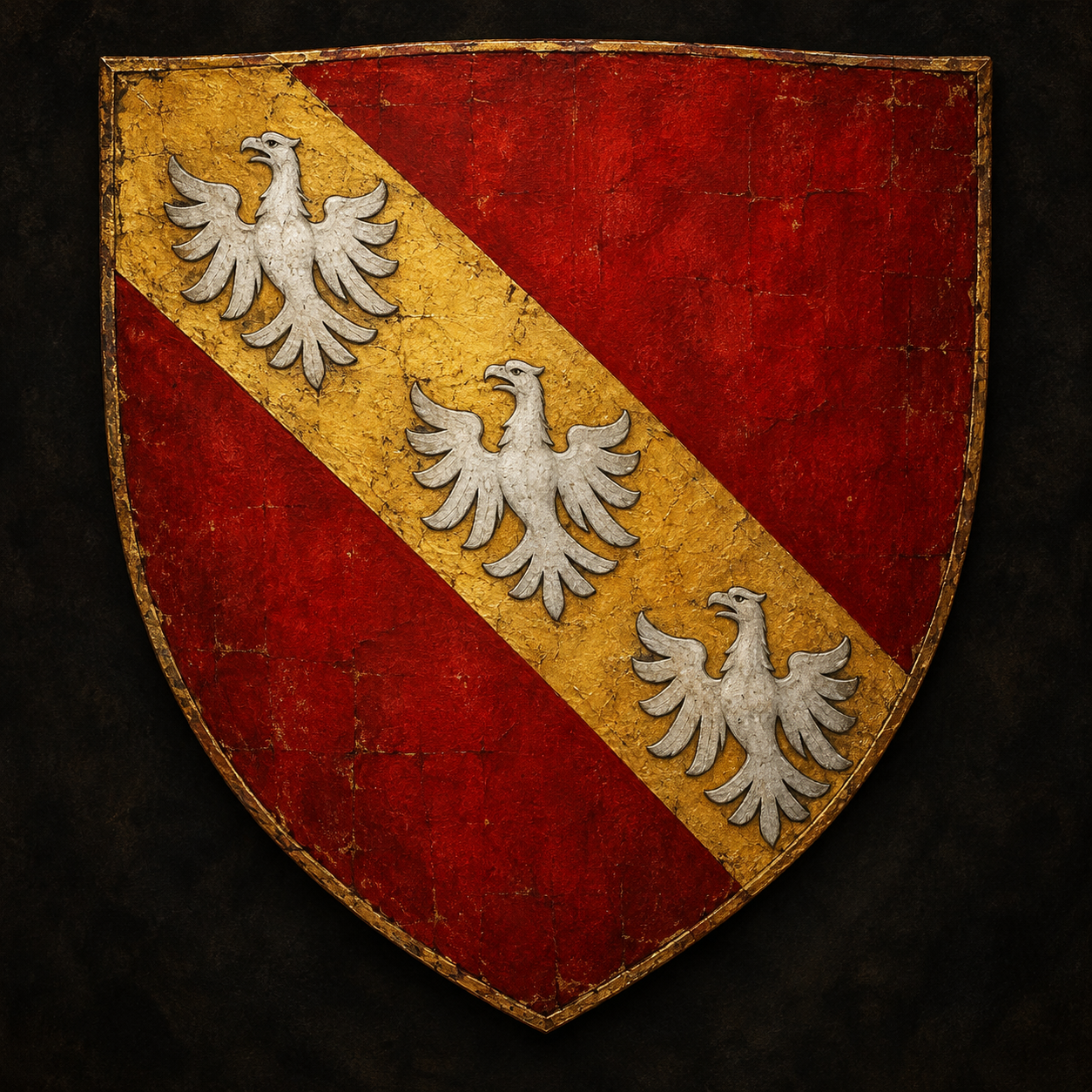
| Duke | John II of Anjou, who inherited the ducal office from his mother Isabella and father René |
| Senior House | René of Anjou, John’s father, retains the separate Duchy of Bar and considerable influence in Lorraine |
| Principal City | Nancy, the ducal residence and centre of the household |
| Other Places | Lunéville, Épinal, Mirecourt and the valleys below the Vosges |
| Neighbours | The Duchy of Bar, the imperial city of Metz, the separate Metz prince-bishopric and other imperial lands |
| Languages | Romance Lorrain and Germanic dialects, French in noble correspondence and multiple market tongues |
| Sacred Life | Local gods of justice, roads, forest and household; ancestral shrines, riverside oaths and competing temple privileges |
| Present Pressures | Missing salt wagons, anxious garrisons, dangerous forest roads and offended sotrés |
Arrival in Lorraine
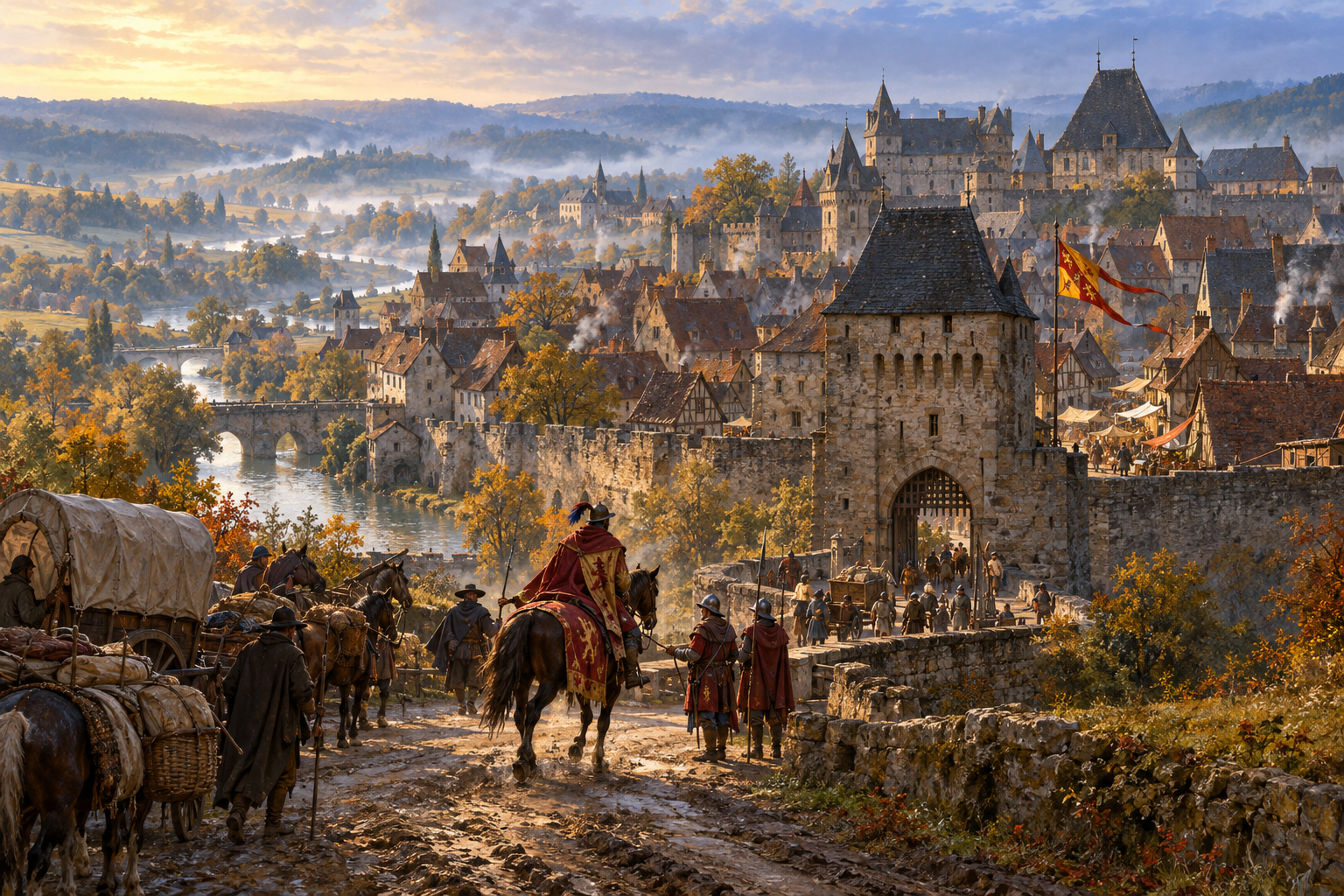
The road into Nancy brings salt wagons, mule trains, mounted messengers and travellers from both sides of the Vosges. Armourers hammer near the ducal household; traders crowd the approaches to the gates. Beyond the city, the Meurthe and Moselle valleys lead towards market towns, brine works and long forest routes. A traveller can spend a day choosing a guide before discovering why the locals refuse to take the shorter track.
John II holds Lorraine; his father René holds neighbouring Bar. Their household ties matter to commanders and merchants, but most visitors meet the consequences through garrisons, rival escorts and the people paid to keep the roads open. Metz is a powerful neighbouring imperial city, not another district of Nancy.
What Is Happening Right Now?
Salt Wagons Missing on the Seille Road
Carriers carrying salt towards Nancy have begun arriving with fewer wagons than they set out with. One driver blames soldiers; another says his missing companion walked into a marsh after hearing bells. Salt is valuable enough that merchants will pay for a careful search, not another armed escort that simply rides past the danger. The saltworks of the Seille valley are too valuable for the disappearances to be ignored.
A Sotré in the Stable
At an inn on a Vosges road, horses wake brushed and fed, although no groom admits touching them. Then a guest tries to catch the unseen helper at work, and the animals are found packed into a stall too small to hold them. Local people recognise the tricks of a sotré, a small being of Lorraine’s folklore that can help with animals but turns mischievous when watched or offended. The party must mend the offence before the inn loses its livelihood.
A Messenger Who Cannot Go Home
A rider serving John II has reached the wrong gate of a fortress and knows that the garrison still answers to officers who served René. He carries news of an approaching armed company, not a petition over land. The characters can bring him inside, warn the villages below or follow the soldiers to learn whose banner they actually serve.
Places and People
Nancy — Court, Market and Workshops
Enter with the traders to look for armour repairs, horses and news from the ducal household. A messenger wants discreet companions; a salt carrier wants to know why his brother did not arrive. Nancy is also where John II’s decisions first become public, although the news reaches outlying valleys slowly.
Lunéville — The Eastern Road
A practical stop for food, fresh horses and information before heading east. Ask a carter about the condition of the next bridge rather than trusting the shortest line on a map.
Mirecourt — The Madon Valley
Craftspeople, carriers and market families work around the river road south-west of Nancy. Dwarven smiths and halfling carriers work beside other craftspeople and traders. Neither group speaks with a single voice.
Épinal — The Moselle Route
Timber moves downriver; pack animals carry what the water cannot. Travellers leaving the valley for the wooded uplands need someone who knows the weather and the safer passes.
The Vosges — Living Forest Country
Woodland paths pass cliffs, streams and secluded farms. The local sotrés are not vague forest spirits: in the traditional tales they tend animals unseen, dislike attention and play elaborate tricks when offended. Farmers who have met one at a roadside stable know better than to watch it at work. The forest also has ordinary wolves, difficult terrain and people who know how to exploit fear of the unseen.
Adventures in Lorraine
- The Empty Salt Wagon. A wagon returns from the Seille valley without its driver. Its cargo is intact, but the horses refuse the north road. The party must retrace the journey before the missing man disappears for good.
- The Smallest Stall. An offended sotré has made a horse fit inside a pigsty. The horse is alive and frightened; breaking down the building might injure it. Can the party earn the creature’s help without trying to trap it?
- The Fortress at Dusk. A warning about approaching soldiers reaches a garrison that distrusts the messenger. The party has one evening to learn whether the armed company intends an assault, a rescue or a bluff.
- The Forest Shortcut. A local guide is willing to take the steep track across the Vosges but refuses to pass the Roches du Sotré after sunset. A stranded family is on the other side. The characters must choose a dangerous night crossing or a much longer rescue.
Getting Around
From Nancy, the roads towards Metz and Bar connect busy towns, but the Vosges tracks are slower, steeper and easier to lose in bad weather. Hire a local guide for forest travel; buy supplies before leaving the valley; ask which bridges are passable. Soldiers and officials may challenge strangers at strategic crossings, but the landscape, weather and what lives along the road are the greater everyday problems.
Lorraine Campaign Map
This painted campaign map depicts Nancy, the routes towards Bar, Metz and Toul, and the forested Vosges. Select a town or the Vosges marker to explore it. The artwork is an illustrative interpretation: river bends, distances and territorial boundaries are schematic rather than surveyed.
View the older territorial reference map (c. 1400) for additional historical context; it does not show exact frontiers in 1454.

History and Sources
The ducal line passed through Isabella of Lorraine and René of Anjou to their son John II in 1453; René retained neighbouring Bar. For the dynastic context see John II and Bar. The French Ministry of Culture documents the medieval Seille saltworks. Limédia’s Lorraine folklore collection records the sotré’s habits and the Roches du Sotré.
Related Lands
Bishopric of Toul · Bar · Metz · Prince-Bishopric of Metz · Luxembourg · Holy Roman Empire
Keep this reference growing
If this page helped with your reading or game, you can support its upkeep or explore the curated books.
Explore the Bookshop — epics, classics and stories behind imagined worlds.