
Cologne — Autonomous Rhine City
Cologne — Autonomous Rhine City
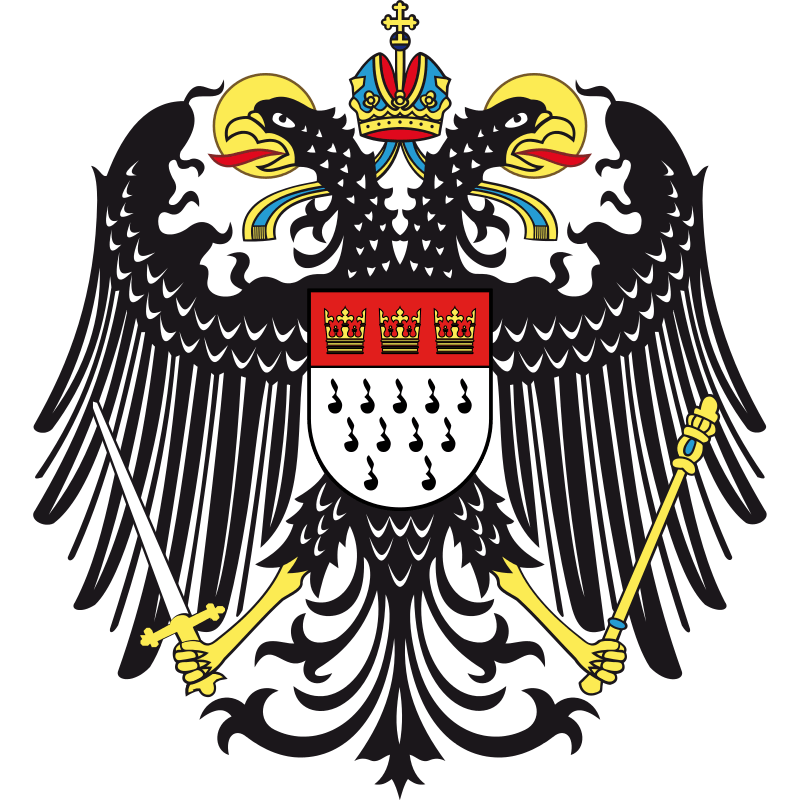
Cologne is a powerful Rhine city within the Holy Roman Empire. Its council governs the city in practice, its merchants and guilds dominate regional trade, and its autonomy is already substantial even though formal Free Imperial City status still lies in the future.
- Coat of arms/Flag – The coat of arms of Cologne features three crowns, retained as one of the city’s oldest and most recognisable civic emblems.
- Motto – “No city on earth is more noble than Cologne”
- Status – City
- General Alignment – Lawful Good
- Corruption – 1; Crime – 6; Economy + 8; Law + 8; Lore + 9; Society + 9
- Settlement size – Large city
- Qualities – Sacred City, Cultural Melting Pot
- Danger –
- Demographics – Humans, Dwarves, Elves, Halflings, and Gnomes are all common in Cologne. The city is also home to a significant number of half-elves and half-orcs.
- Country – Holy Roman Empire
- Government – The city is governed by its council, patrician houses and guild interests. Dietrich II von Moers, the neighbouring Sacred Elector of Cologne, remains a powerful territorial rival and claimant to older rights.
- Legislature – City Council
- Population – Approximately 40,000
- Places of interest – the Great Gothic Works, the historic Rathaus, Roman walls and gates, the Rhine quays, market squares and old monumental precincts
- Civic Authority – Cologne City Council; Dietrich II von Moers remains the neighbouring Sacred Elector of Cologne
- Other Notable residents – merchant patricians, guild masters, Rhine captains, scribes, scholars, artificers and sacred envoys
- Marketplace – Base Value: 1,000 gp Purchase Limit: 5,000 gp Spellcasting: 9th level
- Minor Items: 4d4; Medium Items: 3d4; Major Items: 2d4
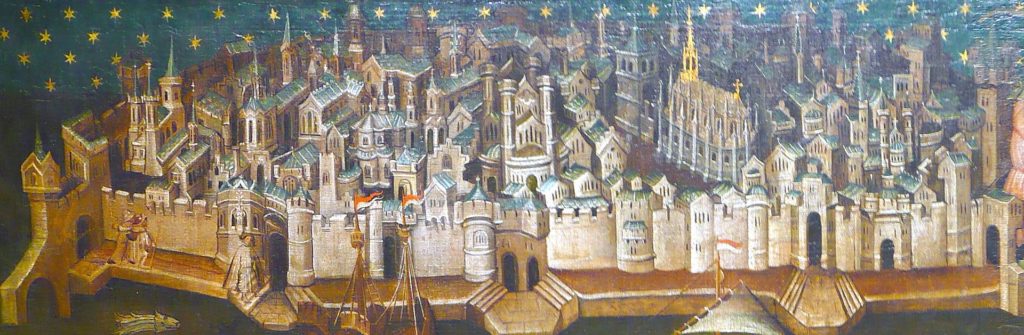
The city of Cologne sits on the banks of the Rhine River, a major transportation route that connects the region to other parts of Europe. Its strategic location has made it an important trading hub for centuries, attracting merchants and traders from all over the world. The city is surrounded by rolling hills and dense forests, home to a variety of wildlife, including wolves and wild boars.
Legend has it that the city is also home to a creature known as the Great Gothic Gargoyle. According to local folklore, the gargoyle is a shape-shifting creature that takes the form of a stone statue during the day, only to come to life at night to roam the city streets. While there is no evidence to support this claim, the gargoyle has become a beloved symbol of the city and is featured in many local legends and stories.
Cologne’s crowded streets are filled with guild shops, wine houses, warehouses, workshops and river traffic. Merchants, metalworkers, scribes, performers and travelling craftsmen give the city a cosmopolitan character, while Roman remains and vast building works keep older layers of the city visible beneath daily trade.
Cologne’s wealth rests on the Rhine, its markets, guilds, civic institutions and ability to negotiate with neighbouring princes. Ancient masonry, monumental works and dense commercial streets make it one of the Empire’s most important urban centres.
Located southwest from Cologne is the small town of Kerpen home of the notorious serial killer Christman Genipperteinga.
Keep this reference growing
If this page helped with your reading or game, you can support its upkeep or explore the curated books.
Explore the Bookshop — epics, classics and stories behind imagined worlds.