
Brandenburg — Frederick Iron Tooth and the River Marches
Brandenburg is a land of market towns, Havel and Spree crossings, lakes and pinewoods, held together by Elector Frederick II’s determination to make the Hohenzollern title mean something beyond his own castle gate. The great towns have long guarded their privileges. Some barons defend their manor courts just as fiercely. On the roads between Berlin, Brandenburg an der Havel and Frankfurt on the Oder, an order from the elector can settle an argument—or start another.
- Status: Margraviate and Electorate of Brandenburg, a princely territory of the Holy Roman Empire, not a kingdom.
- Elector: Frederick II of Hohenzollern, called Iron Tooth (Friedrich Eisenzahn), ruler from 1440.
- Major towns: Berlin and Cölln, Brandenburg an der Havel, Spandau, Potsdam, Frankfurt on the Oder, Bernau, Eberswalde and Prenzlau.
- Waters and routes: The Havel, Spree, Elbe and Oder, with roads, lakes, islands, ferries, river warehouses and woodland tracks.
- Older lands: The Altmark and Mittelmark, with contested interests in the Neumark east of the Oder.
- Government: The elector and his appointed officers alongside estates, local noble houses and town councils whose privileges vary widely.
- Trade: Grain, timber, livestock, fish, wool, cloth and river carriage; guild families and scattered dwarven mercantile households participate in local markets.
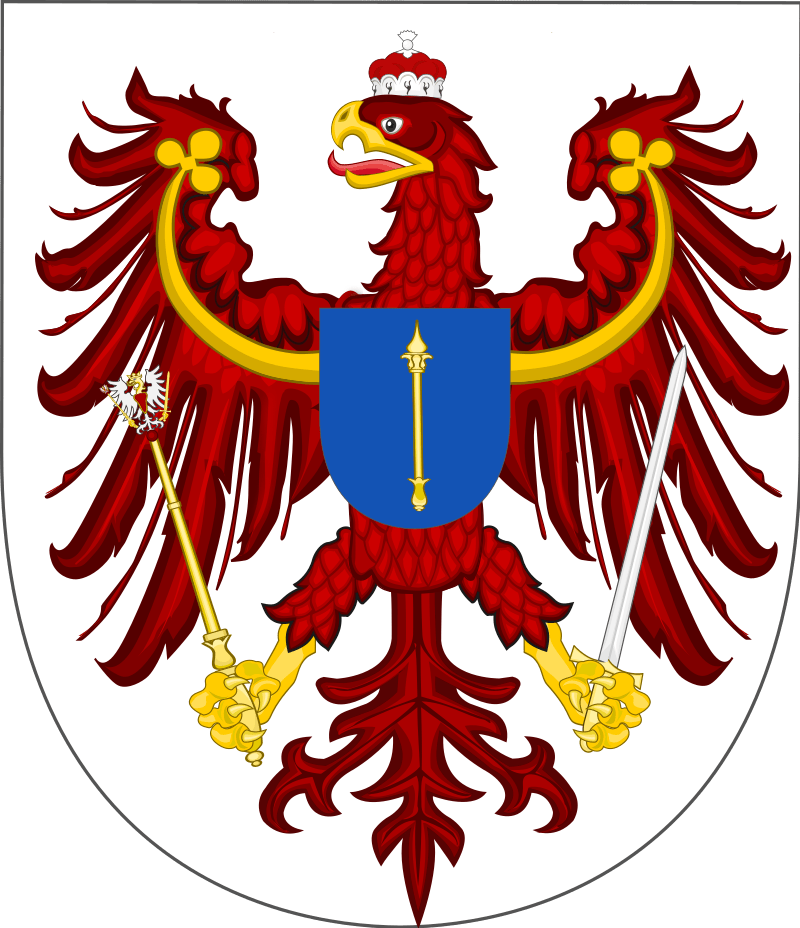
- Arms: The red Brandenburg eagle on silver; separate towns and dynastic branches may carry their own heraldry.
- Sacred life: Dynastic, civic, guild, river, rural and household traditions, with local sacred houses and ancestor rites.
The Elector and the Towns
Frederick II inherited an electorate with proud towns and nobles accustomed to treating the margrave as one claimant among several. In Berlin and Cölln he has already changed that balance: their joint administration was broken in 1442, his riverfront fortress begun in 1443 and the cities’ rebellion suppressed in 1448. The castle now secures the Spree crossing, but the town councils still control the market streets and every boatman, butcher and weaver knows whose livelihood was altered by the dispute.
Brandenburg an der Havel is a different centre, with older political prestige, busy waterways and its own entrenched town rights. Frankfurt on the Oder watches merchants travelling across the eastern border; farther north, settlements such as Prenzlau and Bernau sit among roads, wooded lakes and fields whose returns feed the towns. A letter bearing the elector’s seal may be read with respect in each place, but its effect depends on the local courts and the men entrusted to enforce it.
Land, Water and Working Lives
Much of the Middle March lies between forests, open fields, wet meadows and channels that carry freight when the water is favourable. Riverboat crews and ferrymen know which villages have safe landings; charcoal burners, hunters and farmers know where a traveller can leave the road without losing a wheel or a horse. Merchant families may prosper by securing rights on a crossing, while a small fishing village feels a toll change in the price of bread.
The old Altmark to the west and the Mark’s eastern interests differ in wealth, neighbours and custom. The Neumark, held by the Teutonic Order for decades, is a subject of bargaining and disputed repayment. Its return is a political transaction with implications for every fortress captain and tax collector there, not an invisible movement of ink on a map. Envoys from distant courts and armed escorts can meet at the same border post while claiming opposite orders.
What Is Happening Right Now?
The elector’s agents are tightening their hold on tolls and civic appointments. Berlin’s guilds want to keep the rights they still possess; market towns elsewhere watch closely to see how far princely claims will spread. A town may offer shelter to another city’s envoy but refuse him access to its court, knowing that a compromise reached at Berlin could become a precedent used against its own magistrates.
Along the Oder, negotiations over the Neumark attract merchants with unpaid claims, castellans worried about which lord will pay their soldiers, and landholders who fear their grants will be questioned. A courier carrying the promised terms has to pass through towns whose rulers do not yet agree on the transaction. The delay matters: without a recognised seal, warehouses stay closed and men under arms may go without pay.
Travelling Through Brandenburg
The main river routes link trading towns but do not remove the need for horses, carters and ferries between them. Carry proof of payment and safe-conducts that name the relevant jurisdiction, particularly when travelling into the Neumark. Berlin and Cölln provide guild craftsmen, river passages and a court where petitioners might obtain a powerful sponsor. In smaller settlements the local reeve, not the elector, decides whether an exhausted company can stable its mounts.
Historical Sources
Berlin.de — Hohenzollern Electors and the Palace; Landesregierung Brandenburg — History; F. L. Carsten — Brandenburg Towns and Civic Rights.
Keep this reference growing
If this page helped with your reading or game, you can support its upkeep or explore the curated books.
Explore the Bookshop — epics, classics and stories behind imagined worlds.