
Imperial City of Dinkelsbühl — Walls, Guilds and Wörnitz Trade
Imperial City of Dinkelsbühl
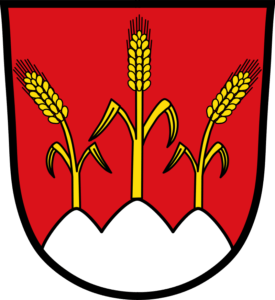
Dinkelsbühl is a small but well-defended imperial city on the Wörnitz, where guild wealth, market traffic and strong walls give a modest town influence beyond its size.
- Coat of arms/Flag – The civic arms use the city’s established blue-and-white field and paired keys.
- Motto – “In concordia firmus” meaning “Strong in unity”
- Status – City
- General Alignment – Neutral
- Settlement size – Small town
- Corruption – 0; Crime – 0; Economy +2; Law +2; Lore +2; Society +2
- Qualities – Strategic Location, guild town, well-defended
- Danger – Low
- Demographics – Town households include merchants, guild craftsmen, labourers, guards, servants and surrounding farming families.
- Country – Holy Roman Empire
- Government – The city is governed by a council of elected officials.
- Legislature – Council
- Population – Around 2,500 inhabitants.
- Places of interest – Town walls and gates, the market square, guild streets, Wörnitz approaches and the great new stone sanctuary still rising over the town.
- Current authority – The elected civic council and its mayor, supported and contested by guild and property interests
- Other notable residents – Guild masters, merchants, civic clerks, master builders and captains attached to the town’s defence
- Marketplace – Base Value: 1,000 gp; Purchase Limit: 5,000 gp; Spellcasting: 3rd level spells
- Minor Items – up to 1,000 gp Medium Items – up to 5,000 gp Major Items – none
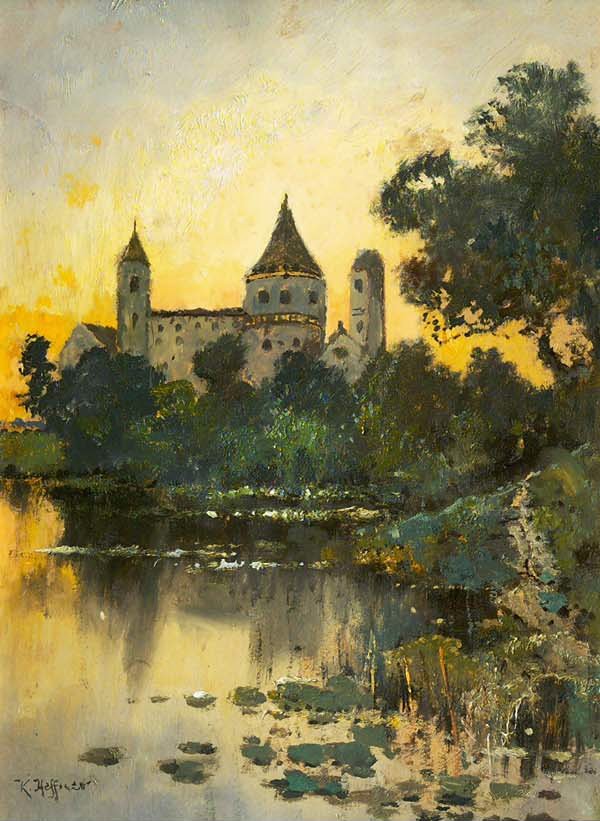
Karl Heffner (1849–1925) Abenddämmerung in Dinkelsbühl
Dinkelsbühl stands beside the Wörnitz behind fortified walls, towers and guarded gates. The marketplace and guild streets form the civic core, while a major new stone sanctuary is still under construction, drawing masons, carters, patrons and labourers into disputes over money, stone and access.
Dinkelsbühl’s population is divided more by guild, property, household and patronage than by a single sacred institution. Local cults, household rites and endowed sanctuaries coexist under civic law, and the council is careful when old sacred rights overlap with market property or building work.
Seasonal fairs and market days draw merchants, drovers, craftsmen and travellers from the surrounding country. Guild processions, contests, music and public feasts give the council opportunities to display unity, while rival houses use the crowds to settle debts, recruit labour and pass messages unnoticed.
Despite its idyllic appearance, the region surrounding Dinkelsbühl is home to a number of creatures. The dense forests that cover the nearby hills are said to be home to werewolves and witches, and travelers are advised to avoid venturing too far from the city walls after dark. However, the city guard is well-trained and vigilant, and there have been few reported incidents of supernatural activity in recent years.
Dinkelsbühl is a compact imperial city whose walls, guilds and market make it more important than its population suggests. Travellers come for trade, skilled work and safe roads; adventurers are more likely to be hired over disputed tolls, guild rivalries, building contracts or dangers in the surrounding forests.
Keep this reference growing
If this page helped with your reading or game, you can support its upkeep or explore the curated books.
Explore the Bookshop — epics, classics and stories behind imagined worlds.