
Mühlhausen — The Imperial City That Kept Its Gates
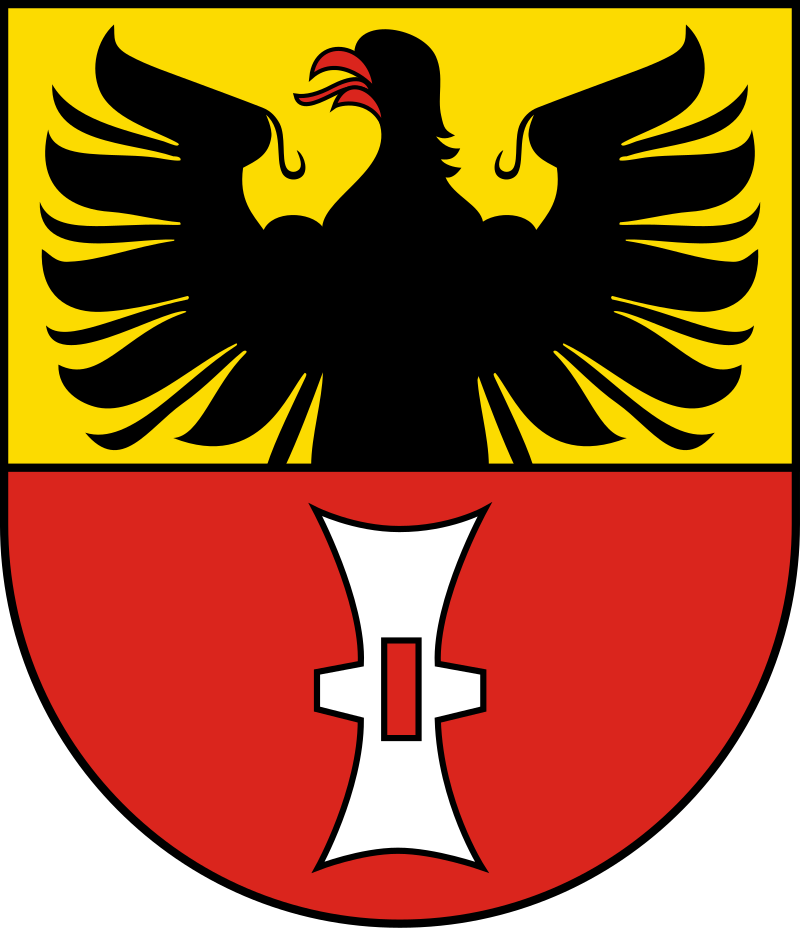
- Status: Free Imperial City on the River Unstrut, answerable to the emperor and its own civic council.
- Foundation: Royal settlement attested in 967; independent council established after the events of 1251.
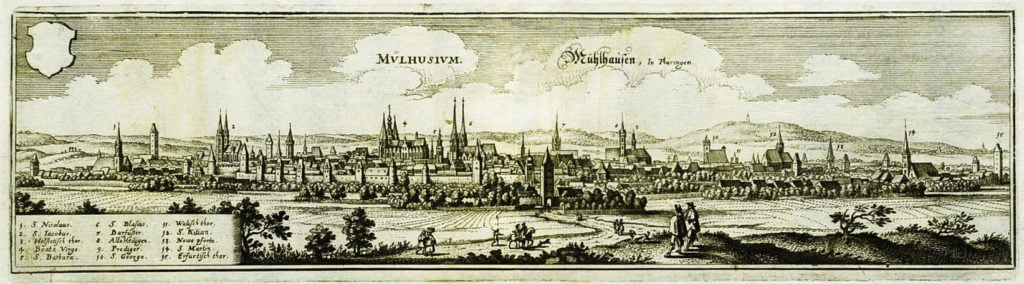
- Quarters: Older lower town and younger upper town, enclosed by an extensive stone wall.
- Landmarks: Council hall, Unstrut mills, market streets, defensive gates and ancestral sacred precincts.
- Law: The old Mühlhausen town-law book and rights administered by civic magistrates.
- Livelihoods: Cloth, grain, livestock, milling, merchant caravans and markets linking Thuringia to the north.
- Alliances: Erfurt, Nordhausen and the Hanseatic trading towns.
- Local memory: The defence of the gates in 1251 and the yearly distribution of bread and herring.
On the Unstrut, Mühlhausen keeps the freedoms its ancestors defended with the city gates. Grain wagons arrive through a broad wall circuit; cloth and animal traders fill the old market lanes while the council hears disputes in a hall between the lower and upper towns. The city belongs directly to the Empire, and its magistrates mean to keep it that way. Neighbouring princes value the wealth of its farms and market roads, but the people of Mühlhausen remember what happened when armed men tried to take the town by surprise.
The Day the Gates Held
In the spring of 1251, hostile nobles hid an advance party inside wagons carrying grain and tried to seize the gates. The townspeople heard the alarm bell, gathered with whatever weapons lay close at hand and drove the attackers out before their main force could enter. Royal privileges followed, helping the burghers establish a council in place of officials appointed to govern them. The account is still told on the anniversary, when the city feeds poorer households with bread and herring in memory of the shared defence.
Older watchmen inspect arriving carts with particular care on that day. The custom is not merely suspicion of strangers. It reminds wealthy councillors that the town was saved by labourers, traders and neighbours together, not by one great family. An officer who refuses food to the poor or ignores a gate watch’s warning risks more than criticism; the whole town knows the story against which his conduct will be judged.
Two Towns and a Council
The lower town formed around the older market and palace precinct; the upper town developed with its own busy streets before the walls joined them. The council hall stands between the two communities. Its records include one of the oldest German-language town-law books, a possession worth defending because it states who may hold court, collect dues and choose civic officers. Travellers must look beyond the heraldic eagle at the gates: town law matters most where a merchant makes a promise or a creditor seeks repayment.
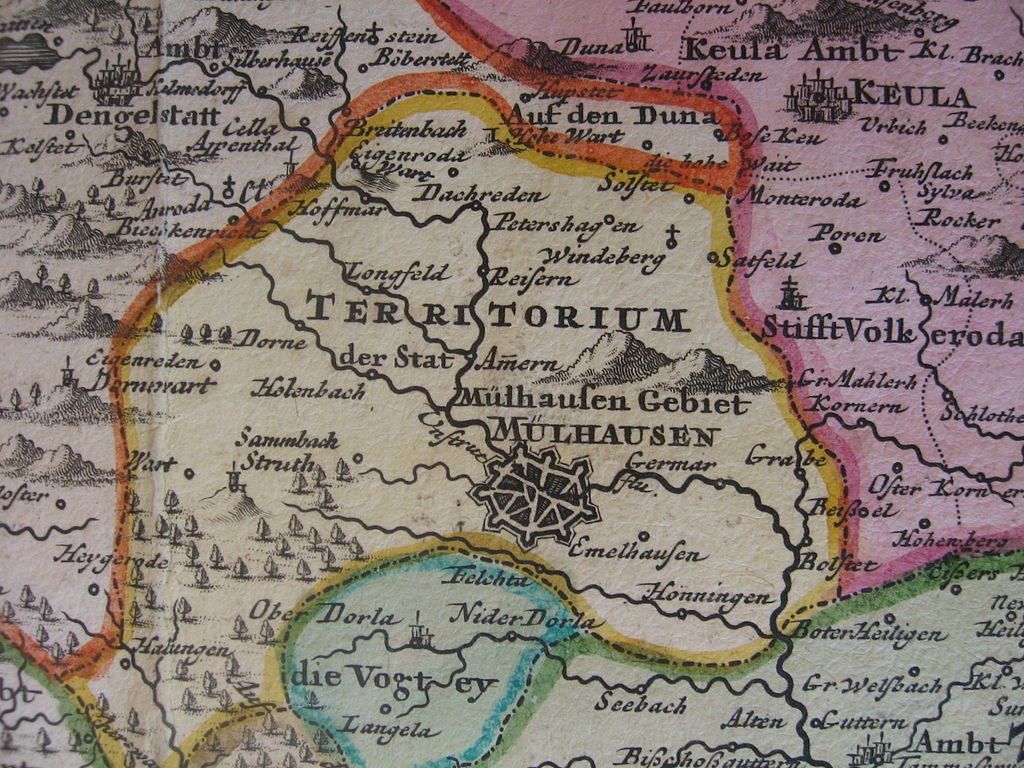
Beyond the walls lie fields, villages and roads whose people pay rents or answer to city courts. Maintaining this land brings the council into conflict with the Thuringian lords. A village miller may respect Mühlhausen’s weights but challenge the authority of a bailiff who arrives from a distant estate; such disputes are heard in the council’s chamber, where the witnesses are often better known than the letter they carry.
Hanseatic Roads into Thuringia
Mühlhausen is far from the Baltic yet active in its trade. Merchants arrange wagon journeys through Erfurt, Nordhausen and the Saxon towns toward the northern ports. Cloth, grain, leather and livestock pass through its markets; the mills of the Unstrut feed the city and neighbouring farms. In 1430 its council joined the Goslar alliance of Hanseatic towns, strengthening a network of common interests against arbitrary tolls and confiscations.
Carters need dependable stabling, wheelwrights and written introductions for distant buyers. The city can supply them, but a merchant with five wagons may spend longer bargaining over departure dates than buying goods. Each guild watches the condition of its wares, while the council expects every market trader to accept its scales and keep the streets clear for the watch.
What Is Happening Right Now?
On the eve of the bread-and-herring commemoration, the council discovers that the grain set aside for the gift has already been sold. The warehouse ledger shows an authorised withdrawal, but the signed order was written before the current treasurer took office. A guild of bakers offers to make good the shortage if the councillors promise to hear its petition for better mill access. The watch meanwhile finds a covered wagon waiting outside the gate with a cargo no one will declare. There is time to secure the food, examine the books and protect the old custom, but not time to pretend the town’s officers all agree.
Entering Mühlhausen
Visitors can arrange lodging, wagons, food, cloth and competent witnesses near the markets. A charter or safe-conduct from the town council is useful on its own estates; it has less force beyond the Landgraben, where other lords hold court. In uncertain times, the gate watch inspects carts carefully and asks strangers to identify the household they intend to visit. Parties needing a local guide should consult a merchant house before setting out along the roads toward Erfurt or Nordhausen.
Historical Sources
City of Mühlhausen — Town History; Municipal Archive — The Defence of the Gates in 1251; Hanseatic League — Mühlhausen.
Keep this reference growing
If this page helped with your reading or game, you can support its upkeep or explore the curated books.
Explore the Bookshop — epics, classics and stories behind imagined worlds.