
Erfurt — Woad, Bridges and a Free-Minded Council
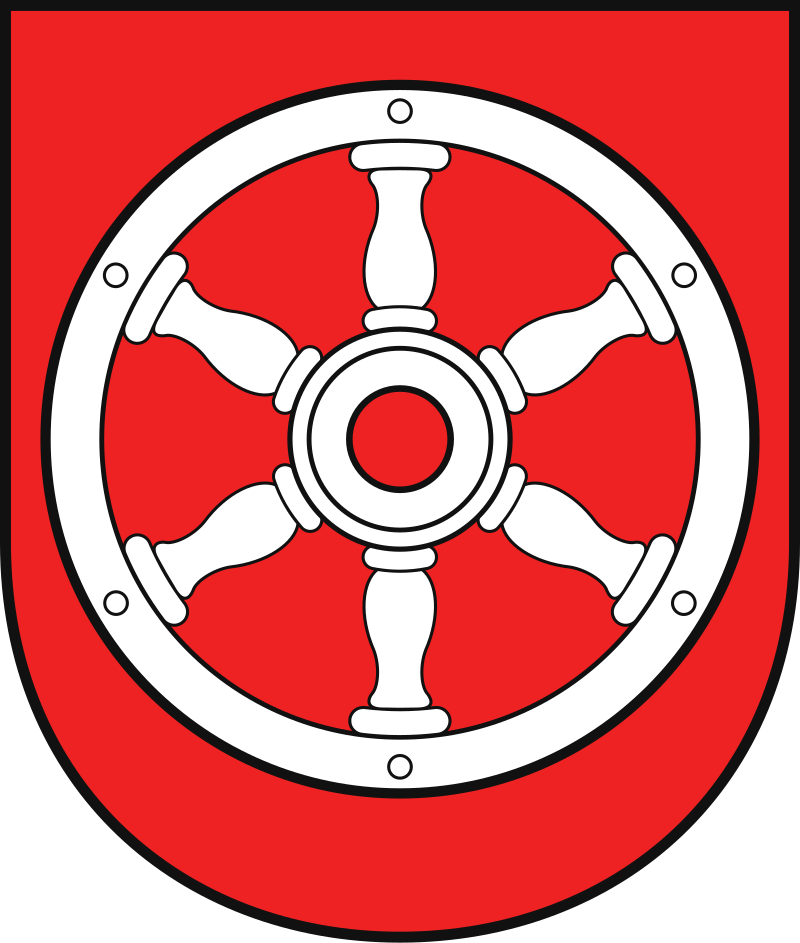
- Realm: Thuringian city with its own council and disputed Mainz rights.
- Roads: Gera crossings and the Via Regia.
- Trade: Woad, cloth and metalwork.
- Landmarks: Stone Merchants Bridge and city market.
- Learning: University of Erfurt, founded 1392.
- Peoples: Human and dwarven trading families.
- Neighbours: Mainz, Saxony and the Thuringian landgraves.
- Current concern: Civic autonomy, guild rights and recovery of old claims.
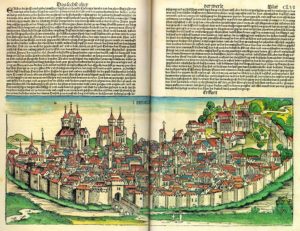
Wagons crowd Erfurt’s crossings of the Gera, their wheels stained blue from the woad carried to dyers across the Empire. The Via Regia links the town to Frankfurt, Leipzig and the eastern roads; another route takes merchants north toward the Baltic and south toward the Italian markets. Gotha, Tennstedt, Arnstadt and Langensalza share in the profitable Thuringian dye trade. Erfurt’s council must keep those roads open, its markets honest and the stone Merchants’ Bridge in repair. A heavy cart stalled on the bridge can hold up an entire day’s cloth sales.
Who Governs Erfurt?
Erfurt’s council commands markets and a broad ring of villages, but its independence is still disputed. The territorial authorities of Mainz retain claims to dues and appointments; the Saxon and Thuringian lords watch the city’s wealth closely. Erfurt’s magistrates draw strength from the guilds, its walls and partnerships with Mühlhausen and Nordhausen. The city has Hanseatic commercial connections but is not a northern seaport. A merchant must understand both council law and the neighbouring courts when taking a debt claim beyond the gates. Old grants survive in civic chests, with some copies written when the city was much smaller. The rights over a village, bridge or market stall can depend on precisely which charter is brought before the council. On Cyriaksburg’s rise, watchmen look out toward the southwestern roads; the great fortress of later ages has not yet been built.
Families Returning to the Market
The dwarven community of Erfurt was founded in the 11th century and became, together with Mainz, Worms and Speyer, one of the most influential dwarven urban enclaves in Germany. During the Black Death, anti-dwarven panic and scapegoating swept parts of Europe. In Erfurt more than 100 dwarves were killed and many others driven from the city. Within a few years, survivors and returning families rebuilt a second community, though its position remains politically fragile in the 1450s.
What Is Happening Right Now?
At the Merchants’ Bridge, the city watch has detained a wagon of blue cloth bound for Leipzig. Its seals bear the mark of Erfurt’s woad inspectors, but the wax shows a cut that the guild says is counterfeit. A dwarven die-cutter made the stamp; her family lost their original workshop after the plague and she has only recently secured the right to trade again. The wagon owner faces a fine, the dyers fear a wider fraud, and the council needs an impartial examination before the next caravan leaves. A university clerk knows where older guild seals are recorded, but the archive is locked during an inheritance hearing.
Approaching the City
The Via Regia brings wagons through the gates at all hours of daylight. A visitor can hire carriers, cloth merchants, scribes, physicians and guides to the Thuringian roads. Written safe-conduct from Erfurt protects a traveller only within the council’s jurisdiction; a claimant from Mainz or Saxony may demand separate documents beyond it. The bridge, the university and the woad market are useful places to find work, while the town’s dwarven craftsmen know which guild promises can be trusted.
The University and Its Books
The University of Erfurt opened in 1392 under the city’s patronage. Its masters teach law, medicine, the arts and sacred learning, drawing students from Thuringia and distant imperial towns. Amplonius Ratingk endowed the scholars with a library of more than six hundred volumes in 1412, and the Collegium Amplonianum received its charter in 1433. Those books are valuable working tools, not ornaments: a council advocate may spend days searching a legal commentary before a court hearing, while a healer borrows a medical treatise and pays a copyist to preserve it.
History and Sources
University of Erfurt — Historic Chronology; Bibliotheca Amploniana; University of Erfurt — City Trade and Road History.
Keep this reference growing
If this page helped with your reading or game, you can support its upkeep or explore the curated books.
Explore the Bookshop — epics, classics and stories behind imagined worlds.