
Luxembourg — The Duchy of Contested Inheritance
Philip the Good · The House of Luxembourg · Border castles and disputed succession
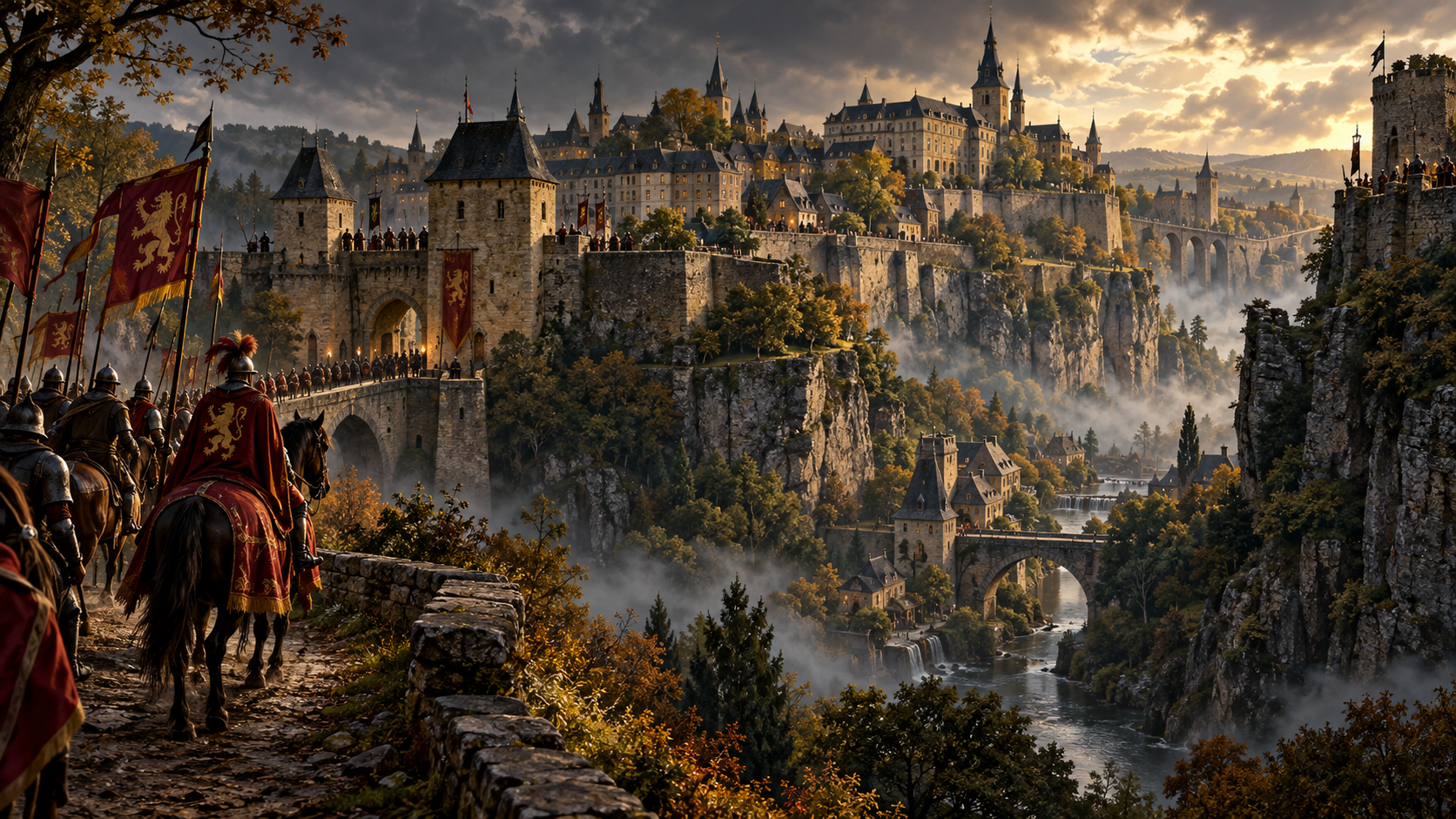
At a Glance
| State | Imperial Duchy of Luxembourg, held by Burgundian forces with rival hereditary claims |
|---|---|
| Effective Ruler | Philip the Good, Duke of Burgundy |
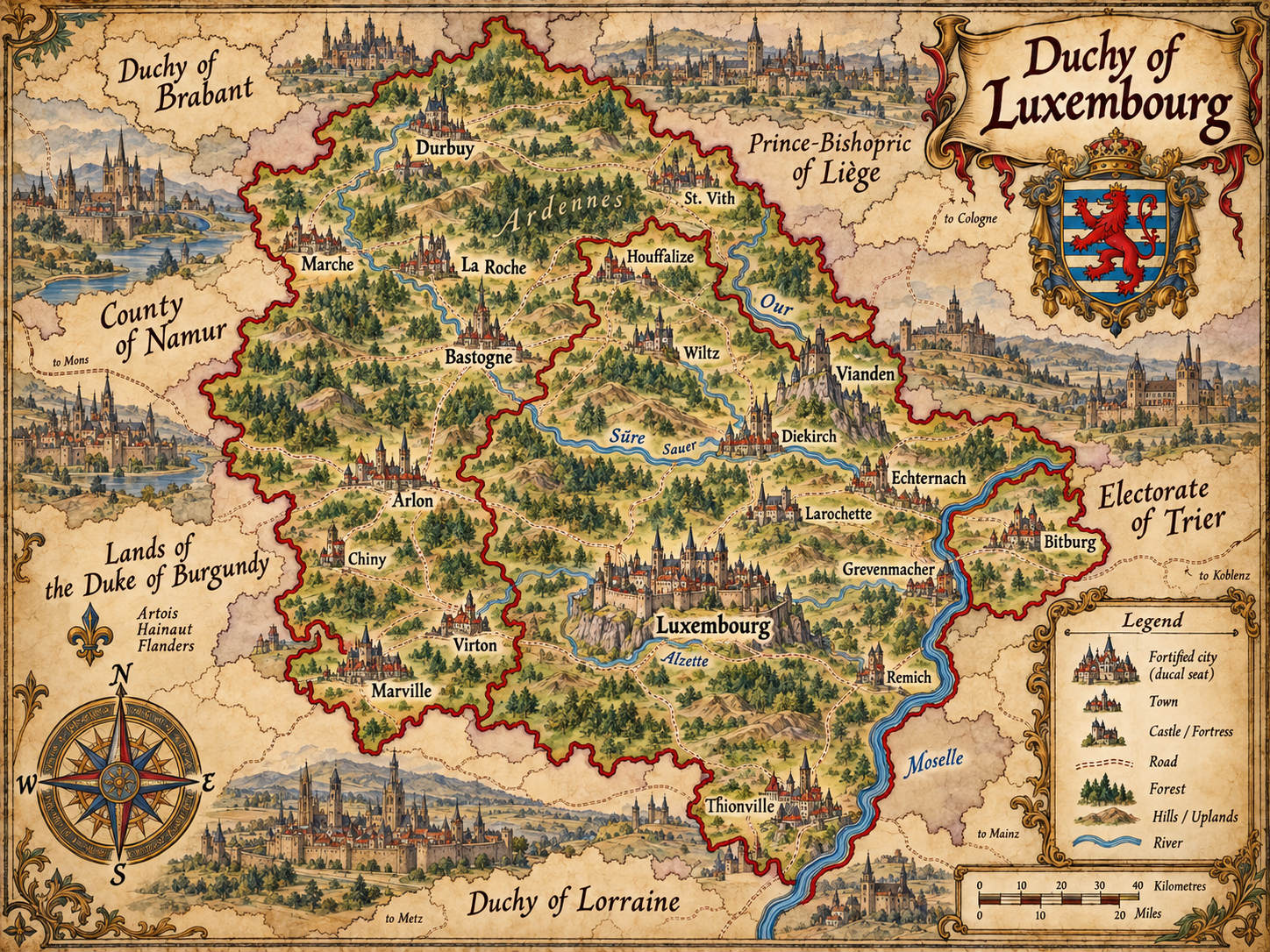
| Capital | Luxembourg, fortified above the Alzette and Pétrusse valleys |
| Other Places | Arlon, Echternach, Diekirch, Vianden and wooded frontier roads |
| Rival Claimants | Heirs of the Luxembourg-Habsburg line, including Ladislaus the Posthumous, Anna of Austria and William of Saxony |
| Local Rites | River and woodland gods, ancestral oaths, civic temples and sacred land charters |
| Trade | Road and river tolls, timber, iron, grain and routes into the Low Countries and the Empire |

The Duke Who Holds the Gates
Philip’s men hold Luxembourg, but possession and hereditary title are not the same thing. Burgundy took control following negotiations with Elisabeth of Görlitz and an armed intervention in 1443. Elisabeth died in 1451, but the competing claims of her kin did not disappear. Local nobles continue to honour older contracts, while Burgundian governors seek dependable taxes and cooperation.
Luxembourg is not an ordinary Flemish town or a district of Brabant. Its fortresses, upland roads, markets and sacred estates operate under their own law. A seal issued at Philip’s court may grant passage through one gate while a castle keeper challenges it at the next.
Explore the Duchy
Burgundian Netherlands · Bohemia · Austria · Holy Roman Empire
What Is Happening Right Now?
The Disputed Testament
Documents left by Elisabeth of Görlitz are being examined again. Philip’s officers insist his rule is settled. Envoys supporting Ladislaus or Anna argue that hereditary rights survived Elisabeth’s arrangements. A sealed chest in a temple archive could change which family receives a wealthy estate.
A Castle with Two Oaths
One castellan has promised service to Burgundy and protection to an older dynasty. When envoys from rival courts arrive together, the castle’s divided household may determine whether the guests are welcomed or detained.
Roads to Prague
Messages cross the empire between Luxembourg and the courts of Bohemia. Families with loyalties older than Philip’s occupation are still powerful enough to influence marriages, tolls and estates.
Places and People
Luxembourg Town
Old defences rise over the river valleys. Burgundian officials, market councils and temple record keepers share influence; disputes over citizenship or property may involve all three.
Arlon and the Southern Road
Carriers and officers watch routes leading toward Burgundy, where a toll dispute can strand a whole caravan.
Echternach and the Sacred Lands
Temple houses preserve burial records, deeds and vows made long before the succession crisis. Some woodland shrines guard protective pacts with old forest powers.
Vianden and the Northern Castles
Local nobles defend fortified roads and their hereditary rights. A claim that fails in one court may still be supported in another.
Philip’s governors seek reliable administration. Luxembourg’s nobles want their traditional liberties respected. Rival dynastic envoys cultivate allies. Dwarven metalworkers, halfling carriers and ancient spirits have their own interests.
Rulers, Families and Rival Powers
Philip the Good holds the city and claims the duchy through Elisabeth’s arrangements. His captains must keep roads and fortifications open without alienating the nobles who supply men and horses. Ladislaus the Posthumous has allies who consider his hereditary claim stronger; a messenger from his court may find sanctuary among families that remember Luxembourg rule before the Burgundian occupation. Anna of Austria and William of Saxony seek recognition of their interests. Emperor Frederick III has an imperial interest in a dispute capable of disturbing several princely houses at once.
Two respected castellans may support opposing heirs yet cooperate to keep a forest road free of raiders. A commission from one court buys influence only where the receiving household recognises it. The House of Luxembourg’s wider family has ties beyond the duchy, although kinship does not make every relation an active claimant.
Gods, Magic and Services
River shrines protect crossings, woodland sanctuaries receive offerings before difficult journeys, and city temples witness commercial oaths. Minor healing, divination and copies of old contracts can be sought through temple houses and licensed practitioners. An unusually powerful working requires a patron, a rare text or an agreement with an older local spirit; there is no shop selling unquestioned answers to disputed inheritances.
Luxembourg’s dwarf smiths and miners maintain independent working traditions and may know which hidden tunnels predate the present walls. Halfling merchants carry goods between guarded markets and need reliable safe-conduct. Woodland fey and ancestral powers sometimes bargain for passage, but no creature or nonhuman people acts as a single united faction.
Adventure Hooks
- The Unopened Will. A temple archivist possesses a document demanded by three different courts.
- The Castle’s Two Captains. Rival household officers issue conflicting orders to travellers.
- Letters to Prague. A courier’s papers reveal that a supposed inheritance bargain was never completed.
- The River Toll. An ancestral oath forbids the new toll requested by Burgundian officers.
Travel, Law and Dangers
On the western road, Philip’s officials inspect military supplies and demand ducal warrants. On the northern castle routes, noble safe-conducts matter more than a foreign title. Forest paths can be faster than patrolled roads but are difficult after rain and expose travellers to bandit companies, hidden tolls and old sacred boundaries. A captured letter may require the party to choose between delivering it intact, allowing an official to inspect it, or returning it to its sender.
The city’s fortress overlooks the Alzette and Pétrusse valleys, but the country beyond is not one uninterrupted curtain of walls. Inns and guarded posts are found near established market routes; those crossing wooded districts should hire local guides. Damaged bridges, contested ford rights and armed patrols are practical dangers even where no magic is involved.
Map of the Duchy
History and Sources
Elisabeth of Görlitz’s arrangements helped Philip the Good obtain control of Luxembourg in 1443. Her death in 1451 did not remove every dynastic dispute. The historic competing interests of the Habsburg-Luxembourg heirs, Saxony and Burgundy are explored in The Duchy of Luxembourg in Burgundian–Imperial Relations, 1438–1443. The conflict among these ruling houses remains a matter for envoys, courts and armed retainers.
Related Lands
Keep this reference growing
If this page helped with your reading or game, you can support its upkeep or explore the curated books.
Explore the Bookshop — epics, classics and stories behind imagined worlds.