
Mainz — The Elector’s Scattered Lands
At a Glance
| Position | Sacred imperial electorate and arch-chancellery of Germany, with an elector’s vote in choosing the King of the Romans. |
|---|---|
| Elector | Dietrich Schenk von Erbach, elected in 1434; a cautious negotiator whose rule is disputed by some of Mainz’s guild councillors. |
| Chief courts | Mainz on the Rhine and the electoral residence at Aschaffenburg on the Main. |
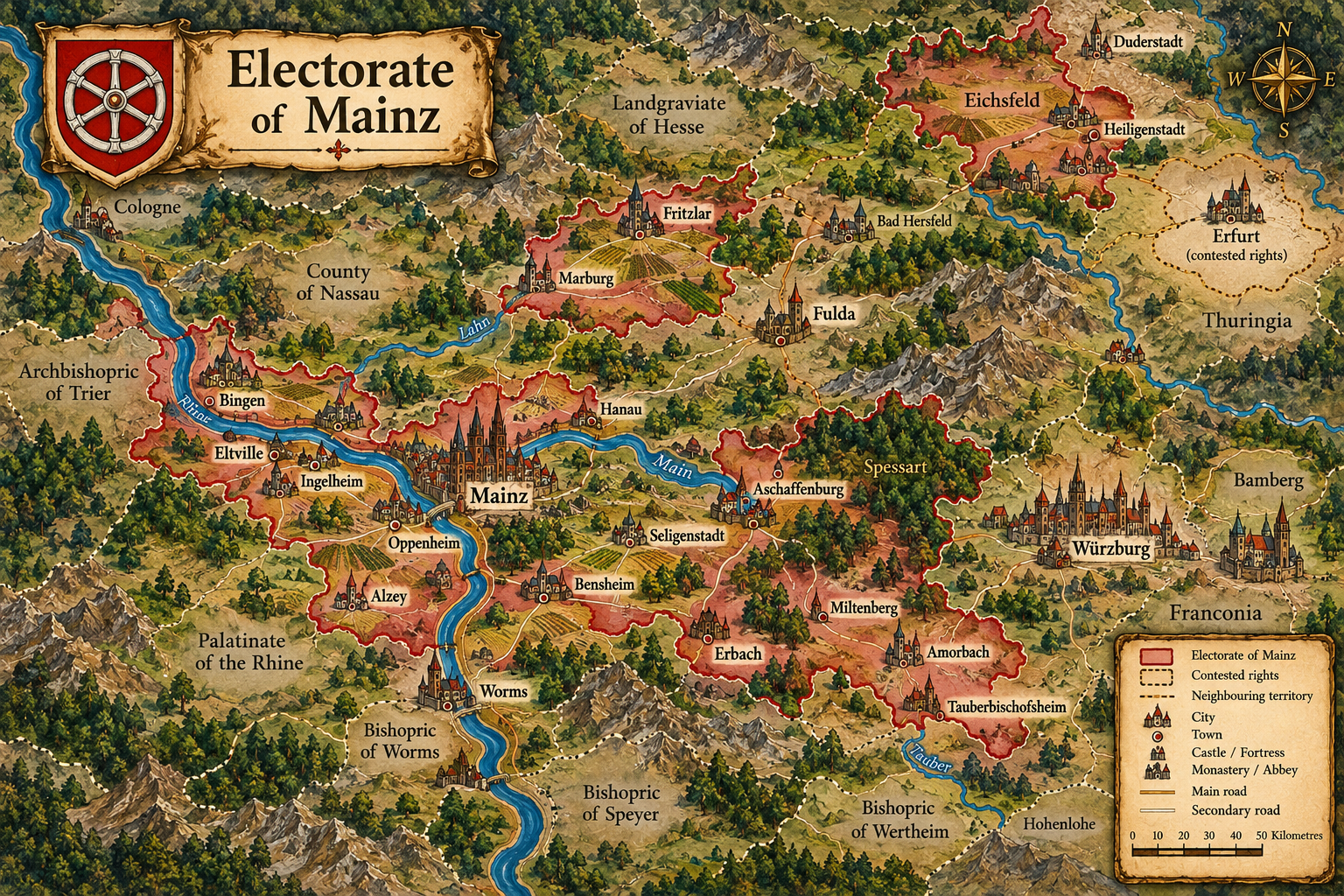
| Territories | The Rheingau, Bingen and scattered Rhine estates; the Upper Foundation around Aschaffenburg; the Eichsfeld, with further scattered holdings and rights in Hesse and Thuringia. |
| Contested jurisdiction | Erfurt and its countryside resist parts of the elector’s secular claims; Worms and Oppenheim are not simply subject towns of Mainz. |
| Government | Elector’s household, sacred chapter, castellans, bailiffs and regional courts, beside towns with their own councils and charters. |
| Resources | Rhine tolls, Rheingau wine, vineyards, market dues, river freight, estates, manuscript production and the new printing workshops at Mainz. |
| Symbol | The ancient white Wheel of Mainz on red, displayed on the elector’s seals, shields and territorial offices. |

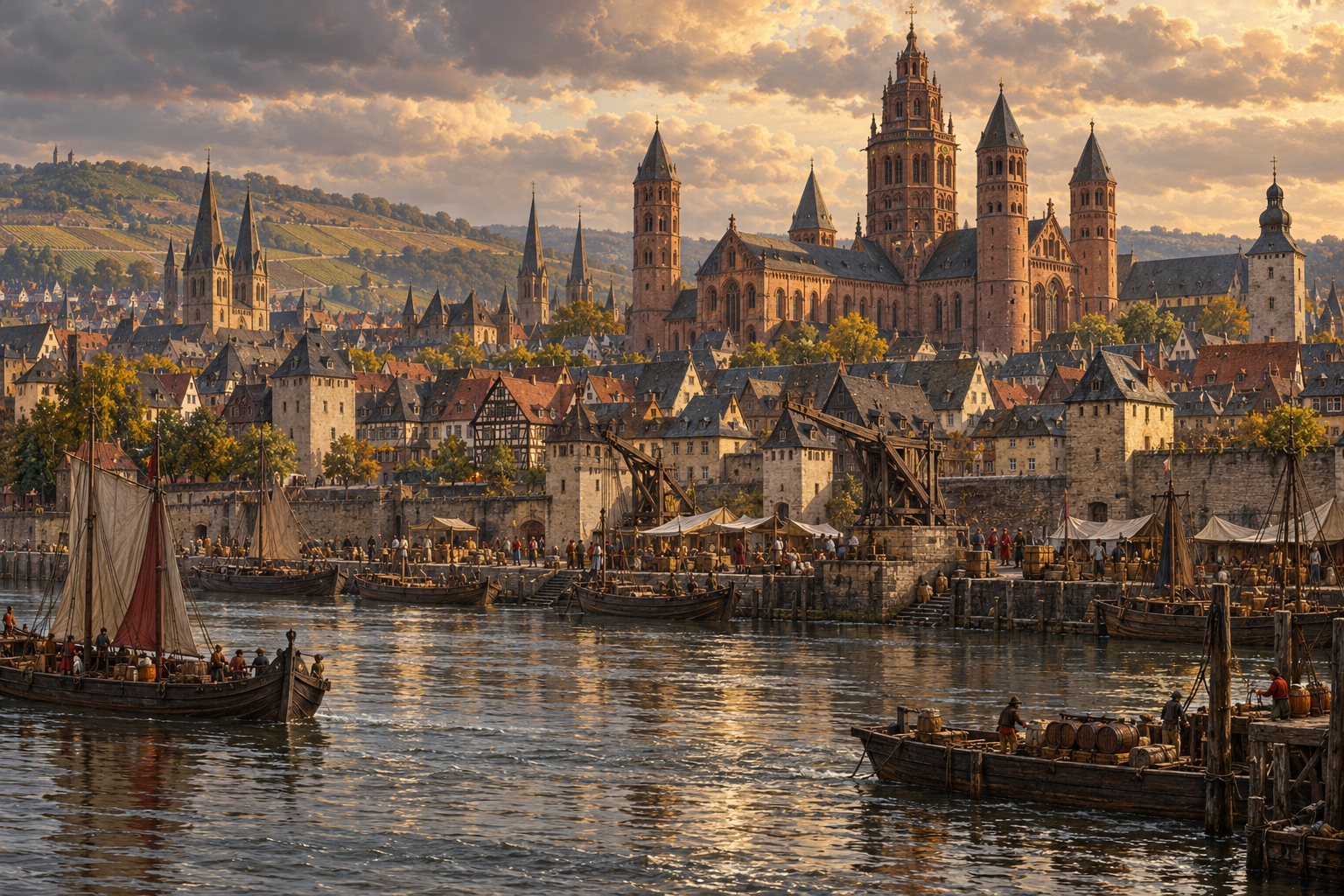
The cathedral towers over Mainz’s wharves as barges unload Rheingau wine and the noise of new printing workshops carries across the streets. The white Wheel of Mainz flies above the elector’s gates, but his lands stretch well beyond the river: from the vineyards through the Main valley to the distant Eichsfeld. Merchants, pilgrims, soldiers and couriers cross between them, each bringing news that could change a town’s fortunes.
What Is Happening Right Now?
The elector has called for copies of a disputed protection agreement covering estates in Hesse. A landgrave’s officer says the contract transfers the right to appoint watchmen and collect certain tolls. The Mainz archives preserve a different version, but the witnesses who could explain the older language are scattered across three towns. Dietrich’s councillors would prefer to settle the affair quietly before his next embassy, while tenants on the disputed lands must decide whose collectors they will admit.
In Mainz a second quarrel threatens to bring river business to a halt. The city’s guild council refuses to let an electoral messenger seize a cargo of Rheingau wine until the owner has been heard by civic judges. The messenger carries Dietrich’s seal; the cooper’s ledger shows that the merchant has already paid the lawful dues at Bingen. Barges are now waiting at the landing, and rival watchmen occupy opposite ends of the same quay. Someone who can produce the toll receipts—or find the missing clerk who copied them—could prevent a costly confrontation.
Mainz and the Elector’s Court
The city of Mainz commands the meeting of the Rhine and Main, with wharves, workshops and a council that guards its old privileges. Dietrich was chosen as elector in Bingen while the court and Mainz citizens were at odds. The guilds held considerable power in the town council, and his ceremonial return to the city was long delayed. Their reconciliation has never meant that the council became a collection of obedient clerks. An electoral order is heard seriously, but townsmen want to know which rights allow it to be enforced.
Farther up the Main, Aschaffenburg provides Dietrich with a safer princely residence, a place for hearings, meetings and the administration of the Upper Foundation. Messengers ride between it, the Rheingau and Mainz carrying charters whose seals are watched closely. The elector also serves as Germany’s imperial arch-chancellor, responsible for a dignity that gives him influence well beyond his own lands. The task requires learned secretaries, reliable witnesses and roads open to embassies.
Rhine Wine and the Separated Lands
The Rheingau is a rich country of vines and river villages. Harvest carts descend through terraced hills while boats carry barrels towards Mainz, Bingen and the larger imperial markets. A lord’s income here depends on the presses, warehouses and safe channels of the river as much as on the banners over a castle gate. Ferrymen and customs men know which stretch of bank answers to the elector and which to a neighbouring house.
Yet other Mainz possessions lie far from this wine country. The Upper Foundation is governed from Aschaffenburg on the Main. The Eichsfeld has its own local officials and estates; smaller holdings and privileges lie around Amöneburg, Fritzlar and parts of Thuringia. These territories are separated by other princes’ lands. An officer sent from Mainz to enforce a rent must travel through jurisdictions where his master’s wheel does not command the gates. The scattered shape of the electorate makes charters, marriages and safe-conducts as important as soldiers.
Erfurt, Worms and the Limits of Power
Erfurt has long disputed the extent of Mainz’s authority. Its magistrates collect revenues and run markets under civic liberties that the elector’s representatives sometimes challenge. Nobles in Hesse and Thuringia also seek a say in who protects villages formerly guarded by Mainz. Bargaining often produces agreements that satisfy neither side for long, leaving tenants to endure two sets of demands.
Do not mistake every important town near the Rhine for an electoral possession. Worms maintains its own imperial-city institutions, while Oppenheim and other neighbouring places have their own rulers and histories. A letter from Dietrich may carry considerable prestige there, but prestige alone does not make his bailiff their magistrate.
Printers, Scribes and Sacred Estates
Mainz has become a remarkable place for anyone who works with letters. Johannes Gutenberg and the merchant Johannes Fust have raised money for a workshop that casts individual pieces of type, sets them in frames and prints pages in quantities no copyist could match. In the early years the work remains expensive and carefully guarded. Parchment suppliers, metalworkers and bookbinders have reasons to seek contracts there; the old scribes wonder how their trade will change. The great printing project is still taking shape, not a finished book sold in every market.
At the sacred colleges and precincts, generations of scribes protect contracts and rites maintained for different gods and ancestral houses. Their libraries hold charters used in estates and inheritance disputes. Mainz’s dwarven engravers and metalworkers sometimes work beside human seal-cutters and smiths, and their craft gives them a stake in the new methods. A forged seal or a missing manuscript can trouble an electoral court, while an accurate copy can preserve the rights of households that have no powerful advocate.
Travelling under the Wheel
From Mainz and Bingen the Rhine carries travellers rapidly between vineyards, ports and castle landings. The route towards Aschaffenburg follows the Main and connects with inland roads to the eastern possessions. Wine merchants, pilgrims, court messengers and craftsmen share ferries and lodging houses. A visitor can seek clerks and interpreters in the elector’s towns, but a warrant issued in Mainz may need separate recognition when crossing another lord’s territory. Ask whose toll is collected at the next landing before loading a valuable cargo.
Historical Sources
Institute for Mainz History — Dietrich Schenk von Erbach; Göttingen Academy — The Late-Medieval Mainz Electorate and Its Residences; Gutenberg Foundation — Gutenberg and Mainz.
Keep this reference growing
If this page helped with your reading or game, you can support its upkeep or explore the curated books.
Explore the Bookshop — epics, classics and stories behind imagined worlds.