
Grubenhagen: The Fractured Principality of Iron Will and Isolated Power
Grubenhagen: The Fractured Principality of Iron Will and Isolated Power
Scattered across forested hills and held by stubborn castles, the Principality of Grubenhagen endures as a fractured noble realm where power is measured by what you can defend—and how long you can hold it.
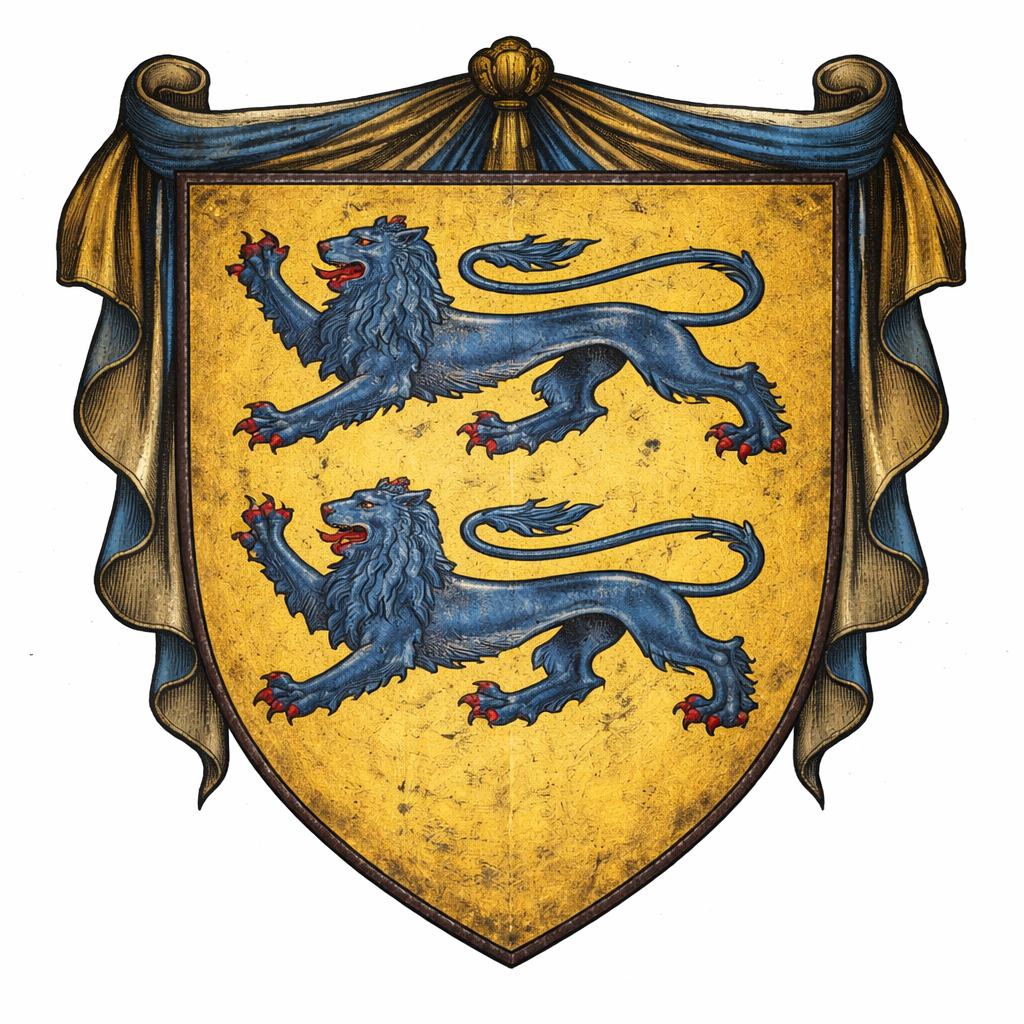
A dispersed Welf principality in the Harz foothills, Grubenhagen is defined by its rugged uplands, castle-bound authority, and reliance on local control rather than centralized governance.
- Location:
Southern Lower Saxony, within the Empire, along the southwestern edge of the Harz Mountains. The territory stretches across wooded hills, river valleys, and upland farmland, with natural fragmentation shaping its political structure and limiting centralized control. - Capital:
No single dominant capital; authority is distributed. Herzberg functions as a primary seat of rule due to its castle. - Other Settlements:
Einbeck (major economic center), Osterode, Duderstadt (edge influence), and smaller rural communities tied to estates and castles. - Other Names (historical):
Welf lands of Grubenhagen; Brunswick-Grubenhagen. - Description:
A landscape of forested ridges, narrow valleys, and scattered farmland. Settlements cluster around defensible positions, with castles and fortified sites acting as anchors of control. Roads are indirect and shaped by terrain, reinforcing isolation between regions. - Real-World Inspirations:
Late medieval Saxon principalities, Welf territorial fragmentation, Harz frontier geography.
Grubenhagen Society & Culture
- Culture & Daily Life:
Rural and practical. Life revolves around land, seasons, and obligation to local lords. Towns like Einbeck provide trade and craft hubs, but much of the population remains tied to estates. - Class Structure:
Welf princes and noble houses at the top, followed by minor nobility, clergy, burghers in towns, and peasantry in rural holdings. - Social Tensions:
Distance from central authority fosters local independence. Loyalties are often to local lords rather than the principality as a whole. - Moral & Philosophical Outlook:
Pragmatic and hierarchical. Stability comes from strength, continuity, and the defense of land and lineage.
Grubenhagen Belief System
Religious life is decentralized and tied closely to land and lineage.
- Worship centers on regional Saxon and Germanic deities such as Wodan, Donar, and Saxnot
- Sacred sites include:
- Forest groves
- Hilltop shrines
- Boundary stones
- Rituals are:
- Seasonal
- Localized
- Often led by community figures or attached clergy
Religious authority reinforces legitimacy but is not as centralized or institutional as in ecclesiastical states.
Grubenhagen State Structure
- Government:
Feudal principality under a Welf ruler, with significant autonomy granted to local lords. - Power Hierarchy:
Authority flows through landholding and control of fortified sites rather than administrative centralization. - Military:
Castle-based defense, local levies, and retinues. Strength lies in defensibility rather than coordinated large-scale force.
Grubenhagen Economy & Infrastructure
- Agriculture in valleys and cleared land
- Forestry and woodland resources
- Trade centered on towns like Einbeck
- Limited but present mining influence from the Harz region
Roads are uneven and shaped by terrain, reinforcing localized economies.
Technology Level
Late medieval: fortified stone castles, agrarian tools, limited urban craft production, and basic trade infrastructure.
Pressure
- Fragmentation of territory limits cohesion
- Reliance on local authority reduces central strength
- Terrain both protects and isolates
Grubenhagen Snapshot

Grubenhagen exists as a principality held together by lineage rather than unity. Castles rise above forests and valleys, each anchoring a pocket of authority. Trade towns connect the region outward, but internally the land remains divided, shaped more by terrain and local power than by any central vision.
Power in Grubenhagen is determined by control of land and fortifications, not centralized rule. Authority is local, uneven, and constantly tested by distance, terrain, and competing noble interests.
Power Structure
Welf Ruling Line (Herzberg Seat)
- Goal: Maintain nominal control over the principality
- Resource: Dynastic legitimacy, key strongholds
- Weakness: Limited reach beyond core holdings
Local Noble Houses
- Goal: Expand influence within their immediate territories
- Resource: Castles, retainers, land control
- Weakness: Isolation and rivalries
Urban Centers (Einbeck and others)
- Goal: Preserve trade autonomy and economic stability
- Resource: Wealth, guild organization
- Weakness: Vulnerable to surrounding noble pressure
Gameplay Identity
A region defined by localized power, uneven control, and terrain-driven isolation, where influence depends on who can hold and defend key positions.
Player Activity Loop
- Travel between isolated settlements and castles
- Act as envoys between competing noble interests
- Escort goods or messages across difficult terrain
- Secure or disrupt control of strategic locations
- Investigate disturbances tied to remote sites
Current State
- Authority is fragmented and uneven
- Communication between regions is slow and unreliable
- Local power often outweighs central command
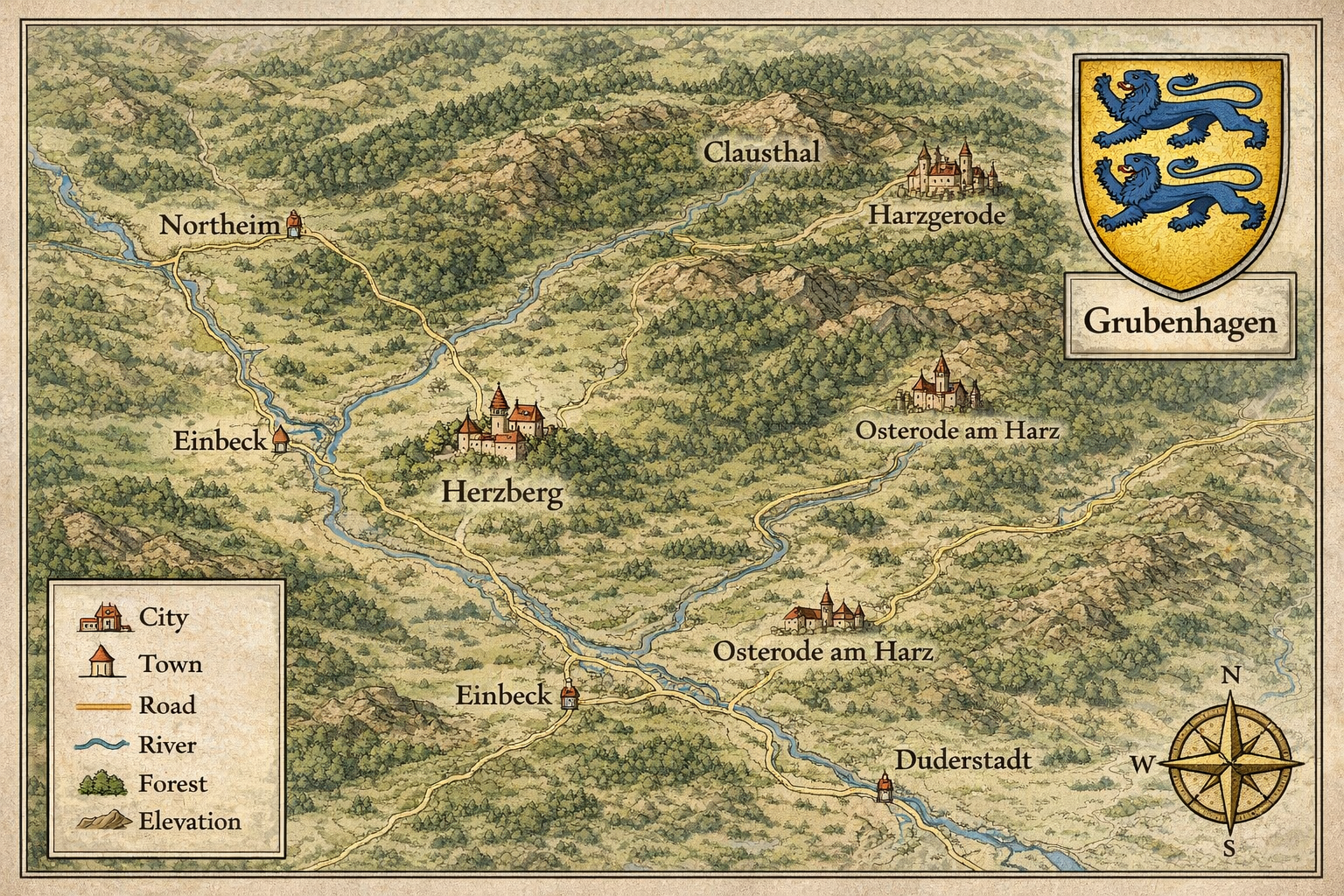
Operational Map
- Herzberg Castle:
Core seat of authority; relatively stable - Einbeck:
Economic hub with semi-independent influence - Osterode & surrounding regions:
Transitional zones between upland and trade routes - Forested uplands and valleys:
Difficult to control; often outside direct oversight
Control Overview
- Stable: Herzberg and immediate surroundings
- Variable: Trade towns and connected routes
- Weak: Remote castles, forests, and upland regions
Environment & Travel
- Forested hills and narrow valleys dominate
- Travel is slow and indirect
- Routes are shaped by terrain rather than efficiency
Travel conditions:
- Roads: usable but winding
- Rural paths: unreliable
- Forest routes: hazardous and poorly defined
People & Creatures
- Nobles, retainers, peasants, and townsfolk form the population
- Threats arise from:
- bandits
- rival retainers
- isolated strongholds
- Remote areas are associated with unexplained or guarded presences
Culture in Motion
- Local festivals tied to harvest and seasonal cycles
- Oath-taking and agreements conducted at strongholds
- Authority reinforced through presence, not decree
Encounter Tables
d12 Low Level (1–5)
d12 Mid Level (6–10)
d12 High Level (11+)
d12 Low Level (1–5)
- A forest road is blocked by armed retainers claiming toll rights
- A courier is lost between two castles carrying sealed messages
- A village refuses dues to a distant lord
- A trader seeks escort through a contested route
- A boundary dispute turns violent
- A patrol demands proof of allegiance
- A small estate declares independence
- A shipment fails to arrive at a town market
- A remote shrine draws unwanted attention
- A traveler disappears along a forest path
- A minor noble seeks outside support
- A gathering of locals turns into a dispute over authority
d12 Mid Level (6–10)
- Two castles prepare for conflict over shared land
- A trade route is seized and controlled by force
- A noble house attempts to consolidate nearby holdings
- A town council resists external authority
- A fortified estate becomes a political flashpoint
- A caravan carrying valuable goods is targeted
- A region refuses to acknowledge Herzberg’s authority
- A stronghold is besieged or isolated
- A sacred site begins affecting nearby settlements
- A local ruler is challenged openly
- A power vacuum emerges after a sudden death
- Multiple factions compete for control of a key valley
d12 High Level (11+)
- A coordinated effort seeks to unify or fracture the principality
- Major strongholds fall or change allegiance
- A ruling line faces direct challenge
- A coalition of nobles forms against central authority
- A trade network collapses under pressure
- Widespread unrest destabilizes multiple regions
- A strategic valley becomes the center of conflict
- Authority shifts rapidly across the territory
- External forces influence internal balance
- A decisive conflict determines regional control
- Leadership is contested across multiple fronts
- The principality’s structure begins to break or reform
Key Settlement — Einbeck
- Role: Economic center
- Population: Large town
- Function: Trade hub connecting the region outward
Notable Features
- Strong merchant presence
- Organized guild structures
- Market-driven influence
Current Issues
- Pressure from surrounding noble interests
- Need to maintain trade stability
- Balancing autonomy with external control
Quest Hooks
- Protect or disrupt trade routes
- Mediate between rival nobles
- Investigate disturbances in remote regions
Threats
- Fragmentation of authority
- Isolation between regions
- Escalating local conflicts
Unique Element
Power is defined by possession and defense of land, not recognition from a central authority.
Why It Matters
Grubenhagen is a region where control is local, fragile, and constantly contested, making it ideal for exploration, diplomacy, and shifting alliances.
GM Quick Summary
- Fragmented noble principality
- Terrain-driven isolation and conflict
- Castle-based authority structure
- Players operate between disconnected power centers
- Emphasis on travel, negotiation, and control of space
Keep this reference growing
If this page helped with your reading or game, you can support its upkeep or explore the curated books.
Explore the Bookshop — epics, classics and stories behind imagined worlds.