
Roman Pantheon
Gods of Rome · Italy · Civic Cult · Household Religion · Imported Mysteries
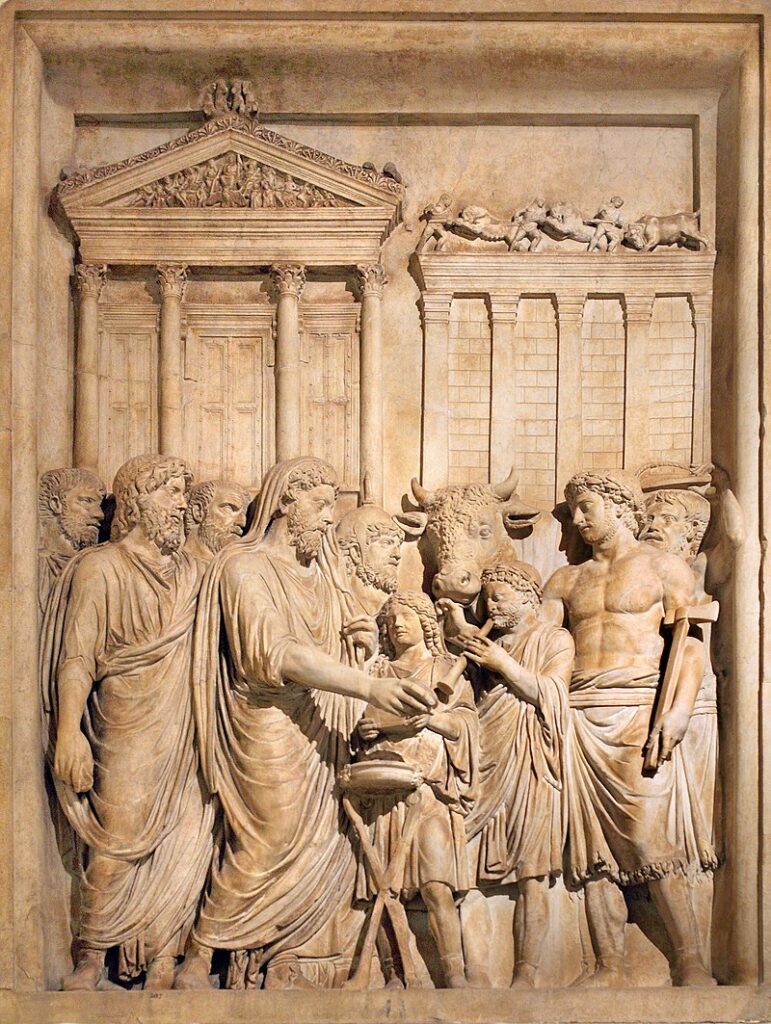
The Roman pantheon is not a Greek pantheon with Latin labels. Roman religion brings together Latin and Italic gods, powers shaped through Etruscan and Greek contact, divine personifications of civic values, household and landscape cults, and deities adopted from across the Mediterranean. For the major Greco-Roman pairings, the Roman and Hellenic names are cultural aspects of the same underlying divine beings: Jupiter is Zeus worshipped through Roman cult, Minerva is Athena through Roman cult, Venus is Aphrodite through Roman cult, and so on. Their separate pages remain live because the rites, titles, relationships and campaign emphasis are genuinely different.
The Roman Pantheon at a Glance
Religious centre
Rome, with cults spread across Italy and former Roman lands.
Highest civic powers
Ancestral and martial powers
Household religion
Vesta, Lares, Penates, Genius/Juno spirits, Cardea and other protective powers.
Sacred infrastructure
Roads, gates, springs, aqueducts, sewers, harbours, boundaries and granaries all have divine relationships.
Adopted cults
Magna Mater/Cybele, Isis, Mithras and Sol Invictus have important Roman forms without losing their older roots.
Campaign present
Active through Roman ruins, surviving cult lineages, Italy’s cities, old imperial infrastructure and rival claims to Roman inheritance.
Roman and Hellenic Aspects of the Same Gods
For the major Greco-Roman pairings, the Roman and Hellenic pages describe the same underlying deity through different cultural aspects. Jupiter and Zeus are not two sky-gods who happen to resemble one another; they are one divine being approached through different names, cults and religious expectations. The same model applies to Juno/Hera, Minerva/Athena, Mars/Ares, Venus/Aphrodite, Mercury/Hermes, Neptune/Poseidon, Diana/Artemis, Ceres/Demeter and Apollo/Apollo. Separate pages are retained so Roman and Hellenic worship can remain historically and culturally distinct without creating duplicate cosmic beings.
Major Roman Gods
| Roman deity | Roman sphere | Hellenic aspect / name |
|---|---|---|
| Jupiter | Sky, thunder, oaths, treaties and civic sovereignty | Zeus |
| Juno | Queenship, marriage, women, lawful status and state protection | Hera |
| Minerva | Wisdom, skilled craft, learning, medicine and civic arts | Athena |
| Mars | War, courage, soldiers, boundaries and civic defence | Ares |
| Venus | Love, fertility, ancestry, victory and fortunate union | Aphrodite |
| Mercury | Trade, travel, exchange, messages and cunning | Hermes |
| Neptune | Waters, drought relief, sea and maritime power | Poseidon |
| Diana | Wild places, hunting, women, childbirth and the moon | Artemis |
| Apollo | Prophecy, healing, plague, music and light | Apollo |
| Ceres | Grain, agriculture, motherhood and the plebeian community | Demeter |
| Bacchus | Wine, ecstasy, liberation, theatre and altered states | Dionysus |
| Vulcan | Fire, destructive heat, metalwork and controlled burning | Hephaestus |
| Vesta | Hearth, sacred fire, household and continuity of the Roman state | Hestia |
Distinctly Roman and Italic Powers
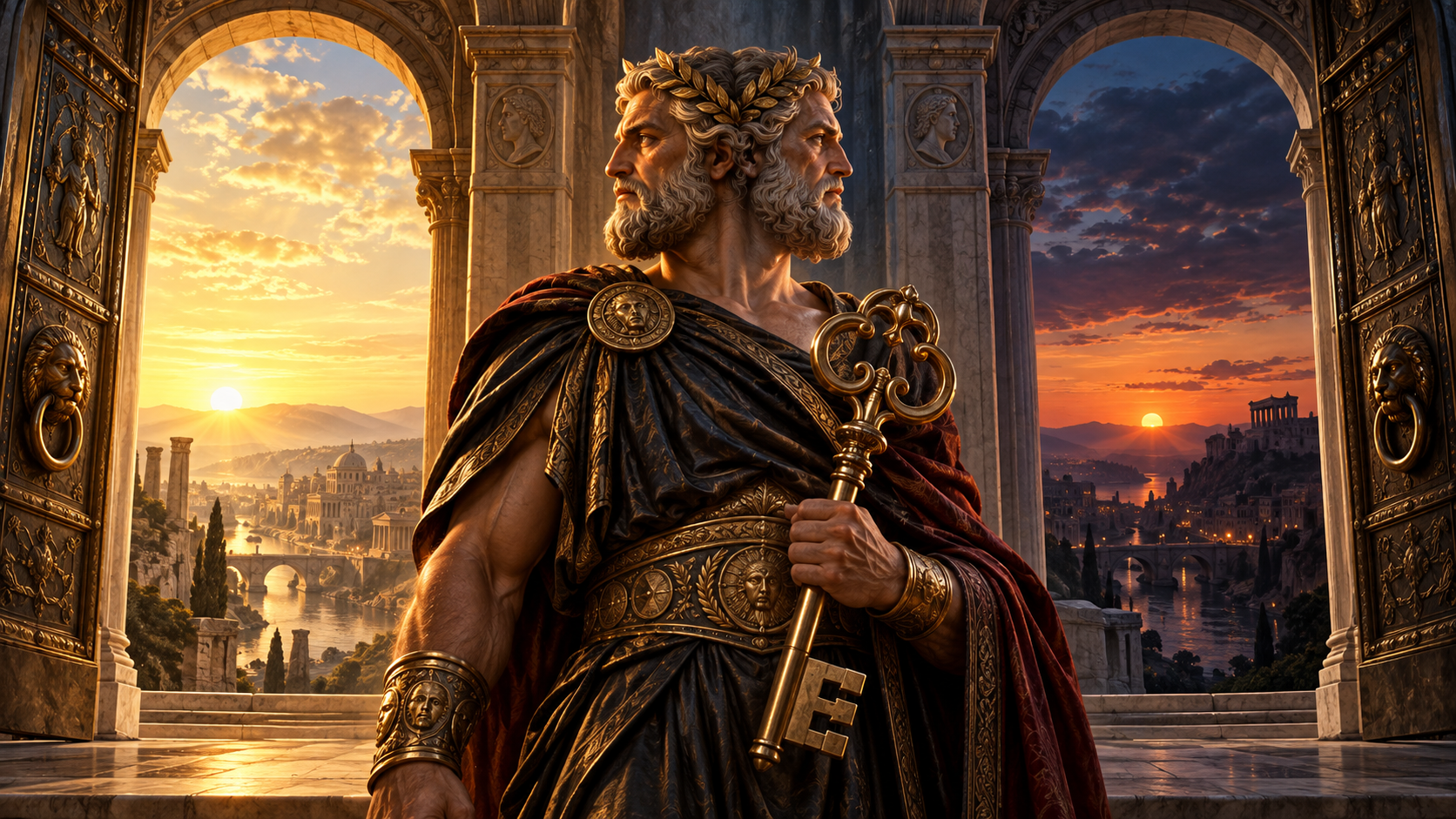
Janus
Gates, beginnings, endings, passages and transitions. Janus has no straightforward Greek equivalent and stands at the opening of Roman ritual.
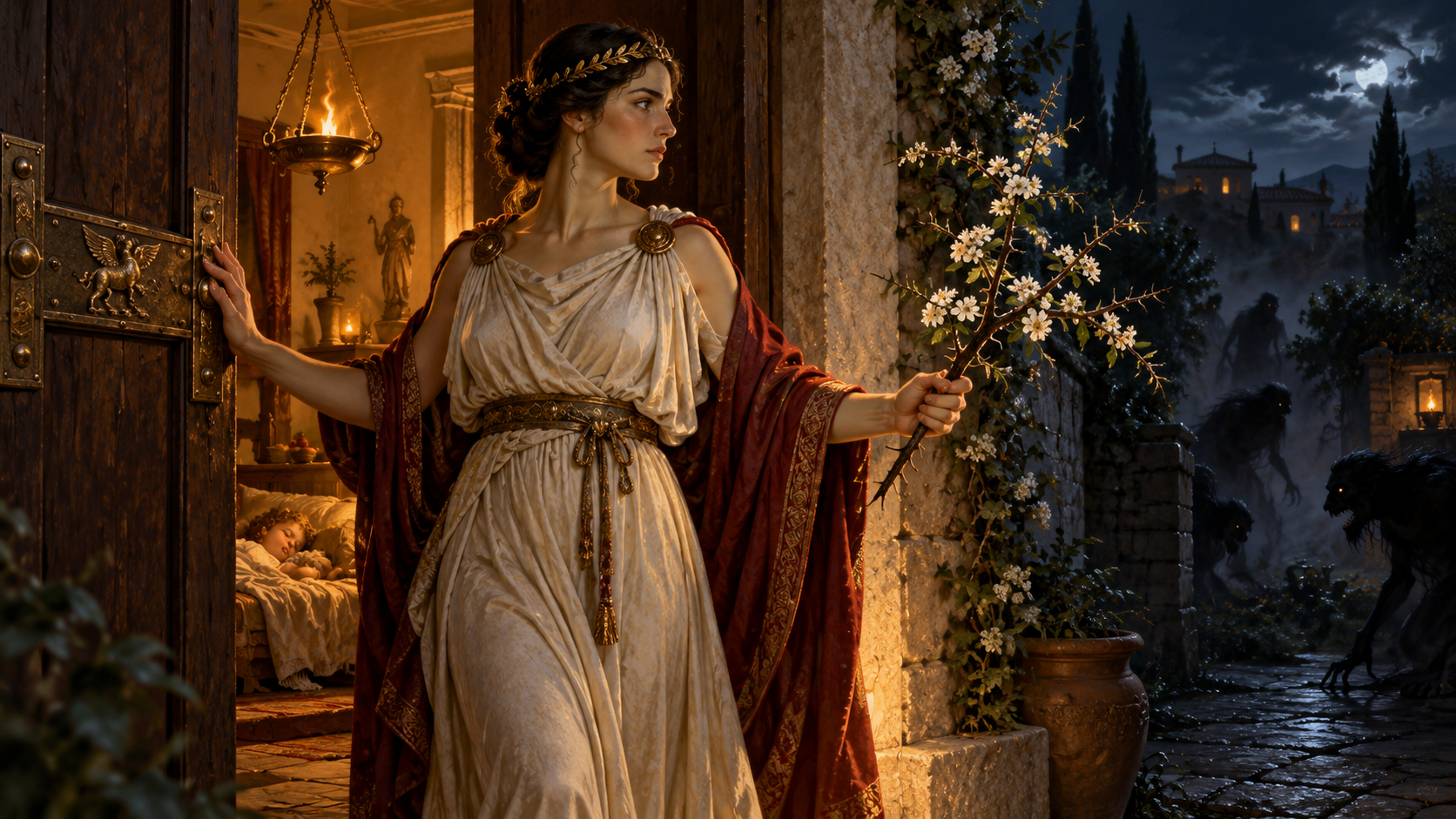
Cardea
Hinges, household doorways, white-thorn protection and the defence of children from predatory night-creatures.
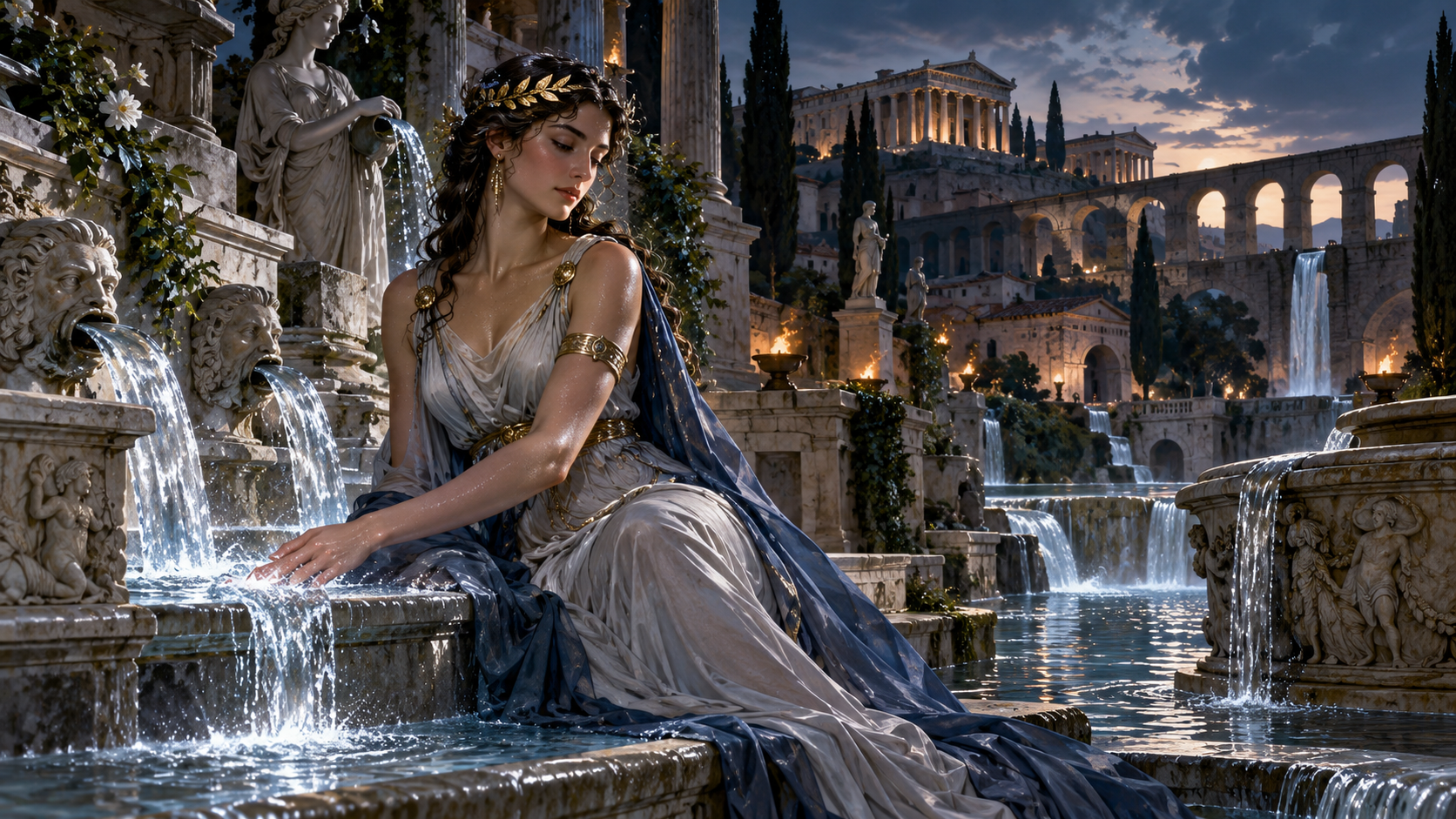
Juturna
Springs, fountains, healing water and the people who maintain a city’s water supply.
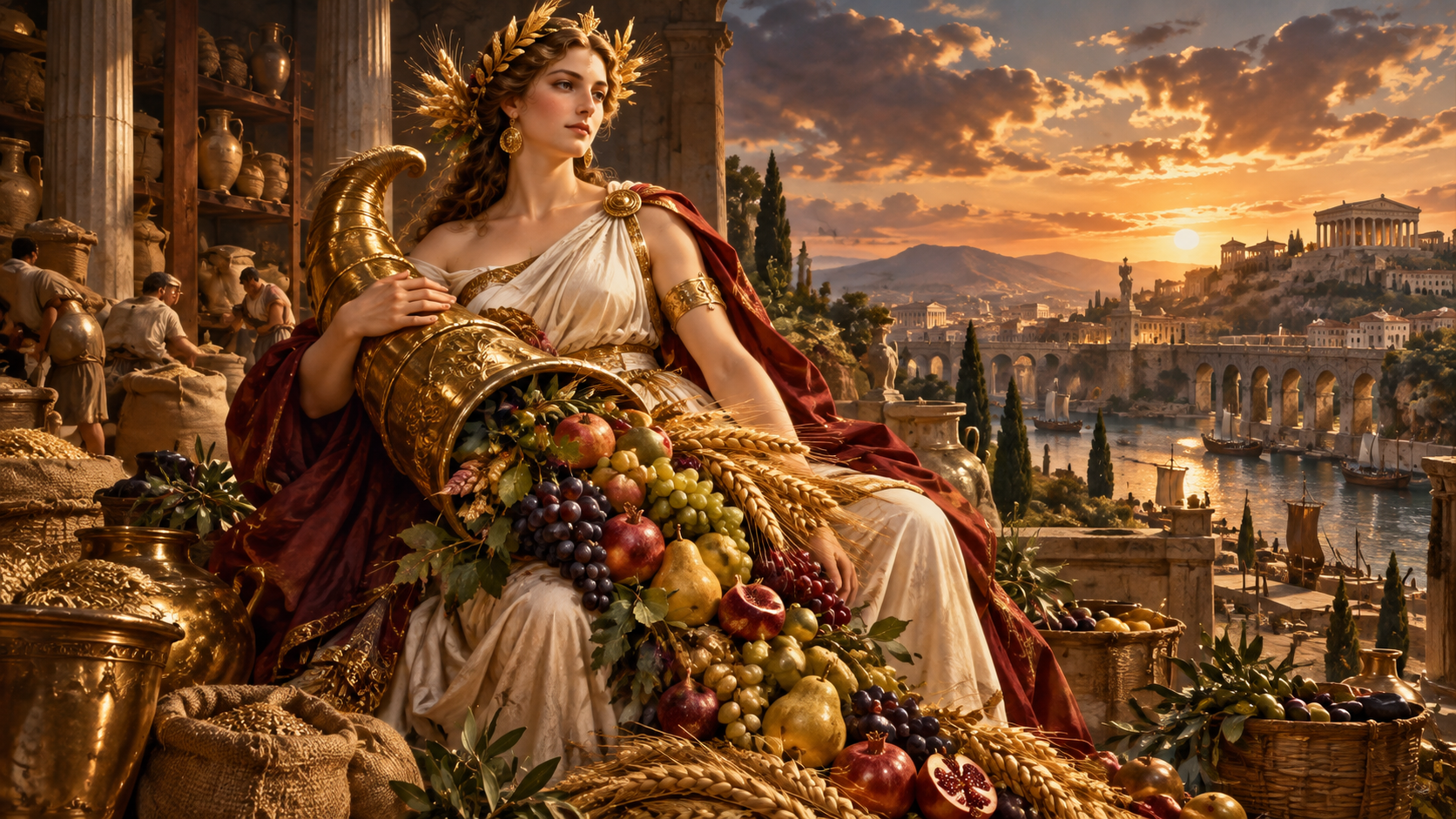
Abundantia
Abundance, prosperity and the overflowing resources symbolised by the cornucopia.
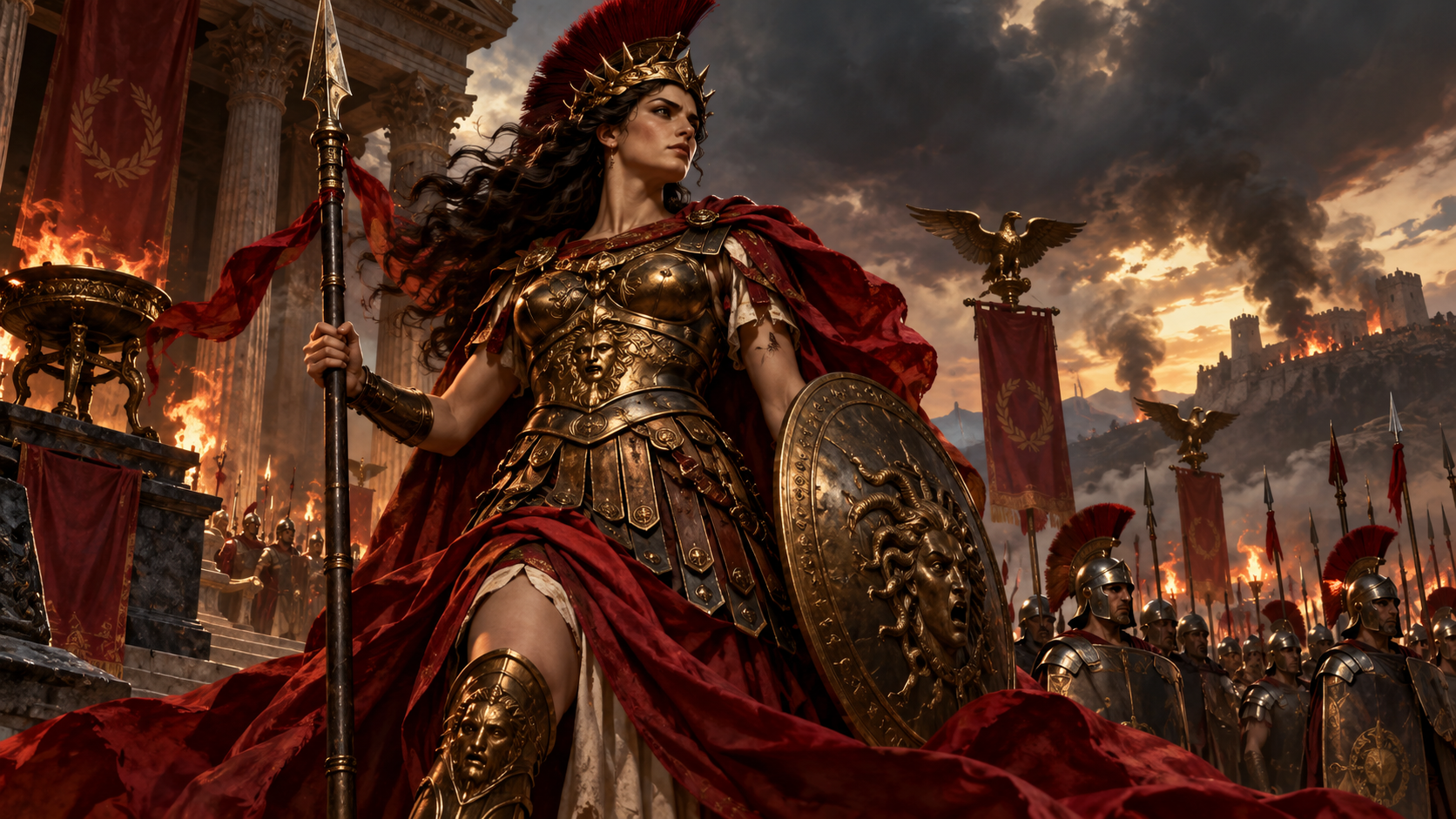
Bellona
War, battle-fury and the ritual declaration of conflict; a major Roman war-goddess distinct from Mars.
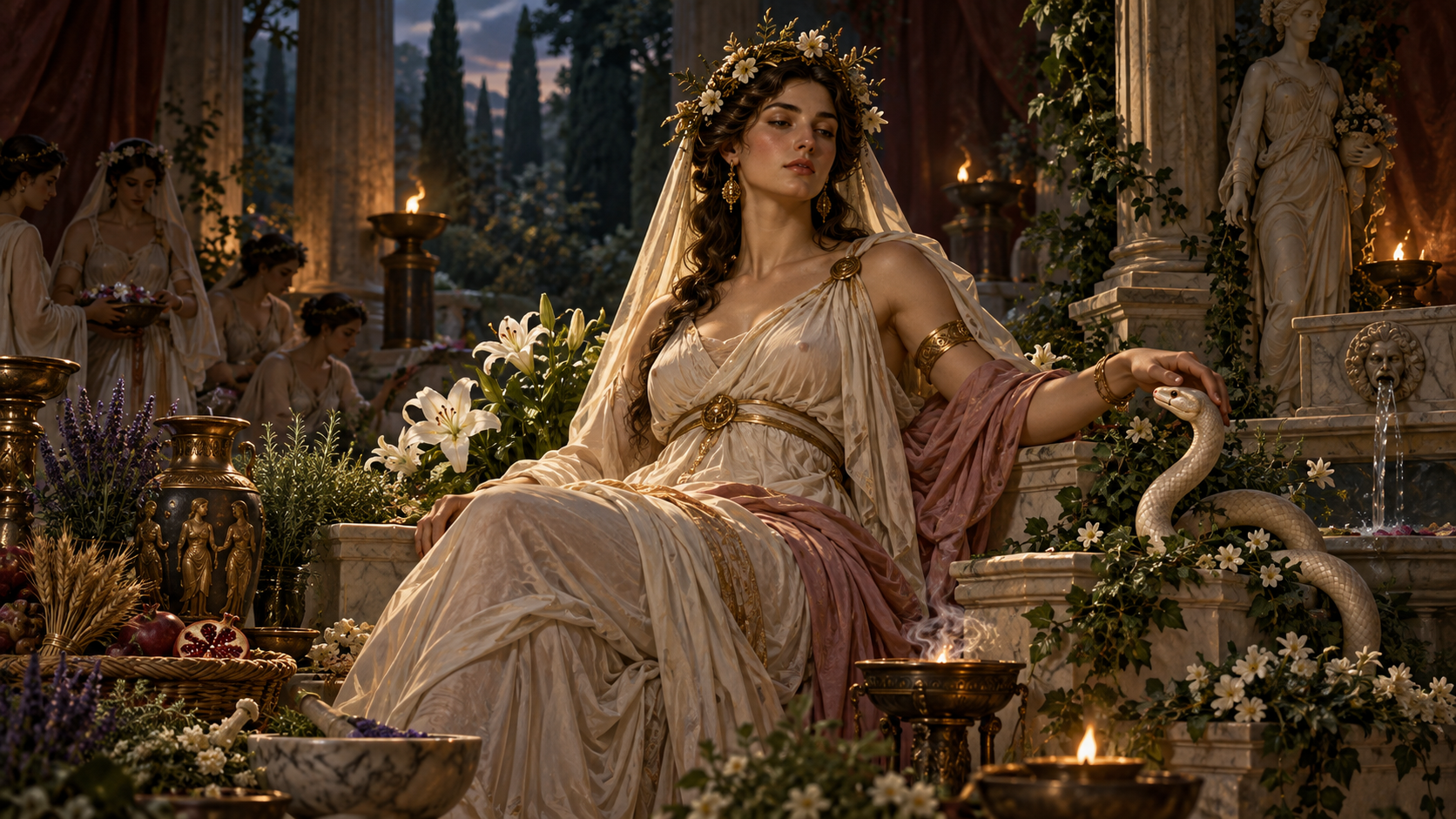
Bona Dea
The “Good Goddess,” associated with women, healing, fertility and rites from which men were famously excluded.
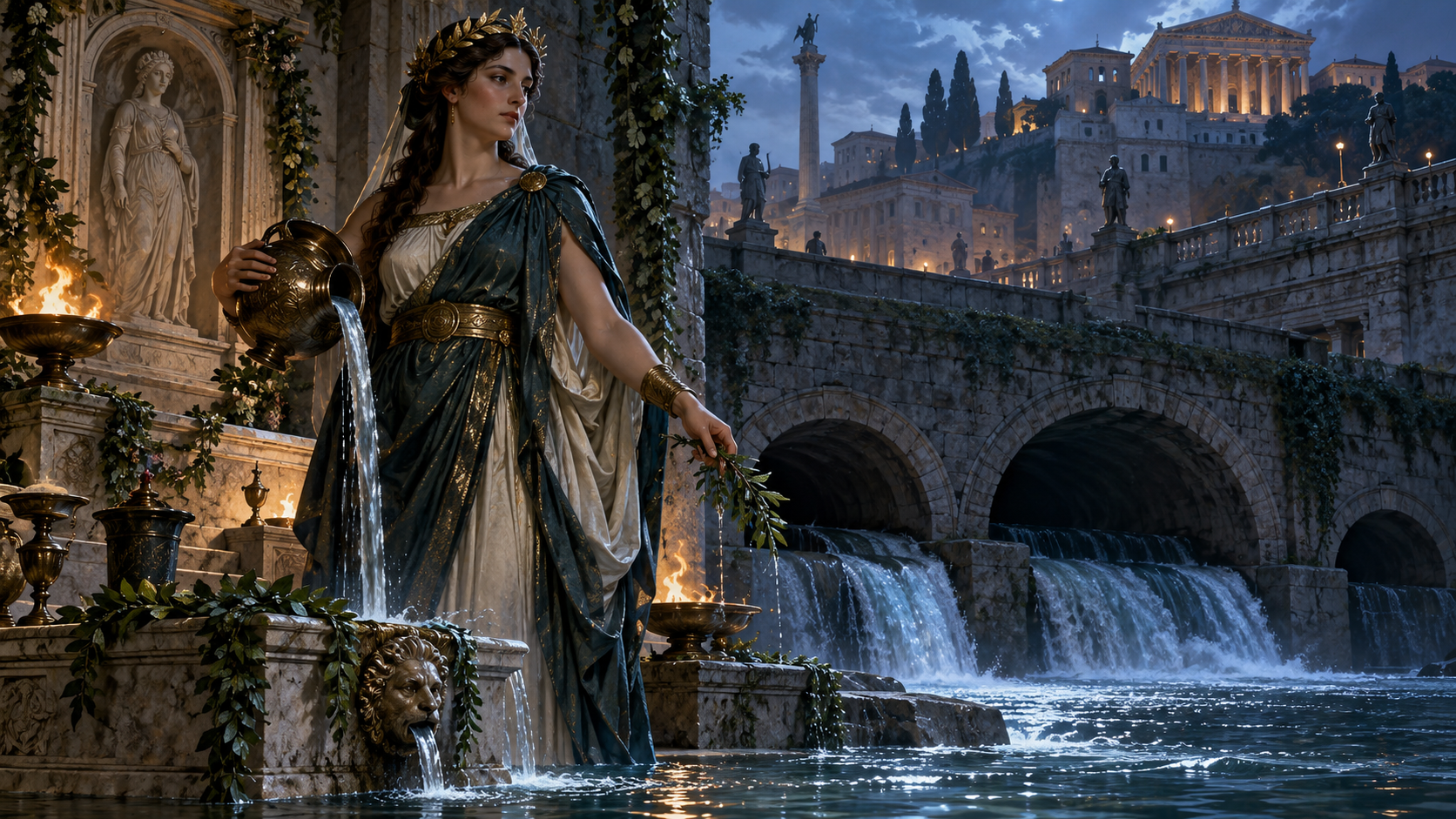
Cloacina
A Roman purification power associated with the Cloaca Maxima and later Venus Cloacina, showing how even Rome’s drainage system could possess sacred identity.
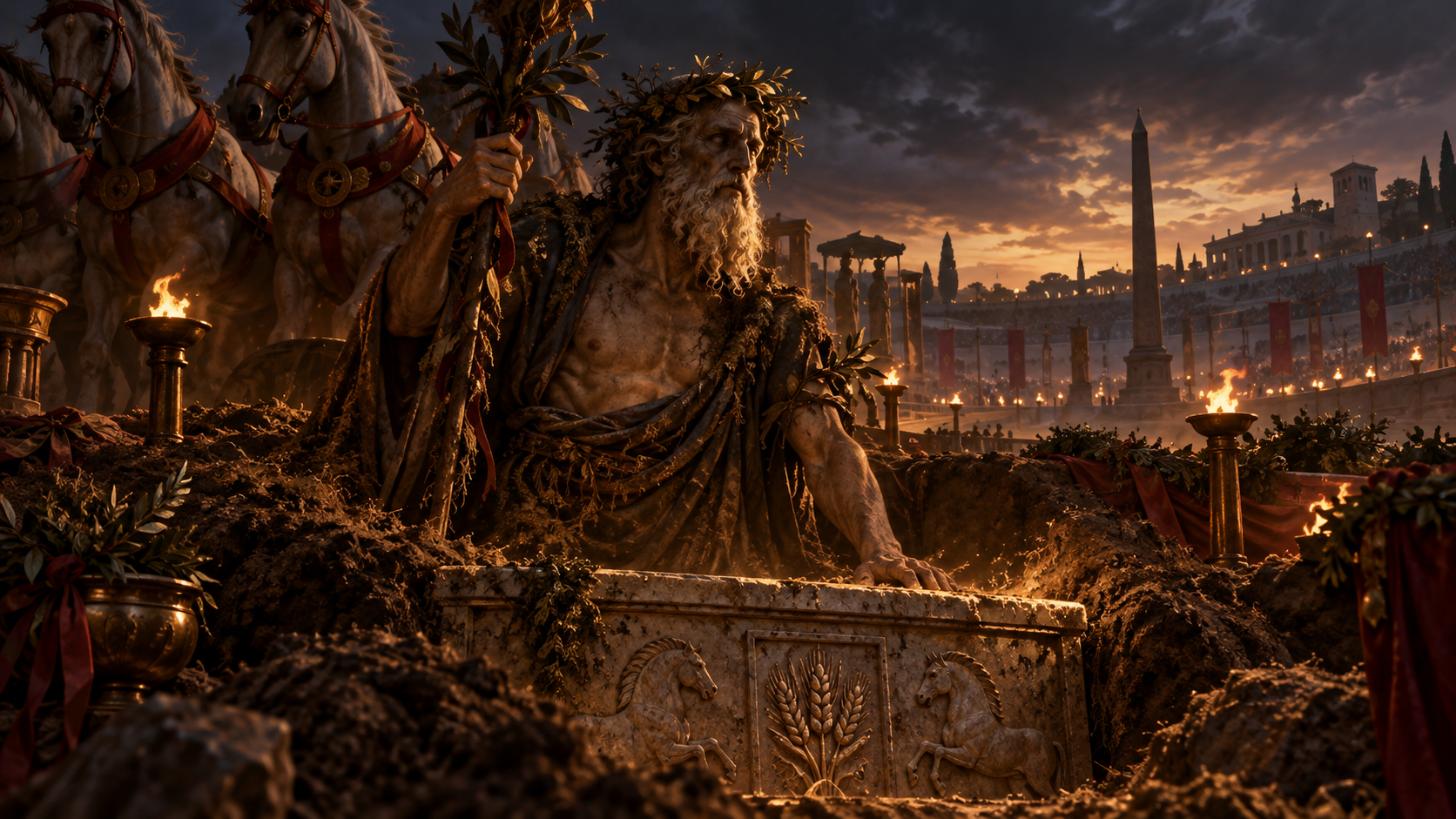
Consus
An ancient Roman god of the Consualia whose altar lay buried near the Circus Maximus; his precise original function remains debated.
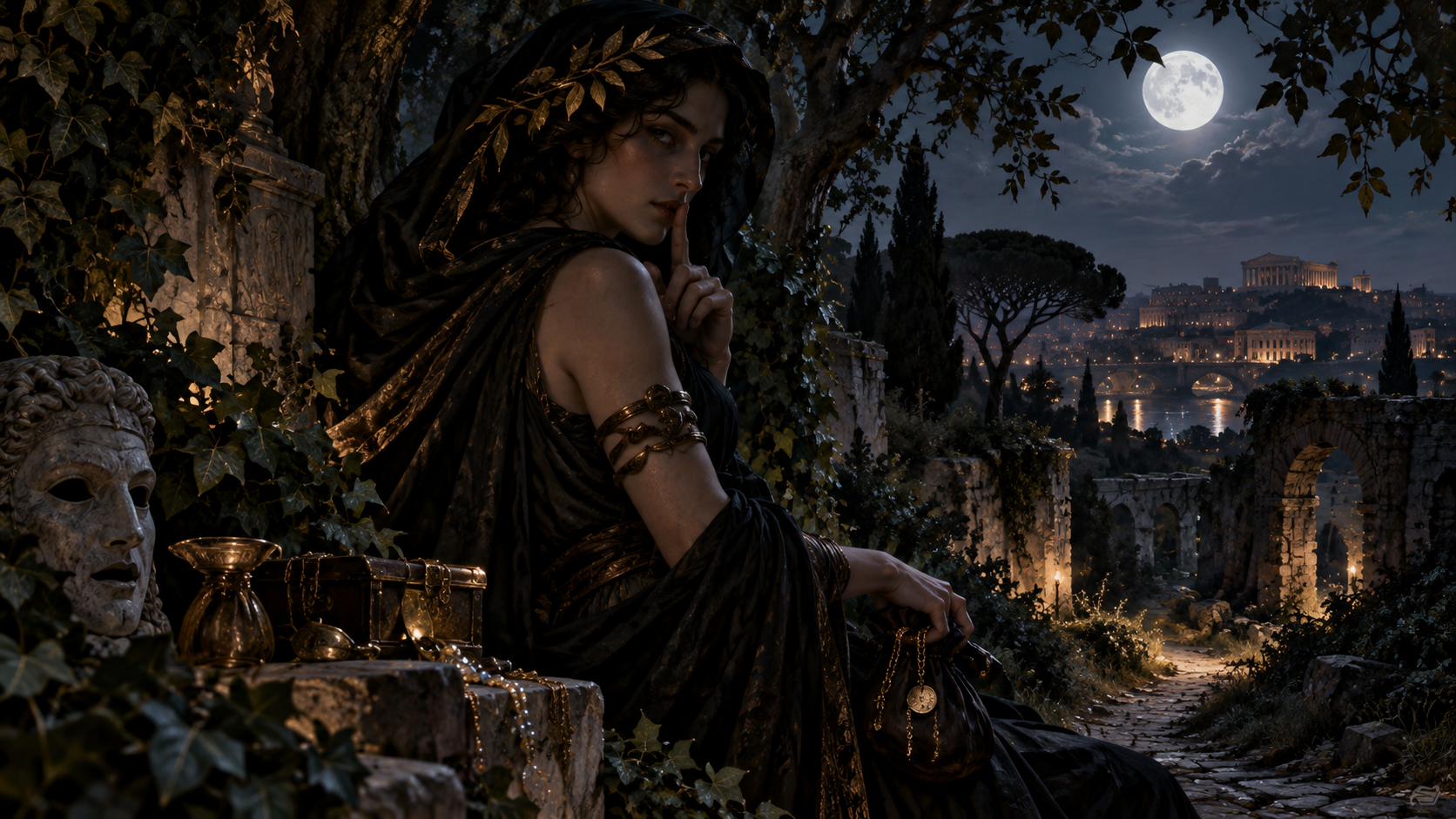
Laverna
A dark and elusive goddess associated in surviving Roman literature with thieves, concealment and a sacred grove.
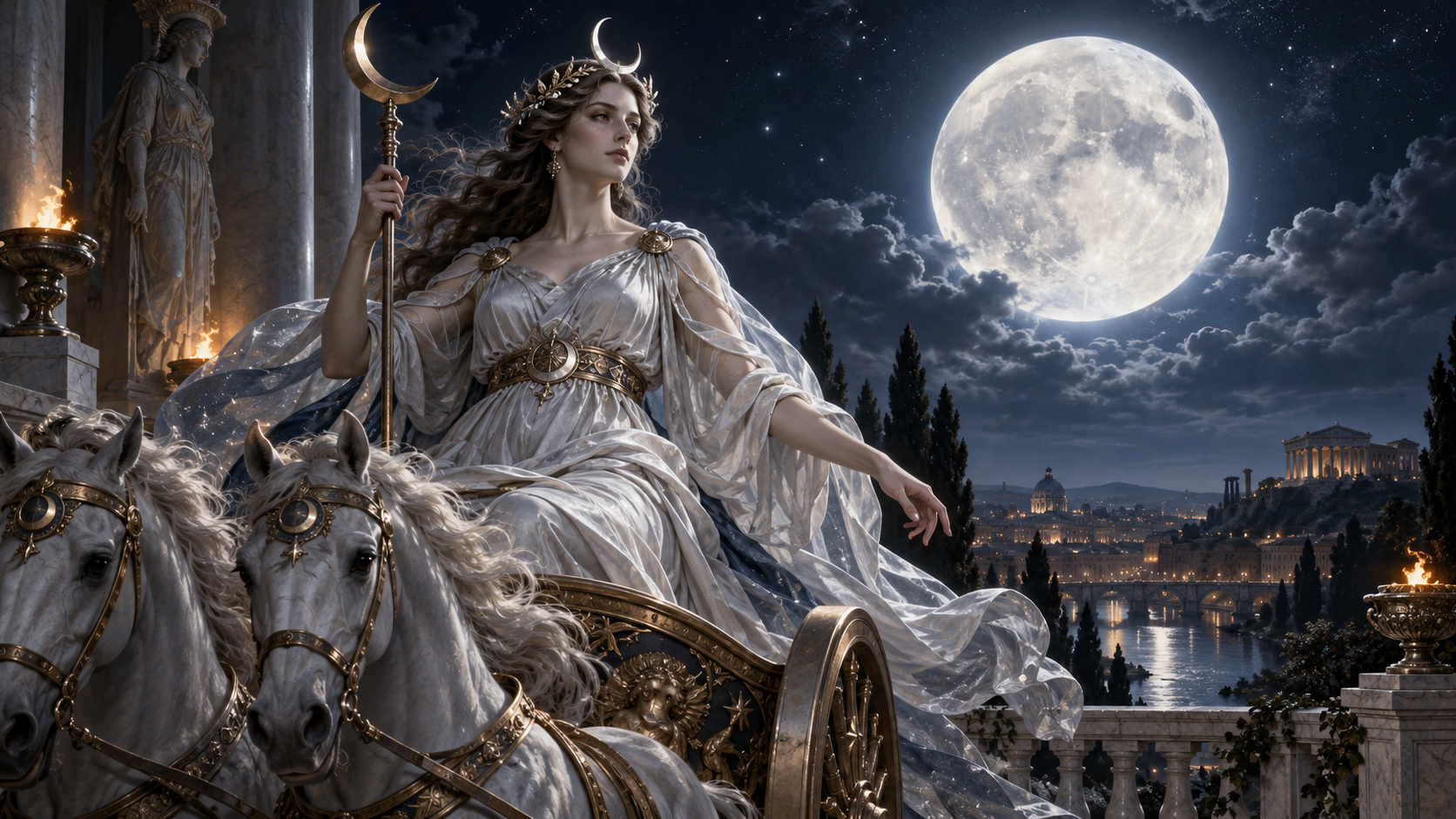
Luna
The Roman moon goddess, related to but not simply erased by identification with Selene.
Pomona
Orchards, fruit trees and cultivated abundance rather than the wild forest.
Silvanus
Woodland margins, uncultivated land, rural boundaries and the dangerous edge between farm and wild.
Other Core Roman Powers
The larger Roman divine order also includes powers too important to leave outside the cluster: Saturn (sowing, old kingship and the Saturnalia), Quirinus (an ancient civic god later identified with the deified Romulus), Fortuna (fortune and the turning of human condition), Ops (plenty, abundance and the earth), Flora (flowering and fertility), Faunus (rural prophecy and wild countryside), Terminus (boundaries), Fons / Fontus (springs and wells), Portunus (harbours and ports), Concordia (civic harmony), Victoria (victory) and Salus (public welfare and safety).
Household religion also requires collective treatment of the Lares and Penates, whose worship belongs to daily Roman life rather than only to grand temples.
Adopted and Transformed Cults
Cybele — Magna Mater
The Anatolian Great Mother whose cult was officially brought to Rome during the Second Punic War. Roman Magna Mater worship develops its own priesthoods, festivals and political importance.
Isis
The Egyptian goddess became one of the most successful Mediterranean cult powers under Roman rule. Her Roman worship is not a replacement for her Pharaonic identity, but a new religious context built around it.
Mithras
The Roman Mysteries of Mithras use an Iranian divine name and eastern imagery but form a specifically Roman mystery cult centred on initiation, the tauroctony and close-knit congregations.
Sol Invictus
The “Unconquered Sun” gathers solar theology into an influential late Roman cult, strongly promoted by imperial power and especially associated with Aurelian.
What Is Happening in Roman Religion Right Now?
Rome no longer commands the old empire, but Roman sacred geography has not vanished with political borders. Temple foundations, springs, roads, aqueducts, boundary stones, household shrines and inherited priestly traditions still provide places where the gods can act.
Across Italy, old cults compete with newer temple movements, mystery cults, magical orders and rulers who want Roman legitimacy without accepting Roman obligations. In Constantinople, newly controlled by the Ninefold Dominion, Roman cisterns and imperial infrastructure remain spiritually active even when the government above them has changed. Elsewhere, soldiers, merchants and migrants carry Roman divine names far beyond Italy.
The gods do not agree on what “Rome” now means. Jupiter cares about oath and public authority; Mars about the disciplined use of force; Vesta about continuity; Janus about what may be opened or closed; Juturna about the water that keeps a city alive. Their cults can therefore support, obstruct or judge the same ruler for entirely different reasons.
Start Exploring
Janus · Mars · Cardea · Juturna · Italy · Rome · Roman States · Gods & Pantheons · Cleric · Cosmic Ranks & Cosmic Entities
Use the Roman Pantheon at the Table
- Broken oath: a ruler, guild or army has sworn publicly and now seeks a loophole. Mars cares about disciplined force; Jupiter cares whether the oath itself still binds.
- Threshold dispute: a gate, household or city boundary is contested. Janus governs passage, Cardea protects the hinge and household threshold, and Terminus governs the fixed boundary.
- Water crisis: a spring fails, an aqueduct is poisoned or a cistern becomes haunted. Juturna, Fons, Neptune and Cloacina each claim a different part of the problem.
- Household danger: a family shrine is neglected, a storehouse is failing or something crosses the door at night. Vesta, Lares, Penates and Cardea turn domestic religion into immediate adventure pressure.
- Public victory: a city wins a war, election, lawsuit or diplomatic contest. Victoria, Concordia, Fortuna and Jupiter may disagree about whether the result deserves celebration, reconciliation or judgement.
Historical Approach
Roman religion changed across centuries and regions. This cluster distinguishes ancient cult evidence from later literary retellings, Greek identifications and campaign invention. Where the sources disagree—as they often do for older Italic gods—the individual deity entries say so rather than presenting one reconstruction as certain.
Several cult anchors are especially useful for keeping the Roman gods distinct from their Hellenic counterparts:
- Jupiter: the Capitoline temple places Jupiter Optimus Maximus with Juno and Minerva at the centre of Roman public religion, while Roman treaty ritual repeatedly invokes Jupiter as guarantor of sworn agreements.
- Juno: Regina, Lucina and Moneta show the breadth of her Roman identity across queenship, women and childbirth, warning and civic institutions.
- Minerva: the Aventine cult and Quinquatrus connect her strongly with scribes, performers, skilled work and learned professions; martial imagery should not erase that Roman emphasis.
- Venus: Genetrix and Victrix connect love and fertility to ancestry, Roman victory and the Aeneas-Julian tradition.
- Mercury: the Mercuralia and the merchants’ rites at the Porta Capena make trade and exchange central to his Roman cult.
- Neptune: the Neptunalia fell in the dry heat of July, preserving a specifically Roman concern with water before and alongside the stronger later identification with Poseidon and the sea.
Useful historical references: Jupiter Optimus Maximus · Jupiter Feretrius and treaty-oaths · Juno Regina · Juno Lucina · Juno Moneta · Minerva on the Aventine · Venus Genetrix · Ovid, Fasti V: Mercury and the merchants · Neptunalia.
Keep this reference growing
If this page helped with your reading or game, you can support its upkeep or explore the curated books.
Explore the Bookshop — epics, classics and stories behind imagined worlds.