
Mithras — God of the Roman Mithraic Mysteries
Mithras at a Glance
Tradition
Roman Mithraic mystery cult with Iranian antecedents
Divine standing
Intermediate Deity
Campaign alignment
Lawful Neutral
Portfolio
Initiation, sworn fellowship, cosmic order, trial, disciplined courage and hidden sacred knowledge
Principal sacred space
Mithraeum — usually a small cave-like or subterranean sanctuary
Central image
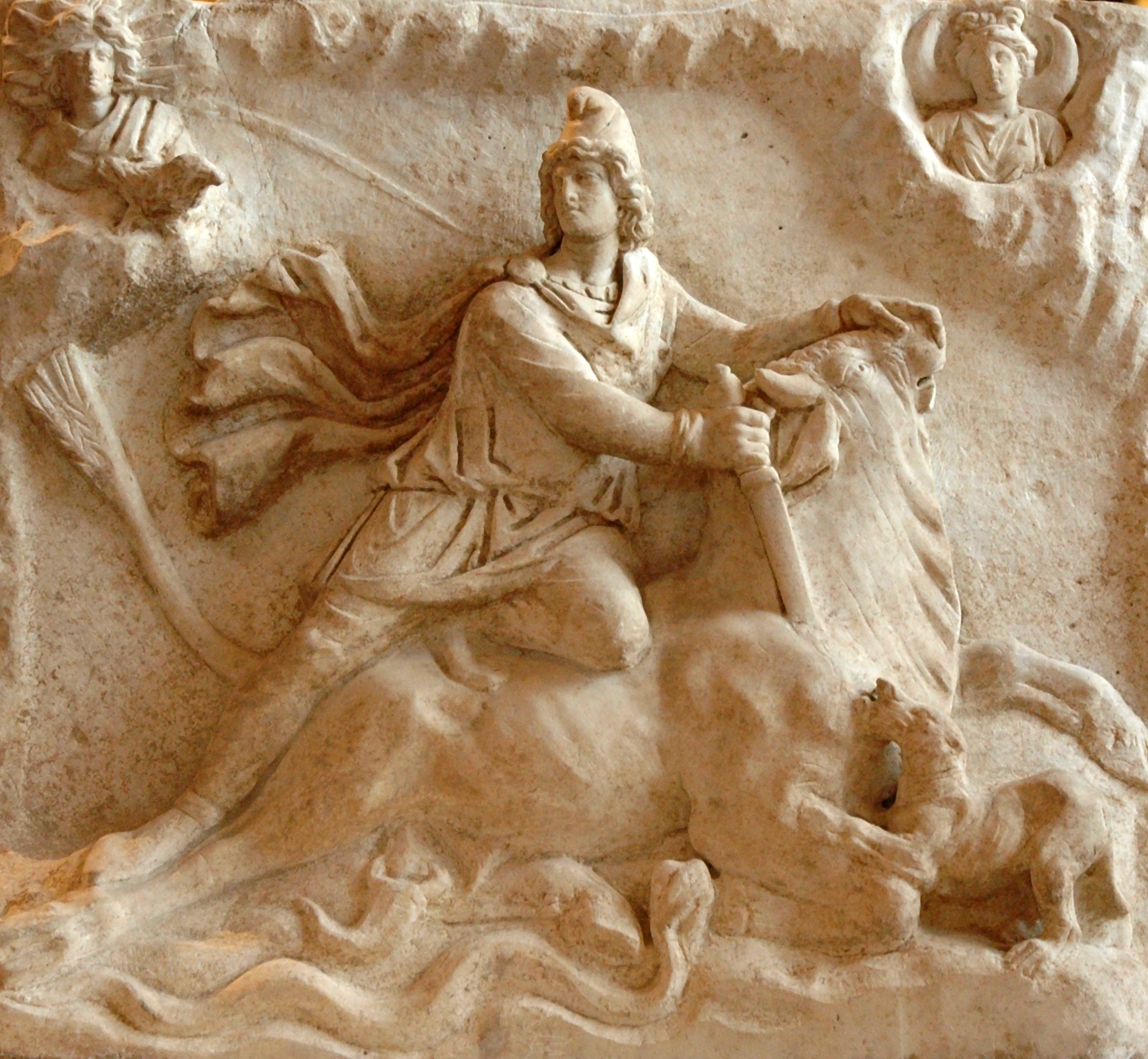
Tauroctony: Mithras killing the bull
Initiatory structure
Seven grades are attested in Roman Mithraic evidence
Emblems
Phrygian cap, torchbearers, bull, raven, serpent, dog and cosmic signs
Favoured weapon
Dagger
Historical caution
Do not equate Roman Mithras and Iranian Mithra as though the cults were identical.
Roman Pantheon · Mystery Cult · Tauroctony · Initiation · Soldiers · Mithraea
Mithras is the central god of the Roman Mithraic mysteries, a specifically Roman-era initiatory religion using an Iranian divine name and eastern imagery. The Roman cult should not be treated as a simple unchanged continuation of Iranian Mithra worship; the relationship is real but historically complex and debated.
Divine Mechanics
Campaign Divine Tier 32 describes the Roman Mithraic god’s setting-scale power. The 5.5e rules-facing form is CR 29 with PB +9.
Mithras — 5.5e Rules-Facing Form
Medium Celestial (Deity), Lawful Neutral
CR 36 (custom epic) · PB +10 · Campaign Divine Tier 32
AC 28 · HP 700 · Speed 50 ft.
| STR | DEX | CON | INT | WIS | CHA |
|---|---|---|---|---|---|
| 30 (+10) | 28 (+9) | 30 (+10) | 28 (+9) | 30 (+10) | 30 (+10) |
Saving Throws Str +20, Con +20, Wis +20, Cha +20
Skills Athletics +18, History +17, Insight +18, Perception +18, Religion +17
Damage Resistances fire, radiant, psychic; bludgeoning, piercing and slashing from nonmagical attacks
Condition Immunities Charmed, Frightened, Poisoned
Senses Truesight 120 ft. · Languages all; telepathy 120 ft.
Traits
Legendary Resistance (5/Day). If Mithras fails a saving throw, he can choose to succeed instead.
Initiate’s Bond. Allies within 30 feet who have willingly sworn the same oath gain +2 to saving throws while they can see another member of that oath-bound group.
Lord of the Mithraeum. Mithras knows the location of every creature inside a consecrated mithraeum unless it is protected by an artifact or another deity.
Divine Spellcasting
Mithras has access to every spell granted by the deity’s portfolio domains in the edition being used: Sun · War · Community · Law. Those spells are always prepared or available to the deity.
Actions
Multiattack. Mithras makes three Sacred Dagger attacks.
Sacred Dagger. Attack: +20 to hit, reach 10 ft. Hit: 30 (4d10 + 8) piercing plus 18 (4d8) radiant damage.
Tauroctony Vision (Recharge 5–6). Creatures of Mithras’s choice in a 60-foot radius make a DC 28 Wisdom save. Enemies take 55 (10d10) psychic and radiant damage and are Frightened until the end of their next turn on a failure; chosen allies gain 20 Temporary Hit Points and Advantage on their next attack.
Bonus Actions
Advance the Grade. One ally within 60 feet gains Advantage on its next saving throw or ability check before the end of its next turn.
Reactions
Hold the Oath. When an oath-bound ally within 60 feet would fail a saving throw against Charmed or Frightened, Mithras allows it to reroll.
Legendary Actions
- Move. Move up to half Speed.
- Divine Strike. Make one Sacred Dagger attack.
- Torchbearers (Costs 2). Mithras creates bright light in a 30-foot-radius area within 90 feet; Invisible creatures there are outlined until the end of his next turn.
Mithras — Pathfinder 1e
Campaign divine extension.
Benchmark near CR 29–30. Emphasise oaths, initiation, morale, hidden sanctuaries, light and disciplined fellowship.
Spell-Like Abilities. At will—discern lies, greater heroism, true seeing; 3/day—forbiddance, greater restoration; 1/day—miracle.
Statistics
CR 36 (custom epic) · AC 54 · hp 940 · Fort +36 · Ref +33 · Will +36
Str 30 · Dex 28 · Con 30 · Int 28 · Wis 30 · Cha 30
Base Atk +36 · CMB +46 · CMD 97
Domain Access
Mithras has full access to the deity’s linked portfolio domains in their Pathfinder-facing versions or clearly marked campaign adaptations.
Mithras — D&D 3.5e
Intermediate Deity; Divine Rank 11; Lawful Neutral Medium Outsider (Extraplanar)
Divine Rank 11 · DR 25/epic · SR 43 · Domain SLA caster level 21.
Salient Divine Abilities. Divine Inspiration, Power of Truth, Divine Protection and rank-appropriate oath or light abilities.
Statistics
Challenge benchmark 42. Ability scores may exceed 30 where the deity’s divine nature requires it; Divine Rank remains the primary measure of cosmic authority.
Domain Access
Mithras can use every spell-like ability granted by the deity’s portfolio domains at the caster level determined by Divine Rank.
Mithras in Roman Religion
Roman Mithraism is known primarily through archaeology rather than a surviving scripture. Mithraea are typically small, enclosed and cave-like, organised around the tauroctony and a community of initiates.
The cult was all-male in the surviving evidence and was particularly popular among soldiers and other mobile imperial communities. Seven grades of initiation are attested in Roman Mithraic tradition.
What Is Mithras Doing Right Now?
Old military roads and ruined forts still conceal mithraea. Some communities continue their initiations in secret, while others have preserved only fragments of the grades and symbols.
Mithras is active where fellowship is tested by fear, secrecy or divided loyalty. His cult can create fierce solidarity—but secrecy also makes it vulnerable to leaders who confuse initiation with personal obedience.
Worship in the Campaign Present
Mithraic groups remain small by design. A mithraeum is more like an initiatory brotherhood than a public civic temple, and its rites are not performed for crowds.
Soldiers, caravan guards, administrators and veterans are common members. The cult values reliability inside the group, controlled revelation and advancement through recognised stages.
Domains, Spells and Divine Gifts
Mithras’s clergy favour Order, Protection, Light and Strength themes. Suitable spells include Heroism, Zone of Truth, Aid, Daylight, Freedom of Movement, Greater Restoration, Forbiddance and Holy Aura.
Gift: Fellow Initiate
Once per long rest, when an ally within 30 feet fails a saving throw against Frightened, the devotee may allow that ally to reroll.
Gift: Hidden Sanctuary
The devotee can recognise whether a chamber was designed or adapted for secret ritual use after ten minutes of inspection.
Artifacts and Relics
The Bull-Slaying Blade
Major Divine Artifact · Weapon (dagger)
Attunement: Required by a creature that has freely sworn loyalty to a fellowship, unit or initiatory brotherhood.
5.5e
The Blade is a +2 dagger. It grows warm when a member of the bearer’s sworn fellowship within 300 feet is actively betraying that fellowship to a hostile power.
Test the Oath (3/Day). Touch a willing member of the fellowship. For 1 minute, you know whether that creature currently intends deliberate betrayal of the sworn group. The Blade reveals intent, not every secret.
Stand Together (1/Day). For 1 minute, the bearer and up to six sworn allies within 30 feet gain Advantage on saves against Frightened and Charmed while at least two affected creatures remain within 10 feet of each other.
Pathfinder 1e
Major Artifact · CL 18th. Functions as a +4 loyal dagger. It warms near active internal betrayal. 3/day: determine whether a willing sworn member currently intends deliberate betrayal; 1/day: six allies gain +4 morale bonus against fear and charm for 10 rounds while staying close together.
D&D 3.5e
Major Artifact · CL 18th. Functions as a +4 dagger, warns of internal betrayal, and 3/day tests a willing sworn member’s present intent. 1/day grants six allies +4 morale bonus against fear and charm for 10 rounds while they remain together.
Destroying the Blade
The Blade can be destroyed only when every surviving member of the fellowship it currently serves knowingly agrees to betray the same innocent ally for private advantage and uses the Blade to sever their oath together.
The Seven-Grade Token
Lesser Divine Relic · Wondrous Item (nested disks)
The Token opens only to the number of initiatory grades genuinely completed by its bearer. Magical disguise, forged credentials and memory alteration cannot force it farther. It proves attainment, not moral worth or authority outside that mystery tradition.
Relationships
Roman Mithras belongs beside Roman mystery cults rather than being forced into an Olympian family tree. His relationship to Iranian Mithra is historical and linguistic but not simple enough to make the two cults interchangeable.
Use Mithras Tonight
The Eighth Grade
A newly discovered mithraeum contains a symbol for an initiation grade no known text mentions.
The Bull Is Missing
Every tauroctony in a military district loses the carved bull overnight.
The Brothers Disagree
Two surviving mithraea each hold half of a ritual and each believes the other half is heresy.
Divine Estate and Regional Effects
Where Mithras’s presence is strong, a major sanctuary can project the following effects across roughly six miles. A small shrine normally manifests only one effect in a smaller area. Unless another divine power contests them, the effects fade over 1d10 days after the sanctuary is abandoned or desecrated.
Oaths Among Companions Hold
Members of a consecrated brotherhood know when one of their number deliberately violates a sworn duty to the group.
The Cave Is Secure
Hidden sanctuaries and initiation chambers are difficult to discover accidentally; a searcher must possess a real clue or succeed on a demanding investigation.
Shared Hardship Binds
Creatures that complete a dangerous task together within the region gain Advantage on their next save against fear while fighting beside one another.
Deep Dive
Continue through the Roman Pantheon. Follow the cult into Rome and wider Italy, or use the Cleric and Cleric Domains pages for player-facing worship.
Historical Sources and Rules Compatibility
- Mystery Cults in the Greek and Roman World — archaeological and initiatory context for Roman Mithraism.
The page distinguishes Roman Mithraic religion from Iranian Mithra instead of treating them as an unchanged single cult. Mechanics and campaign material are original.
Rules licensing. D&D 5.5e terminology derived from the System Reference Document 5.2.1 is used under CC BY 4.0 where applicable. Pathfinder 1e and D&D 3.5e deity statistics on this page are original campaign conversions rather than official published deity stat blocks.
Keep this reference growing
If this page helped with your reading or game, you can support its upkeep or explore the curated books.
Explore the Bookshop — epics, classics and stories behind imagined worlds.