
Flora — Roman Goddess of Flowers, Spring and Blossoming
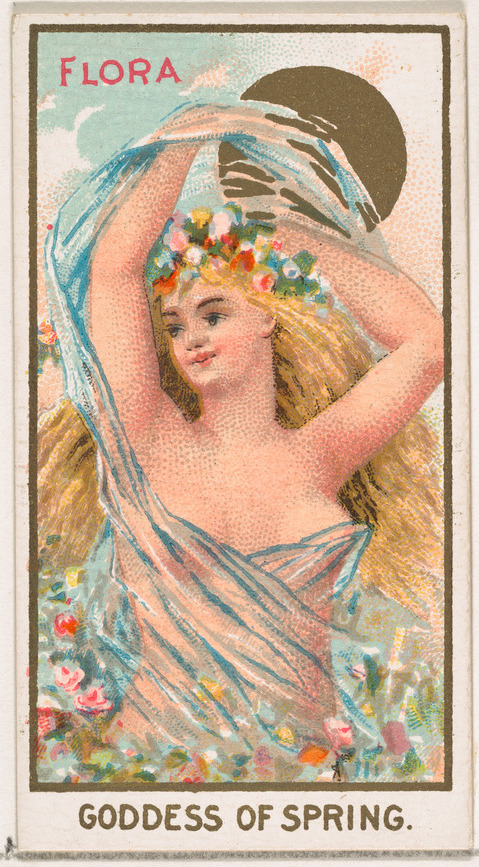
Flora at a Glance
Tradition
Roman
Divine standing
Lesser Deity
Campaign alignment
Chaotic Good
Portfolio
Flowers, blossom, spring growth, flowering crops and joyful fertility
Principal cult / festival
Floralia, beginning 28 April
Sacred places
Flower gardens, orchards in bloom, fields at flowering and temples on the Aventine and Quirinal
Emblems
Flowers, garlands, blossom, bright garments and spring hare
Favoured weapon
Staff
Related Roman powers
Roman Pantheon · Flowers · Blossoming · Spring · Fertility
Flora is the Roman goddess of flowers and blossoming. The Floralia asked for the protection of blossoms because fruit and grain can be lost long before harvest if flowering fails.
Divine Mechanics
Campaign Divine Tier 29 describes Flora’s setting-scale power. The 5.5e rules-facing form is an original epic extension at CR 32 with PB +9.
Flora — 5.5e Rules-Facing Form
Medium Celestial (Deity), Chaotic Good
CR 32 (custom epic) · PB +9 · Campaign Divine Tier 29
AC 25 · HP 560 · Speed 40 ft.
| STR | DEX | CON | INT | WIS | CHA |
|---|---|---|---|---|---|
| 20 (+5) | 28 (+9) | 26 (+8) | 24 (+7) | 30 (+10) | 30 (+10) |
Saving Throws Dex +18, Con +17, Wis +19, Cha +19
Skills Nature +17, Performance +17, Perception +17, Persuasion +17
Damage Resistances poison, radiant; bludgeoning, piercing and slashing from nonmagical attacks
Condition Immunities Charmed, Frightened, Poisoned
Senses Truesight 90 ft. · Languages all; telepathy 90 ft.
Traits
Legendary Resistance (5/Day). If Flora fails a saving throw, she can choose to succeed instead.
Blossom’s Promise. Allied plant creatures and creatures carrying a fresh flower blessed by Flora have Advantage on saves against Poisoned.
Spring Unbound. Nonmagical flowers within 120 feet bloom regardless of season unless the plant is dead.
Divine Spellcasting
Flora has access to every spell granted by the deity’s portfolio domains in the edition being used: Plant · Fertility · Beauty · Joy. Those spells are always prepared or available to the deity.
Actions
Multiattack. Flora makes three Blossom Staff attacks.
Blossom Staff. Attack: +19 to hit, reach 10 ft. Hit: 25 (3d10 + 9) bludgeoning plus 18 (4d8) radiant damage.
Floralia (Recharge 5–6). A 60-foot-radius burst of petals fills the air. Enemies make a DC 27 Wisdom save, taking 45 (10d8) psychic and radiant damage and becoming Charmed until the end of their next turn on a failure; allies gain 18 Temporary Hit Points.
Bonus Actions
Scatter Petals. One 20-foot-square area within 60 feet becomes lightly obscured until the start of Flora’s next turn.
Reactions
Save the Blossom. When a plant, crop or allied creature within 60 feet takes cold, fire or poison damage, Flora reduces the damage by 22 (4d10).
Legendary Actions
- Move. Move up to half Speed.
- Divine Strike. Make one Blossom Staff attack.
- Spring Step (Costs 2). One ally within 60 feet moves up to half Speed and may end one effect reducing its Speed.
Flora — Pathfinder 1e
Campaign divine extension.
Benchmark CR 32 (custom epic). Emphasise flowering plants, morale, charm, seasonal fertility and protection of blossom.
Spell-Like Abilities. At will—plant growth, charm monster, speak with plants; 3/day—control plants, greater restoration; 1/day—miracle.
Statistics
CR 32 (custom epic) · AC 50 · hp 820 · Fort +34 · Ref +33 · Will +36
Str 20 · Dex 28 · Con 26 · Int 24 · Wis 30 · Cha 30
Base Atk +32 · CMB +37 · CMD 88
Domain Access
Flora has full access to the deity’s linked portfolio domains in their Pathfinder-facing versions or clearly marked campaign adaptations.
Flora — D&D 3.5e
Lesser Deity; Divine Rank 9; CG Medium Outsider (Extraplanar)
Divine Rank 9 · DR 20/epic · SR 41 · Domain SLA caster level 19.
Salient Divine Abilities. Power of Nature, Divine Inspiration, Divine Skill Focus and rank-appropriate plant abilities.
Statistics
Challenge benchmark 38. Ability scores may exceed 30 where the deity’s divine nature requires it; Divine Rank remains the primary measure of cosmic authority.
Domain Access
Flora can use every spell-like ability granted by the deity’s portfolio domains at the caster level determined by Divine Rank.
Flora in Roman Religion
The Floralia was celebrated from 28 April into early May in honour of Flora and the protection of blossoms. Ancient explanations explicitly connect the festival with the hope that flowering crops would develop successfully.
Flora’s Roman temples and festival turn spring exuberance into agricultural concern: blossom is beautiful, but it is also the fragile beginning of later food.
What Is Flora Doing Right Now?
Late frosts, magical weather and scorched fields make flowering a strategic moment. Flora is active when a whole year’s harvest depends on a few vulnerable weeks.
Her cult is loudest in towns during Floralia and quietest in orchards at dawn, where one night of hail can matter more than a month of celebration.
Worship in the Campaign Present
Gardeners, orchard workers, flower sellers, vintners and farming communities honour Flora during blossom.
Urban festivals favour colour, theatre and license; rural worship tends to be more directly concerned with protecting flowering crops.
Domains, Spells and Divine Gifts
Flora’s clergy favour Nature, Life, Charm and Community themes. Suitable spells include Entangle, Goodberry, Plant Growth, Speak with Plants, Freedom of Movement and Greater Restoration.
Gift: Read the Blossom
The devotee can tell whether a flowering plant is likely to set healthy fruit under current conditions.
Gift: Spring Breath
Once per long rest, the devotee can cause flowers to bloom across a 20-foot-radius area, granting allies Advantage on their next save against Frightened.
Relics
The Floralian Garland
It remains fresh until the flowering crop it was cut from is safe from the season’s principal threat.
The Seed-Bell
When rung over dormant ground, it reveals whether viable seed remains beneath the soil.
Relationships
Pomona governs the tended fruit tree after blossom; Ceres the cultivated harvest; Venus fertility and attraction. Flora is the flowering threshold itself.
Use Flora Tonight
The Blossoms Fall Upward
Every flower in a valley detaches and rises into the sky before dawn.
The Floralia Never Ends
Festival flowers remain fresh for weeks while the surrounding crops fail to set fruit.
One Tree Blooms in Winter
A single orchard tree flowers in deep frost around a sealed grave.
Divine Estate and Regional Effects
Where Flora’s presence is strong, a major sanctuary can project the following effects across roughly six miles. A small shrine normally manifests only one effect in a smaller area. Unless another divine power contests them, the effects fade over 1d10 days after the sanctuary is abandoned or desecrated.
Flowers Arrive Early
Wild and cultivated flowers bloom a little ahead of season around festivals, reconciliations and successful courtships.
Pollinators Gather
Bees, butterflies and other pollinators are unusually abundant but non-aggressive around healthy flowering plants.
Blight Shows First
A magical or mundane disease affecting local vegetation reveals itself first in conspicuously discoloured blossoms, giving cultivators time to act.
Deep Dive
Continue through the Roman Pantheon, Pomona, Ceres, Venus. Follow the cult into Rome and wider Italy, or use the Cleric and Cleric Domains pages for player-facing worship.
Historical Sources and Rules Compatibility
- Floralia — festival dates and protection of blossoms.
- Temples of Flora — Aventine and Quirinal cult sites.
Historical cult material is separated from campaign invention. Mechanics and relics are original game material.
Rules licensing. D&D 5.5e terminology derived from the System Reference Document 5.2.1 is used under CC BY 4.0 where applicable. Pathfinder 1e and D&D 3.5e deity statistics on this page are original campaign conversions rather than official published deity stat blocks.