
Roman States — Seat of the Sacred College
At a Glance
| Region | Central Italy |
|---|---|
| Seat | Rome |
| Ruler | Rodrigo Borgia, the Golden Pontiff |
| Government | Sacred-legal sovereignty, with temple-princes and territorial officers |
| Power | Oath courts, title judgements, relic authentication and interdiction |
| Campaign tone | Dynastic law, court intrigue, threatened towns and hard bargains |

The Roman States are ruled from the Sacred College’s court in Rome. Their roads and towns matter, but their most dangerous reach is legal: a writ can strengthen a ruler’s claim, dissolve an alliance or leave a city under interdiction. Rodrigo Borgia uses that reach with the ease of a sovereign who knows every great house has a vulnerable heir, a costly debt or an oath it would rather forget.
Current Pressures
The Borgia ascendancy
Rodrigo places family clients in offices and marriage negotiations. His supporters gain access to guards, archives and credit. Rival temple-princes want influence without making an open challenge to the man who controls their seals.
Territory and obedience
Local lords collect dues, maintain fortresses and negotiate with nearby Italian states. A distant judgement can take weeks to enforce. An interdicted town may still close its gates and hire soldiers.
A settlement of uneasy peace
After the Peace of Lodi, Italy’s powers have reason to negotiate instead of marching at once. The College can authenticate terms and offer sanctuary, but each intervention shifts the balance among Milan, Florence, Venice and Naples.
Places and People
Rome and its court
The capital contains the audience halls, guarded archives and bankers who make legal authority effective. Rome is the place to seek a judgement or steal proof that it should never have been issued.
Temple courts
Provincial courts record marriages, inheritance, sanctuary and sworn obligations. Their clerks know which records were amended and which families paid for the ink.
Border towns and roads
Fortified settlements watch central Italian approaches while merchants carry grain, cloth and information toward the capital. Castel Gandolfo offers a nearby refuge; correspondence with Avignon extends the court’s reach beyond central Italy. Local officials can be more responsive to a nearby captain than to a distant decree.
Rodrigo Borgia
The Golden Pontiff offers genuine protection, pardon and recognition. He rarely gives them without creating a debt that House Borgia can collect later.
Services and Access
Petitioners seek sealed rulings on titles, oaths, relics and noble marriage. Advocates prepare the case; notaries trace older charters; bankers underwrite the journey; couriers carry copies to governors and interested courts. A party can use sanctuary to protect a witness, but the grant may require public testimony or service in return. Bring a credible patron and a second copy of every document.
Dangers and Adventure Hooks
- A city under interdiction: contracts fail, soldiers hesitate and merchants turn away. The party must find the judgement’s hidden beneficiary before a neighbour besieges the gates.
- The missing genealogy: an archive leaf proves two rival heirs are kin. Its keeper has fled with a duplicate, and Rodrigo’s agents want both copies.
- Sanctuary at a price: the College will shield a threatened witness if the party transports a relic certificate through hostile territory.
- Two valid seals: separate temple courts approve incompatible marriages. The dispute is a legal trap designed to force a new alliance.
Travel and Connections
Italy’s regional guide connects the Roman States with Milan, Florence and Florentine-controlled Pisa, Venice, Genoa, Naples, Sicily and Sardinia. Travellers from the north pass through competing jurisdictions before reaching Rome; southern routes lead toward Naples and the Appian Way. Letters can travel faster than a wagon, but a sealed decree may change the terms at the next gate.
History and Sources
The Roman court grew around older roads, fortifications and the immense prestige of the ancient capital. Beneath that later authority lies the sacred geography of the Roman Pantheon: temples, springs, boundary shrines and civic cult sites whose divine jurisdictions still shape parts of the landscape. In the campaign present, Rodrigo Borgia already leads the Sacred College. Its authority rests on sacred law and recognized judgements; its territorial power also needs garrisons, credit and local allies.
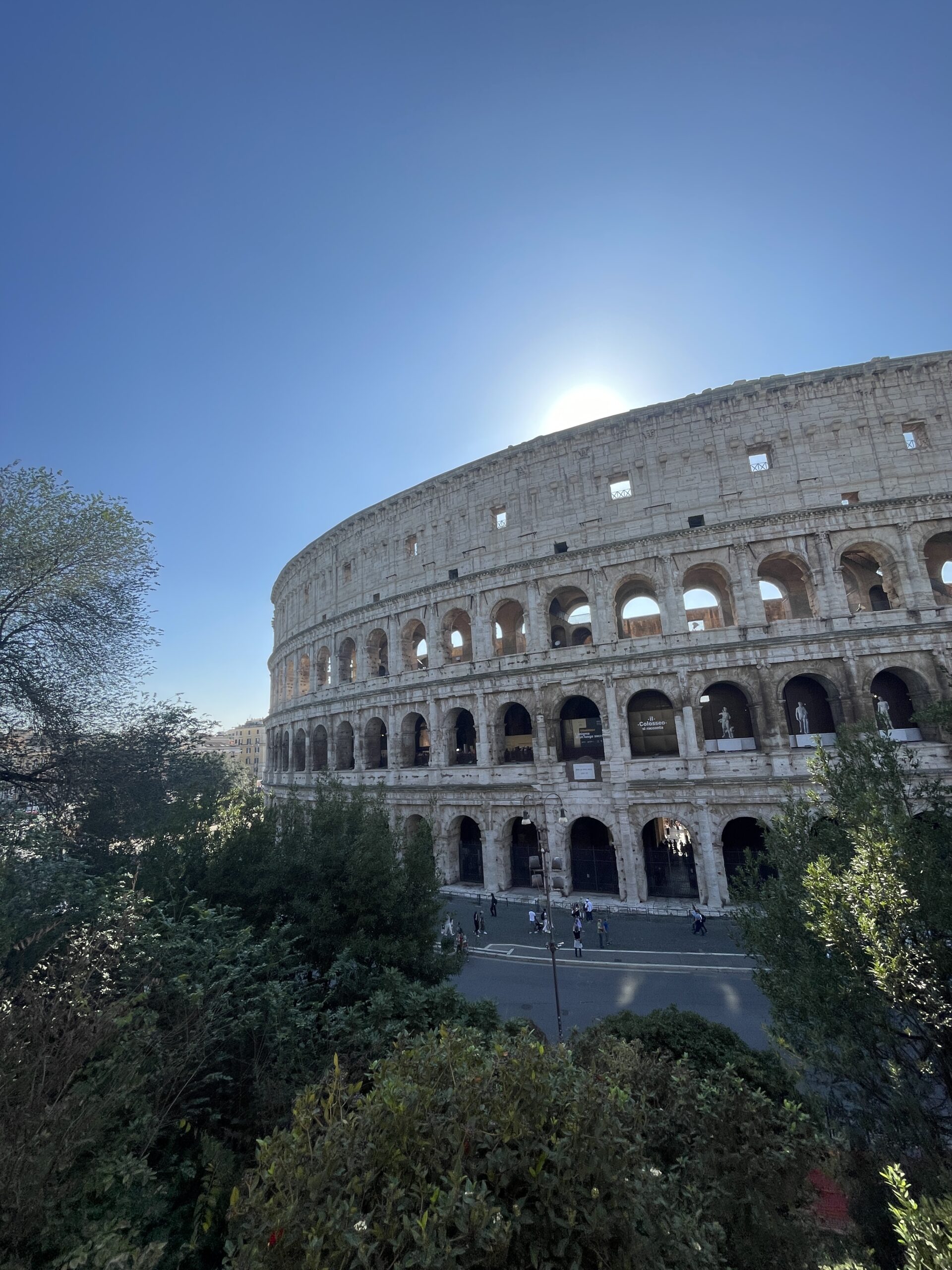
Historical geography and period context: UNESCO, Historic Centre of Rome; Treccani, Peace of Lodi. Image credits: Colosseum photograph (CC0) and SPQR emblem (public domain). Setting authority: Rodrigo Borgia — Golden Pontiff.
Keep this reference growing
If this page helped with your reading or game, you can support its upkeep or explore the curated books.
Explore the Bookshop — epics, classics and stories behind imagined worlds.