
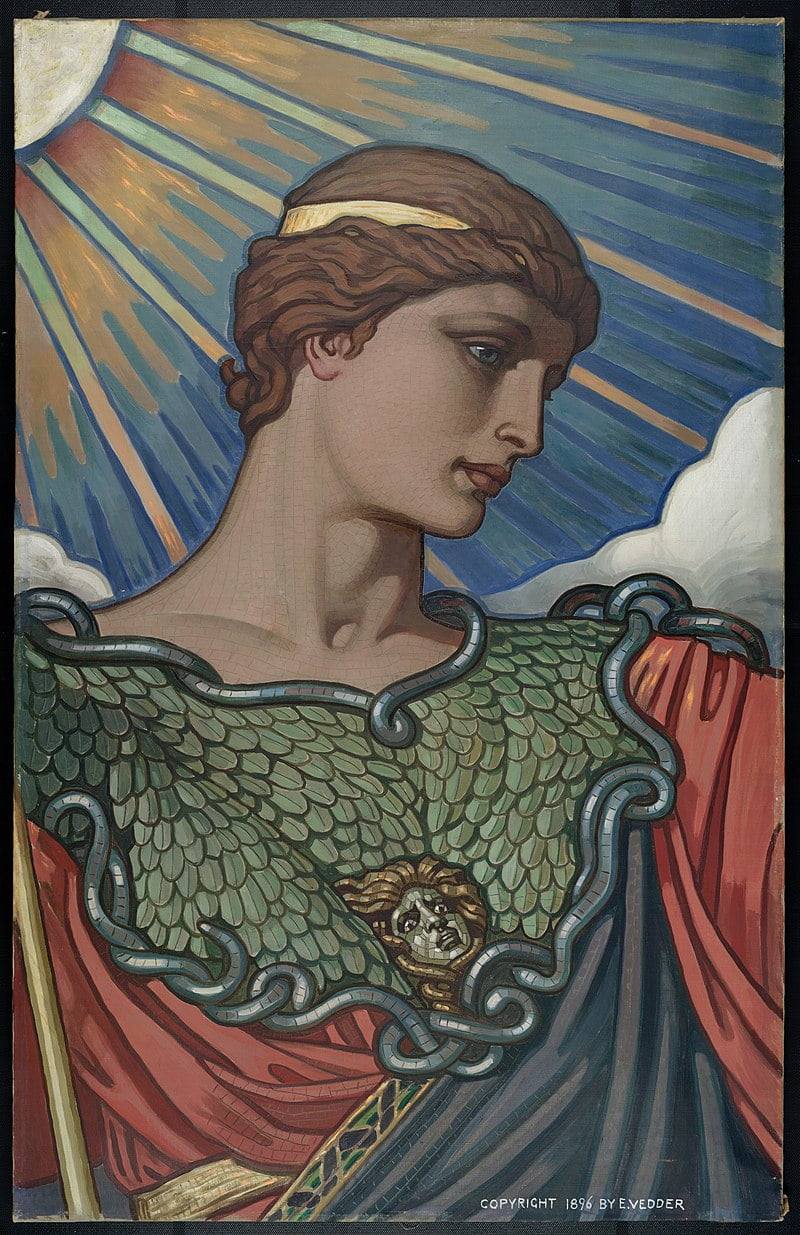
Minerva at a Glance
Tradition
Roman
Divine standing
Intermediate Deity
Campaign alignment
Lawful Neutral
Portfolio
Wisdom, craft, skilled work, learning, medicine, strategy and civic arts
Principal titles
Minerva; Minerva Capta in one Roman cult tradition
Sacred places
The Aventine temple, guild halls, workshops, schools, libraries and places of skilled labour
Emblems
Owl, helmet, spear, aegis and worked tools
Favoured weapon
Spear
Hellenic relationship
Closely identified with Athena, but Roman guild and professional cult contexts remain significant.
Related Roman powers
Roman Pantheon · Wisdom · Craft · Skill · Learning · Strategy
Minerva is the Roman goddess of wisdom, skilled craft, learning and disciplined intelligence. Her Roman cult belongs as much to scribes, performers, teachers, physicians and craftspeople as to commanders. Athena’s martial image matters, but it should not swallow the specifically Roman Minerva of trades and civic skill.
Same Deity, Different Cultural Aspect
Minerva is the Roman aspect of Athena: one goddess expressed through Roman craft, learning, skilled professions and civic intelligence. The Athena page presents the Hellenic aspect. Both pages remain separate and self-canonical because they describe different cults and cultural presentations, not different cosmic beings.
Divine Mechanics
Campaign Divine Tier 36 describes Minerva’s setting-scale power and is not an SRD challenge rating. The rules-facing 5.5e block stays within the SRD 5.2.1 CR 30 and ability-score-30 ceilings.
Minerva — 5.5e Rules-Facing Form
Medium Celestial (Deity), Lawful Neutral
CR 40 (custom epic) · PB +11 · Campaign Divine Tier 36
AC 29 · HP 820 · Speed 40 ft.
| STR | DEX | CON | INT | WIS | CHA |
|---|---|---|---|---|---|
| 28 (+9) | 32 (+11) | 32 (+11) | 34 (+12) | 34 (+12) | 28 (+9) |
Saving Throws Dex +22, Con +22, Int +23, Wis +23
Skills Arcana +19, History +19, Investigation +19, Perception +19, Religion +19
Damage Resistances cold, fire, force, psychic, radiant
Condition Immunities Charmed, Frightened, Poisoned
Senses Truesight 120 ft. · Languages all; telepathy 120 ft.
Traits
Legendary Resistance (6/Day). If Minerva fails a saving throw, she can choose to succeed instead.
Magic Resistance. Minerva has Advantage on saving throws against spells and other magical effects.
Perfect Preparation. At the start of combat Minerva chooses up to three creatures she can see. She learns each target’s highest and lowest saving throw modifiers and one damage resistance or immunity it possesses.
Aegis of Reason. Minerva and allies within 30 feet cannot be surprised and have Advantage on Intelligence and Wisdom saving throws.
Divine Spellcasting
Minerva has access to every spell granted by the deity’s portfolio domains in the edition being used: Knowledge · War · Magic · Artifice. These domain spells are always prepared or available to the deity and do not replace the deity’s normal actions.
Actions
Multiattack. Minerva makes three Strategist’s Spear attacks.
Strategist’s Spear. Attack: +23 to hit, reach 15 ft. or range 120 ft.. Hit: 31 (4d10 + 9) piercing plus 22 (4d10) psychic damage.
Calculated Defeat (Recharge 5–6). Minerva chooses up to six enemies she can see within 120 feet. Each makes a DC 31 Intelligence save, taking 66 (12d10) psychic damage and losing Reactions until the end of its next turn on a failure, or half damage on success.
Bonus Actions
Reposition the Line. Up to three allies within 60 feet move up to 20 feet without provoking Opportunity Attacks.
Reactions
I Expected That. When a creature Minerva can see makes an attack roll, she imposes Disadvantage after the roll is made but before the result is resolved.
Legendary Actions
- Move. Move up to half Speed without provoking Opportunity Attacks.
- Divine Strike. Make one Strategist’s Spear attack.
- Exploit Weakness (Costs 2). One ally within 90 feet makes one attack with Advantage; on a hit it deals an extra 18 (4d8) damage.
Minerva — Pathfinder 1e
Campaign epic extension; true deities are not normally given standard PF1e stat blocks.
CR benchmark 30 · hp about 760 · AC about 48 · Primary attack +41 · Primary DC 35 · Good saves +31 · Poor save +26.
Divine expression. Express Minerva through knowledge, prediction, skill mastery, tactical repositioning, defensive magic and precision rather than by treating her as a simple high-CR warrior.
Spell-Like Abilities. At will—analyze dweomer, greater dispel magic, moment of prescience, true seeing; 3/day—foresight, maze, wall of force; 1/day—miracle. Use caster level 30 for the combat benchmark.
Statistics
CR 40 (custom epic) · AC 58 · hp 1060 · Fort +37 · Ref +35 · Will +38
Str 28 · Dex 32 · Con 32 · Int 34 · Wis 34 · Cha 28
Base Atk +40 · CMB +49 · CMD 102
Domain Access
Minerva has full access to the deity’s linked portfolio domains in their Pathfinder-facing versions or clearly marked campaign adaptations.
Minerva — D&D 3.5e
Greater Deity; Divine Rank 17; LN Medium Outsider (Extraplanar)
Divine Rank 17 · DR 30/epic · SR 49 · Domain SLA caster level 27.
Divine rules. Divine rank adds to attacks, saves and checks; natural armour is rank + 13; divine AC bonus equals rank; deflection uses Charisma modifier.
Salient Divine Abilities. Alter Reality, Battlesense, Divine Skill Focus, Know Secrets and rank-appropriate knowledge or protection abilities.
Statistics
Challenge benchmark 46 · Ability scores use the deity’s epic 5.5e profile as the conversion baseline rather than a score-30 ceiling. Divine Rank remains the primary measure of cosmic authority.
Domain Access
Minerva can use every spell-like ability granted by the deity’s portfolio domains at the caster level determined by Divine Rank.
Minerva in Roman Religion
Minerva’s Aventine temple was associated with scribes and actors during the Republic, and the Quinquatrus placed the goddess within a calendar of skilled work, performance and learned professions. This makes practical competence central to her Roman identity.
The identification with Athena brought martial and mythic material, but Roman worship does not require every Greek story or Athenian civic institution to be copied across. In play, Minerva is the patron of people whose expertise keeps cities functioning: engineers, physicians, navigators, teachers, scribes, artisans and disciplined commanders.
What Is Minerva Doing Right Now?
Siegecraft, artillery, engineering, universities and expanding bureaucracies make Minerva especially relevant in the campaign present. She watches who actually understands the systems rulers increasingly depend upon.
Her priests often stand beside engineers, physicians, archivists and master artisans. They are dangerous to corrupt courts because they can tell the difference between inherited prestige and functional expertise.
Worship in the Campaign Present
Roman-descended guilds keep Minerva’s rites in workshops, scriptoria and schools even where no classical temple survives. Masters dedicate first tools, finished designs or copied texts to her before teaching apprentices.
Military cults honour her when strategy, fortification or logistics matter more than fury. A commander who wastes skilled lives for spectacle may lose her favour even while Mars remains interested in the war itself.
Domains, Spells and Divine Gifts
Minerva’s clergy favour Knowledge, Order, Forge, War and Protection themes. Suitable spells include Identify, Shield, Enhance Ability, Zone of Truth, Clairvoyance, Fabricate, Wall of Force, Legend Lore and Foresight.
Gift: See the Flaw
Once per long rest, after studying an object, fortification or plan for 1 minute, the devotee learns its most important practical weakness.
Gift: Aegis of Reason
The devotee may grant Advantage on one Intelligence or Wisdom saving throw to a creature within 30 feet.
Artifacts and Relics
The Grey Spear
Major Divine Artifact · Weapon (spear)
Attunement: Required by a creature proficient with martial weapons or a creature that has created a masterwork plan, design or crafted object.
The Grey Spear rewards correct understanding rather than fury. It becomes most dangerous after its bearer has identified how an opponent intends to fight.
5.5e
The Grey Spear is a +3 spear.
Read the Tactic. As a Bonus Action after you have seen a creature attack, cast a spell, Dash, Disengage, Dodge or Help, choose that creature. Until the end of your next turn, you have Advantage on attacks with the Spear against it, and the first hit deals an extra 22 (4d10) Force damage.
Aegis of Reason (3/Day). When you or an ally within 30 feet fails an Intelligence, Wisdom or Dexterity saving throw, you can use your Reaction to add 1d10 to the roll, potentially turning it into a success.
Perfect Analysis (1/Day). For 1 minute you can’t be surprised, you have Advantage on Intelligence and Wisdom checks, and creatures don’t gain Advantage on attacks against you merely because they are unseen.
Pathfinder 1e
Major Artifact · CL 20th · overwhelming divination and abjuration.
Functions as a +5 defending keen spear. After observing a creature for 1 round, the wielder may designate it as a studied foe; attacks against that foe gain a +4 insight bonus and deal +4d6 force damage for 1 minute. One studied foe may be designated at a time.
3/day: moment of prescience on an attack, save or skill check; 1/day: foresight on the wielder.
D&D 3.5e
Major Artifact · CL 20th · strong divination and abjuration.
Functions as a +5 defending keen spear. After observing a creature for 1 round, the wielder gains a +4 insight bonus on attacks against it and deals +4d6 force damage with the first successful hit each round for 1 minute.
3/day: moment of prescience; 1/day: foresight.
Destroying the Grey Spear
The Spear can be unmade only by using flawless knowledge to choose a course of action that the bearer knows will certainly destroy the Spear but save an innocent community from a greater disaster. It cannot be destroyed through ignorance, rage or accident.
The Owl Seal
Lesser Divine Relic · Wondrous Item (seal)
Attunement: None.
Mark the Design (3/Day). Press the Seal onto a plan, map, blueprint or set of written instructions. For 24 hours, the first creature that deliberately changes a marked instruction sees a brief diagram of the most immediate practical consequence of that change. The vision reveals consequence, not morality or distant fate.
In PF1e and 3.5e, the creature receives the same warning as a momentary divination effect and gains a +4 insight bonus on the next Craft, Knowledge (architecture and engineering) or Profession check made to evaluate the alteration.
Relationships
Jupiter and Juno complete the Capitoline order. Vulcan shares her concern with making, but Minerva favours design and skill where Vulcan embodies dangerous fire and the forge. Mars overlaps in strategy only where war becomes a disciplined public craft.
Use Minerva Tonight
The Engineer’s Heresy
A master builder proves a holy fortress is structurally unsound, and Minerva’s owl appears over the condemned workshop.
The Stolen Diagram
A siege design vanishes from a locked archive; every surviving copy now shows a different flaw.
The Wrong Victory
Minerva’s priests refuse to celebrate a battlefield triumph because the winning plan creates a worse war next year.
Divine Estate and Regional Effects
Where Minerva’s presence is strong, a major sanctuary can project the following effects across roughly six miles. A small shrine normally manifests only one effect within a much smaller area. Unless another divine power contests them, the effects fade over 1d10 days after the sanctuary is abandoned, desecrated or deliberately renounces the deity’s protection.
Tools Remember Their Purpose
Broken tools, looms, instruments and workshop devices reveal the simplest correct repair to a skilled observer after a minute of inspection.
Plans Reveal Flaws
Architectural, tactical and mechanical plans studied within the region disclose one obvious contradiction or structural weakness that their maker failed to notice.
Craft Is Protected
Sabotage against workshops, libraries and schools leaves visible signs: misplaced tools shift, damaged text darkens and tampered mechanisms refuse to sit flush.
Deep Dive
Continue through the Roman Pantheon, Athena, Jupiter, Juno, Mars. Follow the cult into Rome and wider Italy, or use the Cleric and Cleric Domains pages for player-facing worship.
Historical Sources and Rules Compatibility
- Aedes Minervae — Aventine temple and association with scribes and actors
- Quinquatrus — festival traditions associated with Minerva
Historical cult material is separated from campaign invention. The 5.5e statistics are an original epic extension using SRD-compatible terminology; CR and ability scores may exceed standard published ceilings where the deity’s scale requires it. Pathfinder 1e deity mechanics are explicitly a campaign epic extension. D&D 3.5e uses divine-rank structure.
Rules licensing. D&D 5.5e terminology derived from the System Reference Document 5.2.1 is used under CC BY 4.0 where applicable. Pathfinder 1e and D&D 3.5e deity statistics on this page are original campaign conversions rather than official published deity stat blocks.
Keep this reference growing
If this page helped with your reading or game, you can support its upkeep or explore the curated books.
Explore the Bookshop — epics, classics and stories behind imagined worlds.