
Concordia — Roman Goddess of Agreement and Civic Harmony
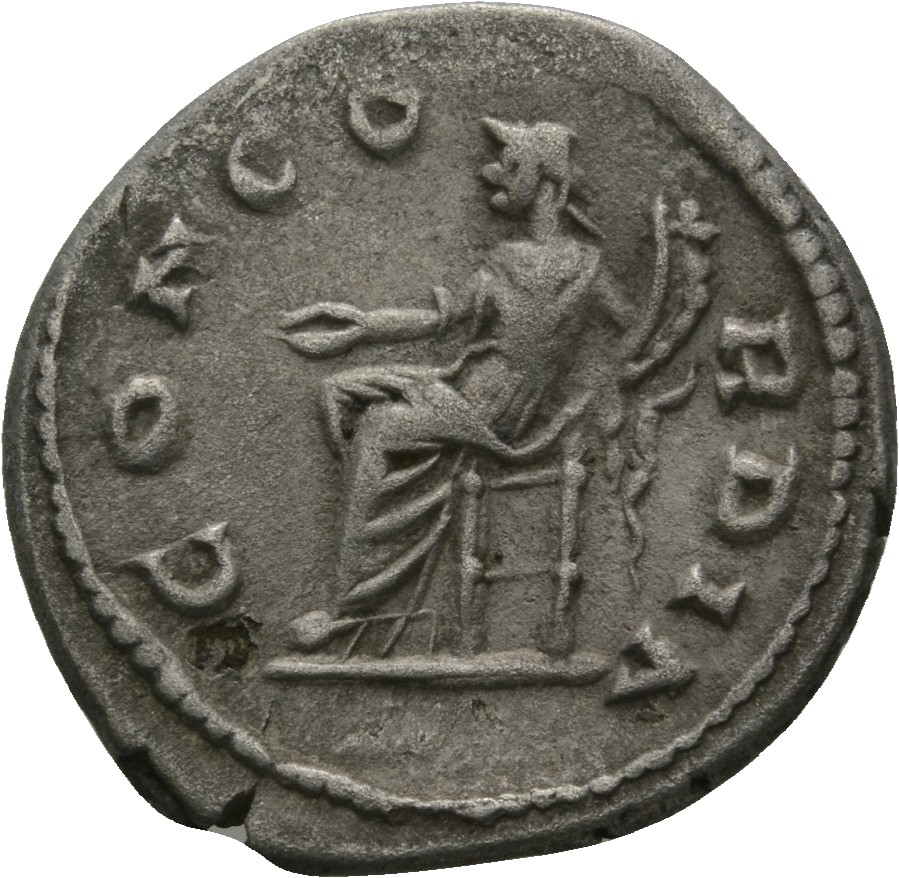
Concordia at a Glance
Tradition
Roman civic cult.
Divine standing
Lesser Deity · Divine Rank 7 · Campaign Divine Tier 27.
Alignment
Lawful Neutral.
Portfolio
Agreement, civic harmony, reconciliation, settlement and the restoration of workable public order.
Domains
Community · Protection · Law · Pact
Emblems
Joined hands, cornucopia, patera and the restored civic tablet.
Favoured weapon
Sceptre or staff.
Related Roman powers
Roman Pantheon · Divine Cult · Campaign Worship · Epic Mechanics
Concordia is the Roman goddess of agreement and civic harmony. She does not erase disagreement; she makes settlement possible when citizens, families, guilds or rulers still possess enough common ground to live under one order.
Divine Mechanics
Concordia — D&D 5.5e
Medium Celestial (Divine), Lawful Neutral
CR 33 (custom epic) · PB +9 · Campaign Divine Tier 27
AC 26 · HP 796 · Speed 40 ft.
| STR | DEX | CON | INT | WIS | CHA |
|---|---|---|---|---|---|
| 24 (+7) | 24 (+7) | 30 (+10) | 30 (+10) | 32 (+11) | 34 (+12) |
Saving Throws Con +19, Wis +20, Cha +21
Skills Insight +20, Perception +20, Religion +19
Damage Resistances psychic, radiant; bludgeoning, piercing and slashing from nonmagical attacks
Condition Immunities Charmed, Frightened, Poisoned
Senses Truesight 120 ft., passive Perception 30 · Languages all appropriate mortal languages; telepathy 120 ft.
Traits
Legendary Resistance (5/Day). If Concordia fails a saving throw, it can choose to succeed instead.
Magic Resistance. Concordia has Advantage on saving throws against spells and magical effects.
Divine Spellcasting
Primary spell save DC 29, +21 to hit with spell attacks. Full portfolio-domain access: Community · Protection · Law · Pact. Domain spells are always prepared or available in the matching edition.
Actions
Multiattack. Concordia makes three Sceptre of Accord attacks.
Sceptre of Accord. Melee or Ranged Spell Attack: +21 to hit, reach 10 ft. or range 120 ft., one target. Hit: 30 (4d8 + 12) force plus 18 (4d8) radiant damage.
Reconcile the Field (Recharge 5–6). Each hostile creature of Concordia’s choice within 60 feet makes a DC 28 Charisma save. On a failure it takes 54 (12d8) psychic damage, cannot take Reactions and cannot willingly attack a creature with which it has accepted a truce until the end of its next turn. On a success it takes half damage.
Reaction
Intercession. When a creature within 60 feet would attack during an agreed truce, Concordia forces it to repeat the choice after a DC 28 Wisdom save. On a failed save the triggering attack is lost.
Legendary Actions
Concordia can take 3 Legendary Actions per round.
- Move. Move up to half Speed without provoking Opportunity Attacks.
- Sceptre of Accord. Make one Sceptre of Accord attack.
- Portfolio Intervention (Costs 2). Use one non-damaging portfolio ability, domain spell of 5th level or lower, or protective effect without expending a normal action.
Concordia — Pathfinder 1e
Deity; original epic campaign extension
CR 33 · AC 55 · hp 862
Fort +35 · Ref +30 · Will +36
DR 17/epic · SR 39 · Speed 40 ft.
Str 24 · Dex 24 · Con 30 · Int 30 · Wis 32 · Cha 34
Base Atk +33 · CMB +40 · CMD 77
Domain Access
Full access to Community · Protection · Law · Pact in their Pathfinder-facing versions or clearly marked campaign adaptations.
Special Abilities
Reconcile the Field (Su). Use the 5.5e effect above as the narrative baseline; Pathfinder targets make a DC 39 Will, Fortitude or Reflex save as appropriate.
Intercession (Su). Functions as an immediate action when its trigger occurs.
Concordia — D&D 3.5e
Divine Rank 7 · CR benchmark 38 · DR 17/epic · SR 39 · Divine Aura 70 ft.
Str 24 · Dex 24 · Con 30 · Int 30 · Wis 32 · Cha 34
Salient Divine Abilities
Choose rank-appropriate abilities that express Concordia’s established portfolio, with Alter Reality or equivalent divine intervention reserved for effects that directly serve that portfolio.
Domain Access
Concordia can use every spell-like ability granted by Community · Protection · Law · Pact at the caster level determined by Divine Rank.
Concordia in Roman Religion
Concordia embodies agreement within the Roman community. Her public importance is political: reconciliation after internal conflict, cooperation between social orders and the claim that Rome’s competing interests can again act as one civic body. That makes her different from a broad personification of peace.
What Is Concordia Doing Right Now?
Concordia watches councils, guilds, noble houses and cities approaching the point where rivalry becomes self-destruction. She does not erase disagreement. Instead she presses mortals to discover whether there is still an agreement they can honour without surrendering everything they value.
When she intervenes personally, the goddess herself appears. More often her presence is recognised when hostile negotiators unexpectedly hear one another clearly, a broken oath-tablet fits together without a seam, or bells sound from an empty civic hall just before violence begins.
Worship in the Campaign Present
Concordia is invoked by councils, guilds, noble houses, neighbourhood assemblies and envoys who need an agreement to survive contact with competing interests. Her priests do not require everyone to like one another; they require terms that can actually be honoured.
Her shrines favour paired tablets, joined hands and public spaces where rival parties can meet under witness. A settlement reached before Concordia is expected to state obligations plainly and to give both sides something they can live with.
Domains, Spells and Divine Gifts
Portfolio domains: Community · Protection · Law · Pact. Concordia has access to every domain spell in the matching edition; the deity is not limited to a short example list.
Artifacts and Relics
The Sceptre of Accord
Major Divine Artifact · Rod
Attunement: Required by a creature formally recognised as mediator, magistrate or representative of a negotiating party.
The Sceptre cannot force peace. It reveals whether an agreement has any genuine foundation to build upon.
5.5e
Good Faith. The Sceptre warms when every creature within 30 feet that has formally agreed to negotiated terms genuinely intends, at that moment, to attempt to keep them.
Hear Each Other (3/Day). For 10 minutes, up to six willing creatures within 30 feet understand one another’s spoken language and have Advantage on Wisdom (Insight) checks made to understand stated terms rather than hidden motives.
Common Ground (1/Day). Each negotiating party names one concession it is willing to make. For 1 hour, deliberate magical compulsion and illusion cannot alter or conceal those stated concessions.
Pathfinder 1e
Major Artifact · CL 20th · overwhelming divination and enchantment. It warms when all signatories genuinely intend to attempt compliance. 3/day: tongues on up to six willing creatures for 10 minutes; 1/day: a 1-hour ward preventing magical alteration or concealment of formally stated concessions.
D&D 3.5e
Major Artifact · CL 20th · strong divination and enchantment. 3/day: tongues on up to six willing negotiators; 1/day: protect formally stated concessions from magical alteration or concealment for 1 hour.
Destroying the Sceptre
The Sceptre can be destroyed only if every party to a genuine peace it has recognised freely chooses to resume the same conflict for reasons none of them believes necessary, then breaks the Sceptre together.
Joined Tablets
Lesser Divine Relic · Wondrous Item (paired tablets)
When opposing parties each touch one Tablet and name the dispute, faint writing appears describing one concession that side could make without surrendering its essential stated goal. The Tablets reveal possible compromise, not whether either side should accept it. They function once per dispute per month.
Adventure Hooks
- A peace settlement blessed in Concordia’s name begins physically cracking although neither side admits breaking it.
- Two factions both receive authentic omens from Concordia and interpret them in opposite ways.
- A city cannot elect a new council because every compromise is supernaturally forgotten overnight.
- A relic of Concordia has been stolen by someone planning to manufacture a false reconciliation.
Related Roman Powers
Jupiter · Juno · Fortuna · Victoria · Roman Pantheon
Deep Dive
Continue through the Roman Pantheon · Jupiter · Juno · Fortuna · Victoria · Rome · Italy · Cleric · Cleric Domains.
Sources and Rules Note
Historical material treats Concordia primarily as the Roman personification of civic and political agreement rather than generic peace. Campaign Divine Tier is separate from 5.5e Challenge Rating. Pathfinder material is explicitly a campaign extension. D&D 3.5e uses the Divine Rank 7 Lesser Deity formulas.
Historical Sources and Further Reading
- Temples of Concordia in Rome — Temple history, civic reconciliation and ancient references.
- British Museum — Concordia coin — Roman coin iconography of Concordia with cornucopia.
Rules licensing. D&D 5.5e terminology derived from the System Reference Document 5.2.1 is used under CC BY 4.0 where applicable. Pathfinder 1e and D&D 3.5e deity statistics on this page are original campaign conversions rather than official published deity stat blocks.
Keep this reference growing
If this page helped with your reading or game, you can support its upkeep or explore the curated books.
Explore the Bookshop — epics, classics and stories behind imagined worlds.