
Ceres — Roman Goddess of Grain, Agriculture and the Plebeian Community
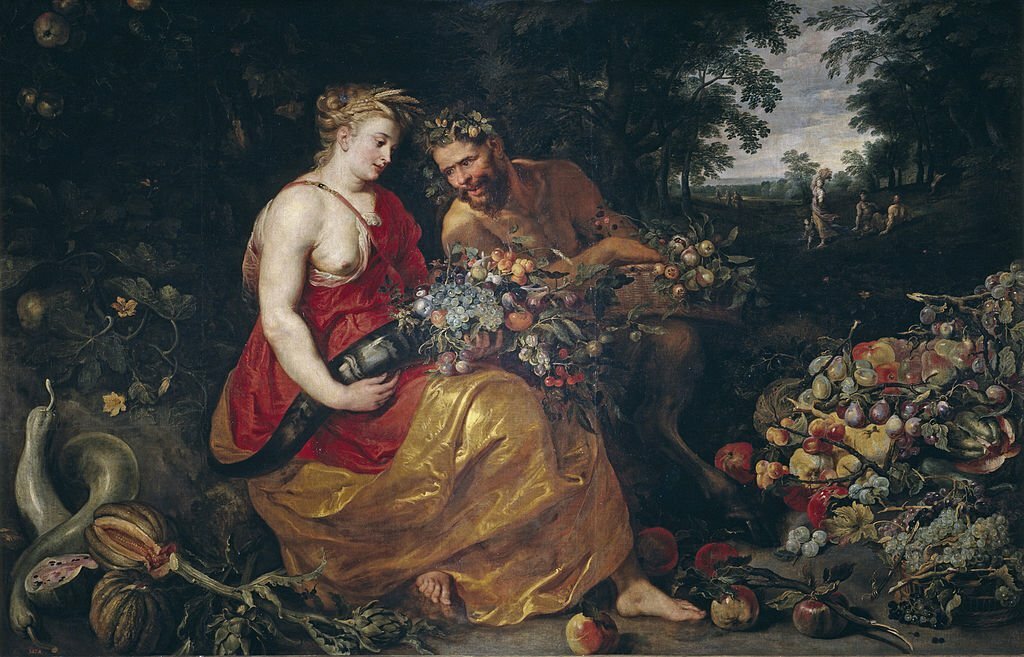
Ceres at a Glance
Tradition
Roman and Italic; the Roman cultural aspect of Demeter.
Divine standing
Intermediate Deity · Divine Rank 13 · Campaign Divine Tier 34.
Alignment
Neutral Good. Her cult is strongly protective of ordinary communities, but alignment is guidance rather than destiny.
Portfolio
Grain, agriculture, cultivated fertility, motherhood, harvest law, food security and plebeian welfare.
Principal cult
Ceres, Liber and Libera on the Aventine, with the Cerialia and older rites surrounding grain, harvest and civic provision.
Sacred places
Fields, granaries, mills, bakeries, market stores, communal ovens and the Aventine sanctuary in Rome.
Emblems
Wheat sheaf, torch, cornucopia, grain measure and sickle.
Favoured weapon
Sickle or staff.
Domains
Plant · Abundance · Fertility · Community · Protection
Hellenic relationship
Demeter is the same underlying goddess expressed through a different cult tradition; Persephone preserves the Hellenic face of the daughter Romans call Proserpina.
Related Roman powers
Ops · Saturn · Abundantia · Flora · Pomona
Who calls on her?
Farmers, millers, bakers, grain carriers, market inspectors, mothers, poor households and officials charged with keeping a city fed.
Roman Pantheon · Grain · Agriculture · Motherhood · Plebeian Life
Ceres is the Roman goddess of grain, agriculture, cultivated fertility and the communities that live by the harvest. Her worship joins the worked field to the city bread supply: sowing, storage, honest measure, public distribution and the political consequences of hunger all fall within her concern.
Same Deity, Different Cultural Aspect
Ceres and Demeter are the same underlying goddess. The Hellenic aspect emphasises Demeter, Persephone, Eleusis and the sacred cycle of loss and return. The Roman aspect is rooted in grain, the Aventine cult of Ceres, Liber and Libera, plebeian institutions and the civic responsibility to keep the community fed.
These pages stay separate because the cults lead adventurers to different places, allies, festivals, laws and conflicts. They do not describe two cosmic beings.
Divine Mechanics
Ceres is presented as the true deity, not a reduced proxy. Her 5.5e and Pathfinder statistics are deliberate epic campaign extensions, so CR and ability scores may exceed the normal published ceilings. D&D 3.5e keeps Divine Rank 13 separate from challenge rating.
Ceres — D&D 5.5e
Medium Celestial (Deity), Neutral Good
CR 37 (custom epic) · PB +10 · Divine Rank 13 · Campaign Divine Tier 34
AC 29 · HP 870 · Speed 40 ft.
| STR | DEX | CON | INT | WIS | CHA |
|---|---|---|---|---|---|
| 28 (+9) | 22 (+6) | 34 (+12) | 28 (+9) | 36 (+13) | 32 (+11) |
Saving Throws Str +19, Con +22, Int +19, Wis +23, Cha +21
Skills Insight +23, Nature +29, Perception +23, Persuasion +21, Religion +19, Survival +23
Damage Resistances cold, fire, psychic, radiant; bludgeoning, piercing and slashing from nonmagical attacks
Damage Immunities poison
Condition Immunities Charmed, Exhaustion, Frightened, Poisoned
Senses Truesight 240 ft., tremorsense 120 ft., passive Perception 33 · Languages all; telepathy 240 ft.
Traits
Divine Immortality. Reducing Ceres to 0 Hit Points defeats her in the encounter but does not erase the goddess. Permanent destruction requires a campaign-scale divine condition tied to her portfolio and cannot be achieved by ordinary damage alone.
Legendary Resistance (6/Day). If Ceres fails a saving throw, she can choose to succeed instead.
Magic Resistance. Ceres has Advantage on saving throws against spells and other magical effects.
Keeper of Cultivated Earth. Cultivated plants and stored grain within 120 feet of Ceres cannot be blighted, poisoned, spoiled or magically withered unless the effect comes from an artifact, another deity or a creature of comparable divine tier.
Bread for the Living. Whenever Ceres restores Hit Points to another creature, that creature also gains 20 Temporary Hit Points and can end one level of Exhaustion affecting it. A creature can lose only one level of Exhaustion from this trait per Long Rest.
Mother of the Measure. Ceres automatically knows when food, seed, grain, land measure or weights within 120 feet have been deliberately adulterated, short-measured or falsely recorded.
Divine Spellcasting
Wisdom is Ceres’s spellcasting ability (spell save DC 31, +23 to hit with spell attacks). She requires no material components. Every spell granted by her Plant, Abundance, Fertility, Community and Protection domains is always available to her in the matching edition. She can cast domain spells of 5th level or lower at will, 6th- and 7th-level domain spells 3/day each, and 8th- or 9th-level domain spells 1/day each.
Commonly used spells: Goodberry, Create Food and Water, Plant Growth, Greater Restoration, Heroes’ Feast, Heal and Regenerate.
Actions
Multiattack. Ceres makes three Harvest Staff attacks, or two Harvest Staff attacks and uses Sow or Reap if available.
Harvest Staff. Melee Weapon Attack: +19 to hit, reach 15 ft., one target. Hit: 31 (4d10 + 9) bludgeoning plus 27 (6d8) radiant damage. If the target is a construct, undead or creature currently benefiting from magical starvation, blight or life-draining magic, the radiant damage becomes 45 (10d8).
Sow or Reap (Recharge 5–6). Ceres chooses a point she can see within 150 feet. A 60-foot-radius field erupts for 1 minute. Allies of her choice regain 27 (6d8) Hit Points when the field appears and 18 (4d8) Hit Points when they start their turns there. Enemies treat the area as Difficult Terrain and must succeed on a DC 31 Strength saving throw when the field appears or become Restrained by grain, roots and binding stalks. A Restrained creature repeats the save at the end of each of its turns.
Judgment of Famine (Recharge 6). One creature Ceres can see within 120 feet must make a DC 31 Constitution saving throw. On a failure it takes 91 (14d12) necrotic damage, cannot regain Hit Points until the end of its next turn and gains one level of Exhaustion. On a success it takes half damage and suffers no other effect. Ceres cannot use this action against a creature that is genuinely starving unless that creature willingly accepts the risk.
Bonus Action
Raise the Grain. Ceres creates a wall of dense grain, roots and packed earth up to 80 feet long, 20 feet high and 5 feet thick within 120 feet. It provides Total Cover and lasts until the start of her next turn unless Ceres chooses to maintain it.
Reaction
No One Starves Here. When a creature Ceres can see within 90 feet would be reduced to 0 Hit Points, she causes it to drop to 1 Hit Point instead and immediately gain 40 Temporary Hit Points. A creature can benefit from this reaction once per Long Rest.
Legendary Actions
Ceres can take 4 Legendary Actions, one at a time at the end of another creature’s turn, and regains them at the start of her turn.
- Move. Ceres moves up to half her Speed without provoking Opportunity Attacks.
- Harvest Staff. Ceres makes one Harvest Staff attack.
- Ripen the Field (Costs 2). One 20-foot-radius area within 120 feet becomes binding vegetation until the end of Ceres’s next turn. Enemies entering or starting their turn there must succeed on a DC 31 Strength save or become Restrained until the start of their next turn.
- Bread Enough (Costs 2). Up to three allies within 90 feet each regain 27 (6d8) Hit Points and gain 15 Temporary Hit Points.
- Turn the Season (Costs 3). Ceres ends one spell or magical effect of 8th level or lower within 120 feet that causes blight, disease, poison, unnatural drought, magical famine or plant death. Against stronger effects she makes a Wisdom check at +13 against DC 10 + the effect’s spell level or equivalent divine tier.
Ceres — Pathfinder 1e
Medium outsider (deity, extraplanar, good), Neutral Good; original epic campaign extension
CR 38 · Divine Rank 13 · Campaign Divine Tier 34
Init +12 · Senses truesight 120 ft., tremorsense 60 ft.; Perception +56 · Aura abundance 120 ft.
AC 58, touch 36, flat-footed 50 · hp 900 · Fast Healing 20
Fort +39 · Ref +33 · Will +42
Defensive Abilities divine immortality, freedom of movement · DR 30/epic · SR 49
Immune charm, compulsion, disease, exhaustion, fear, paralysis, poison, sleep · Resist cold 30, electricity 30, fire 30
Speed 40 ft.
Offense
Melee +5 sacred sickle +50/+45/+40/+35 (2d6+21/19–20 plus 4d6 divine) or divine staff +49/+44/+39/+34 (2d8+17 plus 4d6 divine)
Space 5 ft. · Reach 10 ft.
Special Attacks abundant field, grain-mother’s judgment, harvest surge, divine aura (DC 39)
Spell-Like and Domain Abilities
Ceres uses caster level 38 for this epic conversion. Every spell granted by her Plant, Abundance, Fertility, Community and Protection domains is available to her in its Pathfinder-facing version or clearly marked campaign adaptation.
Constant: freedom of movement, tongues, true seeing
At will: create food and water, goodberry, neutralize poison, plant growth, remove disease, restoration, speak with plants
3/day: control plants, greater restoration, heal, heroes’ feast, regenerate
1/day: control weather, mass heal, miracle
Special Abilities
Abundance Aura (Su). Allies within 120 feet gain a +4 sacred bonus on saving throws against disease, poison, fatigue, exhaustion and effects that reduce ability scores or maximum hit points. Mundane food and water within the aura cannot spoil.
Abundant Field (Su) 1d4 rounds. As a standard action Ceres creates a 60-foot-radius field within 120 feet for 1 minute. Allies heal 20 hit points when they begin their turn in it. Enemies treat it as difficult terrain and must succeed on a DC 39 Reflex save when the field appears or become entangled; a creature that fails by 10 or more is also pinned for 1 round.
Grain-Mother’s Judgment (Su) 1/day. One creature within 120 feet makes a DC 40 Fortitude save. On a failure it takes 20d8 damage, becomes exhausted and cannot regain hit points for 1 round. On a success it takes half damage and becomes fatigued for 1 round.
Honest Measure (Su). Ceres automatically detects deliberate adulteration, false weights, concealed spoilage and magically falsified inventories involving food, seed or cultivated land within 1 mile.
No One Starves Here (Su) 3/day. As an immediate action when an ally within 120 feet would fall below 1 hit point, Ceres leaves it at 1 hit point and grants it 40 temporary hit points.
Statistics
Str 32 · Dex 26 · Con 34 · Int 28 · Wis 38 · Cha 32
Base Atk +38 · CMB +49 · CMD 67
Feats Combat Casting, Combat Reflexes, Great Fortitude, Improved Critical (sickle), Improved Initiative, Iron Will, Lightning Reflexes, Skill Focus (Knowledge [nature]), Toughness, Weapon Focus (sickle), plus epic-appropriate divine feats chosen to support healing, terrain control and spellcasting.
Skills Diplomacy +52, Heal +60, Knowledge (history) +50, Knowledge (nature) +58, Knowledge (nobility) +50, Knowledge (religion) +50, Perception +56, Sense Motive +56, Spellcraft +50, Survival +56
Languages all; telepathy 120 ft.
Ceres — D&D 3.5e
Intermediate Deity; Divine Rank 13; Medium Outsider (Extraplanar, Good); Neutral Good
CR 46 (campaign deity benchmark) · Divine Rank 13 · Campaign Divine Tier 34
Init +12 · Senses divine senses, true seeing; Listen +53, Spot +53 · Divine Aura 130 ft., Will DC 38
AC 67, touch 43, flat-footed 59 · hp 980
Fort +43 · Ref +38 · Will +46
DR 25/epic · SR 45 · Immune disease, poison, sleep, paralysis, stunning, ability damage, ability drain, energy drain and ordinary aging
Speed 60 ft.
Offense
Attack +5 sacred sickle +58 melee (2d6+17/19–20 plus 4d6 divine)
Full Attack +5 sacred sickle +58/+53/+48/+43 melee
Space/Reach 5 ft./10 ft.
Special Attacks divine aura, domain spell-like abilities, harvest judgment, power over cultivated life
Divine Spellcasting and Domains
Ceres has full access to every spell granted by her Plant, Abundance, Fertility, Community and Protection domains in their 3.5e-facing versions or clearly identified campaign conversions.
Domain spell-like ability caster level 23. Unless an individual spell says otherwise, save DCs use Ceres’s divine rank and Charisma in addition to the spell’s normal level.
Typical spell-like abilities: create food and water, goodberry, plant growth, neutralize poison, restoration, control plants, heroes’ feast, heal, regenerate, greater restoration, mass heal.
Salient Divine Abilities
- Alter Reality. Ceres can reshape local conditions when the change directly serves grain, agriculture, food security, motherhood or the survival of a community.
- Divine Healing. Her healing ignores ordinary limits on mortal restorative magic when used within her portfolio.
- Gift of Life. Ceres can restore life where death was not demanded by a greater cosmic law or a superior divine power.
- Power of Nature. Cultivated plants, seeds and agricultural terrain answer directly to her will.
- Divine Creation. Ceres can create mundane seed, grain, bread and agricultural necessities on a divine scale, but she does not use this power casually to erase the social meaning of work, storage or stewardship.
Portfolio Powers
Harvest Ward. Mundane crops, seed stores and food under Ceres’s immediate protection cannot be spoiled or blighted by non-epic magic.
Honest Measure. She knows when food, weights, field boundaries or grain accounts within her divine senses have been falsified.
Famine Withheld. Ceres may suspend the effects of starvation, mundane drought and crop failure for a community she directly protects, though long-term intervention always produces political and religious consequences.
Statistics
Str 32 · Dex 26 · Con 36 · Int 30 · Wis 40 · Cha 34
Skills Concentration +56, Diplomacy +55, Heal +58, Knowledge (history) +53, Knowledge (nature) +58, Knowledge (nobility and royalty) +53, Knowledge (religion) +53, Listen +53, Sense Motive +58, Spellcraft +53, Spot +53, Survival +58
Feats Combat Casting, Combat Reflexes, Empower Spell, Epic Will, Great Fortitude, Improved Critical (sickle), Improved Initiative, Iron Will, Lightning Reflexes, Quicken Spell, Skill Focus (Knowledge [nature]), Toughness, Weapon Focus (sickle), plus rank-appropriate epic divine feats.
What Is Ceres Doing Right Now?
Ceres is paying attention to the points where harvest becomes power: grain stores held behind armed doors, merchant contracts that can starve a district, fields requisitioned for war, bad coin accepted for bread, irrigation cut to punish a village and officials who discover that a shortage can be more useful than a full granary.
Her signs are rarely subtle when hunger is being used deliberately. Locks refuse to close on confiscated grain. Mould stops at the threshold of a communal store. A baker finds exactly enough flour for the queue outside and no more. A ledger develops a new line showing where missing sacks were diverted. A field that should have failed rises green around the homes of the people who actually worked it.
In Rome, her priests are especially alert to old Aventine obligations, food distribution, warehouse ownership and the political use of scarcity. Across Italy, rural shrines watch seed stores, milling rights, common fields and the movement of grain toward towns.
Worship in the Campaign Present
Farmers, tenant cultivators, millers, bakers, grain carriers, market inspectors, mothers, poor households and officials responsible for food supply all call on Ceres. Her cult is strongest where the crop must pass through many hands before it becomes bread.
Her clergy do not condemn profit, storage or trade. They condemn false measure, deliberate adulteration, seizure of seed grain, extortion during famine and the use of necessary food as a weapon against people who cannot walk away from the market.
Field priests
Bless seed, judge planting disputes, inspect blight and decide when a failed harvest is natural, magical or deliberate.
Granary keepers
Maintain emergency stores, record withdrawals and guard against spoilage, theft and politically convenient accounting.
Market witnesses
Test weights, measures and grain quality. A sworn measure before Ceres is treated as more than commercial evidence.
Neighbourhood bakers
Keep communal ovens and bread lines functioning when siege, riot or shortage breaks ordinary supply.
Divine Estate and Regional Effects
Ceres does not possess a second cosmic realm separate from Demeter. Roman worship reaches the cultivated, civic face of the same divine territory: ordered fields, threshing floors, seed stores, torchlit roads and granaries where the moral question is always who is fed, who is excluded and who controls the measure.
When Ceres is personally present or when a major sanctuary is fully consecrated to her, the following effects can extend across roughly six miles. A village shrine usually produces only one or two effects within a mile. Unless another divine power contests them, the effects fade over 1d10 days after the sanctuary is desecrated, abandoned or deliberately renounces her protection.
The Harvest Holds
Sign: grain heads stand upright after storms and seed stays dry even in damp stores. Effect: mundane crop disease, ordinary pests and nonmagical spoilage cannot destroy more than one-tenth of a protected harvest. Magical blight must overcome a DC 20 spellcasting ability check or equivalent divine contest to take hold. Fade: protection weakens over three days once Ceres’s presence is withdrawn.
Every Measure Tells the Truth
Sign: false weights feel unnaturally heavy and adulterated grain separates visibly in the hand. Effect: deliberate short-measure, hidden spoilage and falsified food inventories are revealed to anyone who inspects them for at least 1 minute. Illusion magic can conceal the evidence only if it exceeds Ceres’s regional effect in divine tier. Fade: the signs disappear after 24 hours.
Bread Shared Is Bread Enough
Sign: shared meals stay warm and ordinary bread tastes freshly baked. Effect: a creature that willingly shares a meal with at least one other person can ignore the first level of Exhaustion caused by hunger or forced march until its next Long Rest. A creature cannot gain this benefit from food deliberately withheld from others in need. Fade: the benefit ends at the next Long Rest.
The Fields Remember the Hands
Sign: stalks bend toward the people who sowed, weeded or harvested them. Effect: within cultivated land, checks made to identify sabotage, stolen seed, poisoned irrigation or fraudulent boundary changes gain Advantage in 5.5e or a +4 sacred bonus in d20 editions. Fade: evidence remains visible for seven days after the offending act.
No Famine by Decree
Sign: official seals on seized food crack, while locks on genuinely protected emergency stores remain sound. Effect: food confiscated solely to starve a dependent population cannot be magically preserved, hidden or transported by teleportation within the region unless the opposing effect succeeds in a divine contest. Ceres does not stop lawful emergency rationing or necessary military storage; the effect responds to intent and consequence. Fade: contested stores return to normal within one day after the coercive order is lifted.
How Ceres Intervenes
Ceres normally escalates slowly. First comes an omen: grain sprouting in a footprint, a torch that refuses to go out, a set of scales that will not balance. Next she directs a priest, household, guild or neighbourhood to act. If mortals cannot solve the problem, cultivated plants, protective spirits and sacred animals begin to assist. Miracles follow only when the threat is large enough to endanger a community or break the obligations that make harvest possible.
Direct divine intervention is rare because it changes politics as much as weather. A field ripened overnight can feed a city, but it can also destroy the price of grain, expose hoarding, collapse a merchant house and force rulers to explain why divine help was needed at all.
Ceres in Roman Religion
The Aventine temple of Ceres, Liber and Libera was traditionally connected with famine and the early Republic. The sanctuary became closely associated with plebeian institutions: ancient sources and later topographical summaries describe it as a headquarters for plebeian aediles, a repository for records and a place connected with food distribution to the poor.
That history is central to her use in play. Ceres is not simply a goddess who makes crops grow. She stands where agriculture becomes civic survival: grain contracts, market law, public storage, access to bread and the question of whether the people who work the land can survive the system built around their harvest.
The Cerialia
The Cerialia honours Ceres in spring. Torch imagery recalls the search for Proserpina, while public games, white garments and the movement of crowds turn the festival into a visible statement that grain, mourning, motherhood and civic life belong to the same sacred cycle.
Domains, Spells and Divine Gifts
Ceres grants access to the Plant, Abundance, Fertility, Community and Protection domains. Each link leads to the full domain entry; use only the edition that applies to the character rather than mixing rules between editions.
Her divine spellcasting naturally favours nourishment, cultivated growth, healing, endurance and the defence of communities. Useful linked spells include Goodberry, Create Food and Water, Plant Growth, Greater Restoration, Heroes’ Feast, Heal and Regenerate.
Divine Gifts
Honest Measure
You always know whether grain, flour, oil or another staple has been deliberately short-measured or adulterated when you personally inspect it.
Bread Enough
Once per Long Rest, when you contribute food to a shared meal, the existing meal feeds twice as many creatures without reducing nourishment. It cannot create saleable surplus.
Seed-Keeper
Mundane seed you deliberately set aside for planting remains viable for one year despite ordinary damp, frost, heat or poor storage. Magical blight and deliberate destruction still work normally.
The Mother’s Refusal
Once per Long Rest, when a creature you can touch would gain Exhaustion from hunger, forced march or exposure, it may immediately repeat the relevant saving throw with Advantage.
Relics of Ceres
The Aventine Sheaf
A sheaf of grain that never rots. Seed taken from it can restore a blighted field if the land has not been destroyed by a superior divine or artifact-level curse.
The Plebeian Measure
A bronze grain measure that exposes fraudulent weights and refuses to hold an intentionally short portion when the recipient depends on the food for survival.
The Torch of the Search
A blackened torch that burns without consuming fuel when carried in search of a missing child, stolen seed store or community cut off from food. Its flame dims when the bearer knowingly abandons someone who could still be saved.
Relationships
Demeter
The Hellenic expression of the same goddess. Their myths, names and ritual languages differ, but their deepest identity is shared.
Persephone / Proserpina
The daughter whose loss and return turns harvest into a story of motherhood, grief and seasonal restoration.
Ops
Stored plenty and the earth’s capacity to provide. Ops represents abundance held in reserve; Ceres is more closely tied to grain, cultivation and the community fed by it.
Saturn
Sowing, old agricultural order and remembered abundance. Saturn looks backward toward the Golden Age; Ceres judges the present harvest and who receives it.
Abundantia
Plenty personified. Ceres is less abstract: she is concerned with soil, seed, labour, storage and bread.
Flora and Pomona
Flora governs flowering and spring abundance; Pomona guards orchards and fruit. Ceres rules the staple crop and the civic life built around it.
How Ceres Appears
Ceres usually appears as a tall matron in heavy drapery, crowned or wreathed with grain. She carries a torch, a sickle, a staff or a full sheaf. When she is pleased, dust smells like warm bread and seed spills without being lost. When she is angry, full granaries sound hollow and every dishonest weight feels like stone.
Her presence changes the behaviour of food before it changes the weather. Bread stays warm. Spoiled grain separates from the good. Rats flee a storehouse. A field that has been stolen or poisoned bends toward the road as though pointing after the culprit.
Use Ceres Tonight
The Granary Refuses the Seal
A magistrate’s lock will not close on grain seized from a starving district. Every replacement lock fails, and the crowd outside is growing.
The Bread Is Warm at Dawn
Every poor household in one quarter wakes to fresh loaves, but the city’s central granary has not lost a single sack. Someone wants the miracle investigated before it becomes a precedent.
The Field Names the Thief
Wheat bends into letters spelling the name of the person who sabotaged the irrigation channels. The named person swears the field is lying.
The Seed Grain Is Missing
A ruler has distributed emergency grain to calm unrest, but the sacks were the district’s seed stock. Ceres’s priests demand its return before the next planting window closes.
The Cerialia Torch
During the festival, one sacred torch will not extinguish and points steadily toward a sealed cellar beneath a merchant house.
Deep Dive
Continue through the Roman Pantheon and compare Ceres with Demeter, Persephone, Ops, Saturn, Abundantia, Flora, Pomona and the Penates. Her cult leads naturally into Rome, wider Italy, the Cleric and the complete Cleric Domains collection.
For agricultural magic, follow Plant Growth, Create Food and Water, Heroes’ Feast, Heal and Regenerate. For player-facing worship, begin with the Plant, Abundance, Fertility, Community and Protection domains.
Historical Sources and Rules Compatibility
- Temple of Ceres, Liber and Libera — Platner & Ashby — temple tradition, Aventine location, plebeian political role, archives and food distribution.
- Cerealia — Smith’s Dictionary of Greek and Roman Antiquities — festival traditions, white garments, torches and public games.
- Ceres — World History Encyclopedia — accessible overview of Ceres, Proserpina, symbols and later mythic tradition.
Historical cult material is kept distinct from campaign mechanics. The 5.5e statistics are an original epic extension using SRD-compatible terminology; their CR and ability scores intentionally exceed the normal SRD ceiling and should not be mistaken for official published deity statistics. Pathfinder 1e material is an original epic conversion rather than a claim that the ruleset published a canonical Ceres stat block. D&D 3.5e uses the established divine-rank framework with Ceres fixed at Divine Rank 13. SRD-derived 5.5e material is used under CC BY 4.0 where applicable.