
Myth Made Real
Gods &
Pantheons
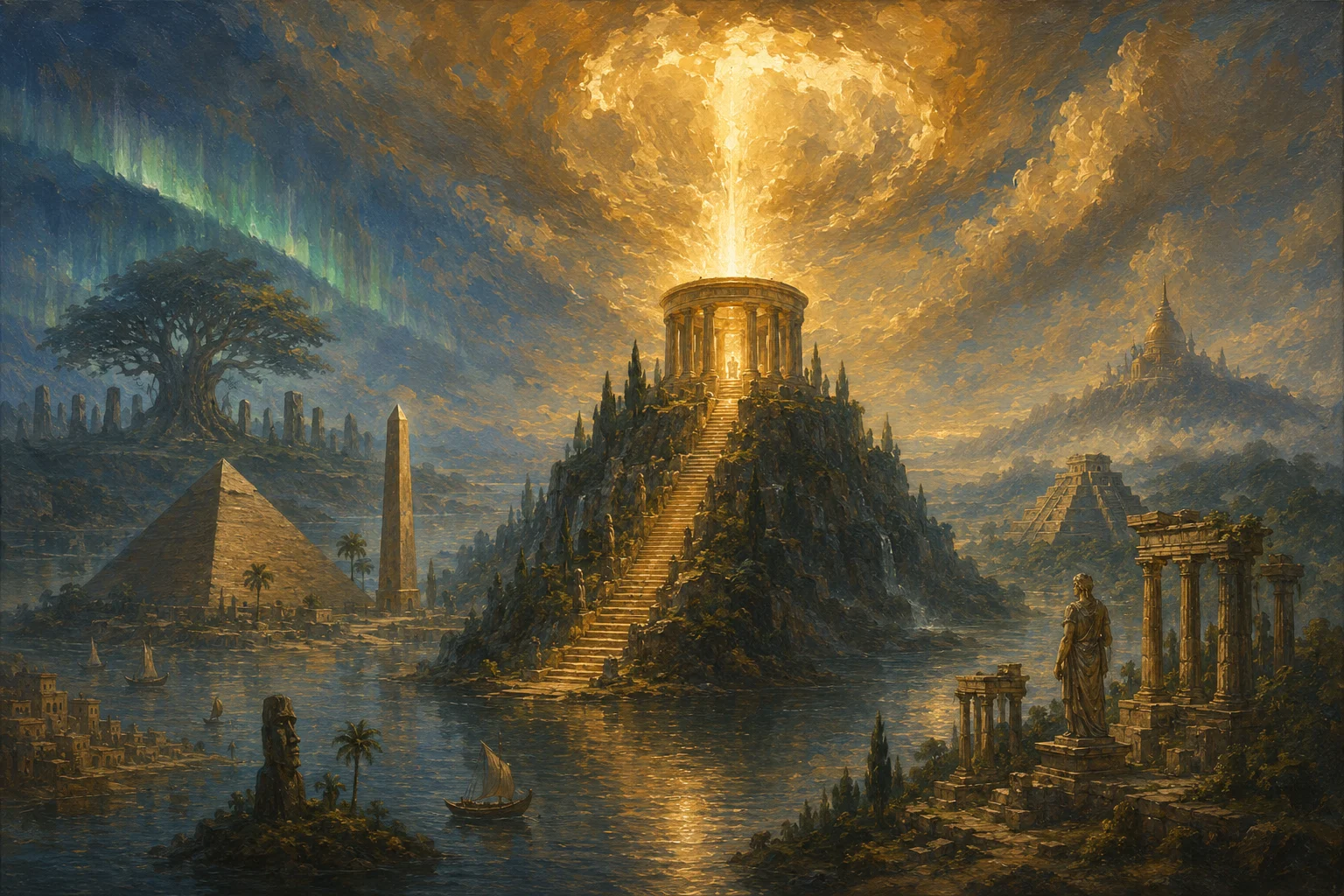
Enter the divine courts, sacred landscapes, heavens and underworlds whose rivalries shape the mortal world.
The gods are active powers. They are remembered in epic and ritual, approached through temples and sacred places, and encountered through omens, cults, relics, avatars and divine realms. This hub leads directly to every established pantheon, deity collection and divine-rules page already published on the site.
At a Glance
The Divine World
| What You’ll Find | Pantheons, individual deities, sacred powers, divine realms, cults, relics and campaign-facing divine rules. |
|---|---|
| Major Collections | Mesopotamian, Pharaonic, Hellenic, Roman, Asgardian and more. |
| Campaign Use | Patrons, enemies, omens, temples, divine quests, relics, domain magic and planar encounters. |
| Divine Rules | Salient Divine Abilities and deity-specific game mechanics where appropriate. |
| Start Here | Choose a pantheon below, then follow its deity pages, associated realms, creatures and regional links. |
Pantheons of the world
Pantheons and deity collections
Choose a divine tradition to explore its gods, sacred relationships, mythic history and campaign material.
Ancient Mediterranean and Near East
Temple cities, river kingdoms, civic cults, divine kingship and the great mythic courts of antiquity.
Mesopotamian Pantheon
Deities and primordial powers drawn from the cultures and temple cities of ancient Mesopotamia.
Open collection →Pharaonic Pantheon
Egyptian powers of creation, kingship, the Nile, protection, death, judgement and renewal.
Open collection →Hellenic Pantheon
Olympians, Titans, primordial beings, chthonic powers and lesser divinities of Greek tradition.
Open collection →Roman Pantheon
Roman and Italic gods, deities closely identified with Hellenic counterparts, household powers and imported cults transformed within Roman religious life.
Open collection →Northern and western traditions
Gods, otherworldly rulers and mythic beings preserved through heroic poetry, folklore and sacred landscape.
Celtic Pantheon
Irish, Welsh and continental Celtic deities, sacred ancestors, culture heroes and otherworldly rulers.
Open collection →Asgardian Pantheon
The Æsir, Vanir, giants, monsters and other beings whose struggles reach across the Nine Worlds.
Open collection →Finnish Pantheon
Sky, forest, water, death and household powers associated with Finnish and Kalevala-related traditions.
Open collection →Asia, Africa, Oceania and the Americas
Distinct pantheons and regional divine traditions, each with its own gods, sacred relationships and campaign material.
Chinese Pantheon
Celestial rulers, creator powers, culture heroes, scholars and immortals of the Chinese divine tradition.
Open pantheon →Japanese Pantheon
Kami of sun, storm, harvest, sacred landscape and divine ancestry, gathered as a distinct pantheon.
Open pantheon →Indian Pantheon
Vedic powers, great gods, goddesses, avatars and divine families of the Indian subcontinent.
Open pantheon →North American Pantheon
Regionally organised creator beings, sacred figures, tricksters and animal powers from distinct traditions.
Open collection →Mesoamerican Pantheon
Aztec, Maya and other Mesoamerican-associated divine figures already gathered on the collection page.
Open collection →African Gods & Sacred Traditions
A connected collection of Yoruba orishas and the Akan Anansi tradition, with each divine figure kept rooted in its own people, sacred landscape and ritual context.
Open collection →Polynesian Pantheon
Māori, Hawaiian, Tahitian and Samoan divine traditions, with gods, ancestors, sacred genealogies and living landscapes kept distinct while their wider Polynesian relationships remain visible.
Open collection →Beyond the cultural pantheons
Divine rules, campaign gods and cosmic horror
These pages cover divine rules, cosmic powers and campaign-specific divinities beyond the historical pantheon collections.
Cosmic Ranks & Cosmic Entities
Rules for distinguishing gods, quasi-divine beings and cosmic entities.
Open rules page →Salient Divine Abilities
An index of deity abilities, prerequisites and high-level divine mechanics.
Open ability index →The Outer Gods
Great Old One and Outer God material housed within the Bestiary rather than the cultural pantheons.
Open Bestiary collection →Other Gods
Setting-specific material for the Universal Ruler and other campaign divinities.
Open campaign gods →Historical and mythological context
How pantheons grow, change and endure
The historical record presents divine traditions as living systems shaped by place, language, ritual, political power and the movement of peoples.
Pantheons are histories, not inventories
Ancient worshippers did not usually encounter their gods as a single fixed list. A city might elevate its patron above neighbouring powers; a dynasty might promote one divine family; conquest and trade might introduce foreign cults; and the same deity could acquire different names, titles or relationships in different places.
Our evidence comes from hymns, epics, inscriptions, temple records, ritual texts, sculpture, votive objects, folklore and oral tradition. Those sources preserve different voices and periods rather than one perfectly consistent theology. The Mesopotamian, Egyptian, Greek and Roman collections therefore reflect long historical development, while the Celtic, Finnish, Indigenous American, African and Polynesian collections also depend heavily on regional story-cycles, later recording and living cultural knowledge.
Myth is real within the campaign world. Historical and cultural tradition establishes each power’s identity, sacred geography and remembered deeds; campaign canon determines how those powers act in the shared setting, how their realms touch the planes and how their rivalries affect mortal history.
Mesopotamian Deities
The British MuseumAncient Egyptian Gods and Goddesses
The Metropolitan Museum of ArtGreek Gods and Religious Practices
The British MuseumGreek and Roman Gods and Goddesses
The British MuseumViking Belief, Myth and Material Culture
Museum WalesAncient Druids of Wales
The Kalevala SocietyThe Kalevala: Introduction
The Metropolitan Museum of ArtHinduism and Hindu Art
The Metropolitan Museum of ArtShinto
Smithsonian National Museum of the American IndianStorytelling and Oral Traditions
The Metropolitan Museum of ArtAztec Stone Sculpture and Images of the Gods
Smithsonian National Museum of African ArtYoruba Ceremonial Staff Honouring Shango
Te Ara — Encyclopedia of New ZealandMāori Creation Traditions
Selected external videos
Gods, religion and pantheon building
Four practical videos on divine lore, religion and pantheon design. Each thumbnail opens the original video on YouTube.

Dungeons & Dragons Lore: Ecology of the Gods
A D&D-focused examination of divine beings, worship and the place of gods within a fantasy cosmology.
Watch on YouTube ↗
D&D Universe: Religion and the Gods
A broad introduction to religion, divine influence and worship within Dungeons & Dragons settings.
Watch on YouTube ↗
Davvy’s Guide to Making Your Own Pantheon
Practical worldbuilding guidance for designing gods, portfolios and relationships within an original pantheon.
Watch on YouTube ↗
On Worldbuilding: Religions
A worldbuilding discussion of invented religion, belief systems and their role in fictional societies.
Watch on YouTube ↗Keep this reference growing
If this page helped with your reading or game, you can support its upkeep or explore the curated books.
Explore the Bookshop — epics, classics and stories behind imagined worlds.