
Settlements — Towns, Cities, Villages & RPG Settlement Rules
Game Master Reference · 1454 CE
Settlements are where geography becomes human-scale. A village, town or city is not merely a population total or a place to buy equipment: it is a concentration of food, roads, markets, law, labour, memory, institutions, competing claims and people who want different things.
Begin with the place itself. Geography, supply, travel, law and institutions still matter in 1454, even where gods, monsters and magic are part of everyday reality. The supernatural changes material conditions; it does not make them irrelevant.

Run This Settlement Tonight
A Game Master does not need to map every lane, name every resident or decide what is stored in every warehouse before play begins. Prepare the pieces most likely to create decisions.
Prepare six things
- First impression: one striking sight, sound, smell or public event.
- Immediate problem: one Pressure that cannot be ignored indefinitely.
- Three active people: NPCs who want different outcomes.
- Two useful places: locations the characters are likely to enter.
- One organised move: something a guild, court, household, military force or other institution will do if nobody interferes.
- One escalation: what becomes worse if the party delays.
End with a consequence
After the session, change something. A debt is created, a road reopens, a watch captain loses authority, grain reaches the market, an organisation takes a district, a monster withdraws, a law changes or a supernatural claim becomes harder to ignore.
A settlement should remember what the characters do.
For reusable guards, merchants, scholars, officials and other everyday characters, see Non-Player Characters.
Quick Settlement Builder
Answer these questions in order. A playable settlement can be built without a street-by-street map.
1 Why is it here?
Choose the reason the settlement occupies this exact place: water, harbour, ford, bridge, road, mine, farmland, fortress, sanctuary, court, university, refuge, planar crossing or another defensible or profitable advantage.
2 How large is it?
Assign a descriptive Scale: Outpost/Hamlet, Village, Town, City or Great City. Do not confuse size with importance.
3 Who rules?
Record the Formal Authority, then separately decide who possesses Actual Power.
4 What sustains it?
Identify food, water, fuel, labour, local production, trade routes, tribute and any magical infrastructure that keeps the population alive.
5 What can adventurers obtain?
Decide the settlement’s lodging, equipment, specialist crafts, transport, information, healing, magical services and unusual markets.
6 Who keeps order?
Name the watch, militia, lord’s retainers, guild guards, soldiers, supernatural servants or other enforcement body.
7 Who claims the place?
Add external mortal authority and any deity, spirit, monster, magical order or planar power with a real claim.
8 What makes it distinctive?
Choose two or three persistent Traits: Academic, Defensible, Guild-Dominated, Sacred Site, Strategic Location, Great Market, Under-City or similar.
9 What is changing?
Choose one or two active Pressures: plague, food shortage, political conflict, curse, war, population surge, inflation, supernatural instability or another problem that can change through play.
Practical GM reference ▶ Creating a Fantasy Town in Dungeons & Dragons 5e — Dungeon Dudes
A practical town-building guide covering lodging, equipment, authority, information, healing, population, food and water, defences, resources and landmarks.
Settlement Profile
Use this profile for a substantial town or city. Smaller communities can omit fields that do not matter in play.
- Settlement: Name of the community.
- Region: The geographic or political region in which it stands.
- Campaign Present: Normally 1454 CE unless the entry explicitly represents another era.
- Permanent Population: Usual resident population, with uncertainty acknowledged where historical evidence is weak.
- Seasonal Population: Market-day, pilgrimage, fair, military, university, refugee, harvest or other temporary population where significant.
- Scale: Outpost/Hamlet, Village, Town, City or Great City.
- Civic Importance: Local, District, Regional, Realm or World/Crossroads.
- Settlement Roles: Why the settlement exists: port, fortress, market, sacred centre, resource town, administrative seat and so on.
- Site: Why this exact physical location was chosen.
- Hinterland: The farms, fisheries, villages, forests, mines, estates or other territory supporting it.
- Routes: Roads, rivers, coasts, passes, sea lanes, underground ways or supernatural routes connecting it.
- Imports / Exports: What the community cannot supply itself and what it sends outward.
- Critical Lifeline: The resource or route whose loss would seriously destabilise the settlement.
- Formal Authority: The ruler or body recognised by law or custom.
- Actual Power: The people or organisations capable of compelling action in practice.
- External Claims: Higher mortal authorities that claim jurisdiction, tribute or allegiance.
- Supernatural Claims: Gods, spirits, monsters, outsiders or magical powers with recognised, disputed or hidden rights.
- Institutions: Courts, guilds, schools, military bodies, councils, archives, sacred organisations and major commercial institutions.
- Watch / Enforcement: The people who physically enforce decisions.
- Peoples & Communities: The peoples living in or regularly using the settlement and how their communities are organised.
- Languages: Actual local and trade languages rather than a universal Common tongue.
- Rights & Status: Citizenship, residence, guild privilege, foreign merchant status, military dependency, legal exemptions and similar distinctions where relevant.
- Districts: Recognisable internal neighbourhoods, quarters, wards, compounds or suburbs.
- Traits: Persistent characteristics that make the settlement distinctive.
- Pressures: Problems and changes capable of creating adventures.
- Inherited Claim: An older event, treaty, charter, ruin, migration, conquest, debt or oath that still matters.
- Settlement State: Current condition after recent events.
- Notable NPCs: People whose decisions matter to visitors or residents.
- Adventure Hooks: Immediate situations that force choices rather than merely supplying background lore.
Why Settlements Exist
A settlement should have a reason to occupy its site. Water, food, defence, movement, resources, authority and sacred geography determine where people can gather and why they remain.
Agricultural Centre
Collects, stores, processes and redistributes the production of surrounding farms, orchards, pasture or managed woodland.
Ford, Bridge or River Centre
Controls a crossing, landing, navigable river or other point where movement is concentrated.
Port
Connects a hinterland to coastal or river traffic. A port needs both water access and something worth moving through it.
Market & Fair
Exists where producers, travellers and merchants can exchange goods under recognised protections or customs.
Resource Settlement
Grows around mines, quarries, timber, salt, fisheries, unusual crops, magical resources or specialised manufacture.
Fortress
Controls a frontier, road, bridge, harbour, mountain pass, border or other strategically valuable location.
Administrative Centre
Hosts a court, ruler, treasury, mint, tax administration, archive or other institution that draws people and wealth.
Sacred Centre
Grows around a sanctuary, oracle, sacred landscape, divine estate, pilgrimage route, ancestral site or supernatural covenant.
Scholarly Centre
Supports a university, school, archive, magical institution, learned court or specialist craft tradition.
Refuge
Occupies a defensible or hidden location where displaced or threatened communities can survive.
Mobile Centre
A seasonal, pastoral, naval or military community whose political and economic centre moves rather than remaining inside permanent walls.
Supernatural Crossroads
Exists because a planar gate, magical road, divine presence or other supernatural feature changes the value of the location.
No Settlement Is an Island
Even a fortified city depends on a wider network. Villages feed towns; towns gather regional trade; cities draw specialised labour, administration and long-distance exchange. A mine without food must import it. A port without a productive hinterland needs a reason ships still call there. A fortress without supply becomes a trap.
Network test: if the settlement’s critical road, river, harbour, bridge, magical route or food-producing hinterland is cut off, decide what fails first and how quickly the consequences become visible.
Settlement geography ▶ On Worldbuilding: WHY are cities where they are? — Hello Future Me
Useful for thinking about rivers, routes, terrain, resources and the geographical pressures that cause settlements to develop in particular places.
Scale, Population & Civic Importance
Population and importance are not the same thing. A relatively small town can control an indispensable bridge, host a famous fair, house a major university or possess political privileges far beyond what its population suggests.
| Scale | Typical Character | What Matters Most |
|---|---|---|
| Outpost / Hamlet | A small cluster of households, post, camp, fort, fishing site or specialist community. | Personal relationships, immediate resources and one or two dominant authorities. |
| Village | A rooted community with several families, local institutions and a defined relationship with surrounding land. | Land, custom, local production and nearby routes. |
| Town | A recognised market, craft, administrative, fortified or transport centre serving a wider district. | Markets, law, guilds, roads, specialised services and political privilege. |
| City | A dense centre with multiple districts, complex institutions, specialised labour and regional influence. | Competing powers, supply networks, jurisdiction and political rivalry. |
| Great City | A major regional or international centre whose consequences extend far beyond its walls. | Long-distance trade, major courts, armies, learning, sacred authority, diplomacy and overlapping claims. |
Civic Importance
- Local — matters mainly to its immediate inhabitants.
- District — serves several surrounding communities.
- Regional — controls or influences a wider territory or route.
- Realm — important to a kingdom, confederacy or major political power.
- World / Crossroads — affects long-distance trade, diplomacy, cosmology or several major regions.
Settlements in 1454
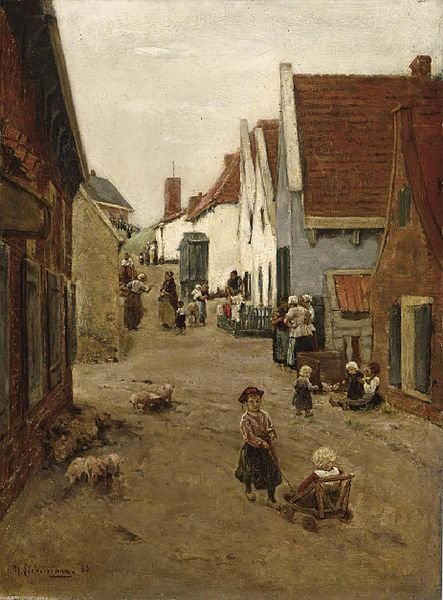
The campaign present is 1454 CE. Communities depend on agriculture, transport, legal privilege, taxation, household labour, warfare and local custom. Magic and supernatural powers can alter those systems, but they do not abolish them.
Food, Water & Fuel
A large population needs extensive production or dependable imports. Wells, rivers, springs and cisterns can be as politically important as walls. Wood, charcoal, peat and other fuels sustain households and industries.
Movement, Protection & Labour
Roads, rivers, bridges, passes, harbours and seasonal weather determine what can reach the settlement. Walls, castles, militias, households and alliances provide protection, while every form of construction, production and administration depends upon labour.
Magic changes constraints; it does not erase explanation. If magic supplies water, food, transport, protection or healing, decide who performs it, who controls access, what it costs and what happens when it fails.
Historical urban reference ▶ We Explored the Hidden Medieval City of London — History Hit
A historical case study of the surviving traces of medieval London: narrow streets, landmarks, religious buildings and the urban fabric beneath the modern city.
Seasonal Population
A single population figure can hide the rhythm of a settlement. Record temporary population whenever it changes markets, accommodation, crime, supply or authority.
- Market day
- Annual fair
- Pilgrimage
- Harvest labour
- Fishing season
- University term
- Military muster
- Campaigning army
- Refugees
- Seasonal migration
- Supernatural festival
- Plague flight
Inherited Claim
A substantial settlement should possess at least one piece of earlier history that still creates a right, obligation or dispute.
Legal Memory
A charter, old boundary, toll right, tax exemption, market privilege or disputed succession still shapes who may command whom.
Material Memory
A ruined predecessor settlement, buried wall, abandoned mine, changed river course or older road still shapes the place.
Mythic Memory
A broken divine oath, monster treaty, ancestral boundary, spirit compact or supernatural catastrophe remains politically real.
The Timeline can help connect local history to older wars, migrations, disasters and changes of rule.
Authority, Government & Actual Power
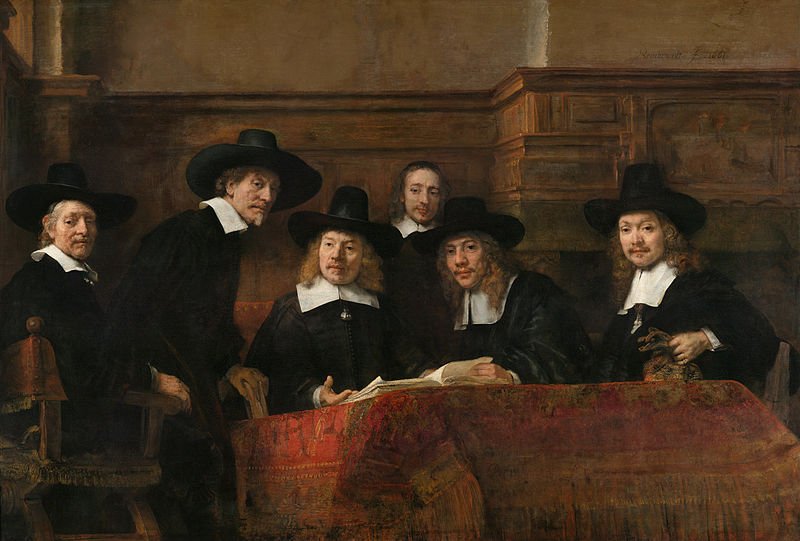
A legal ruler may lack the resources to enforce a decision, while guilds, military commanders, wealthy families, criminal organisations or supernatural powers can wield enormous influence without holding the formal title of ruler.
| Field | Question | Example |
|---|---|---|
| Formal Authority | Who possesses recognised legal or customary right to govern? | A civic council, noble, clan assembly, military governor or sacred authority. |
| Actual Power | Who can obtain compliance in practice? | Three merchant houses control credit and grain despite the council’s formal rule. |
| Institutions | Through what bodies is power exercised? | Courts, guilds, councils, households, military commands, schools or sacred bodies. |
| Enforcement | Who carries orders into the streets? | A paid civic watch backed by guild auxiliaries and the ruler’s retainers. |
| External Claims | Which greater mortal authority claims superior jurisdiction? | A prince claims taxation and appellate rights despite local autonomy. |
| Supernatural Claims | Which non-mortal powers possess recognised or disputed rights? | A river spirit’s older toll is still recognised by boatmen despite civic objections. |
Common Authority Types
- Single Ruler
- Council / Oligarchy
- Chartered Community
- Guild / Merchant Rule
- Military Authority
- Clan / Assembly
- Sacred Authority
- Administrative Rule
- Hidden / Syndicate Rule
- Magical / Supernatural Rule
- Mobile Confederation
Use culturally and historically appropriate titles on individual settlement pages. These categories describe how authority functions rather than imposing one political vocabulary on the entire world.
Economy & political power ▶ D&D City Geopolitics, Explained! — Dungeon Masterpiece
A useful RPG-focused treatment of why cities differ in size, how neighbouring settlements depend on one another, and how economics and authority create adventure pressures.
For organised groups capable of exercising power within or across a settlement, see Guilds, Factions & Organisations.
Supernatural Claims
A supernatural claimant should be described with the same precision as a mortal one: who claims, what they claim, why the claim exists and what practical consequence follows.
Example: the river dragon claims toll on every vessel passing the eastern bridge and regards the civic harbour dues as subordinate to its older right.
- Deity
- Divine servant
- Local spirit
- Monster
- Undead ruler
- Magical order
- Outsider
- Planar authority
- Ancestral power
- Supernatural covenant
Claims can be recognised, disputed, hidden, dormant or dominant. Relevant claimants can be found through the Gods, Bestiary and Planes.
Peoples, Communities, Rights & Belonging
A population list alone says little about how people actually live together.
Peoples & Communities
- Who lives here permanently?
- Who arrives seasonally?
- Are communities geographically concentrated?
- Do occupation, kinship or ancestry shape neighbourhoods?
- Are nonhuman communities integrated, autonomous, itinerant or legally distinct?
Rights & Status
- Who is a citizen, resident or subject?
- Who may own property?
- Who may enter guilds?
- Do foreign merchants possess protected status?
- Are some groups exempt from particular courts or taxes?
- Who owes military, labour or financial obligations?
Languages
Record the languages people actually use. A market may require interpreters, multilingual brokers or scribes; a court may operate in a different language from the surrounding streets; merchant communities can maintain their own languages across long-distance trade.
Markets, Trade, Services & Magic
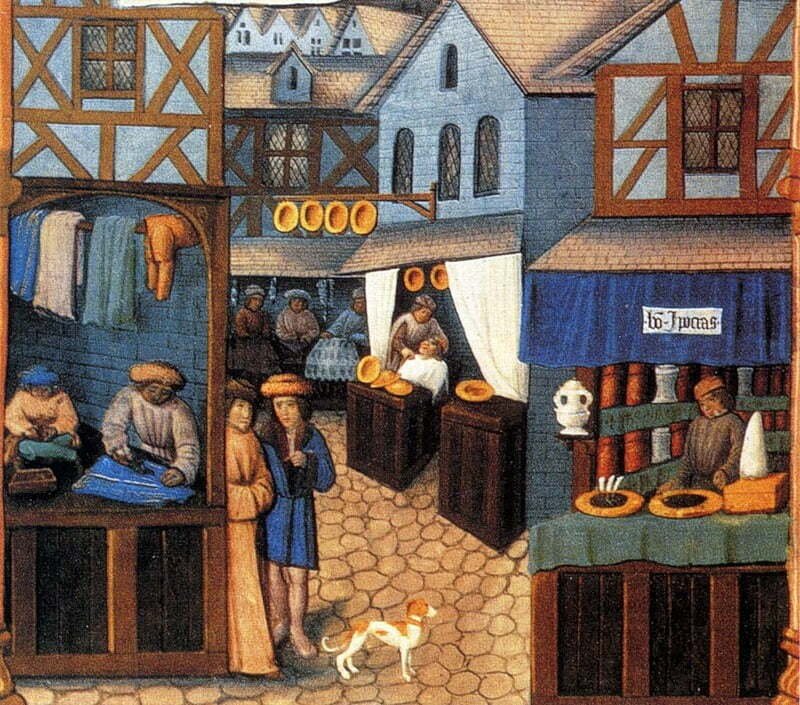
A larger population does not automatically provide every item or magical service. Availability depends on routes, institutions, specialist labour, patrons and current supply.
Market Reach
| Rating | Meaning |
|---|---|
| Sparse | Household production and a handful of local specialists. Unusual purchases require travel or commission. |
| Local | A regular market provides ordinary regional goods and several established trades. |
| Regional | Merchants and specialists serve a wider district; uncommon services can often be arranged. |
| Major | Long-distance merchants, specialised crafts and significant finance make unusual transactions plausible. |
| Exceptional | An international, supernatural or uniquely specialised market whose reach exceeds normal expectations for its population. |
Services Adventurers Actually Use
- Food & lodging
- Weapons & equipment
- Specialist crafts
- Transport
- Guides
- Healing
- Scholarly research
- Translation & scribes
- Credit & money-changing
- Rare buyers
- Magical commissions
- Information brokers
For mundane equipment, tools, transport and hireable services, see Player Resources.
Magic in the Settlement
Instead of simply writing “magic is available,” decide who teaches it, regulates it and provides it.
- Who teaches magical practice?
- Who licences, tolerates or suppresses it?
- Which institutions possess magical specialists?
- Are magical services public, private, guild-controlled, court-controlled or sacred?
- Which wards protect gates, archives, treasuries or prisons?
- Which magical resources enter through local or long-distance trade?
- What happens if a magical service fails?
See Magic for spells, rituals and magical traditions.
Law, Watch & Justice
Law becomes more useful in play when it is described through jurisdiction, institutions and response rather than reduced to a generic guard encounter.
Jurisdiction
Who has authority over the offence, location and accused person? Civic, noble, military, guild and supernatural jurisdictions can overlap.
Watch
Who patrols streets, gates, walls, harbour and markets? Is service professional, rotational, household-based, military or privately funded?
Alarm
Bells, horns, criers, runners, gate signals, beacon systems and magical alarms determine how quickly authority learns of trouble.
Restrictions
Weapon carrying, curfew, gate closure, market regulation, magical practice and access to particular districts may all be controlled.
Detention
Stocks, lockups, castle cells, civic prisons, guild custody and supernatural containment imply very different adventures.
Judgment
A ruler, magistrate, civic court, council, military tribunal, guild authority or customary assembly may decide the outcome.
For offences, courts, imprisonment and punishment, see Crime and Punishment.
Districts & Neighbourhoods
Large settlements should not behave as though every street has identical wealth, policing, politics and culture. A city can change character as soon as the characters cross a bridge, gate, canal, hill or legal boundary.
District Profile
- Name: Recognisable local name.
- Function: Docks, market, workshops, court, residences, military quarter, sacred precinct, university and so on.
- Boundary: Wall, canal, road, gate, river, former village, guild jurisdiction, sacred limit or social convention.
- Formal Authority: Who legally governs this district?
- Actual Power: Who dominates life here?
- Market: What can be bought, sold or arranged?
- Watch: How visible and effective is enforcement?
- Organisation: Which organised group matters most?
- Trait: One persistent feature.
- Pressure: One current problem.
- Day / Night: What changes when work stops, gates close or another population takes over the streets?
Settlement Traits & Pressures
Traits
Traits are persistent features that explain what the settlement is unusually good at, known for or shaped by.
- Academic
- Defensible
- Free City
- Great Market
- Guild-Dominated
- Living Settlement
- Magical Centre
- Major Port
- Planned Community
- Planar Crossroads
- Road Hub
- Sacred Site
- Strategic Location
- Trading Post
- Under-City
- Resettled Ruins
- Renowned Crafts
- Scholarly Archive
- Military Centre
- Seasonal Fair
For underground sites, buried complexes and adventure spaces beneath settlements, see Dungeons.
Pressures
Pressures are present problems. They can worsen, change or disappear through play.
- Anarchy
- Cursed
- Food Shortage
- Plagued
- Impoverished
- Rampant Inflation
- Population Surge
- Refugee Crisis
- Political Conflict
- Hunted
- Siege Threat
- Political Oppression
- Trade Disruption
- Polluted
- Magical Dead Zone
- Wild Magic Zone
- Supernatural Predation
- Temple Suppression
- Succession Dispute
- Failed Harvest
For disease rules and disease reference material beyond the settlement condition itself, see Diseases.
Removing one Pressure can create another. Overthrowing a brutal governor may improve justice while temporarily weakening Authority; reopening a trade route may relieve shortages while enriching a merchant monopoly.
Settlement State & Lasting Consequences
Settlement State records what has changed. It is descriptive rather than a second numerical subsystem.
| State | What It Measures | Possible Signs of Failure |
|---|---|---|
| Authority | Ability of institutions to make and enforce decisions. | Orders ignored, rival courts, unpaid guards, contested appointments. |
| Supply | Food, water, fuel, transport and essential goods. | Shortages, queues, hoarding, theft, price spikes and rationing. |
| Safety | Protection from violence, monsters, disease, fire and military attack. | Empty streets, abandoned districts, armed patrols and flight. |
| Public Mood | Confidence, fear, anger, hope and willingness to cooperate. | Rumours, unrest, panic, scapegoating, desertion or revolt. |
| Power Balance | Whether rival powers remain checked or one has become dominant. | Purges, private armies, coups, monopolies and captured institutions. |
| Magical Stability | Reliability of wards, supernatural boundaries, magical services and planar conditions. | Failed wards, curses, manifestations, uncontrolled crossings or magical contamination. |
- Strong
- Stable
- Strained
- Failing
- Broken
Example: bandits close the principal grain road and Supply becomes Failing. After the road is reopened, Supply returns to Stable, but if the crisis empowered warehouse monopolists, Power Balance may remain Strained.
Game Statistics
The settlement itself remains the same across editions. Use the tab that matches the campaign’s rules.
5.5e Settlement Rules
These rules keep settlement effects simple. Local conditions change access, time, availability and Advantage or Disadvantage rather than adding a second set of numerical settlement modifiers.
Settlement Ratings
| Rating | Levels | What It Describes |
|---|---|---|
| Authority | Weak · Ordinary · Strong · Dominating | Institutional ability to compel cooperation and enforce decisions. |
| Watch | None · Informal · Organised · Professional · Fortified | Readiness and capability of organised enforcement. |
| Market | Sparse · Local · Regional · Major · Exceptional | Reach and specialisation of trade and available services. |
| Knowledge | Limited · Local · Specialist · Scholarly · Exceptional | Access to archives, specialists, witnesses, schools and accumulated information. |
| Magic | Rare · Limited · Established · Major · Exceptional | Availability and institutional depth of magical knowledge and service. |
| Danger | Calm · Guarded · Unstable · Dangerous · Extreme | How readily ordinary settlement activity becomes hazardous. |
Using Settlement Features
- Advantage or Disadvantage: use when local circumstances materially help or hinder an attempt.
- Access: require an introduction, membership, payment, warrant or permission before an attempt is possible.
- Time: information or goods can exist without being immediately obtainable.
- Availability: some services simply do or do not exist locally.
- Leverage: relationships, debts, status and useful information can matter more than settlement size.
Example Traits
Academic
Characters who gain access to a relevant institution can receive Advantage when researching subjects that institution genuinely studies.
Insular
Unknown outsiders can suffer Disadvantage when trying to win cooperation until a trusted resident introduces or sponsors them.
Great Market
Characters have an easier time locating specialist mundane goods, merchants or buyers that logically pass through the settlement.
Efficient Watch
Authorities communicate and deploy rapidly, reducing reasonable response delay and making conspicuous public crimes harder to conceal.
Rumour Network
Local information circulates quickly, but conspicuous actions by the characters can also become public rapidly.
Planar Crossroads
Relevant lore, specialists and routes are easier to obtain, but the settlement should normally possess a supernatural Pressure reflecting the risks of such access.
Quick Stat Block
- Authority: Weak · Ordinary · Strong · Dominating
- Watch: None · Informal · Organised · Professional · Fortified
- Market: Sparse · Local · Regional · Major · Exceptional
- Knowledge: Limited · Local · Specialist · Scholarly · Exceptional
- Magic: Rare · Limited · Established · Major · Exceptional
- Danger: Calm · Guarded · Unstable · Dangerous · Extreme
- Traits: Two or three settlement-defining features.
- Pressures: One or two active problems.
- Notable NPCs: Three active people are usually enough to begin play.
Settlement alignment: rather than assigning thousands of people one moral alignment, describe law, institutions, conduct and competing interests directly.
Pathfinder 1e Settlement Rules
PF1e uses a dedicated settlement-stat-block subsystem. Alignment, modifiers, Danger, Base Value, Purchase Limit, spellcasting and magic-item availability all belong to that subsystem.
Recovered settlement reference: the linked names in this section open the surviving dedicated Settlements child pages, restoring the older rules library to its parent hub.
Settlement Population Ranges
| Settlement Type | Population Range |
|---|---|
| Thorp | Fewer than 20 |
| Hamlet | 21–60 |
| Village | 61–200 |
| Small town | 201–2,000 |
| Large town | 2,001–5,000 |
| Small city | 5,001–10,000 |
| Large city | 10,001–25,000 |
| Metropolis | More than 25,000 |
Settlement Statistics
| Type | Modifiers | Qualities | Danger | Base Value | Purchase Limit | Spellcasting |
|---|---|---|---|---|---|---|
| Thorp | −4 | 1 | −10 | 50 gp | 500 gp | 1st |
| Hamlet | −2 | 1 | −5 | 200 gp | 1,000 gp | 2nd |
| Village | −1 | 2 | 0 | 500 gp | 2,500 gp | 3rd |
| Small town | 0 | 2 | 0 | 1,000 gp | 5,000 gp | 4th |
| Large town | 0 | 3 | +5 | 2,000 gp | 10,000 gp | 5th |
| Small city | +1 | 4 | +5 | 4,000 gp | 25,000 gp | 6th |
| Large city | +2 | 5 | +10 | 8,000 gp | 50,000 gp | 7th |
| Metropolis | +4 | 6 | +10 | 16,000 gp | 100,000 gp | 8th |
Available Magic Items
| Community Size | Base Value | Minor | Medium | Major |
|---|---|---|---|---|
| Thorp | 50 gp | 1d4 | — | — |
| Hamlet | 200 gp | 1d6 | — | — |
| Village | 500 gp | 2d4 | 1d4 | — |
| Small town | 1,000 gp | 3d4 | 1d6 | — |
| Large town | 2,000 gp | 3d4 | 2d4 | 1d4 |
| Small city | 4,000 gp | 4d4 | 3d6 | 1d6 |
| Large city | 8,000 gp | 4d4 | 3d4 | 2d4 |
| Metropolis | 16,000 gp | Nearly all minor items | 4d4 | 3d4 |
The Six Settlement Modifiers
Corruption
Measures civic honesty and openness to bribery. It modifies Bluff checks against officials or guards and outdoor Stealth checks.
Crime
Measures lawlessness and the prevalence of theft and violence. It modifies appropriate Sense Motive and Sleight of Hand checks.
Economy
Measures the health of trade and wealth-producing activity. It modifies Craft, Perform and Profession checks used to generate income.
Law
Measures strictness, vigilance and organisation. It modifies specified Intimidate and Diplomacy checks involving authorities or calling the guard.
Lore
Measures access to conversation, libraries, research and sages. It modifies information-gathering and appropriate Knowledge research.
Society
Measures openness to visitors and social diversity within the PF1e abstraction. It modifies Disguise and specified Diplomacy checks involving nongovernment residents.
Settlement Alignment
- Lawful increases Law by 1.
- Good increases Society by 1.
- Chaotic increases Crime by 1.
- Evil increases Corruption by 1.
- Neutral increases Lore by 1; a truly neutral settlement increases Lore by 2.
- Alignment does not modify Economy.
Core Governments
| Government | Effect |
|---|---|
| Autocracy | No modifier. |
| Council | Society +4; Law −2; Lore −2. |
| Magical | Lore +2; Corruption −2; Society −2; increase spellcasting by 1 level. |
| Overlord | Corruption +2; Law +2; Crime −2; Society −2. |
| Secret Syndicate | Corruption +2; Economy +2; Crime +2; Law −6. |
Core Qualities
| Quality | Effect |
|---|---|
| Academic | Lore +1; increase spellcasting by 1 level. |
| Holy Site | Corruption −2; increase spellcasting by 2 levels. |
| Insular | Law +1; Crime −1. |
| Magically Attuned | Base Value +20%; Purchase Limit +20%; increase spellcasting by 2 levels. |
| Notorious | Crime +1; Law −1; Danger +10; Base Value +30%; Purchase Limit +50%. |
| Pious | Increase spellcasting by 1 level; additional faith-related restrictions apply under the original subsystem. |
| Prosperous | Economy +1; Base Value +30%; Purchase Limit +50%. |
| Racially Intolerant | Legacy PF1e terminology for hostility toward specified peoples; associated social and pricing penalties apply. |
| Rumormongering Citizens | Lore +1; Society −1. |
| Strategic Location | Economy +1; Base Value +10%. |
| Superstitious | Crime −4; Law +2; Society +2; reduce spellcasting by 2 levels. |
| Tourist Attraction | Economy +1; Base Value +20%. |
Core Disadvantages
| Disadvantage | Effect |
|---|---|
| Anarchy | Replaces Government; Corruption +4; Crime +4; Economy −4; Society −4; Law −6; Danger +20. |
| Cursed | Choose one settlement modifier and reduce it by 4. |
| Hunted | Economy −4; Law −4; Society −4; Danger +20; Base Value −20%. |
| Impoverished | Corruption +1; Crime +1; halve Base Value and Purchase Limit; halve magic-item availability. |
| Plagued | −2 to all six settlement modifiers; Base Value −20%; communicable-disease exposure applies. |
Cityscapes 3PP Options
The following options come from Cityscapes: New Settlement Options for the Pathfinder RPG rather than the Paizo core settlement rules.
Governments
Qualities
- Abundant
- Abstinent
- Defensible
- Financial Center
- Free City
- Gambling
- God Ruled
- Good Roads
- Guilds
- Legendary Marketplace
- Living Forest
- Mobile: Frontlines
- Mobile: Sanctuary
- Morally Permissive
- Planar Crossroads
- Planned Community
- Pocket Universe
- Population Surge
- Racial Enclave
- Resettled Ruins
- Religious Tolerance
- Romantic
- Royal Accommodations
- Small-Folk Settlement
- Trading Post
- Unaging
- Under-City
- Unholy Site
- Untamed
- Well Educated
Disadvantages
- Atheistic
- Bureaucratic Nightmare
- Fascistic
- Magically Deadened
- Magical Dead Zone
- Mutagenic
- Rampant Inflation
- Soul Crushing
- Polluted
- Wild Magic Zone
Additional Recovered Settlement Options
The existing Settlements library also contains the following dedicated options. They are retained here as part of the recovered reference index rather than folded into the core or Cityscapes lists above.
- Anthropomorphizing
- Animal Polyglot
- Artists Colony
- Asylum
- City of the Dead
- Cruel Watch
- Decadent
- Desecrate / Hallow
- Eldritch
- Famed Breeders
- Ignorant
- Magical Polyglot
- Majestic
- Peacebonding
- Phantasmal
- Rural
- Sacred Animals
- Sexist
- Slumbering Monster
- Therapeutic
Calling the Guard
The PF1e urban rule uses a Diplomacy check modified by the settlement’s Law modifier to call the guard. The baseline DC is 5; success normally produces a response in 1d6 minutes, while substantially better results shorten the response.
Bribery, corruption and punishment should still be grounded in the settlement’s actual institutions and Crime and Punishment rather than treated as universal prices for offences.
D&D 3.5e Settlement Rules
This compatibility framework uses familiar 3.5e community concepts without reproducing the Dungeon Master’s Guide town-generation and GP-limit tables.
Community Scale
- Thorp
- Hamlet
- Village
- Small Town
- Large Town
- Small City
- Large City
- Metropolis
Keep the historically researched population in the settlement profile. The community label is the game-facing category.
Power Centres
Identify the individuals and organisations capable of compelling action. A small community may have one overwhelmingly important centre of power; a town often has a rival or secondary centre; a city can sustain several.
Civic Power
Rulers, councils, courts, noble households, town officers and other recognised authorities.
Factional Power
Guilds, merchant houses, criminal organisations, military companies, clans, schools and other organised interests.
Magical Power
Spellcasters, magical colleges, temples, oracles, supernatural institutions and controllers of magical infrastructure.
Monstrous Power
A dragon, giant, undead ruler, outsider or other creature whose demands amount to genuine civic authority rather than a nearby encounter.
Typical Active Power Centres
| Community | Typical Active Centres |
|---|---|
| Thorp / Hamlet | Usually 1 dominant centre |
| Village | 1 dominant centre, sometimes 1 rival |
| Town | Usually 2 competing or cooperating centres |
| City | Usually 2–3 major centres plus lesser interests |
| Metropolis | 3 or more major centres, often with overlapping jurisdictions |
Settlement Profile
- Community Scale: Thorp through Metropolis.
- Primary Power Centre: The person or institution most capable of compelling action.
- Secondary Power Centres: Rivals, allies or specialised authorities where appropriate.
- Market Reach: Sparse · Local · Regional · Major · Exceptional.
- Specialist Services: Which crafts, professions and magical services genuinely exist?
- Knowledge Access: Local · Specialist · Scholarly · Exceptional.
- Watch: None · Informal · Organised · Professional · Fortified.
- Traits: Persistent settlement characteristics.
- Pressures: Current problems affecting play.
Using 3.5e Skills
Let local circumstances affect the skills characters actually use rather than applying one universal settlement modifier. Particularly useful skills include Gather Information, Diplomacy, Knowledge (local), Appraise, Profession and appropriate Craft skills.
- An Academic settlement can make relevant research easier once characters gain access to its scholars.
- An Insular settlement can make social investigation harder for unknown outsiders.
- A Great Market can improve access to buyers, appraisers and specialised merchants without guaranteeing every possible item.
- A strong watch makes public crime riskier because witnesses, patrols and authorities respond more effectively.
Buildings, Institutions & Strongholds
Some structures deserve their own treatment because they concentrate authority, wealth, specialists, prisoners or military force.
Chapterhouses
Headquarters and fortified complexes for organised orders, including quarters, training areas, vaults, defences and specialist facilities.
Manor Houses
Elite residences and estates combining household authority, property, staff, local administration and defensive potential.
Shiro
A reference for fortified Japanese complexes and associated defensive structures.
Wizard Towers
Magical strongholds, specialist spaces, defences and facilities for powerful arcane residents and institutions.
Castles & Keeps
Fortifications, defensive authority and strongholds.
Justice & Detention
Prisons and detention structures make most sense when read through the settlement’s wider legal and jurisdictional system.
PF1e Sample Settlements
These quick-reference locations use the older PF1e settlement format and can be dropped into play when a Game Master needs a community immediately.
Sample Capital City
Large-city marketplace, modifiers, population and notable NPCs.
Open the Sample Capital City →
City of Thieves
A criminal urban template for rapid use.
City-State of Intrigue
A high-pressure urban political template.
Open the City-State of Intrigue →
Creepy Backwoods Hamlet
A small isolated community suited to horror and investigation.
Open the Creepy Backwoods Hamlet →
Dwarven Trade Town
A trade-town stat block centred on a dwarven population.
Elven Town
A settlement template for an elven community.
Failing Fishing Village
A community built around economic and environmental decline.
Open the Failing Fishing Village →
Sleepy Crossroads Thorp
A tiny roadside community intended for rapid insertion into play.
Find Settlements in the World
Towns and cities make more sense when encountered through their wider landscape. Use the Geography atlas to explore regions, roads, seas, realms, wilderness and settlements together.
Settlements in Earth
The framework above becomes concrete in actual places. Start with:
Sources & Rules Notes
Original Material
The general settlement framework on this page—including Site and Hinterland, Critical Lifeline, Formal Authority and Actual Power, Supernatural Claims, Inherited Claim, Traits and Pressures, Settlement State, the quick-building procedures, and the compatible 5.5e and 3.5e implementations—is original material created for this reference.
Historical Calibration
- Scott C. Lomax — Understanding late medieval population change in English towns
- The Cambridge Urban History of Britain — The greater towns 1300–1540
These works help calibrate late-medieval scale and urban importance without treating English urban history as a universal model for every region.
5.5e Compatibility
The 5.5e settlement rules are original compatibility guidance and do not reproduce an official settlement subsystem.
Pathfinder 1e Core Rules
Pathfinder 1e Third-Party Options
The Cityscapes governments, qualities and disadvantages are separated from the Paizo core rules in the PF1e tab.
D&D 3.5e Compatibility
The 3.5e section is an original compatibility framework and does not reproduce the Dungeon Master’s Guide Random Town Generation, GP Limit or Power Centre tables.
Open Game Content copyright notices
Pathfinder RPG GameMastery Guide © 2010 Paizo Publishing, LLC; Authors: Cam Banks, Wolfgang Baur, Jason Bulmahn, Jim Butler, Eric Cagle, Graeme Davis, Adam Daigle, Joshua J. Frost, James Jacobs, Kenneth Hite, Steven Kenson, Robin Laws, Tito Leati, Rob McCreary, Hal Maclean, Colin McComb, Jason Nelson, David Noonan, Richard Pett, Rich Redman, Sean K Reynolds, F. Wesley Schneider, Amber Scott, Doug Seacat, Mike Selinker, Lisa Stevens, James L. Sutter, Russ Taylor, Penny Williams, Skip Williams and Teeuwynn Woodruff.
Cityscapes: New Settlement Options for the Pathfinder RPG © 2012 Otherverse Games; Author: Chris A. Field.
Keep this reference growing
If this page helped with your reading or game, you can support its upkeep or explore the curated books.
Explore the Bookshop — epics, classics and stories behind imagined worlds.