
Ulster — O’Neill Power, Tír Conaill and the Northern Sea Roads
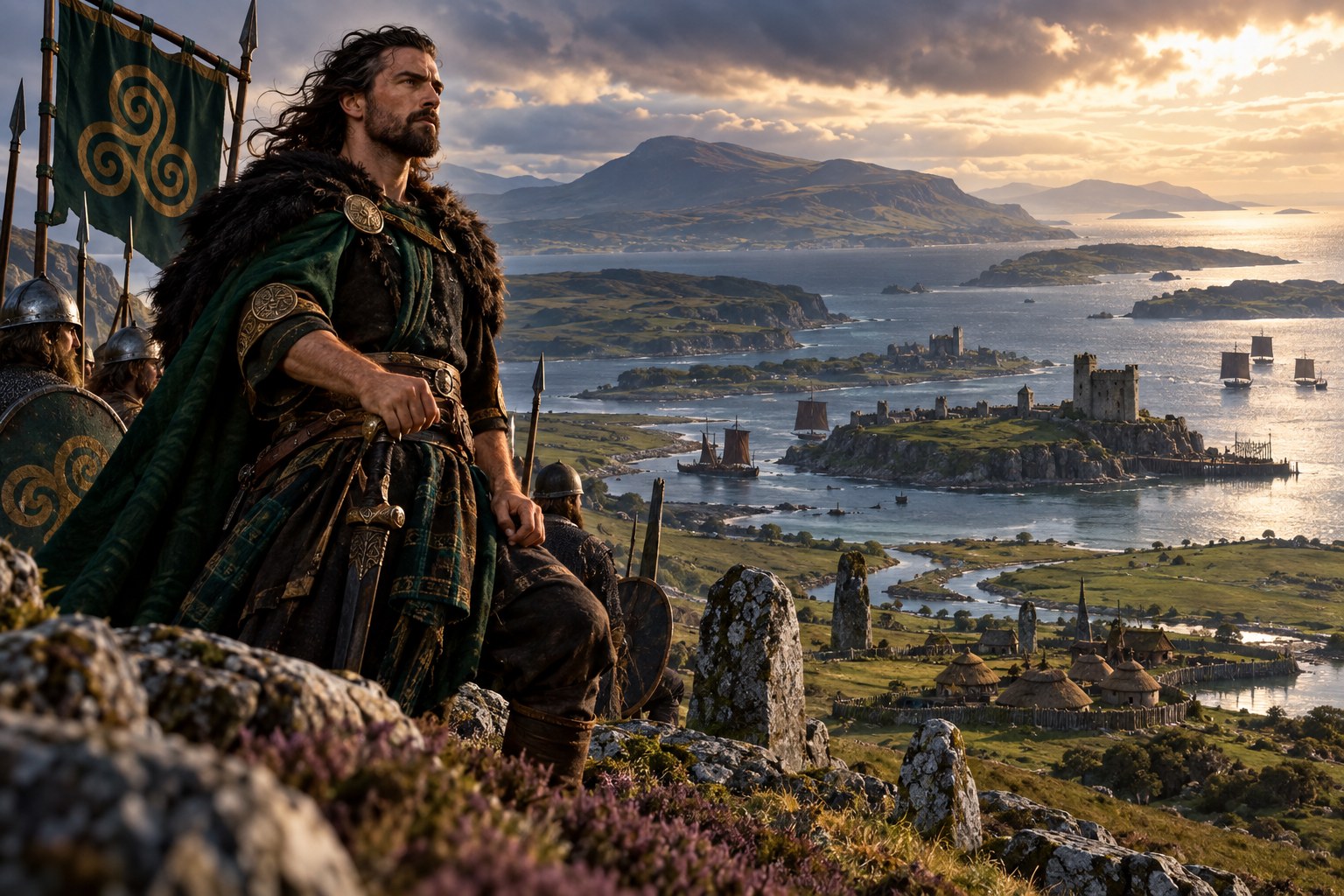
Ireland · Northern province · Tír Eoghain · Tír Conaill · Clandeboye · Carrickfergus · North Channel
At a Glance
| Political reality | A mosaic of Gaelic kingdoms, dynastic branches and a reduced English earldom rather than one unified province |
|---|---|
| Principal king | Eóghan O’Neill of Tír Eoghain, with his son Énrí already acting as the dynasty’s dominant heir and commander |
| Other major powers | O’Donnells of Tír Conaill, Clandeboye O’Neills, MacMahons of Oriel, Magennises of Iveagh, MacQuillans and the English-held coastal lordships |
| English claim | Richard, Duke of York, is Earl of Ulster; practical English control is concentrated around surviving towns, castles and coastal interests |
| Key places | Armagh, Dungannon, Carrickfergus, Downpatrick, Derry, Clogher, Belfast Lough and the routes into Donegal |
| Languages | Irish, English and Scots/Gaelic speech across the North Channel networks; Latin in diplomatic use beside native learned traditions |
| Best for | Dynastic war, gallowglass companies, coastal raids, hostage diplomacy, druidic politics and ancient heroic landscapes |
| Immediate danger | The succession struggle in Tír Conaill and the ageing O’Neill kingship can pull every northern lord into war |
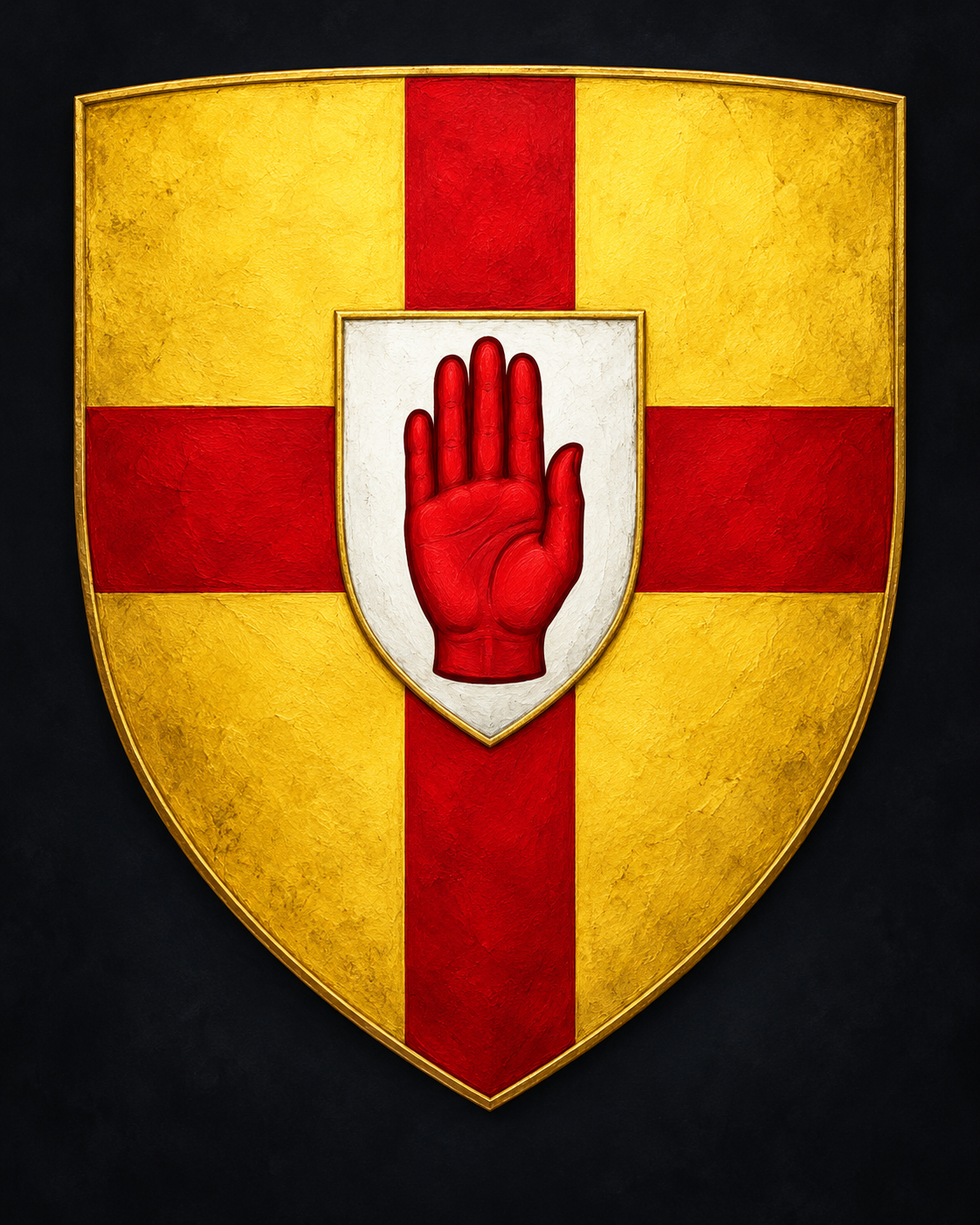
Ulster is the strongest concentration of Gaelic military power in Ireland, but it is not politically united. Eóghan O’Neill dominates Tír Eoghain while his son Énrí waits impatiently behind him; Tír Conaill is tearing itself apart in an O’Donnell succession struggle; Clandeboye controls much of the east; and English claims survive most clearly around coastal strongholds such as Carrickfergus. Across the North Channel, warriors, merchants and gallowglass move between Ireland and western Scotland faster than Dublin can regulate them.
What Is Happening Right Now?
Eóghan O’Neill remains king of Tír Eoghain, but age and infirmity are changing the balance inside his dynasty. His son Énrí has commanded armies, negotiated with Richard Duke of York and acts increasingly like the man who will inherit the northern kingship. Their disagreement is no longer private; every client lord must decide which generation to obey.
In Tír Conaill the O’Donnell succession has become open war. Neachtan O’Donnell was murdered in 1452. His sons resist the sons of Niall Garbh, and in 1454 Domhnall O’Donnell is installed with O’Neill backing. The siege of Inis ends with the death of rival Ruaidhrí O’Donnell, but that killing settles nothing permanently.
Richard, Duke of York, holds the title Earl of Ulster and remains the king’s lieutenant of Ireland, but the English earldom no longer translates into command over the whole province. His earlier agreements with O’Neill demonstrate recognition and negotiation, not conquest.
The North Channel is equally important. Galloglaigh and seaborne retainers from the western Scottish world move through the province, creating military connections between Ulster and the Lordship of the Isles. A quarrel in Antrim can therefore acquire Scottish allies before Dublin hears of it.
Run Ulster Tonight
The Hostage at Dungannon
A hostage entrusted to Énrí O’Neill vanishes the night before a peace meeting. His father assumes murder. Énrí knows the boy escaped alive but revealing how would expose an ally inside his own father’s household.
The Siege of Inis
During the O’Donnell struggle, a messenger offers proof that the besieged Ruaidhrí has a secret route across the water. Domhnall wants the path. Ruaidhrí wants the messenger silenced. Something beneath the lake wants both armies to leave.
The Carrickfergus Charter
A coastal merchant produces a royal charter granting rights that three neighbouring lords reject. The parchment is genuine; the witness named in it is a supernatural being who still remembers the original bargain.
The Gallowglass Ship
A galley from the Hebrides enters Belfast Lough carrying heavily armed mercenaries who refuse to name their employer. Two rival lords each insist the men were hired by the other.
The Bronze Gong of Armagh
A bronze ritual gong sounds at midnight without being touched. Each time it sounds, a different armed company abandons an intended raid. The High Druid wants the cause found before the omen becomes a political weapon.
Tír Eoghain and the O’Neills
Tír Eoghain forms the great central power of Gaelic Ulster. The O’Neill kingship depends on military strength, dynastic legitimacy, alliances and the ability to compel lesser lords to acknowledge supremacy.
Eóghan O’Neill has ruled through decades of war against O’Donnell rivals, Clandeboye, MacMahon interests and English intervention. His son Énrí has become the most important commander of the next generation and has already negotiated directly with Richard of York.
For a campaign, the succession tension matters more than a neat family tree. Orders carrying Eóghan’s authority and promises made by Énrí may conflict. A lord who obeys the king today may be punished by the heir tomorrow.
Tír Conaill in Civil War
The O’Donnell kingdom in the north-west is divided after the killing of Neachtan O’Donnell. His sons and the sons of Niall Garbh compete for kingship with O’Neill involvement changing the balance.
Domhnall O’Donnell’s elevation in 1454 and the death of Ruaidhrí at the siege of Inis create a temporary advantage, not peace. Toirdhealbhach Cairbreach remains capable of revenge, while Aodh Ruadh, born in 1429, is emerging from the same violent dynasty and will become one of the century’s great northern rulers.
Eastern Ulster and the English Earldom
The title Earl of Ulster belongs to Richard, Duke of York through the Mortimer inheritance. Its historical claim is vast; its effective control is not. English lordship survives most strongly at coastal fortresses and in relationships with local magnates.
Carrickfergus remains the key English stronghold of the north-east, commanding a harbour and route across the North Channel. Around it lie Gaelic powers that are neither isolated nor politically simple: the Clandeboye O’Neills, Magennises of Iveagh, MacQuillans and others bargain, raid and marry across supposed cultural boundaries.
Armagh and the Sacred Colleges
Armagh is a sacred and learned centre whose authority does not map neatly onto any secular kingdom. Its High Druid and colleges of law, poetry and ritual must negotiate with O’Neill power while defending sacred lands from the same lords whose support may be needed against another enemy.
Sanctuary, sacred property, ritual treasures and druidic messengers create a second political network across Ulster. A person unsafe in one lordship may still travel under the protection of sacred custom—until a ruler decides the diplomatic cost of violating it is acceptable.
Places That Matter
Dungannon
A principal O’Neill centre in Tír Eoghain and the natural place for dynastic councils, hostages and military musters.
Armagh
Druidic authority, learning and disputed lands meet here. It is ideal for adventures where geasa, sanctuary or sacred land rights matter as much as armies.
Carrickfergus
The strongest surviving English coastal fortress in the north. Its harbour faces Scotland and makes the town a gateway for troops, trade and intelligence.
Downpatrick
A sacred and political centre in Down associated with Patrick the druid-lawgiver and contested eastern lordships.
Derry
A druidic college settlement overlooking the Foyle, positioned between powerful northern territories and sea routes.
Clogher
A druidic centre embedded in the political landscape of western Ulster, useful for diplomacy between sacred authority and O’Neill power.
The North Channel and Gallowglass
Ulster faces Scotland as much as it faces Dublin. The sea between Antrim and the western isles is a route rather than a barrier. Galleys carry warriors, weapons, cattle, merchants and kinship obligations in both directions.
Gallowglass companies give northern lords access to heavily armed professional infantry with Scottish-Gaelic roots. Their loyalty is personal and contractual; a captain whose payment fails can become a political problem of his own.
Heroic Ulster
The landscapes of the Ulster Cycle are not dead literary scenery. Emain Macha, the roads of Cú Chulainn, royal mounds, wells and battle sites remain part of the province’s supernatural geography. Old oaths can still attach themselves to new dynasties that occupy the same land.
This does not make every ruin magical. It means that a king who deliberately imitates an ancient hero may attract the attention of powers that remember how the older story ended.
Dungeon: The Red-Hand Vault
A collapsed souterrain beneath an O’Neill client settlement reveals a stone door carved with a handprint older than the current dynasty.
The Hostage Room
Names scratched into the walls belong to captives from several centuries. One appears in a treaty signed only last year.
The Spear Passage
Bronze spearheads emerge from the stone when anyone carrying stolen cattle crosses the chamber.
The King’s Choice
The deepest hall contains two inauguration stones. Each recognises a different O’Neill claimant, and both are genuine.
Removing either stone could settle a succession dispute temporarily while provoking the power that sanctified the other.
Travel and War
| Route | Pressure |
|---|---|
| Armagh–Dungannon | O’Neill patrols, druidic messengers and dynastic retainers. |
| Belfast Lough–Carrickfergus | Shipping, coastal fortresses, Clandeboye interests and Scottish traffic. |
| West toward Tír Conaill | O’Donnell civil war, shifting hostages and fortified crossings. |
| North Channel | Fast galley movement makes reinforcements or raiders appear with little warning. |
| Sacred roads | Sanctuary custom and druidic status provide protection, but not immunity from powerful lords. |
Fomorian Sea-Roads and Northern Fey
Ulster’s coast is crossed by routes older than the Gaelic kingdoms. Fomorian envoys still use sea-roads that touch the North Channel, hidden caves and oath-sites such as the Giant’s Ring near Belfast. Most mortals encounter the signs rather than the travellers themselves: black water where no tide should reach, iron rings cold enough to frost in summer and footprints that begin at the high-water mark.
Fir Darrig are particularly troublesome in the north-west, where they attach themselves to roads, feast nights and journeys between Derry and Tír Conaill. Their jokes are rarely harmless for long.
Banshee cries are treated as political intelligence as well as omens. When a great house hears one, rival families may learn of an approaching death before the household has decided how to respond.
Historical and Mythic Context
Mid-fifteenth-century Ulster is dominated by Gaelic dynasties despite the continuing legal existence of the English earldom. Eóghan O’Neill remains king of Tír Eoghain in 1454, but his son Énrí is already the principal heir and will depose him the following year.
Tír Conaill is simultaneously in a violent O’Donnell succession war. Domhnall O’Donnell is installed in 1454 and kills his rival Ruaidhrí during the siege of Inis, setting up further revenge rather than ending the dispute.
Dictionary of Irish Biography — Eóghan O’Neill · Dictionary of Irish Biography — Énrí O’Neill · Dictionary of Irish Biography — O’Donnell succession
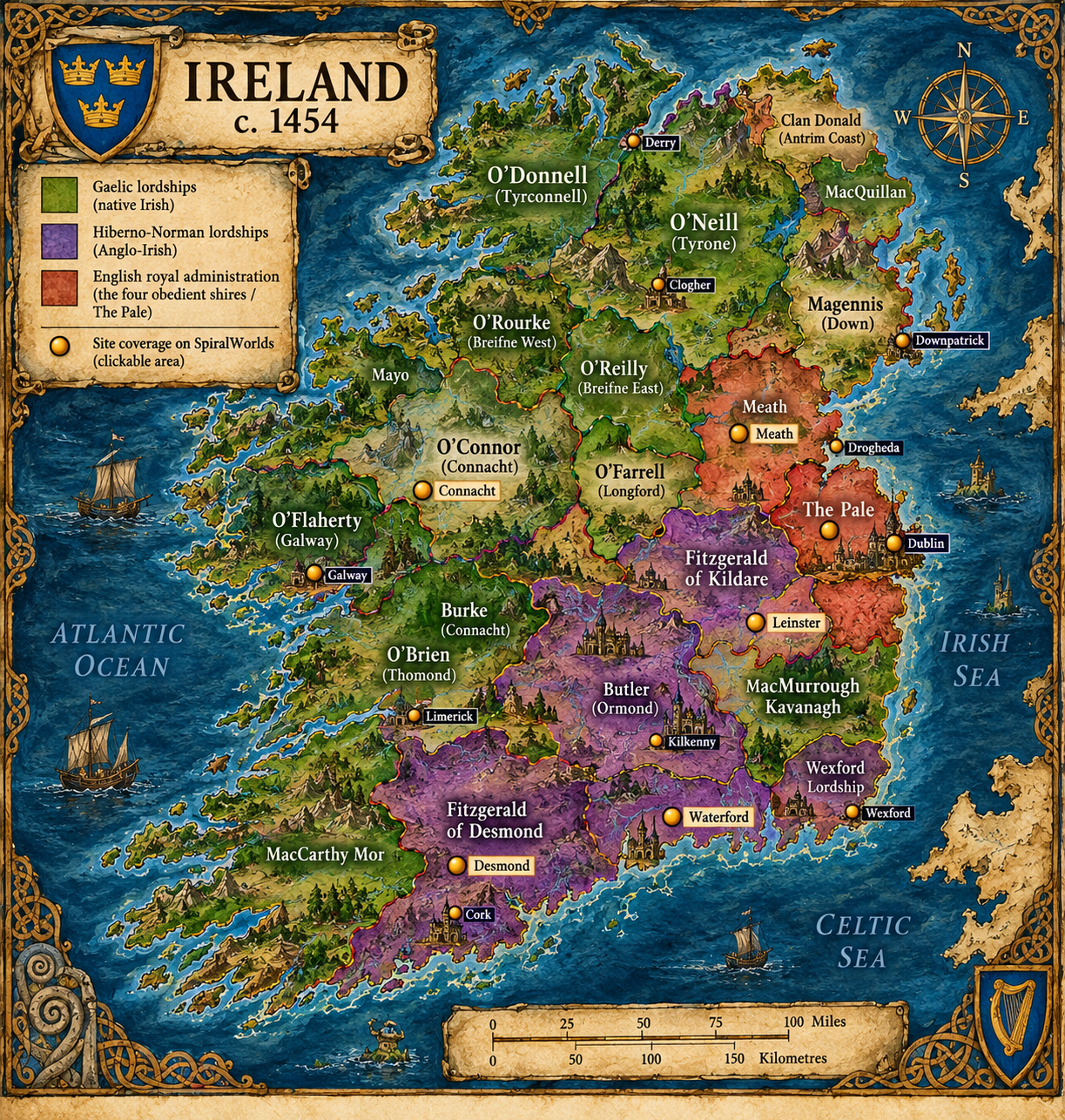
Map of the Political Landscape
Keep this reference growing
If this page helped with your reading or game, you can support its upkeep or explore the curated books.
Explore the Bookshop — epics, classics and stories behind imagined worlds.