
Belfast — O’Neill Castle on the Lagan
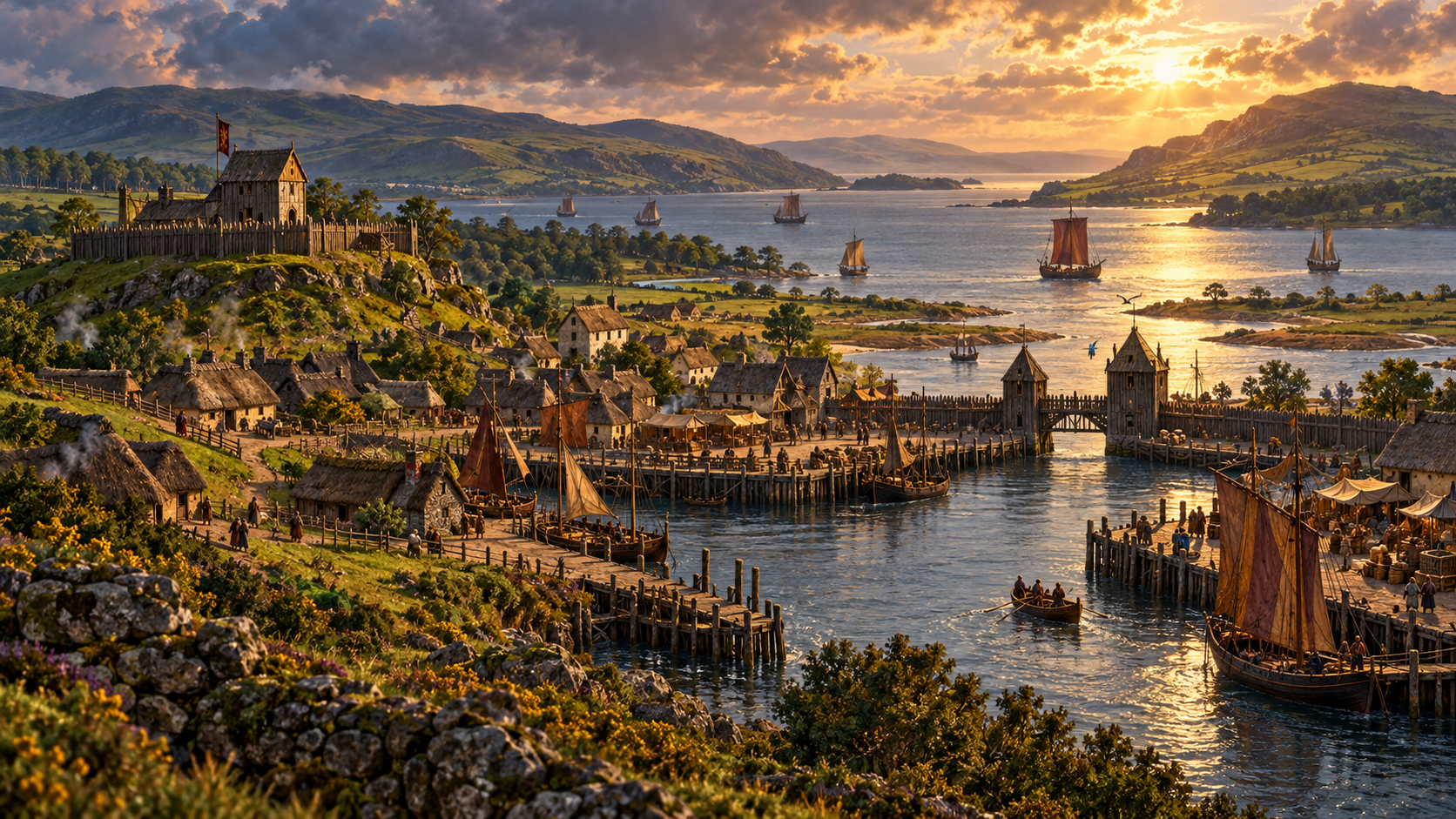
Ireland · Ulster · Clandeboye · Lagan crossing · Belfast Lough · O’Neill lordship
At a Glance
| Province | Ulster |
|---|---|
| Lordship | Clandeboye, ruled by the O’Neills east of the Bann |
| Lord | Brian Ballach O’Neill |
| What Belfast is | A small castle settlement, river crossing and harbour at the head of Belfast Lough |
| Why it matters | Boats, messengers, hostages and armed companies can move between the Lagan, Clandeboye and the North Channel |
| Main rival | Carrickfergus, the great Anglo-Norman fortress across the lough |
| Where travellers stay | O’Neill guest halls, merchant houses, alehouses near the landing and rough camps beyond the palisade |
| Ancient place | The Giant’s Ring, a vast Neolithic henge and chambered tomb south of the settlement |
| Best for | Hostage exchanges, coastal intrigue, border raids, clan politics and ancient supernatural bargains |
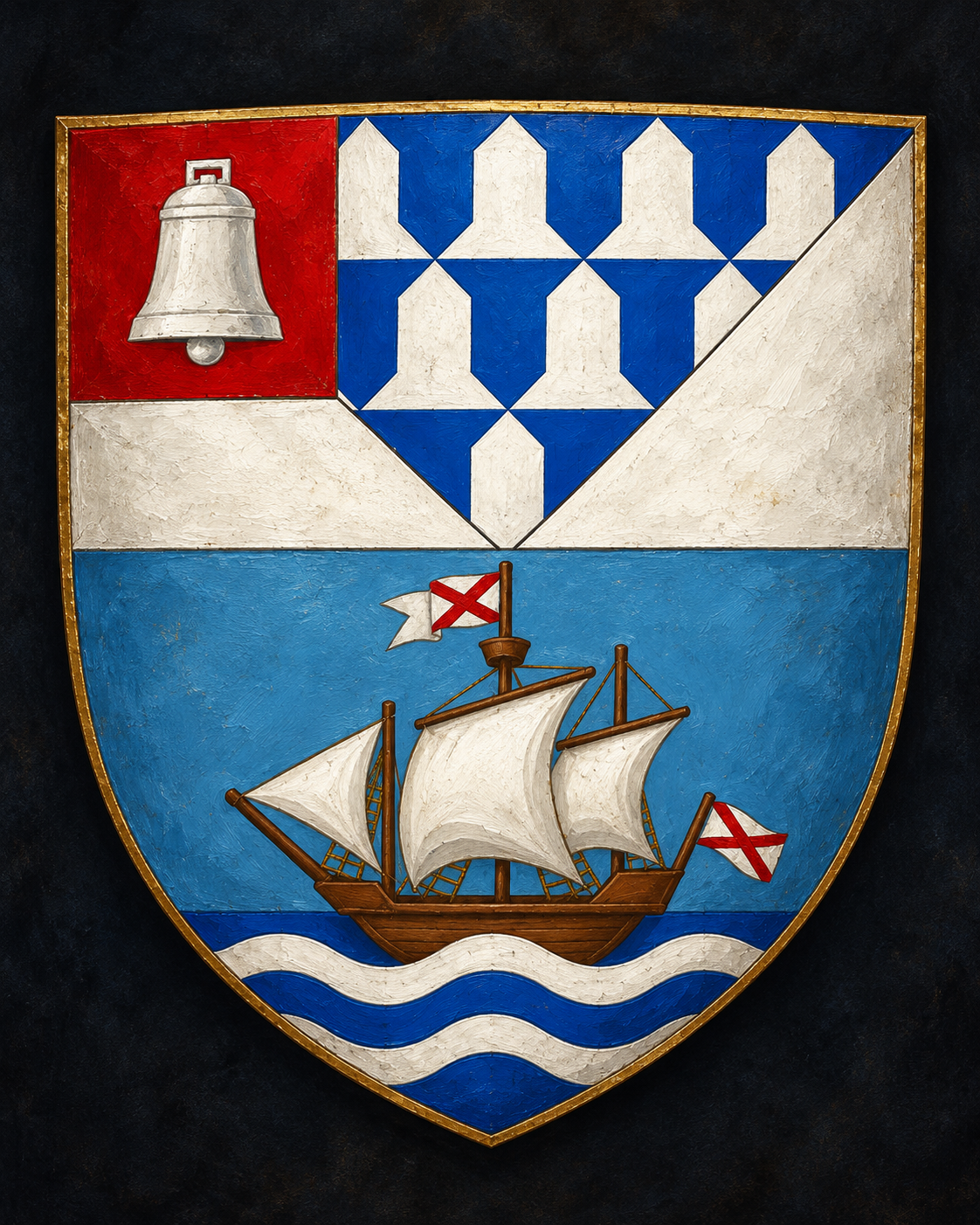
Belfast is a castle, crossing and harbour before it is a city. The settlement clusters around an O’Neill stronghold where the River Lagan reaches Belfast Lough. Whoever controls this point can watch river traffic, move men by boat, bargain with captains arriving from Scotland and force travellers to choose between Gaelic Clandeboye and the English power centred on Carrickfergus.
What Is Happening Right Now?
Brian Ballach O’Neill holds Clandeboye, but control here depends on people more than walls. The wider O’Neill dynasty, neighbouring Gaelic lords, Carrickfergus and North Channel captains all have reasons to test his authority. Belfast matters because it is small enough for a secret meeting and important enough for that meeting to change the balance of the north-east.
Across the lough, Carrickfergus remains the strongest surviving English fortress in the region. Its garrison can watch shipping and threaten the coast, but it cannot command every road, ford or household inland. A messenger who reaches Belfast can be inside wooded Clandeboye before Carrickfergus knows which direction to pursue.
Galleys from the western Scottish world regularly make the sea feel shorter than the land. Mercenaries, traders, foster-kin and envoys can appear with little warning. A quarrel at the landing may therefore bring consequences from Antrim, Down or the Isles before the next tide turns.
Run Belfast Tonight
The Castle Hostage
A young noble held as surety for a truce vanishes from a guarded room. The O’Neills insist no boat left the shore. Carrickfergus claims the disappearance proves the truce was never meant to hold.
The Galley Without Banners
A long, low vessel enters Belfast Lough at dusk carrying heavily armed men from the western Scottish world. They refuse to name their employer until they have spoken privately with Brian Ballach’s steward.
The Giant’s Ring Fire
Blue flame burns inside the chambered tomb at the centre of the Giant’s Ring without consuming anything. Cattle nearby refuse to face south, and an old woman says a lord has broken an oath older than Clandeboye.
The Carrickfergus Prisoner
An escaped prisoner reaches Belfast carrying a seal taken from an English officer. He offers intelligence worth a fortune if the O’Neills guarantee his safety. The seal proves he is not who he claims to be.
The Lagan Ford
A body is found where the river can be crossed at low water. Its boots are English, its cloak is Irish and its purse contains clipped foreign silver. Three different lords claim the right to judge the killing.
Arriving in Belfast
Approaching by land, the first signs are smoke, fenced pasture and the O’Neill stronghold above the Lagan. The settlement thickens around the crossing and landing: timber buildings, storehouses, boat sheds, livestock pens and narrow tracks where carts, pack animals and armed retainers compete for space.
Approaching by water is faster and more dangerous. The lough opens toward the North Channel, but tides, shoals and sudden weather punish unfamiliar crews. Local boatmen know where a shallow-draft vessel can land without passing beneath the eyes of Carrickfergus.
| Arrival | What Characters Meet |
|---|---|
| Lagan crossing | Retainers asking who sent you, what you carry and whose protection you claim. |
| Harbour landing | Boatmen, traders, mercenary captains, fishers and men watching for unfamiliar sails. |
| Road from Castlereagh | O’Neill clients, cattle traffic and riders carrying household messages. |
| Road from Down | Travellers moving through overlapping lordships where safe conduct matters. |
Castle, Landing and Crossing
The O’Neill Castle
The castle is useful because of its position, not because it rivals the great stone fortress at Carrickfergus. It shelters the lord’s household, hostages, weapons, tribute and messengers close to both the river and the lough. A visitor who matters is likely to be summoned here before serious business can begin.
The interior is crowded with retainers, fosterlings, poets, druids, brehons, captains seeking employment and servants carrying food or messages. Privacy is difficult. A whispered bargain may have six witnesses before sunset.
The Landing
Small vessels crowd the river edge. Fishing boats, traders and armed galleys use the same water, so every unfamiliar sail attracts attention. Cargo can disappear into a storehouse quickly, but a heavily armed company cannot land without someone reporting it.
The Crossing
The Lagan is both road and barrier. Tides alter the safest routes near the lough, and marshy ground makes a bad approach worse. A local guide can save hours; an enemy guide can place travellers in mud, deep water or an ambush.
Food, Lodging and Trade
Belfast has no grand urban inn quarter. Travellers with status seek hospitality from an O’Neill household or a local landholder. Merchants may lodge with trading partners. Everyone else finds space in alehouses, boatmen’s buildings, barns or rough camps outside the busiest household enclosures.
Food is practical: oats, bread, dairy, fish, beef and whatever can be bought from nearby farms or landed from the lough. Traders bring salt, cloth, metal goods and small luxuries. Weapons and armour can be acquired, but buying a suspicious quantity will be noticed.
| Need | Most Likely Place |
|---|---|
| Safe lodging | A household guest hall secured through patronage, kinship or a letter of introduction. |
| Cheap food and drink | Alehouses and cookfires near the landing and crossing. |
| Boat passage | Local boatmen, merchant crews or North Channel captains. |
| Weapons or repairs | Household smiths and craftsmen serving O’Neill retainers. |
| News | The landing, guest halls and anyone waiting for a tide or escort. |
People and Factions
| Power | What They Want |
|---|---|
| Brian Ballach O’Neill | Keep Clandeboye independent and Belfast useful without allowing stronger neighbours to dictate terms. |
| O’Neill retainers | Land, cattle, honour, military opportunity and advancement through household service. |
| Carrickfergus officials | Preserve English coastal authority, secure shipping and prevent Clandeboye from swallowing the remaining northern enclaves. |
| Druids and brehons | Protect sacred lands, sanctuary customs and the agreements that allow people to cross rival jurisdictions. |
| North Channel captains | Trade, contracts, mercenary employment and safe harbours on both sides of the sea. |
Law, Custom and Trouble
Authority changes quickly around Belfast. Inside an O’Neill household, the lord’s protection matters. On the road, kinship and local alliances matter. Near sacred ground, brehon judgement and druidic custom can matter more than the demands of an armed captain. Carrickfergus may claim rights that Clandeboye refuses to recognise.
Hostages are political guarantees, not ordinary prisoners. Cattle can represent wealth, compensation and insult at the same time. A killing at a ford may become a feud unless compensation is accepted. A traveller who understands whose protection applies at each stage of a journey is safer than one carrying the finest sword.
Clandeboye
Clandeboye is the eastern O’Neill lordship created from lands recovered as the old earldom weakened. Its rulers pursue their own alliances and feuds rather than simply obeying the senior O’Neill line in Tír Eoghain.
Woods, hills, river valleys and scattered strongholds make the territory difficult for any outsider to control. An army may win a battle and still lose the roads behind it if local households close their gates, hide supplies or guide enemies through the hills.
Castlereagh
The high ground east of the Lagan is another major O’Neill centre. Its position gives wide views and makes it a natural place for councils, musters and control of routes toward Down.
The Clandeboye Household
Power is personal. Fosterage, marriage, hostage-taking, genealogy and public judgement bind households together. A written agreement matters, but so does the person who guarantees it and the armed men willing to enforce it.
Carrickfergus Across the Lough
Carrickfergus Castle is the great surviving Anglo-Norman fortress of the north-east. Its harbour position lets it watch much of the traffic entering Belfast Lough.
Its presence shapes every serious decision in Belfast. Merchants may prefer its protection. English officials can claim authority from behind its walls. O’Neill captains must decide whether a ship is merely trading, carrying spies or bringing men intended for war.
For Clandeboye, Carrickfergus is both threat and opportunity. A strong garrison keeps other rivals cautious; a weak one becomes a source of information, ransom and weapons.
The Giant’s Ring
South of Belfast, on the high ground at Ballynahatty, stands the Giant’s Ring: an immense earthwork more than two hundred metres across, with a great stone chamber near its centre. It is not a dead monument. The Ring is one of the surviving Fomorian oath-grounds of Ireland, and the old powers still use it.
The Fomorian Oath-Ring
The bank marks a place where the Fomorians once gathered to divide tribute, settle quarrels and bind agreements between sea-lords, giants and the older powers of the island. The central stone chamber is not simply a tomb. It is the visible mouth of a sealed road descending toward the dark waters beneath the earth, one of the routes by which Fomorian envoys once moved inland from the western and northern seas.
The Ring’s enormous scale is deliberate. Human gatherings barely fill it. A company of giants can enter without crowding the enclosure, and the bank gives even the largest creature a clear boundary it is expected not to cross once an oath has begun.
Still in Use
On ordinary days the Ring may stand empty except for shepherds, travellers and people seeking neutral ground. On certain nights it does not. Storm tides, eclipses, solstices and the deaths of powerful rulers can bring old visitors back to Ballynahatty.
Fomorian emissaries enter through the central chamber when black water rises between the stones. Giant envoys come down from the hills under truce. Fey witnesses gather along the bank without crossing into the centre. Pookas watch from the approaches, and banshees have been heard before an oath that will end in blood.
The O’Neills know this. So do the druids and brehons of Ulster. A mortal lord may use the Ring for a hostage exchange or settlement because everyone understands that the ground is neutral, but no sensible ruler claims ownership of it.
The Law of the Ring
Three customs are older than any kingdom around Belfast. No blood may be deliberately spilled inside the bank while a formal parley is under way. Every speaker must give the name by which they can be called to account. Anyone who swears upon the central stones must either keep the bargain or return to answer for breaking it.
These are not merely traditions. The Ring enforces them. A murderer who draws blood during truce finds every exit leading back into the enclosure. A false name echoes from the stones in the speaker’s true voice. An oathbreaker may wake to find wet footprints leading from the central chamber to their bed.
The Stone Chamber
By daylight the chamber resembles an ancient burial monument: upright stones beneath a massive capstone, weathered by centuries of rain. At high supernatural tides its interior changes. The space beneath the capstone becomes deeper than the earth allows, and the floor fills with cold black water that reflects no sky.
Crossing that water leads onto the Fomorian sea-road: a drowned passage of stone causeways, caverns and black beaches beneath the mortal world. The road is not always open, and those who enter without invitation may emerge miles away, years late or not at all.
The Older Landscape
The Ring was raised in deep prehistory, around 2700 BC, but it belongs to a much larger sacred landscape. Timber circles, standing stones, burial places and later ritual monuments surround Ballynahatty. Mortal communities returned to the same ground again and again because the power here never faded.
Some of those monuments are human attempts to mark the edges of the older Fomorian site. Others are meeting places built for druids, fey and giant-kind who preferred not to enter the Ring itself. The land south of Belfast therefore remains a patchwork of visible ruins and invisible boundaries.
Who Uses the Ring?
| Power | Why They Come |
|---|---|
| Fomorians | To summon envoys, renew ancient claims, demand tribute and enforce agreements made before the human kingdoms existed. |
| Giants | To negotiate under ancient truce, settle blood-debts and meet creatures too dangerous to admit into their own halls. |
| Druids and brehons | To witness oaths, arbitrate disputes and recognise boundaries that no ordinary charter can override. |
| Fey | To observe bargains, collect debts and ensure mortals do not alter paths linking the Ring to older places. |
| O’Neill lords | To hold hostage exchanges and negotiations on ground neither Carrickfergus nor any rival Gaelic dynasty controls. |
Adventures at the Giant’s Ring
| Situation | What Is at Stake |
|---|---|
| The Fomorian Envoy | A black-water gate opens beneath the capstone and an emissary arrives demanding payment on a treaty nobody in Clandeboye remembers signing. |
| The Giant’s Debt | A giant enters the Ring carrying the broken weapon of an O’Neill ancestor and demands that the old blood-debt finally be paid. |
| The Broken Truce | Someone spills blood during a hostage exchange and every path out of the enclosure returns the party to the same bank. |
| The Fey Witness | A fey noble insists that one clause of a mortal treaty violates an older compact and refuses to let either side leave until it is corrected. |
| The Sea-Road Opens | Black water fills the chamber at noon and something enormous begins climbing the submerged steps beneath it. |
Queen’s University Belfast — Ballynahatty stone-circle discovery · Queen’s University Belfast — Ballynahatty timber-circle research
Creatures and Old Places
Eastern Ulster’s supernatural dangers gather around water, hills and ancient enclosures. Pookas lead riders astray on roads beyond the settlement. Banshee cries are feared because the death of a single O’Neill can rearrange an entire lordship.
Strange lights move over the lough after storms. Black dogs are reported near old burial places. These encounters often become dangerous only after someone ignores a warning, crosses a boundary or breaks a promise made on sacred ground.
Dungeon: Beneath Belfast Castle
Repairs to the castle’s riverward wall reveal a blocked stair descending toward the wet ground beside the Lagan.
The Norman Cellar
Broken pottery, iron fittings and old storage recesses belong to the earlier settlement. One wall carries a scratched list of names in a hand nobody recognises.
The Flood Passage
A narrow corridor fills at high tide. Fresh rushes lie on the dry stones beyond, proving someone still uses the passage and knows exactly when the water falls.
The Hostage Room
Iron rings line the walls around a central post. Some are medieval. Others are set into stone clearly older than the castle.
The River Door
The deepest chamber opens through a stone arch directly onto black water even when the tide outside is low. Anyone who crosses emerges beneath the Giant’s Ring rather than beside the Lagan.
The hidden route can become an escape path, a military secret or proof that the castle was raised over an older network whose owners still expect payment.
Travel from Belfast
| Route | Pressure |
|---|---|
| North shore to Carrickfergus | English patrols, coastal traffic and the political risk of approaching the great fortress. |
| East toward Castlereagh | O’Neill household territory, hills and roads controlled by local clients. |
| South toward Downpatrick | Changing lordships, sacred lands and the ritual geography of Down. |
| North Channel by sea | Fast travel toward Scotland and the Isles, with weather and piracy as constant risks. |
| Upper Lagan | River crossings, marshy approaches and small settlements whose loyalties matter more than formal maps. |
Historical and Mythic Context
Belfast’s medieval settlement has an earlier Anglo-Norman phase and a later Gaelic one. A castle and borough existed here centuries before the O’Neills of Clandeboye expanded east of the Bann and made the site part of their lordship.
The wider landscape is far older. The Giant’s Ring was built in the Neolithic period around 2700 BC and encloses a chambered tomb. The result is a place where a working castle, a contested river crossing and a ritual landscape thousands of years older all occupy the same small area.
Queen’s University Belfast — Medieval settlement at Belfast · Dictionary of Irish Biography — Clandeboye O’Neills · Department for Communities — Giant’s Ring
Keep this reference growing
If this page helped with your reading or game, you can support its upkeep or explore the curated books.
Explore the Bookshop — epics, classics and stories behind imagined worlds.