
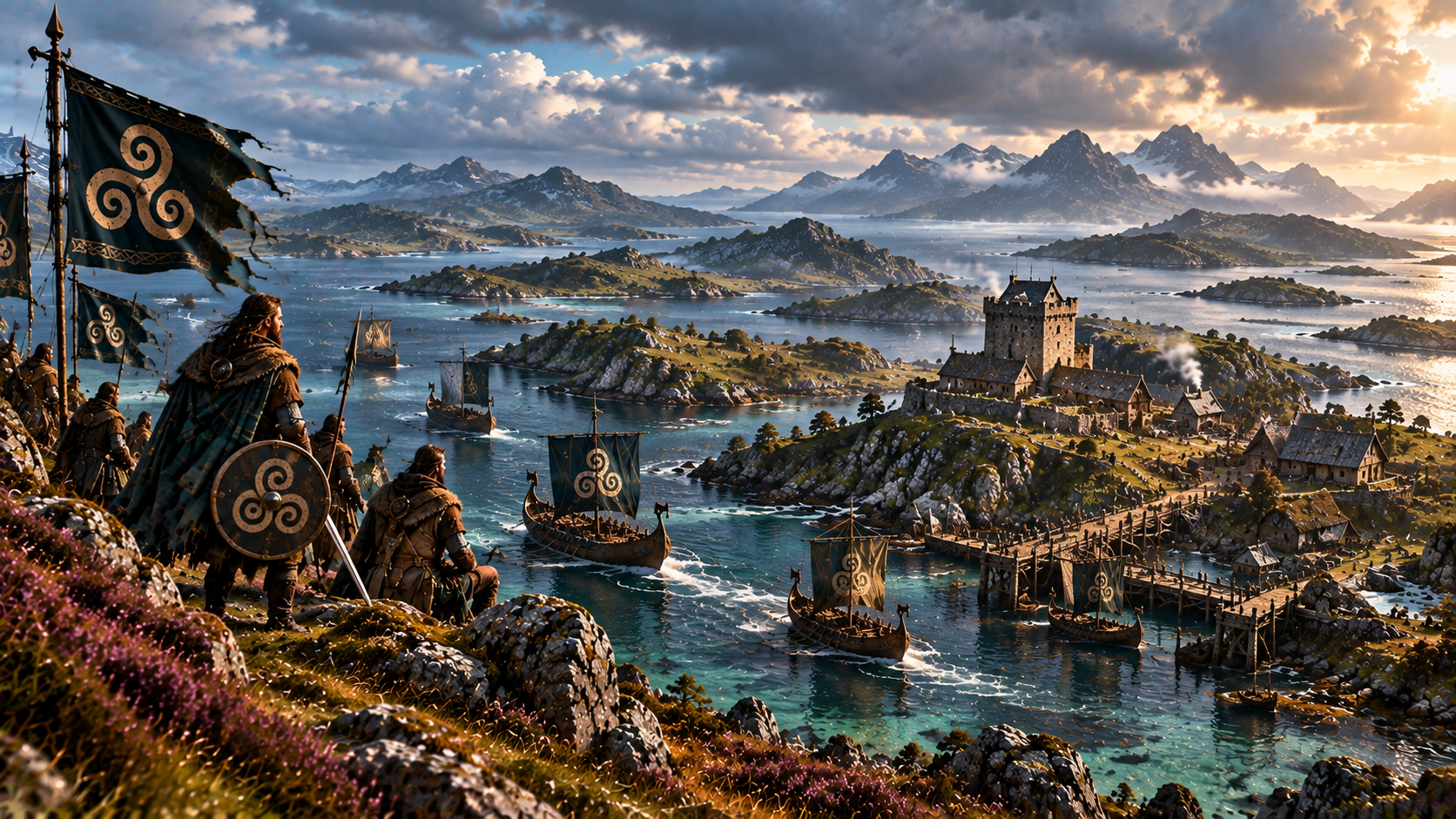
Scotland · Hebrides and western seaways · Maritime lordship
At a Glance
| Political centre | A maritime lordship spanning island and mainland interests |
|---|---|
| Ruler | John of Islay, Lord of the Isles and Earl of Ross |
| Movement | Galleys, coastal sailing, island roads and mountain passes |
| Best for | Sea travel, clan politics, diplomacy, raids, hidden harbours and Otherworld voyages |
| Connections | Western Scotland, Ulster, the North Channel, Hebrides and Atlantic routes |
| Supernatural layer | Kelpies, each-uisge, selkies, faerie islands and sea-roads that do not remain in the mortal world |
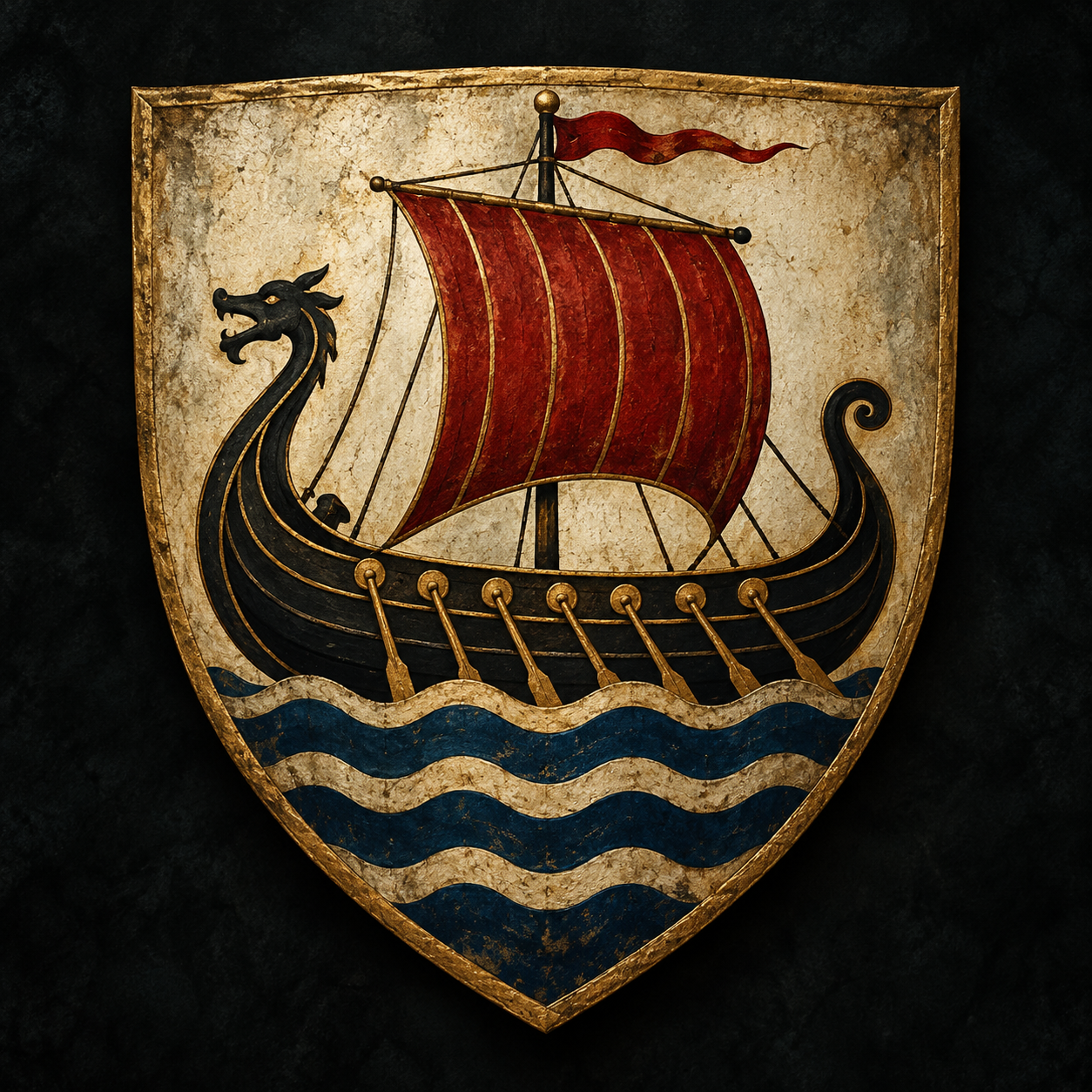
The Lordship of the Isles is a western power whose roads are sea-lanes. John of Islay, Lord of the Isles and Earl of Ross, commands ships, island strongholds, kinship networks and loyalties that make him one of the most powerful magnates in the Scottish world.
What Is Happening Right Now?
John of Islay is not an ornamental island noble. His title of Earl of Ross gives him mainland interests while the Lordship’s maritime network lets him move people, messages and force across waters that slow land-bound rivals. His alliance with the Douglas and Crawford interests places him directly inside James II’s struggle with magnates powerful enough to resist royal pressure.
Adventurers entering the western seaways are therefore entering a political theatre in which a galley captain, foster-brother, island chief or harbour keeper may matter more locally than a distant royal officer.
Run the Isles Tonight
The Empty Galley
A lordly galley drifts into harbour under full sail with no crew aboard. Its cargo is untouched, its oars are shipped correctly and salt water lies ankle-deep in the hold despite the hull being sound.
The Two Messages
The party is paid to carry a letter to Ulster. Before departure a second patron offers twice as much to replace it with an apparently identical message. Both seals are genuine.
The Island That Owes a Debt
A storm drives the party onto an island absent from ordinary charts. Its inhabitants recognise the Lord of the Isles, but claim that his family owes them a promise made before the present dynasty existed.
Power on the Western Sea
The Lord and his household: authority depends on personal relationships, ships, landed rights, retainers and the ability to reward loyalty.
Island and mainland kindreds: local power is not a neat chain of command. Kinship, marriage, feud and fosterage can pull the same family in different directions.
The Scottish Crown: James II cannot ignore the west, but neither can he govern every island and sea-road as though they were streets outside Edinburgh Castle.
Ulster connections: the North Channel joins rather than separates western Scotland and northern Ireland. People, mercenaries, marriages and rumours cross it constantly.
The Supernatural Sea
Water is territory. Kelpies and each-uisge turn lochs and crossings into hunting grounds. Selkies complicate the boundary between coastal settlement and the sea. Fey islands may appear only under particular conditions, while some routes can carry a ship into Faerie and return it after the mortal political situation has changed.
This makes navigation a social skill as much as a maritime one: knowing which captain, druid, spirit, island family or supernatural ruler controls a passage can keep a voyage from becoming a disappearance.
Places to Use at the Table
Island Harbours
Harbours are the true crossroads of the Lordship. A sheltered anchorage may hold fishing boats, armed galleys, traders, messengers from Ulster and crews waiting on weather or permission to sail. News travels with ships, so a harbour master may know more about a distant feud than a mainland official.
Galley Houses and Strongholds
Power follows the ability to move men quickly by sea. Storehouses, beaches suitable for hauling vessels ashore, island halls and coastal strongholds therefore matter as much as great castles. They are ideal locations for negotiations, hostage exchanges, missing crews and disputes over who has the right to command a ship.
Hidden Inlets
Smugglers, raiders and supernatural travellers use coves that ordinary pilots avoid. Some are simply hard to find. Others are avoided because water spirits, drowned dead or passages into Faerie make them unreliable after dusk.
Travel and Adventure Pressure
Distance in the Lordship is measured by wind, tide, boat and obligation rather than miles alone. A nearby island can be effectively unreachable in bad weather, while a skilled crew can move a message farther in a day than a rider can cross difficult mainland ground.
Parties travelling here should need pilots, hospitality and introductions. Refusing a local guide may save money but lose access to a safe anchorage; accepting one may entangle the group in a clan obligation they did not know existed. Westward voyages can become Atlantic expeditions, while eastward travel reconnects the campaign with Scotland, the Highlands and royal politics.
Selkie Shores and Sea Bargains
The western sea is inhabited territory. Selkies come ashore on quiet beaches, sometimes trading information or affection and sometimes demanding the return of skins stolen by mortals. Kelpies haunt freshwater crossings inland from the coast.
Island households keep old agreements with beings that do not recognise the authority of a mainland king. A fishing family may owe one night of shelter each winter to a visitor from the sea; a chief may inherit a promise made before his lineage held the island.
Breaking such bargains rarely produces an immediate curse. It produces bad weather, empty nets and doors that no longer open onto the same shore.
Historical Foundation
Historic Environment Scotland’s account of James II and the Black Douglases identifies John of Islay, Earl of Ross and Lord of the Isles, as one of the powerful magnates allied with William Douglas and the Earl of Crawford during the crisis of the early 1450s.
Historic Environment Scotland — James II and the Black Douglases
Keep this reference growing
If this page helped with your reading or game, you can support its upkeep or explore the curated books.
Explore the Bookshop — epics, classics and stories behind imagined worlds.