
Meath — Tara, Trim and the Kingship Lands
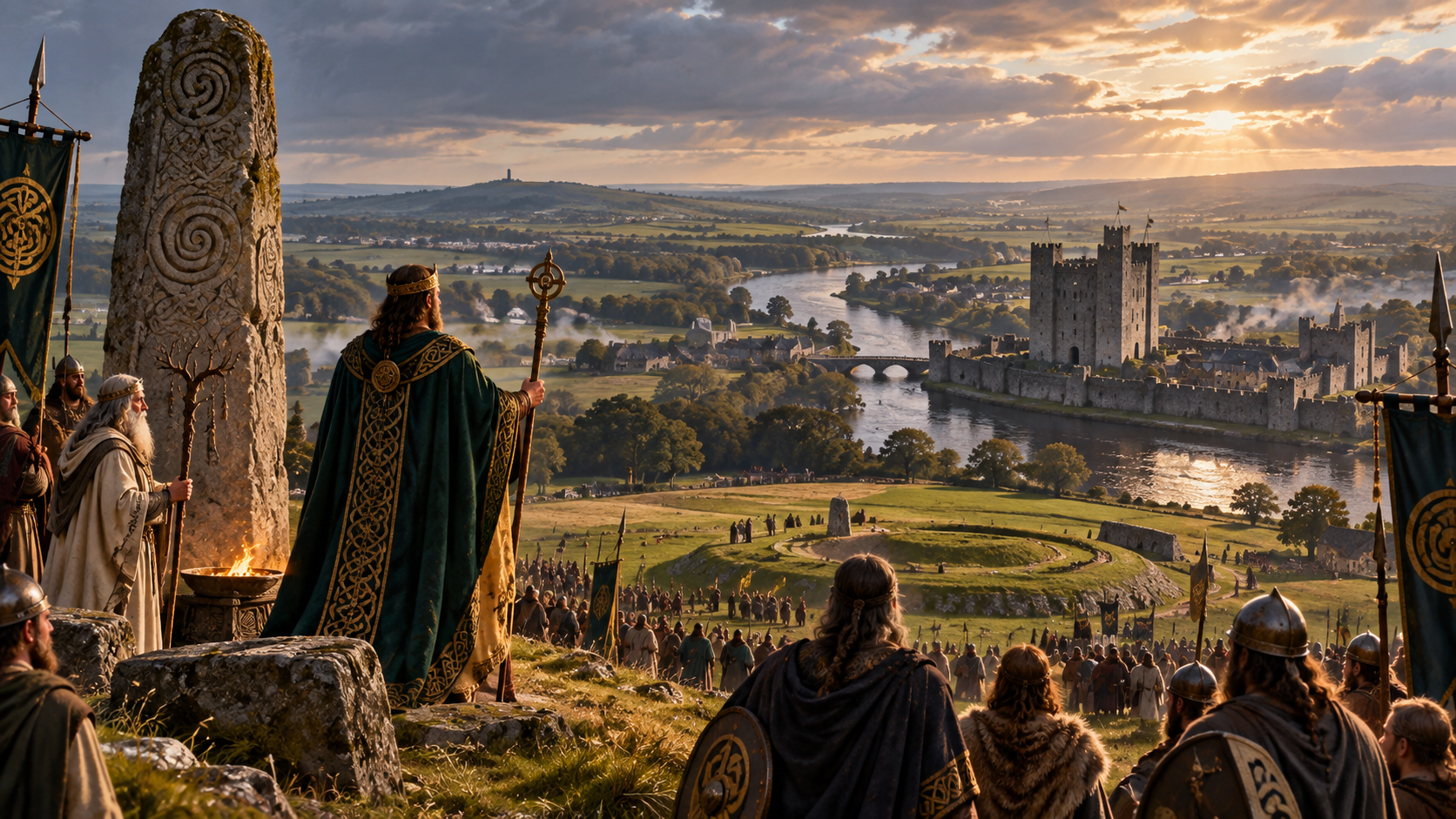
Ireland · Mide · Tara · Boyne valley · Royal earthworks · Norman strongholds
At a Glance
| Historic identity | Mide, the middle kingdom and the land of Tara’s sacral kingship |
|---|---|
| Political reality | Part of the eastern lordship world and the Pale, crossed by great Anglo-Irish estates and older Gaelic claims |
| Key places | Hill of Tara, Trim, the Boyne valley, Brú na Bóinne and Loughcrew |
| Great stronghold | Trim Castle, the largest Anglo-Norman fortress in Ireland |
| Best for | Kingship disputes, ancient tombs, castle intrigue, inheritance, sacred oaths and Otherworld roads |
| Living powers | Lugh, the Dagda, sovereignty spirits, ancestral dead and powers bound to Tara and the Boyne |
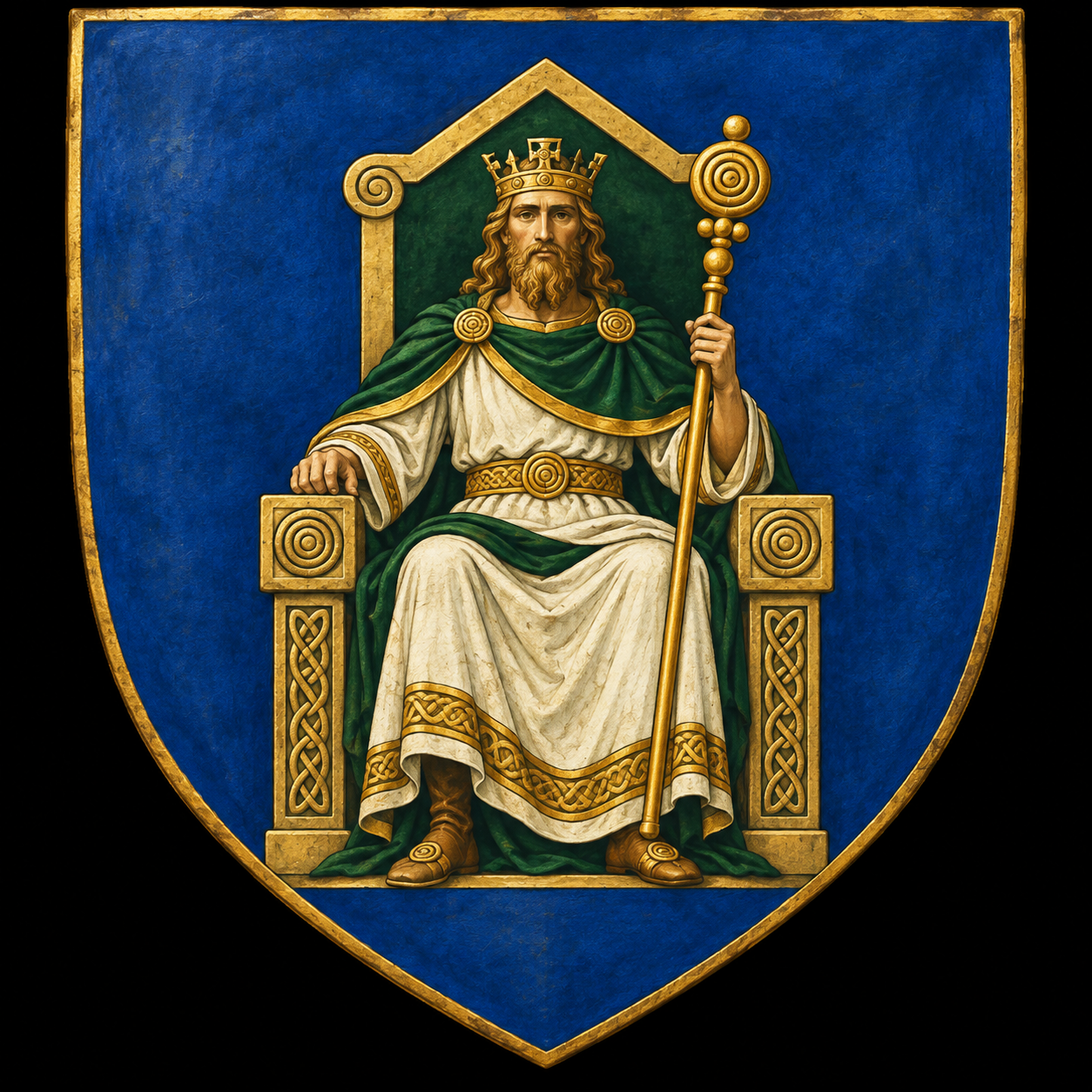
Meath is the land where political rule and sacred kingship most visibly overlap. Tara remembers High Kings long after their courts vanished, Trim anchors the great Anglo-Norman lordship of Meath, and the Boyne valley is filled with monuments so old that later kingdoms seem temporary beside them.
What Is Happening Right Now?
Meath sits close enough to Dublin for royal government to matter and far enough into the Irish interior for old lordship to remain unavoidable. Estates around Trim and the eastern roads are tied to the great Anglo-Irish families, while Gaelic neighbours, cattle routes and local kinship networks cross the same landscape.
Richard, Duke of York, holds the Irish lieutenancy and also inherited Mortimer interests in Meath. That makes the region more than a distant administrative district: land, castles and political influence here connect directly to one of the most powerful men in the wider English kingdoms.
Tara complicates every mortal claim. A lord may hold a perfectly valid charter and still face a rival who has been recognised at the Lia Fáil, supported by poets, or accepted by powers that care nothing for Dublin’s paperwork.
Run Meath Tonight
The Stone Cries Out
During a private inauguration rite at Tara, the Lia Fáil gives its legendary cry beneath the hand of a claimant nobody expected it to recognise. By morning three noble houses know what happened and each wants the witnesses controlled.
The Boyne Boat
A boat drifts downstream without crew or oars. Its cargo is a royal chest last recorded at Trim Castle, but the seals are older than the castle itself.
The Hostage Wakes
A burial chamber at Tara opens after heavy rain. One of the dead inside is wearing a torque that several families claim as proof of descent. The corpse sits up only when someone lies about ancestry.
Tara and the Law of Kingship
The Hill of Tara is not merely an old royal residence. It is a landscape of enclosures, mounds, avenues and inauguration places accumulated over thousands of years. The Mound of the Hostages predates the High Kings by millennia; the Fort of the Kings encloses the summit; the Royal Seat carries the Lia Fáil, the Stone of Destiny.
Kingship here is a relationship between ruler, land and right conduct. A ruler who possesses strength without justice may hold a fortress but fail at Tara. A claimant accepted by the hill gains something no ordinary charter can provide: the suggestion that the land itself has recognised him.
Lugh is strongly associated with royal skill, mastery and rightful authority. The Dagda embodies abundance, stewardship and the prosperity expected from good rule. Their presence gives political ceremony at Tara consequences beyond symbolism.
Trim and the Mortimer Lands
Trim Castle dominates the River Boyne from one of the greatest fortifications in Ireland. Its huge cruciform keep, curtain walls, ditch and water defences were built to make lordship visible as well as secure. The castle controls roads, stores prisoners, protects documents and anchors estates whose ownership has passed through powerful dynasties.
Mortimer inheritance ties Trim and neighbouring holdings to Richard of York. That connection means a dispute over a local manor can reach into the highest politics of England and Ireland. A sealed deed found in Meath may matter at Dublin Castle, Westminster or York’s own household.
Dungeon: The Lower Keep of Trim
Trim’s dungeon begins inside a functioning great fortress. Guards occupy the gates, stores fill the lower chambers and officials use the keep for the practical business of lordship. Any descent into forgotten levels therefore threatens the security of a living castle.
The Keep Cellars
Vaulted stores lie beneath the great tower. One chamber contains a blocked stair hidden behind later masonry. The stonework is older than the current floor plan and drops toward the river side of the keep.
The Moat Passage
The stair reaches a low gallery running beneath the outer ward toward the water-filled defences. Silt covers the floor, and old iron rings remain set into the walls. At high river levels the passage floods from below.
The De Lacy Chamber
A sealed room contains fragments of the first lordship: broken seals, burnt timber and a stone table cut with land divisions that no surviving charter records. Touching a named estate causes the table to show the last person who swore to defend it.
The Boyne Door
Beyond the chamber a narrow exit opens onto a cave at river level. The Boyne flows past it, but on certain nights the water carries voices from Brú na Bóinne upstream rather than downstream.
If the underworks are exposed, prisoners gain escape routes, rival claimants gain evidence and York’s officers gain reason to seize every document found below. The castle dungeon is inseparable from Meath’s living politics.
Brú na Bóinne and the Older Dead
The Boyne valley holds Newgrange, Knowth, Dowth and scores of associated monuments. These passage tombs are older than Tara’s kingship traditions and vastly older than Trim Castle. Their carved stones, aligned passages and buried chambers belong to a ritual world whose rules were never fully forgotten.
At Newgrange, winter light reaches the inner chamber through a carefully arranged passage. At Knowth, carved kerbstones hold patterns that still answer to particular moon phases. Dowth is darker and less forgiving: local guides refuse to enter certain passages after sunset.
The dead of Brú na Bóinne do not recognise every later political claim. A king at Tara may still be judged by ancestors buried beside the Boyne.
Creatures of Meath
Pookas
Pookas frequent roads, field boundaries and lonely crossings between the Pale and older countryside. Their mischief becomes dangerous when a rider is carrying a message whose arrival time decides a political outcome.
Banshees
Banshees follow bloodline and family memory. In Meath, where genealogy can decide both land and kingship, their cries are treated as political information as well as omens of death.
Dullahan
Dullahan ride the old roads when a death has acquired a destination. Castle gates and Pale patrols do little to stop them once the road itself has accepted their passage.
Historical and Mythological Context
Tara has been important since the late Stone Age and became the pre-eminent royal site associated with the High Kings. Heritage Ireland identifies the Lia Fáil as the legendary inauguration stone and the Mound of the Hostages as a roughly 5,000-year-old passage tomb. The hill contains monuments from the Neolithic through the medieval period.
Trim represents a different layer of power. Hugh de Lacy and his successors built the great castle after the Anglo-Norman conquest, creating the largest Anglo-Norman fortification in Ireland. Mortimer inheritance later brought major Meath estates into the hands of Richard, Duke of York, tying the region directly to fifteenth-century dynastic politics.
Heritage Ireland — Hill of Tara · Heritage Ireland — Trim Castle · Heritage Ireland — Mortimer’s Castle · World Heritage Ireland — Brú na Bóinne
Keep this reference growing
If this page helped with your reading or game, you can support its upkeep or explore the curated books.
Explore the Bookshop — epics, classics and stories behind imagined worlds.