
Cork — Walled Merchant City on the Lee
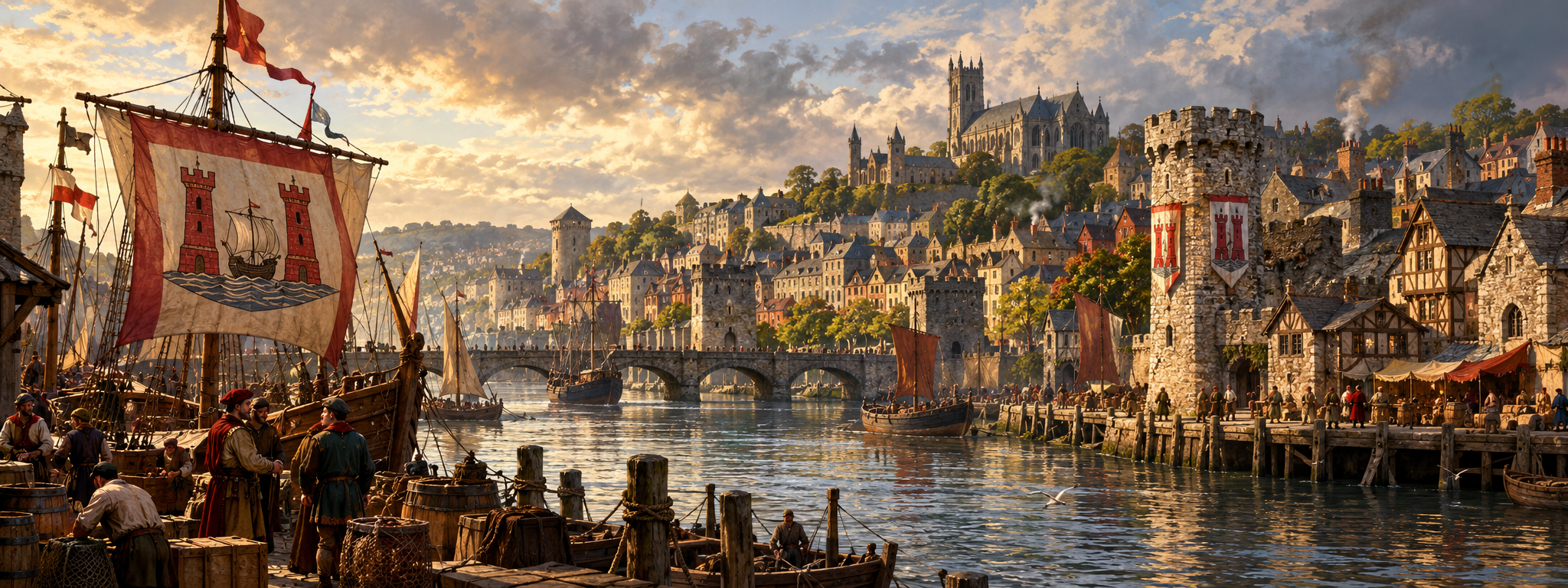
Munster · Walled port · River Lee · Merchant government · Desmond frontier · European trade
At a Glance
| Realm | Lordship of Ireland |
|---|---|
| Region | Southern Munster, among powerful FitzGerald and MacCarthy lordships |
| Status | Chartered, walled merchant city with long-standing civic privileges |
| Landscape | River islands, channels, bridges, quays, gates and densely built streets |
| Economy | Exports of grain, wool, hides, furs and dairy produce; imports of wine, salt, iron, cloth and luxury goods |
| Key powers | Civic merchant families, guilds, the Earls of Desmond and neighbouring MacCarthy lords |
| Best for | Merchant intrigue, smuggling, guild disputes, river pursuit, protection payments and foreign cargo |
| Immediate pressure | Cork can defend its walls, but its food, trade roads and rural markets depend on negotiated peace beyond them |
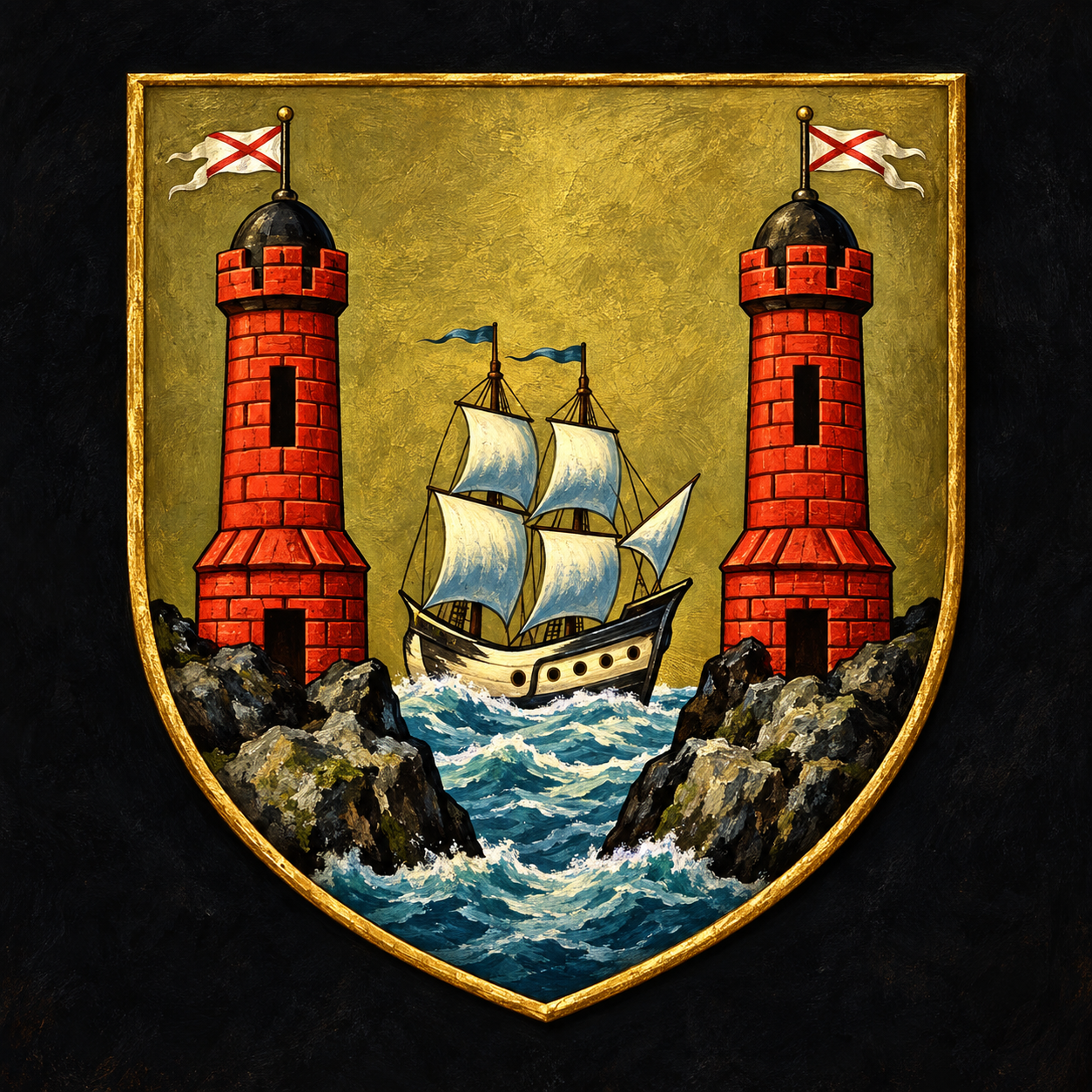
Cork is a fortified trading city that lives by negotiation. Its merchants possess valuable royal privileges and dominate civic government, but the walls stand inside a countryside controlled by powerful regional lords. Ships can reach the quays from Europe more easily than a caravan can sometimes reach the city from twenty miles inland.
What Is Happening Right Now?
Cork’s mercantile elite controls much of the city’s trade and governance. Charters dating back to the twelfth and thirteenth centuries give citizens important rights over burgage, tolls, wine customs and the port.
Those rights weaken outside the gates. The surrounding lordships control roads, cattle country and armed followings. Protection payments and private agreements are part of the practical price of keeping trade moving when distant royal power cannot secure the countryside.
European shipping keeps the city wealthy and exposed. Wine, cloth, salt, iron and luxury goods come in from English and continental ports; grain, wool, hides, furs and dairy products leave in return. Foreign vessels also bring news, fugitives, disease and contraband.
Cork’s later Yorkist reputation belongs to events still ahead. The present city’s problems are trade, local lordship, civic privilege and the weakening ability of the wider royal administration to impose one settlement across Munster.
Run Cork Tonight
The Wine Ship Without a Crew
A Breton vessel drifts into the Lee under full sail with its cargo intact and nobody aboard. One sealed cask in the hold is warm to the touch and every rat on the quay avoids it.
The Road Payment
A merchant refuses the payment demanded for a caravan travelling inland. The convoy vanishes without signs of battle, and both the city and the neighbouring lord accuse the other of staging the disappearance.
The Charter Chest
Repairs to a gate tower reveal an iron box containing an old royal grant. One forgotten clause would strip a powerful rural lord of a profitable toll.
The South Main Street Murder
A foreign factor is killed behind a workshop. His purse remains full, but a set of merchant marks has been cut from his belt.
The River Gate Bell
A gate bell rings whenever the tide turns although its rope has been removed. Each ringing coincides with goods disappearing from a locked warehouse.
A City Built on the Lee
Medieval Cork occupies islands and low ground shaped by channels of the River Lee. Water is road, harbour, drain, defensive barrier and escape route. Main streets are constrained by bridges and gates, producing a crowded city where movement can be controlled quickly.
The walls define the practical reach of civic law. Inside them, burgesses, guilds and courts matter most. Beyond them, safe conduct from a local lord may be worth more than a document issued by the city.
Merchants, Crafts and Trade
Archaeological evidence shows Cork tied firmly into European commerce. Imported ceramics came from regions that supplied wine, oil, preserved food and other goods, while local artisans worked metal, leather, wood and pottery for an increasingly wealthy urban market.
| Trade | Campaign Use |
|---|---|
| Grain and dairy | Depend on access to the rural hinterland and become vulnerable during feuds. |
| Wool, hides and furs | High-volume exports that generate credit, tolls and theft. |
| Wine and salt | Valuable imported cargo ideal for smuggling and customs disputes. |
| Iron and cloth | Essential supplies for craftsmen, households and armed retainers. |
| Letters and news | Ships can carry political information faster than overland messengers. |
City and Countryside
Cork’s merchants need the surrounding lordships as much as they fear them. Cattle products, grain, timber, fuel and travellers must cross territories the city does not control. FitzGerald and MacCarthy rulers in turn need Cork’s markets, imports and credit.
This creates a frontier of bargains rather than a permanent siege. A lord who threatens Cork today can guarantee its merchants tomorrow. Hostages, fosterage, marriage, toll agreements and private safe conducts keep goods moving through political instability.
Places That Matter
South Main Street
The commercial spine of the medieval city is crowded with houses, shops, workshops and religious property. Public business quickly becomes public spectacle here.
The River Gates
Water gates connect warehouses to boats and are obvious points for customs evasion, bribery and covert movement after curfew.
River Market Quarter
Merchants and specialised craftsmen cluster around one of the city’s busiest urban districts. Foreign objects and local luxury work make it a natural centre for valuable cargo and information.
Lady’s Isle College
The sacred college holds property and obligations inside the river landscape. Its records preserve oaths, genealogies and land agreements that merchants sometimes hoped were forgotten.
Fin Barre’s Sacred Enclosure
The sacred enclosure represents an older Cork of druids, poets and ritual law whose rights do not always align with merchant government.
Magic on the Trade Routes
Cork’s supernatural dangers should travel with commerce. A spirit crosses the sea in a wine cask; a relic is declared as ordinary cargo; a merchant contract sworn before a foreign shrine becomes enforceable when the ship reaches the Lee.
Older river channels survive beneath streets and cellars. Some simply flood. Others lead to parts of Cork that civic maps no longer acknowledge.
Dungeon: The Drowned Customs House
A warehouse floor collapses into masonry beside a buried channel of the Lee.
The Toll Room
Tally sticks and broken seals show that this was once an unofficial customs point.
The Foreign Cellar
Imported casks stand sealed in mud. One contains seawater that remains warm through winter.
The Charter Door
A bronze-bound door opens only when its toll is paid with coin from a ruler who no longer reigns.
The Old Lee
A subterranean current passes beneath the walls. A silent boatman offers passage in exchange for a traveller’s true name.
Teigue of the Lee and the River Folk
The River Lee carries more than ships and cargo. Old Cork stories tell of Teigue of the Lee, a man drawn into encounters with the otherworld along the river. In this world those stories describe a real pattern: certain bends in the Lee become roads into Faerie when mist lies low over the water.
Merrow sometimes trade along the lower river and harbour, especially after storms. Clurichauns are a more domestic problem, haunting prosperous wine cellars and punishing merchants who cheat guests or water the drink too aggressively.
A Cork merchant who laughs at river folklore may still pay a boatman extra to avoid a particular channel after sunset.
Historical and Mythic Context
Cork received important chartered privileges from the late twelfth century onward. Medieval archaeology demonstrates extensive European trade and a prosperous mercantile class that held a controlling stake in civic government. The city exported agricultural and animal products and imported wine, salt, iron, cloth and luxury goods.
The city’s autonomy did not make it sovereign over Munster. Its survival depended on constant relationships with the FitzGerald and MacCarthy powers surrounding it, creating the overlapping urban and lordly authority that defines late-medieval Ireland.
Cork Public Museum — Medieval craft and trade · Cork City Council — Charters
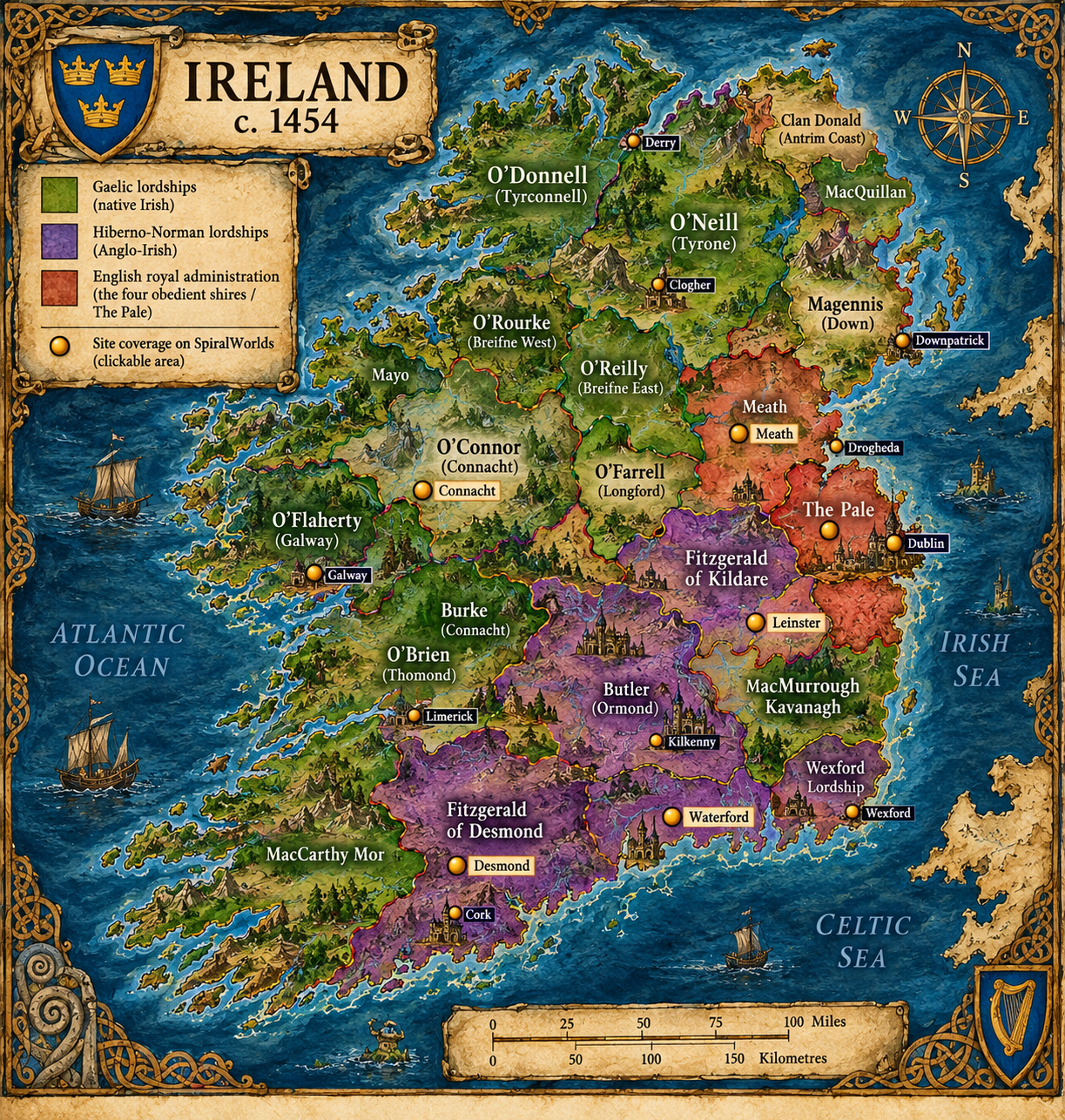
Map of Southern Ireland
Keep this reference growing
If this page helped with your reading or game, you can support its upkeep or explore the curated books.
Explore the Bookshop — epics, classics and stories behind imagined worlds.