
King Arthur Pendragon — High King of Camelot
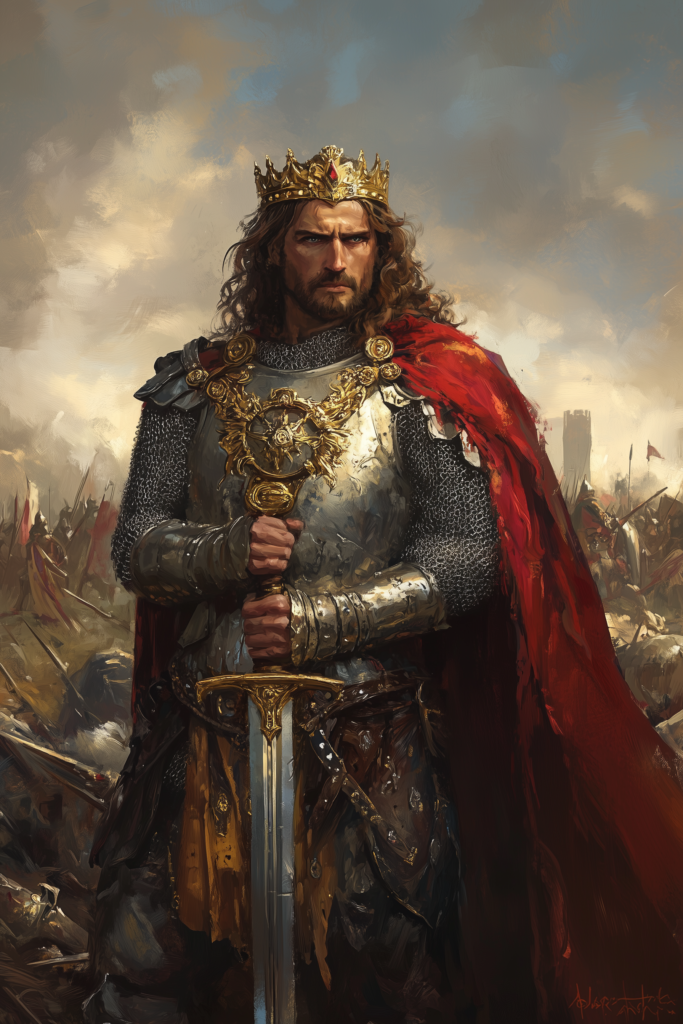
King Arthur rules Camelot and leads the Knights of the Round Table. He can unite rival lords against an invasion, but the oaths holding his court together can also lead to betrayal. Morgan le Fay plans to arm Sir Accolon with the real Excalibur while Arthur receives a false copy. A visitor seeking the king’s help may have to decide which of his advisers can be trusted.
At a Glance
- Role
- High King of Camelot; commander of the Round Table
- Identity
- Human; the Once and Future King
- Seat
- Camelot; the wounded king may travel to Avalon
- Court and rivals
- Morgan le Fay, Mordred and competing lords
- Current danger
- Accolon has the real Excalibur, while Arthur carries a false sword
- Family
- Guinevere is his wife; Morgan and Morgause are half-sisters
- Weapons
- Excalibur and its protective sheath; sometimes lance and dagger
- Sacred customs
- The old gods and sacred places of Britain in this campaign
- Encounter
- Legendary monarch, not an automatic enemy
Arthur grew up in Sir Ector’s household and won his crown by drawing the sword from the stone. With Merlin’s counsel, he brought together lords who had fought each other for years. His knights still answer his call, but Guinevere, Lancelot, Morgan le Fay and Mordred each have interests that can divide the court. The stories of Camelot range from his first victories to the last battle at Camlann; the account below follows that wider legend.
King Arthur — Game Statistics
Arthur is a powerful battlefield commander, but not every campaign needs an epic-level king. Choose the rules edition below. The normal D&D versions depict a legendary monarch; the D&D 3.5e entry preserves the established epic adaptation. The real Excalibur, a false sword and its stolen sheath are central to the Accolon adventure.
King Arthur — D&D 2024
Medium Humanoid (Human), Lawful Good • campaign legendary monarch
Armor Class 20 (plate and shield); Initiative +2 (12); Hit Points 228 (24d10 + 96); Speed 30 ft.
Challenge 15 (13,000 XP; PB +5).
Saving Throws Str +10, Con +9, Wis +9, Cha +10; Skills Athletics +10, History +8, Insight +9, Persuasion +10; Senses passive Perception 14; Languages Common, Brythonic and court tongues.
Traits
Legendary Resistance (3/Day). If Arthur fails a saving throw, he can choose to succeed instead.
Aura of Valor. Arthur and allies within 10 feet of him receive +1 AC and +1 on saving throws while he is conscious. These bonuses are not included in Arthur’s printed AC or saves; apply them once in play.
The Scabbard. While Arthur bears Excalibur’s true scabbard, the first attack that would deal Slashing or Piercing damage to him each round instead deals half damage. This protective effect is an optional SpiralWorlds adaptation; if Morgan has stolen the sheath, Arthur has no protection from it.
Actions
Multiattack. Arthur makes three attacks with Excalibur or his ordinary longsword.
Excalibur. Melee Attack Roll: +13 to hit, reach 5 ft., one target. Hit: 12 (1d8 + 8) Slashing plus 7 (2d6) Radiant damage. Arthur must wield the real sword. The damage assumes he also carries his shield. An ordinary longsword instead attacks at +10 and deals 9 (1d8 + 5) Slashing.
Royal Command (Recharge 5–6). Arthur chooses up to three enemies he can see within 30 feet who can hear him. Each makes a DC 18 Wisdom saving throw. On a failure the target is Charmed by Arthur until the end of its next turn. A creature immune to the Charmed condition is unaffected.
Inspiring Presence (1/Short Rest). Arthur and up to six allies within 30 feet that can hear him gain 10 temporary hit points and Advantage on saves against being Frightened for 1 minute.
Bonus Action
Defensive Stance. Arthur gains a +2 bonus to AC until the start of his next turn.
Reaction
Parry. Arthur adds 3 to his AC against one melee attack that would hit him; he must see his attacker and hold a weapon.
Legendary Actions
Arthur has three legendary-action uses, restoring them at the start of his turn. He takes one action after another creature’s turn. Sword Strike (1 Use): one Excalibur attack. Command Ally (1 Use): one ally within 30 feet can use its Reaction to make one weapon attack. Rally the Line (2 Uses): two allies within 30 feet each gain 10 temporary hit points.
Adventure Use
Arthur protects his household and confronts danger openly. In the plot against Accolon, Arthur begins the fight with a false sword and without the scabbard; use the ordinary-longsword attack until he recovers Excalibur. His court and the named knights are more important than his hit-point total.
King Arthur — D&D 5e / 2014
Medium humanoid (human), Lawful Good • campaign legendary monarch
Armor Class 20 (plate and shield); Hit Points 228 (24d10 + 96); Speed 30 ft.
Challenge 15 (13,000 XP; PB +5).
Saving Throws Str +10, Con +9, Wis +9, Cha +10; Skills Athletics +10, History +8, Insight +9, Persuasion +10; Senses passive Perception 14; Languages Common, Brythonic and court tongues.
Traits
Legendary Resistance (3/Day). If Arthur fails a saving throw, he can choose to succeed instead.
Aura of Valor. Arthur and allies within 10 feet of him receive +1 AC and +1 on saving throws while he is conscious. These bonuses are not included in Arthur’s printed AC or saves; apply them once in play.
The Scabbard. While Arthur bears Excalibur’s true scabbard, the first attack that would deal Slashing or Piercing damage to him each round instead deals half damage. This protective effect is an optional SpiralWorlds adaptation; if Morgan has stolen the sheath, Arthur has no protection from it.
Actions
Multiattack. Arthur makes three attacks with Excalibur or his ordinary longsword.
Excalibur. Melee Weapon Attack: +13 to hit, reach 5 ft., one target. Hit: 12 (1d8 + 8) Slashing plus 7 (2d6) Radiant damage. Arthur must wield the real sword. The damage assumes he also carries his shield. An ordinary longsword instead attacks at +10 and deals 9 (1d8 + 5) Slashing.
Royal Command (Recharge 5–6). Arthur chooses up to three enemies he can see within 30 feet who can hear him. Each makes a DC 18 Wisdom saving throw. On a failure the target is Charmed by Arthur until the end of its next turn. A creature immune to the Charmed condition is unaffected.
Inspiring Presence (1/Short Rest). Arthur and up to six allies within 30 feet that can hear him gain 10 temporary hit points and Advantage on saves against being Frightened for 1 minute.
Bonus Action
Defensive Stance. Arthur gains a +2 bonus to AC until the start of his next turn.
Reaction
Parry. Arthur adds 3 to his AC against one melee attack that would hit him; he must see his attacker and hold a weapon.
Legendary Actions
Arthur has three legendary-action uses, restoring them at the start of his turn. He takes one action after another creature’s turn. Sword Strike (1 Use): one Excalibur attack. Command Ally (1 Use): one ally within 30 feet can use its Reaction to make one weapon attack. Rally the Line (2 Uses): two allies within 30 feet each gain 10 temporary hit points.
Adventure Use
Arthur protects his household and confronts danger openly. In the plot against Accolon, Arthur begins the fight with a false sword and without the scabbard; use the ordinary-longsword attack until he recovers Excalibur. His court and the named knights are more important than his hit-point total.
King Arthur — Pathfinder 1e
King Arthur Pendragon CR 19 (PC-class campaign NPC)
XP 204,800
Male human fighter 20
LG Medium humanoid (human); Init +6; Senses Perception +4
Defense
AC 36, touch 14, flat-footed 34 (+14 armor, +5 shield, +2 Dex, +3 natural armor, +2 deflection)
hp 190 (20d10 + 80); Fort +19, Ref +11, Will +13 (includes a +3 resistance cloak); Defensive abilities armor mastery (DR 5/— while in armor).
Offense
Speed 30 ft. in armor
Melee Excalibur +36/+31/+26/+21 (1d8+18 Slashing, 17–20/×3), when used as a +5 longsword; normal +5 magic sword damage without custom artifact effects.
Ranged composite longbow +22/+17/+12/+7 (1d8+5, ×3); Space 5 ft.; Reach 5 ft.
Tactics
Before Combat Arthur commands the line and seeks a fair challenge. During Combat he relies on the fighter’s Weapon Mastery and disciplined attacks instead of spellcasting. Morale he withdraws only to save his court or civilians.
Statistics
Str 20, Dex 14, Con 18, Int 16, Wis 18, Cha 20
Base Atk +20; CMB +25; CMD 37
Feats Weapon Focus (longsword), Greater Weapon Focus (longsword), Weapon Specialization (longsword), Greater Weapon Specialization (longsword), Improved Critical (longsword), Power Attack, Cleave, Great Cleave, Combat Reflexes, Improved Initiative, Shield Focus, Improved Shield Bash, Mounted Combat, Ride-By Attack, Spirited Charge, Leadership, Improved Bull Rush, Iron Will, Toughness, Step Up, Lunge, Critical Focus (22 feats including human and fighter bonus feats).
Skills Diplomacy +25, Intimidate +28, Knowledge (nobility) +23, Ride +23 (masterwork armor, fighter armor training and shield check penalties included); Languages Common, Brythonic and court dialects
Combat gear full plate +5, heavy shield +3, ring of protection +2, amulet of natural armor +3, cloak of resistance +3, Excalibur as +5 longsword. The sheath is a separate campaign artifact.
Special Abilities
Bravery +5; Armor Training 4; Weapon Training (heavy blades) +4; Armor Mastery; Weapon Mastery (longsword). These class abilities follow Pathfinder 1e Fighter. The source-legend Excalibur and its scabbard can be treated as distinct custom artifacts; do not borrow the epic D&D 3.5e weapon’s level-draining powers.
King Arthur — D&D 3.5e, Epic
King Arthur Pendragon CR 29
Male human Fighter 26 / Cavalier 3, LG Medium humanoid
Init +8; Senses Spot +9
Defense
AC 22, touch 11, flat-footed 21 (original epic design’s masterwork plate and heavy steel shield)
hp 323 (original author’s epic campaign value; not a standard hit-point average)
Fort +25, Ref +17, Will +26
Offense
Speed 20 ft.
Melee Excalibur +46/+41/+36/+31 (1d8+17 plus 3d6 good damage and one negative level; threat 15–20/×2; enhanced on critical hits); or lance +32/+27/+22/+17 (1d8+5, ×3)
Space 5 ft.; Reach 5 ft.
Tactics
Mounted combat deadly charge (1/day), burst of speed, and +1 attack with sword or lance while mounted; these epic features are from the preserved author-permitted 3.5e adaptation, not Pathfinder rules. Morale he fights for Britain and withdraws to preserve civilians and knights rather than abandon the realm.
Statistics
Str 21, Dex 18, Con 20, Int 16, Wis 21, Cha 25
Base Atk / Grapple +25 / +30; Skills Diplomacy +37, Ride +28, Knowledge (nobility) +16, Intimidate +15; Feats mounted combat, Combat Expertise, Leadership and epic longsword specialisation among others. Refer to the original author-permitted archival adaptation below for its complete feat links, item abilities and source notes.
Special Abilities
Excalibur is a bespoke greater artifact with holy damage, critical strike and disarm/sunder powers; the scabbard protects its lawful-good bearer from piercing and slashing wounds in this adaptation. The extensive original campaign treatment has been retained below, including Cernwennan, Rhongomiant and Wigar; it remains a much higher-powered epic alternative to the other three editions. D&D 3.5 epic Fighter rules provide the underlying progression.
The Life of King Arthur
The Prophetic Birth and Claim to the Throne
Arthur’s story begins before he was even born. His father, Uther Pendragon, was the king of Britain and fell in love with Igraine, the wife of the Duke of Cornwall. With the help of the wizard Merlin, Uther was magically disguised as Igraine’s husband and conceived Arthur. However, Merlin, aware of the child’s great destiny, took Arthur away at birth, raising him in secret under the care of Sir Ector.
After Uther’s death, rival lords disputed the crown. Arthur proved his claim by drawing the sword from the stone. In Malory’s account, Excalibur is a different sword, given to Arthur later by the Lady of the Lake. He gained the throne, then had to win the support of lords who had fought for it themselves. This distinction matters when Morgan le Fay later gives the real Excalibur to Accolon.
The Rise of Camelot and the Knights of the Round Table
Arthur’s reign was defined by his vision of a just and noble kingdom. With Excalibur in hand and the counsel of Merlin, he established Camelot, a shining city representing the pinnacle of civilization and honor. To ensure fairness among his knights, he formed the Knights of the Round Table, a fellowship of warriors bound by chivalry, equality, and the pursuit of justice. Among them were legendary figures such as:
- Sir Lancelot – His greatest knight, yet also his greatest betrayer.
- Sir Gawain – A fiery warrior known for his honor and strength.
- Sir Galahad – A knight whose search for the Grail tests the ideals of the Round Table.
- Sir Percival – A seeker of wisdom and enlightenment.
- Sir Bedivere – Arthur’s most loyal companion, the one to return Excalibur to the Lady of the Lake.
Arthur’s rule brought an age of peace, but his ambitions extended beyond politics—he sought to create a land where might served right, where honor was the law, and where the world itself would be shaped by virtue.
Exploits and Trials
Throughout his reign, Arthur faced many trials, both external and personal:
- The Saxon Wars – Arthur led numerous campaigns to push back invading Saxon forces, establishing Britain’s dominance.
- The Grail Quest – Arthur’s knights search for a sacred vessel. Galahad and Percival undertake the quest, while Lancelot must confront the harm his divided loyalties have caused.
- The Betrayal of Lancelot and Guinevere – The love affair between Arthur’s wife, Queen Guinevere, and his most trusted knight, Lancelot, shattered the unity of Camelot. This betrayal led to civil war, as Arthur was torn between duty and personal heartbreak.
- Mordred’s Rebellion – Arthur’s own illegitimate son (or nephew in some versions), Mordred, rose against him, seizing Camelot in his absence. Their final battle at Camlann was brutal and tragic—Arthur slew Mordred, but was mortally wounded in return.
The Fall of Camelot and the Journey to Avalon
As he lay dying, Arthur ordered Sir Bedivere to return Excalibur to the Lady of the Lake, ensuring that its power would not fall into unworthy hands. He was then carried to the mystical island of Avalon, where, according to legend, he rests in an enchanted sleep, awaiting the day he is needed once more.
Some say Arthur will return when Britain is in its greatest hour of need—a prophecy that cements his legend as The Once and Future King.
The Character of King Arthur
Personality and Virtues
Arthur is the embodiment of the noble king—wise, just, and unwavering in his pursuit of righteousness. He believes in the power of order, chivalry, and the rule of law, standing against tyranny and chaos. He is deeply loyal, valuing camaraderie and trust, yet his adherence to duty often blinds him to the more personal, human struggles of those around him.
Fears and Flaws
Despite his greatness, Arthur is haunted by betrayal and the fragility of ideals. He fears that the dream of Camelot—his life’s work—may be doomed to fail. His trust in others, particularly in Guinevere and Lancelot, becomes his greatest weakness, and his commitment to justice sometimes makes him rigid and unable to compromise.
Another of Arthur’s fears is his own destiny—the weight of prophecy hangs over him, and though he strives for greatness, he knows he cannot escape fate.
Ambitions and Legacy
Arthur’s ultimate goal is a kingdom where honor and justice reign supreme, a land where no tyrant rules and no innocent suffers. He fights not for personal gain but for the greater good, a vision larger than himself. Even in death, his legend serves as an inspiration—his story is told across generations, reminding the world of the ideals he stood for.
Conclusion
King Arthur is more than just a king—he is a symbol of hope, honor, and sacrifice. His story is filled with triumphs and tragedies, yet his legacy endures. Though his kingdom fell and his dreams were undone by betrayal, his ideals live on in those who seek justice and strive for a better world. Whether sleeping in Avalon or waiting to return in Britain’s darkest hour, Arthur remains the eternal monarch of legend—the Once and Future King.
Screen and Video Interpretations
Original King Arthur adaptations, historical Excalibur notes and source illustrations
King Arthur Pendragon
Medium humanoid (human), Lawful Good
Armor Class: 20 (plate armor and shield)
Hit Points: 220 (20d10 + 100)
Speed: 30 ft.
| STR | DEX | CON | INT | WIS | CHA |
|---|
| 20 (+5) | 14 (+2) | 18 (+4) | 16 (+3) | 18 (+4) | 20 (+5) |
Saving Throws: Str +10, Con +9, Wis +9, Cha +10
Skills: Athletics +10, History +8, Insight +9, Persuasion +10
Senses: Passive Perception 14
Languages: Common, Celestial, Draconic
Challenge Rating: 15 (13,000 XP)
Traits:
- Legendary Resistance (3/Day): Automatically succeed on a failed saving throw 3 times per day.
- Inspiring Presence (Action, once per short rest): Allies within 30 ft. gain advantage on saving throws against fear and receive 10 temporary hit points.
- Aura of Valor: Allies within 10 ft. gain a +1 bonus to AC and saving throws.
Actions:
- Multiattack: Makes three melee attacks.
- Excalibur (Artifact):Melee Weapon Attack: +10 to hit, reach 5 ft.; Hit: 15 (1d10 + 5) slashing damage plus 7 (2d6) radiant damage.
- Artifact Description: Excalibur is a legendary sword imbued with divine radiance, forged by ancient magic and blessed by the Lady of the Lake. Its ethereal glow cleaves through darkness and evil, and it symbolizes the divine right and courage of its wielder.
- Royal Command (Recharge 5–6): Enemies within 30 ft. must succeed on a DC 18 Wisdom save or be charmed for 1 minute; affected enemies may repeat the saving throw at the end of each turn.
Bonus Actions:
- Defensive Stance: Adopts a defensive posture, gaining a +2 bonus to AC until the start of his next turn.
Reactions:
- Parry: When hit by a melee attack, adds +3 to AC to potentially turn the hit into a miss (requires seeing the attacker and wielding a melee weapon).
Legendary Actions: (3 per round; regained at the start of his turn)
- Strike: Makes one Excalibur attack.
- Command Ally: One ally within 30 ft. may immediately use their reaction to make one weapon attack.
- Inspiring Shout (Costs 2 Actions): Allies within 30 ft. gain 10 temporary hit points and may use a bonus action on their turn.
Spell-Like Abilities:
- Divine Smite (1/Day): When hitting with Excalibur, adds 21 (6d6) extra radiant damage—or 28 (8d6) radiant damage against undead or fiends.
- Lay on Hands (1/Day): As an action, heals an ally he touches for up to 30 hit points.
- Bless (1/Day): Casts bless without requiring concentration; all allies within 30 ft. gain a +1 bonus to attack rolls and saving throws for 1 minute.
Tactics & Combat Strategy:
- Frontline Leadership: Leads from the front, bolstering allies with Inspiring Presence and Aura of Valor while engaging foes with Excalibur.
- Defensive Play: Uses Defensive Stance and Parry to mitigate damage and protect allies.
- Battlefield Control: Employs Royal Command to charm and disorient enemies, creating openings for his forces.
- Dynamic Support: Utilizes Legendary Actions to maintain pressure on foes and coordinate with his party.
- Divine Smite Usage: Saves Divine Smite for critical strikes, particularly effective against unholy adversaries.
Character Description:
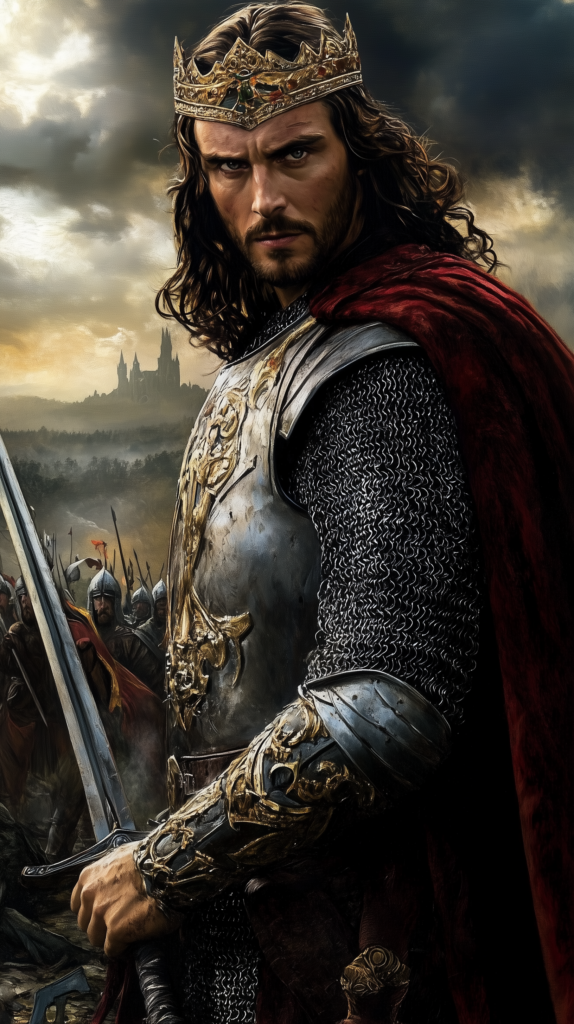
King Arthur Pendragon embodies chivalric honor and noble leadership. With an unwavering gaze and commanding presence, he inspires hope in allies and caution in his enemies. Guided by duty and the weight of destiny, every swing of Excalibur—a divine artifact of immense power—is dedicated to forging a realm where valor and righteousness prevail. Despite personal betrayals and the burdens of prophecy, Arthur’s resolve remains unyielding as he fights for justice and unity.
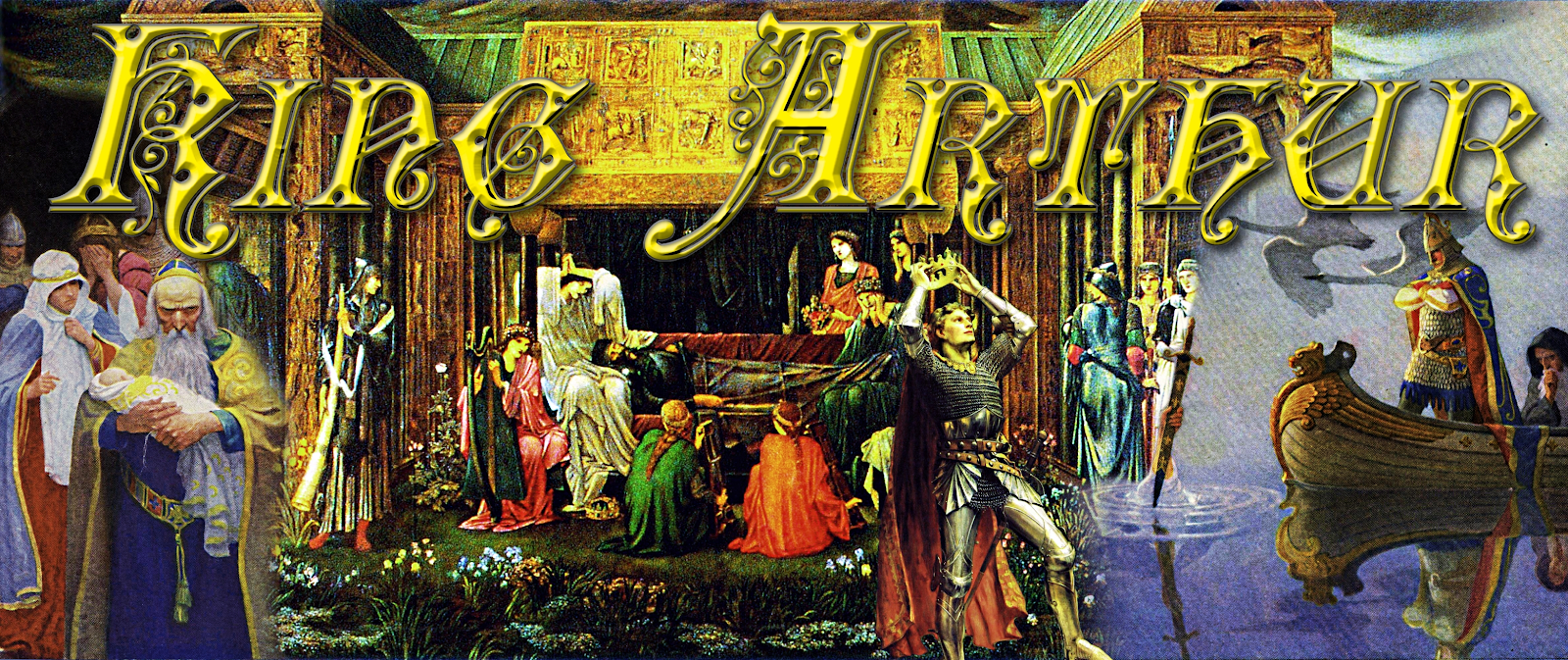
Arthur Pendragon, King of Camelot and the Knights of the Round Table—he is easily one of the most enduring popular mythological figures in human history.
What we do know is that there likely was some fellow named Arthur going about fighting Saxons in the late 400s and early 500s but there is a tremendous amount of folklore that’s come in his wake in the millennium and a half since then. Whether or not he made as big of an impact as some schools of thought claim (killing 960 men by his own in the Battle of Badon, for instance) is still a matter of academic debate.
Design Notes: For our purposes here I decided to gauge him against the other Knight of the Round Table but with a focus on the royalty aspect—what I consider to be the best known part what with him being a king and all—and that he’s the center of the Arthurian legend. With that in mind I opened the throttle up and put him near 20th level, with a nod towards fighter battlefield tactics (taken from Mike Mearls’ warlord class work) and a heavy shoulder into divine sovereignty of rule via paladin.
King Arthur
Medium humanoid (human), neutral good fighter (warmaster) 4/paladin (oath of royalty) 15
Armor Class 19 (scale mail, shield, defense fighting style)
Hit Points 142 (19d10+38)
Speed 30 ft.
| STR | DEX | CON | INT | WIS | CHA |
| 16 (+3) | 14 (+2) | 14 (+2) | 12 (+1) | 12 (+1) | 18 (+4) |
Saving Throws Str +13, Dex +6, Con +12, Int +5, Wis +5, Cha +8
Skills Athletics +9, History +7, Insight +7, Persuasion +10
Condition Immunities disease
Senses passive Perception 11
Languages Common (Anglo-Saxon), Cymric (Celtic-Welsh)
Challenge 12 (8,400 XP)
Background: Noble – Lordship. Due to his lordship King Arthur receives a measure of respect wherever he goes. He is treated as royalty (or as closely as possible) by most peasants and traders, and as an equal when meeting other authority figures (who make time in their schedule to see him if requested to do so).
Action Surge (1/short rest). On his turn, King Arthur can take an additional action on top of his regular action and a possible bonus action.
Aura of Courage. King Arthur and friendly creatures within 10 feet of him can’t be frightened while he is conscious.
Aura of Protection. Whenever King Arthur or a friendly creature within 10 feet of him must make a saving throw, the creature gains a +4 bonus to the saving throw as long as the King Arthur is conscious (included in his statistics).
Channel Divinity (1/short rest). King Arthur can channel his divinity through the two following features.
Royal Challenge. King Arthur calls out a provocation to creatures he selects that are able to see him and with 30 feet. A challenged creature makes a DC 18 Wisdom saving throw or can’t choose to move further than 30 feet away from King Arthur until he dies, is incapacitated, or a creature is moved more than 30 feet away from him by another effect.
Warrior Rally. King Arthur can use a bonus action to call out a rallying cry to creatures he selects that are able to see him and within 30 feet. If a selected creature has no more than half of its hit points, it regains 1d6+4 hit points.
Cleansing Touch (4/long rest). King Arthur can use his action to end one spell on himself or on one willing creature that he touches.
Divine Sense (5/long rest). As the paladin class feature.
Divine Smite. When King Arthur hits a creature with a melee weapon attack, he can expend one spell slot to deal radiant damage to the target, in addition to the weapon’s damage. The extra damage is 2d8 for a 1st-level spell slot, plus 1d8 for each spell level higher than 1st, to a maximum of 5d8. The damage increases by 1d8 if the target is an undead or a fiend.
Lay on Hands (75 points). As an action, King Arthur can touch a creature and restore a number of hit points to it, up to the maximum amount remaining in this pool. Alternatively, he can expend 5 hit points to cure the target of one disease or neutralize one poison affecting it.
Royal Fortitude. King Arthur has advantage on saving throws made to resist the paralyzed and stunned conditions.
Second Wind (1/short rest). On his turn, King Arthur can use a bonus action to regain 1d10+4 hit points.
Spellcasting. King Arthur is a 15th-level spellcaster that uses Charisma as his spellcasting ability (spell save DC 18; +10 to hit with spell attacks). He has the following spells prepared from the paladin’s spell list:
1st-level (4 slots): bless, command, compelled duel, detect evil and good, detect magic, divine favor, shield of faith
2nd-level (3 slots): aid, find steed, lesser restoration, warding bond, zone of truth
3rd-level (3 slots): aura of vitality, magic circle, remove curse, spirit guardians
4th-level (2 slots): banishment, death ward, guardian of faith
Tactical Focal Point. King Arthur selects a 10-foot square to be his tactical focal point as a bonus action or as part of the attack action, choosing one of the following benefits to apply to it. This lasts until he cannot take actions or uses this feature again. Each time King Arthur completes a long rest, he can swap one of these benefits for a different one.
- Area Clear. When an ally inside King Arthur’s focal point hits a creature with an attack, the ally can move that creature 5 feet.
- Cover the Flank. As many as three target creatures of King Arthur’s choice can use a reaction to move up to their speed when an enemy that he can see enters his focal point, so long as that movement does not end in the focal point. If a target creature is ending their movement adjacent to the enemy that triggered this feature, they do not have to use their reaction.
- Run Away! When an ally inside of King Arthur’s focal point is forced to make a Dexterity saving throw, they moves up to their speed by using their reaction and are no longer subjected to the triggering effect if their movement takes them outside of the area or range.
Tactical Mastery (3/long rest). King Arthur uses part of his Attack action or a bonus action to take mastery of the battlefield, granting it to himself and allies within his focal point by expending uses of this feature. A creature that is granted a use of King Arthur’s Tactical Mastery can either regain 2d10 hit points when it is granted (any hit points greater than its maximum are temporary hit points) or use it to deal an extra 2d10 damage with an attack.
ACTIONS
Extra Attack. King Arthur attacks twice whenever he takes the Attack action on his turn.
Enchanted Longsword. Melee Weapon Attack: +10 to hit, reach 5 ft., one target. Hit: 10 (1d8+6) magical slashing damage plus 4 (1d8) radiant damage.
Shortbow. Ranged Weapon Attack: +8 to hit, range 80/320 ft., one target. Hit: 5 (1d6+2) piercing damage.
REACTIONS
Loyalty to the Crown. King Arthur can use his reaction to take the damage from an attack that would otherwise damage a creature within 5 feet of him. He is unable to reduce or prevent the damage he takes from this attack.
Excalibur
GMs that want King Arthur’s sword (the legendary Excalibur) to be more powerful can give him a holy avenger instead, changing his statistics as follows.
1) Increase King Arthur’s challenge rating to 14 (11,500 XP).
2) Add this feature:
Holy Avenger. While King Arthur is wielding his sword, he and all creatures friendly to him and within a 10-foot radius have advantage on saving throws against spells and other magical effects.
3) Remove the Enchanted Longsword attack and replace it with this attack:
Holy Avenger. Melee Weapon Attack: +12 to hit, reach 5 ft., one target. Hit: 12 (1d8+8) magical slashing damage plus 4 (1d8) radiant damage. If the target is a fiend or undead, it takes 11 (2d10) radiant damage.
King Arthur Pendragon
“Take thou Excalibur, my good sword, and go with it to yonder water side, and when thou comest there I charge thee throw my sword in that water. . . . Alas, help me hence, for I dread me I have tarried over long. . . . Comfort thyself and do as well as thou mayst, for in me is no trust for to trust in; for I will into the vale of Avilion to heal me of my grievous wound: and if thou hear never more of me, pray for my soul.”

Arthur was the son of Uther and defeated the barbarians in a dozen battles. Subsequently, he conquered a wide empire and eventually he has gone to war with the Romans
Arthur’s conception when Uther approached Igraine who was made, by Merlin’s sorcery, to resemble her husband. The child was given to Ector to be raised in secret. After Uther’s death there was no High-king ruling Albion. Merlin had placed a sword in a stone, saying that whoever drew it out would be king.
Arthur did so and Merlin had him crowned. This led to a rebellion by eleven rulers which Arthur put down. He married Guinevere whose father gave him the Round Table as a dowry; it became the place where his Warriors sit, to avoid quarrels over precedence. A Magnificent reign followed, Arthur’s court becoming the focus for many heroes.However, his most illustrious Warrior, Lancelot, became enamoured of Guinevere and an affair between them has followed.
Arthur is married to the beautiful Guinevere, whom he met when he came to the aid of her father, Laodegan, who was being besieged by enemy forces. Despite the fact that they were outnumbered, Arthur and his company attacked and drove them away. In gratitude, Laodegan promised Arthur anything he wanted. The young king, who had fallen in love with his host’s daughter the instant he saw her, asked for Guinevere’s hand in marriage. Laodegan was happy to comply, though it was not clear that Guinevere returned Arthur’s feelings. In addition, Laodegan presented Arthur with an oak table large enough to seat 250 knights. This table eventually became known as the Round Table.
Physically, Arthur is a huge man with strong, honest features, a heavy beard, and a penetrating gaze. He is never far from his famous sword, Excalibur, or its magical scabbard.
Arthur is not only the principal defender of Britain, but the embodiment of her ethical ideals as well.
He rules his realm, with compassion, wisdom, and, when need be, unappeasable might.
Used with permission from Paolo
As seen in Paolo’s thread at Dicefreaks
Excalibur


The Scabbard of Arthur
Cernwennan
Rhongomiant
Wigar
Keep this reference growing
If this page helped with your reading or game, you can support its upkeep or explore the curated books.
Explore the Bookshop — epics, classics and stories behind imagined worlds.