
Sir Ector the Kind – Foster-Father of King Arthur
Sir Ector the Kind – Foster-Father of King Arthur
The foster-father who raises a hidden king, then kneels when the truth is finally drawn from stone.
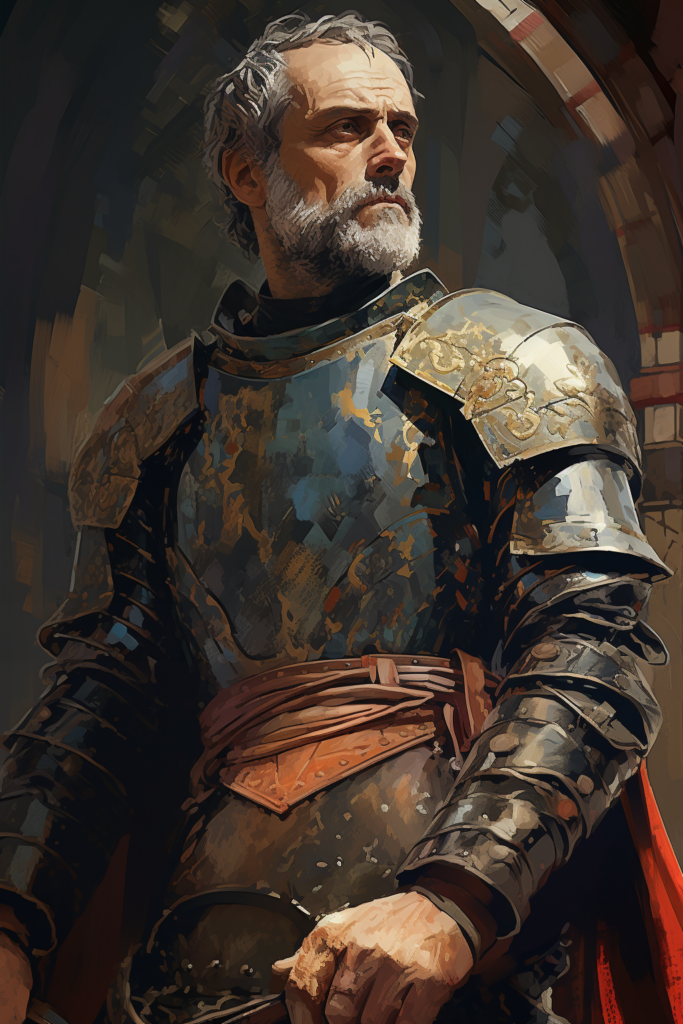
- Alias: Sir Ector, Ector the Kind, Ector of the Foster-House
- Gender: Male
- Culture: Arthurian Britain
- Race: Human
- Role: Knight, foster-father, household lord, mentor, oath-witness
- Known For: Raising Arthur in secret, fathering Sir Kay, and recognising Arthur’s true station after the drawing of the sword
- Allies: Arthur, Sir Kay, Merlin, loyal household knights, the young court
- Enemies: Usurpers, oath-breakers, rivals to Arthur’s claim, enemies of the Pendragon succession
- Base of Operations: Ector’s fortified household and training yard; later Arthur’s court when counsel is needed
- Languages: British, Welsh, French, Latin
- Alignment: Lawful Good
- Affiliations: The household of Ector, the Pendragon succession, Arthur’s early court
- Family and Bonds: Foster-father of Arthur; father of Sir Kay
Sir Ector is one of the quiet hinges of Arthur’s reign. He does not win his place in legend by slaying giants, conquering kingdoms, or claiming a throne. He earns it by keeping faith before anyone else can see the shape of the future.
When Arthur is hidden from the violence of succession, Ector receives the child into his household and raises him as his own. He does not raise Arthur as a prince wrapped in prophecy. He raises him as a boy who must learn patience, service, courtesy, horses, weapons, household duty, and the hard discipline of obeying before commanding.
Ector’s kindness is not softness. It is duty made durable. He corrects young men before pride hardens in them, punishes cruelty before it becomes habit, and teaches that a sword proves nothing unless the hand that holds it can also protect the weak.
His great mythic moment comes when Arthur draws the sword that others cannot move. Ector does not cling to his own pride, bloodline, or authority. He demands the truth, recognises the sign, and kneels. That act does not make him lesser. It proves what kind of man raised the king.
Without Ector, Arthur may still have been born royal. He would not have been raised worthy.
Appearance
Sir Ector is a broad, weathered man past the first heat of youth but not yet broken by age. His hair and beard are greying, his hands are scarred from training yards and old campaigns, and his shoulders still carry armour with ease.
He dresses plainly for a man of rank: good wool, serviceable leather, a clean cloak, a knight’s belt, and well-kept arms rather than excessive ornament. In the yard he wears practical armour. At court he favours sober clothing, a plain sword, and the alert expression of a man who notices more than he says.
His face can seem stern until he smiles. Younger knights often discover that disappointing Ector hurts worse than being shouted at by a louder lord.
Personality
Ector is patient, firm, and difficult to flatter. He believes lineage matters, but conduct matters more. A noble name can be disgraced. A hidden child can prove kingly.
He is kind in the old household sense: he feeds those under his roof, protects those given into his care, disciplines those who abuse his trust, and honours an oath even when that oath costs him pride. He is not naive. He knows that courts lie, heirs are murdered, and prophecy attracts knives.
Ector’s tenderness is usually private. He corrects Arthur in public and worries for him in silence. He is harder on Kay, partly because Kay is his blood son and partly because Kay’s pride needs a firmer hand. He loves them both, but he does not love them in the same way.
Role in the Campaign
Sir Ector works best as a stabilising NPC: a mentor, witness, guardian, and household authority whose importance comes from trust rather than raw power.
Use him when the campaign needs a grounded knight who understands household duty, royal danger, young warriors, and the cost of oaths. He can sponsor player characters entering Arthurian service, test them before they are trusted near the court, or quietly block them if they behave dishonourably.
Ector should not overshadow Arthur or the brighter knights of the court. His strength is local, personal, and moral. He knows who Arthur was before the crown, and that makes his judgement dangerous to liars.
Currently in the World
Sir Ector divides his time between his own fortified household and Arthur’s court. At home, he governs like a practical country lord. Disputes are heard in the hall, weapons are kept in order, horses are checked before dawn, and no squire is allowed to confuse swagger with courage.
At court, he is less visible than the famous knights. He watches. He listens. He speaks when Arthur asks, or when silence would become cowardice. Younger knights often fear disappointing him more than they fear losing in the yard.
Ector is most often found beside the training ground, in the hall where household disputes are settled, or in a quiet chamber where old oaths and dangerous truths are discussed away from flatterers.
Relationships
- Arthur: Ector loves Arthur as a son, even after the truth of Arthur’s birth is revealed. He does not treat the crown as a replacement for fatherhood. He remains one of the few people who can remind Arthur what he was before kingship.
- Sir Kay: Kay is Ector’s blood son, trained hard and expected to carry the family’s honour. Ector sees Kay’s pride clearly and tries to turn it toward service rather than resentment.
- Merlin: Ector respects Merlin, but he does not trust wizardly secrecy without limits. He obeyed the old charge placed upon him, yet he knows that prophecy often asks ordinary people to bear extraordinary costs.
- Arthur’s Court: Some courtiers underestimate Ector because he is not flamboyant. Wiser knights know that his approval matters. If Ector calls a man false, that accusation carries weight.
Secrets and Pressure Points
Ector knows more about Arthur’s childhood than almost anyone alive. He knows who visited the household, what warnings came with the child, what promises were made, and what fears surrounded the succession.
Enemies may try to pressure him by threatening Kay, bribing old servants, falsifying fosterage records, or claiming that Arthur was trained to deceive the realm. Ector’s weakness is not greed or ambition. It is family.
Mechanics Tabs
The rules below are mechanics compatible for different game editions.
Sir Ector 5.5e
Sir Ector Pathfinder 1e / 3.5e
Sir Ector 5.5e-Compatible Rules

Sir Ector, Foster-Father of Kings
Medium Humanoid (Human), Lawful Good
Armor Class 20
Initiative +0
Hit Points 112
Speed 30 ft.
Proficiency Bonus +3
| STR | DEX | CON | INT | WIS | CHA |
|---|---|---|---|---|---|
| 18 (+4) | 11 (+0) | 16 (+3) | 13 (+1) | 16 (+3) | 15 (+2) |
Saving Throws Str +7, Con +6, Wis +6
Skills Athletics +7, History +4, Insight +6, Perception +6, Persuasion +5
Senses passive Perception 16
Languages British, Welsh, French, Latin
Challenge 6
Traits
Foster-House Discipline. Allied creatures of Ector’s choice within 30 feet of him have advantage on saving throws against being frightened while they can see or hear him.
Household Authority. Ector has advantage on Charisma checks made to command squires, household guards, sworn retainers, and knights who recognise his honour.
Old Knight’s Eye. Ector has advantage on Wisdom (Insight) checks made to detect boasting, false testimony, concealed fear, or a young warrior pretending to be braver than they are.
Stand Behind Me. When an allied creature within 5 feet of Ector is hit by an attack, Ector can use his reaction to reduce the damage by 10, provided he is wielding a shield.
Actions
Multiattack. Ector makes two Longsword attacks.
Longsword. Melee Weapon Attack: +7 to hit, reach 5 ft., one target. Hit: 8 slashing damage, or 9 slashing damage if used with two hands.
Shield Check. Melee Weapon Attack: +7 to hit, reach 5 ft., one target. Hit: 7 bludgeoning damage. If the target is Medium or smaller, it must succeed on a DC 15 Strength saving throw or be pushed 5 feet away from Ector.
Mounted Opening Charge. While mounted, if Ector moves at least 20 feet straight toward a target, he may make one Lance attack against that target. Melee Weapon Attack: +7 to hit, reach 10 ft., one target. Hit: 10 piercing damage plus 7 piercing damage. If the target is Large or smaller, it must succeed on a DC 15 Strength saving throw or fall prone. This attack is not part of Ector’s Multiattack.
Command the Young Knight. Recharge 5–6. Ector chooses one allied creature within 30 feet that can see or hear him. That creature may immediately use its reaction to move up to half its speed without provoking opportunity attacks, or make one weapon attack.
Mentor’s Correction. 3/day. Ector chooses one allied creature within 30 feet that can hear him. Until the end of that creature’s next turn, it adds 1d6 to one ability check, saving throw, or attack roll it makes.
Reactions
Parry. Ector adds 3 to his AC against one melee attack that would hit him. To do so, Ector must see the attacker and be wielding a melee weapon.
No, Behind Me. When a creature Ector can see attacks an ally within 5 feet of him, Ector imposes disadvantage on the attack roll. Ector must be wielding a shield.
Equipment
Plate armour, shield, longsword, lance, knight’s belt, household signet, riding gear, cloak, and keys to his hall.
Ector does not need a magic shield or medallion to function. If the campaign already uses those items, treat them as later court gifts rather than core parts of his identity.
Sir Ector Pathfinder 1e / 3.5e-Compatible Rules

Sir Ector, Foster-Father of Kings
Male human aristocrat 4 / fighter 6
LG Medium humanoid
CR 7
Init +1; Senses Perception +14
AC 22, touch 11, flat-footed 21
hp 76
Fort +10, Ref +5, Will +9
| STR | DEX | CON | INT | WIS | CHA |
|---|---|---|---|---|---|
| 18 (+4) | 12 (+1) | 16 (+3) | 13 (+1) | 16 (+3) | 15 (+2) |
Speed 20 ft. in armour; 30 ft. unarmoured
Base Atk +9; CMB +13; CMD 24
Melee masterwork longsword +14/+9 (1d8+4/19–20)
Mounted Lance masterwork lance +14 (1d8+4/x3), or increased damage on a mounted charge according to the edition being used
Feats
Combat Expertise, Mounted Combat, Ride-By Attack, Shield Focus, Weapon Focus (longsword), Bodyguard, Power Attack, Skill Focus (Sense Motive)
For 3.5e, replace Bodyguard with a suitable aid-another or defensive feat used at your table.
Skills
Diplomacy +15, Handle Animal +12, Knowledge (nobility) +12, Perception +14, Profession (soldier) +13, Ride +14, Sense Motive +16
For 3.5e, split Perception into Listen and Spot as appropriate.
Special Abilities
Household Command. 3/day, as a standard action, Ector grants one ally within 30 feet who can hear him a +2 morale bonus on one attack roll, saving throw, or skill check made before the end of that ally’s next turn.
Mentor’s Correction. 3/day, Ector may allow an ally within 30 feet to reroll a failed skill check connected to courtly conduct, mounted discipline, weapon drill, oath testimony, or resisting fear. The ally must take the second result.
Mounted Opening Charge. Ector may use a lance effectively from horseback, but he does not make repeated lance attacks as routine close combat. The lance is for the first committed charge, a formal mounted pass, or a battlefield opening. Once the lines close, Ector normally fights with sword and shield.
Gear
Full plate, heavy steel shield, masterwork longsword, masterwork lance, knight’s belt, signet ring, riding tack, court clothing, and household keys.
Combat Tactics
Ector fights like a household knight, not a glory-hunter. He protects the vulnerable, orders the young and reckless back into formation, and tries to keep a fight from becoming a massacre.
On horseback, he opens with a single controlled lance charge if the ground and formation allow it. He does not keep wheeling around in close quarters. Once the fight closes, he changes to sword and shield, guards allies, and uses his authority to steady frightened retainers.
On foot, Ector takes the centre of a defensive line. He wants enemies to strike at him rather than at squires, servants, wounded allies, or Arthur before Arthur is ready to be seen. He accepts surrender from honourable foes, but he has little patience for oath-breakers who hide behind courtly manners.
Ector should not be run as a legendary solo enemy. He is most dangerous when surrounded by household guards, loyal squires, a few trained knights, and people who trust his judgement.
Using Sir Ector in Your Game
Ector is ideal when the campaign needs a moral centre who is not sentimental. He can test player characters before they enter Arthur’s service, sponsor them after they prove themselves, or quietly block them if they behave dishonourably.
He is also useful as a witness. If rivals attack Arthur’s legitimacy, Ector knows what happened in the foster-house. If Kay is accused of arrogance, cowardice, or betrayal, Ector’s judgement matters. If Merlin’s secrets begin to harm ordinary people, Ector is one of the few lawful good figures willing to ask whether prophecy has demanded too much.
Do not make Ector merely “Arthur’s nice foster father.” His kindness has weight because it is disciplined, costly, and tested by politics.
Adventure Hooks
The Fosterage Oath
A rival claimant argues that Arthur’s upbringing was staged by Merlin and Ector to manufacture a false king. Ector asks the characters to recover an old household witness, oath-token, or servant’s record before the accusation becomes civil war.
Kay’s Bitter Hour
Sir Kay’s pride creates a political crisis. Ector will not excuse his son, but neither will he let enemies use Kay to wound Arthur. The characters must discover whether Kay acted from vanity, manipulation, or an attempt to protect the household.
The Hall That Raised a King
Ector’s old hall is attacked by enemies who want to destroy every trace of Arthur’s childhood. The target is not treasure but memory: nursery tokens, fosterage records, old weapons, household servants, and the room where Arthur first learned service before command.
Mythic and Historic Context
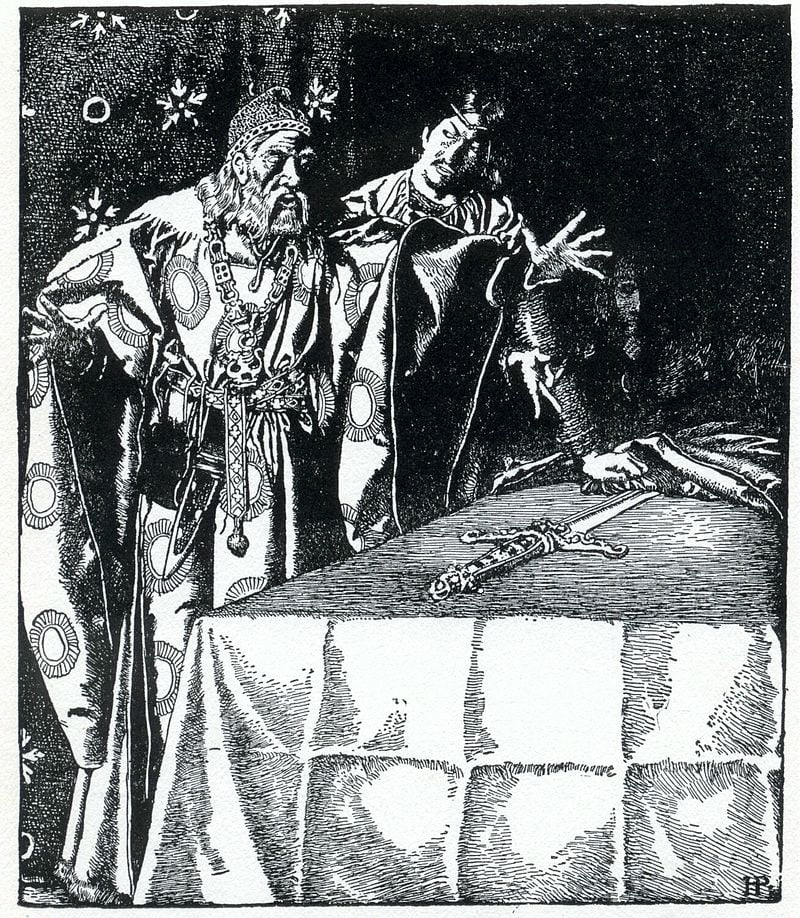
Sir Ector belongs to the fosterage tradition at the heart of Arthurian legend. He is the father of Sir Kay and the foster-father of Arthur, the man whose household shelters the hidden heir before the public revelation of kingship.
In Sir Thomas Malory’s Le Morte Darthur, Ector appears in the Sword in the Stone episode as the elder authority who tests the truth of Kay’s claim and then recognises Arthur’s higher birth. The important campaign lesson is not merely that Arthur draws the sword, but that Ector accepts the truth when it costs him the ordinary place of fatherhood.
Howard Pyle’s The Story of King Arthur and His Knights gives the foster-household a strong narrative shape: Kay stands as the elder knightly son, while Arthur is raised within Ector’s household before the revelation of the sword. This makes Ector useful as a campaign figure of household discipline, hidden legitimacy, and ordinary goodness placed under mythic pressure.
For campaign use, Ector should remain a grounded knight and foster-father rather than a secret archmage, saint, or battlefield superhuman. His mythic force comes from care, oath, recognition, and surrendering pride when the true king is revealed.
Video
Keep this reference growing
If this page helped with your reading or game, you can support its upkeep or explore the curated books.
Explore the Bookshop — epics, classics and stories behind imagined worlds.