
Protection Domain
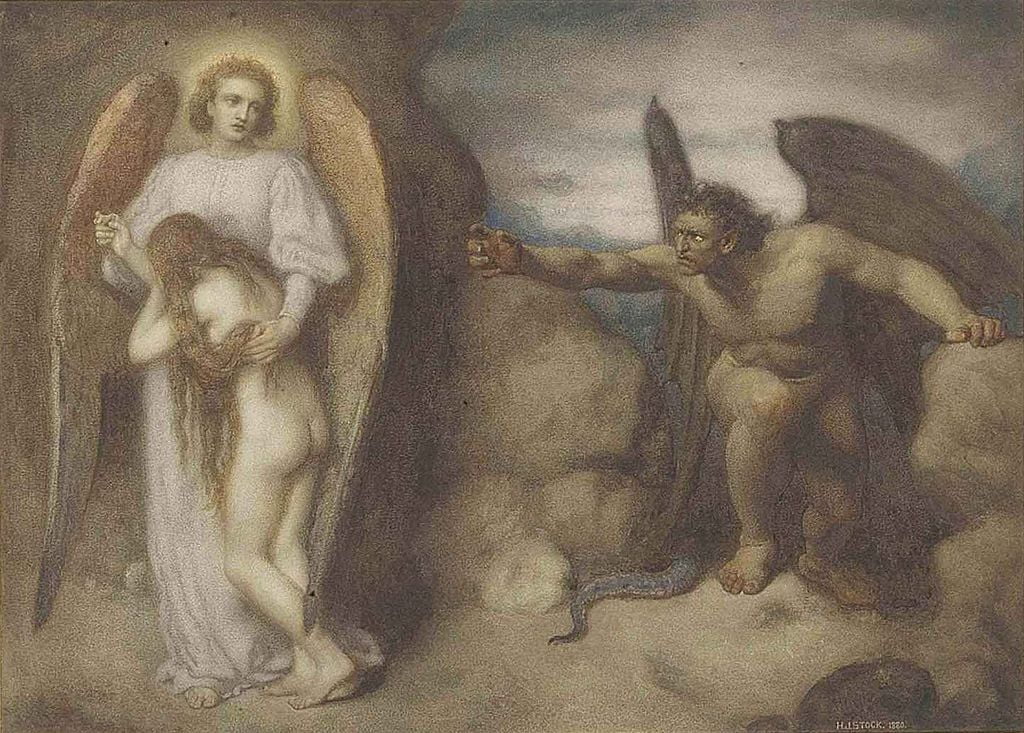
Protection is active, not passive. Clerics of this domain stand in doorways, hold threatened lines, ward minds and bodies, strengthen the vulnerable and place themselves where harm is most likely to fall.
At a Glance
| Divine Sphere | Protection, guardianship, sanctuary, vigilance, warding and defence |
|---|---|
| Typical Role | Defensive support cleric, bodyguard, warder and battlefield protector |
| Core Strengths | Protecting allies, resisting hostile magic, controlling dangerous approaches and keeping key characters standing |
| Primary Ability | Wisdom; Constitution is especially useful for a cleric who expects to hold the line |
| Sacred Imagery | Shield and open hand |
| Typical Patrons | Bes, Heimdall, Artemis, Athena and other powers whose established roles include guardianship, vigilance or defence |
| Best For | Players who want to prevent harm and protect other characters rather than simply repair damage afterward |

Protection Domain Mechanics
The Protection Domain changes substantially between rulesets. Use only the panel for the edition in play. The 2024 panel is a clearly labelled compatibility adaptation of the 2016 playtest domain; Pathfinder 1e and D&D 3.5e use their own published domain rules.
Protection Domain — D&D 5.5e / 2024-Compatible
Status: compatible adaptation of the 2016 Unearthed Arcana Protection Domain. There is no official Protection Domain among the 2024 Player’s Handbook Cleric subclasses. This version keeps the playtest domain’s identity while fitting the 2024 Cleric subclass structure.
| Cleric Level | Protection Domain Feature |
|---|---|
| 3rd | Protection Domain Spells, Shield of the Faithful, Radiant Defense |
| 6th | Blessed Healer |
| 17th | Indomitable Defense |
2024 Compatibility Notes
Heavy Armour training is not granted by the domain. A cleric who wants the heavily armoured guardian style should normally choose the Protector Divine Order at 1st level. The 2016 domain’s 8th-level Divine Strike is also omitted because the 2024 Cleric gains Blessed Strikes from the base class.
Shield of the Faithful
When a creature you can see attacks someone other than you who is within 5 feet of you, you can use your Reaction to impose Disadvantage on that attack roll. You must be able to see both attacker and target. This rewards staying physically close to the ally you intend to protect.
Channel Divinity: Radiant Defense
As an Action, spend one use of Channel Divinity and choose an ally you can see within 30 feet. The ward lasts for 1 minute. The first time that ally is hit by an attack during that time, the attacker takes Radiant damage equal to 2d10 + your Cleric level, and the ward ends.
Blessed Healer
At 6th level, when you cast a spell using a spell slot and that spell restores Hit Points to a creature other than you on that turn, you also regain Hit Points equal to 2 + the spell’s level.
Indomitable Defense
At 17th level, choose two damage types from Bludgeoning, Necrotic, Piercing, Radiant and Slashing. You gain Resistance to those damage types and can choose different types whenever you finish a Short or Long Rest. As an Action, you can transfer those Resistances to a creature you touch. They remain with that creature until your next Short or Long Rest or until you reclaim them as a Bonus Action.
5.5e / 2024-Compatible Domain Spells
| Cleric Level | Always-Prepared Spells |
|---|---|
| 3rd | Aid, Compelled Duel, Protection from Evil and Good, Protection from Poison |
| 5th | Protection from Energy, Slow |
| 7th | Guardian of Faith, Resilient Sphere |
| 9th | Antilife Shell, Wall of Force |
Protection Domain — D&D 5e / 2014 Playtest
Status: 2016 Unearthed Arcana playtest material. It was published for testing but was not subsequently released as a final Player’s Handbook subclass.
| Cleric Level | Protection Domain Feature |
|---|---|
| 1st | Bonus Proficiency, Shield of the Faithful |
| 2nd | Channel Divinity: Radiant Defense |
| 6th | Blessed Healer |
| 8th | Divine Strike |
| 17th | Indomitable Defense |
Bonus Proficiency
You gain proficiency with heavy armour.
Shield of the Faithful
When a creature attacks a target other than you within 5 feet of you, you can use your Reaction to impose Disadvantage on the attack roll, provided you can see both creatures.
Channel Divinity: Radiant Defense
Starting at 2nd level, you can use an Action and spend Channel Divinity to ward an ally you can see within 30 feet for 1 minute. The first attacker to hit that ally during the duration takes 2d10 + your Cleric level Radiant damage.
Blessed Healer
At 6th level, a spell-slot spell that restores Hit Points to another creature on your turn also restores Hit Points to you equal to 2 + the spell’s level.
Divine Strike
At 8th level, once on each of your turns when you hit with a weapon attack, you can deal an extra 1d8 Radiant damage. The extra damage becomes 2d8 at 14th level.
Indomitable Defense
At 17th level, choose two damage types from Bludgeoning, Necrotic, Piercing, Radiant and Slashing. You gain Resistance to both and can change the choices after a Short or Long Rest. You can transfer the Resistances to a creature you touch as an Action and reclaim them as a Bonus Action.
5e / 2014 Protection Domain Spells
| Cleric Level | Domain Spells |
|---|---|
| 1st | Compelled Duel, Protection from Evil and Good |
| 3rd | Aid, Protection from Poison |
| 5th | Protection from Energy, Slow |
| 7th | Guardian of Faith, Otiluke’s Resilient Sphere |
| 9th | Antilife Shell, Wall of Force |
Protection Domain — Pathfinder 1e
Pathfinder’s Protection Domain is built around a scaling personal resistance bonus that can be lent to an ally, followed by an area defence that protects the whole nearby party.
Granted Protection
You gain a +1 resistance bonus on saving throws. That bonus increases by +1 for every 5 Cleric levels you possess.
Resistant Touch
As a standard action, touch an ally to grant that creature your Protection Domain resistance bonus for 1 minute. You lose the domain’s resistance bonus yourself for the same minute. You can use Resistant Touch a number of times per day equal to 3 + your Wisdom modifier.
Aura of Protection
At 8th level, you can emit a 30-foot aura for a total number of rounds per day equal to your Cleric level; the rounds need not be consecutive. You and allies inside the aura gain a +1 deflection bonus to AC and resistance 5 against acid, cold, electricity, fire and sonic damage. The deflection bonus increases by +1 for every four Cleric levels beyond 8th, and the energy resistance becomes 10 at 14th level.
Pathfinder 1e Protection Domain Spells
| Spell Level | Domain Spell |
|---|---|
| 1st | Sanctuary |
| 2nd | Shield Other |
| 3rd | Protection from Energy |
| 4th | Spell Immunity |
| 5th | Spell Resistance |
| 6th | Antimagic Field |
| 7th | Repulsion |
| 8th | Mind Blank |
| 9th | Prismatic Sphere |
Protection Domain — D&D 3.5e
The 3.5e domain is deliberately simple: one powerful saving-throw ward and a defensive spell progression. Do not import Pathfinder’s Resistant Touch or Aura of Protection into this edition.
Protective Ward
Once per day, as a standard action, touch a creature and create an abjuration ward lasting for up to 1 hour. The ward grants a resistance bonus equal to your Cleric level on that creature’s next saving throw. Once that saving throw is made, the ward is expended.
D&D 3.5e Protection Domain Spells
| Spell Level | Domain Spell |
|---|---|
| 1st | Sanctuary |
| 2nd | Shield Other |
| 3rd | Protection from Energy |
| 4th | Spell Immunity |
| 5th | Spell Resistance |
| 6th | Antimagic Field |
| 7th | Repulsion |
| 8th | Mind Blank |
| 9th | Prismatic Sphere |
How the Protection Domain Plays
A Protection cleric is strongest when the party cannot afford to lose a particular person, position or route. The domain rewards anticipation: stand beside the vulnerable ally before the attack comes, place the right ward before the saving throw matters, and keep defensive magic available for the moment when an enemy’s plan finally lands.
In Combat
- Protect the ally who matters most. A wounded front-line fighter is not always the right target; sometimes the exposed spellcaster maintaining Concentration is more important.
- Position deliberately. The 5e-style Shield of the Faithful only matters when you are close enough to intervene.
- Prevent rather than repair. Resistance, wards, sanctuary effects and barriers can save more resources than healing the same damage afterward.
- Watch your own exposure. Pathfinder’s Resistant Touch literally lends away part of your defence, while Shield Other can move harm onto you. Protection often means accepting risk rather than eliminating it.
Outside Combat
Protection clerics are natural ward-keepers, escorts, bodyguards, guardians of vulnerable households, witnesses at dangerous crossings, keepers of sanctuary, advisers on magical security and ritual specialists called when a place or person is believed to be under supernatural threat.
Who Grants the Protection Domain?
Protection can mean defending a city, guarding a threshold, watching for danger, sheltering children, keeping a household safe or standing between hostile power and those unable to resist it. Patrons should therefore be chosen for their established protective role rather than simply because they are benevolent.
- Bes — a major patron of household protection, women, childbirth, children and defended thresholds.
- Heimdall — divine watcher, guardian of Bifröst and patron of vigilance against approaching danger.
- Artemis — protector of children, young women and the sacred boundaries of the wild.
- Athena — an associated patron through civic defence, disciplined warfare, strategy and the protection of communities worth defending.
- Frigga — an associated northern patron where protection centres on household, family, foresight and the preservation of those under her care.
Priests, Temples and Rites
Protection priesthoods tend to gather where danger crosses a boundary. Their sanctuaries are often practical places: fortified shrines beside gates, household altars, guarded halls, bridge approaches, birthing rooms, watch stations, refuges and places where travellers must pass from one jurisdiction or landscape into another.
- Warding rites mark doors, beds, shields, cradles, gates and travelling gear before danger is expected.
- Night vigils place clergy on watch while others sleep, particularly during journeys, sieges, dangerous births or supernatural disturbances.
- Sanctuary customs define who may claim protection, what obligations the protected person accepts and when a priest is permitted to surrender or expel someone under their care.
- Protective processions may walk the boundary of a settlement, field, household or sacred precinct, renewing old wards at doors, stones and crossing points.
What Are Protection Priests Doing Now?
Protection clergy are not one international order. Their work follows the priorities of their patrons and communities.
- Followers of Bes concentrate on households, children, childbirth, sleeping places and the defence of ordinary people from malign supernatural intrusion.
- In the Union of Midgard, Heimdall’s watchful clergy value sentries, warning systems, defended crossings and the duty to notice danger before it reaches the hall.
- Within the Hellenic divine world, protection can take Athena’s civic and strategic form or Artemis’s defence of the young and of boundaries that should not be violated.
- Frigga’s protective traditions are more likely to centre on household continuity, kinship, foresight and the preservation of people whose loss would tear a family or community apart.
Sacred Places and Protective Practice
Protection is strongest where a boundary has meaning. A doorway separates household from street; a gate separates city from countryside; a bridge separates one bank from another; a sanctuary separates the protected from the pursuer. Protection clergy treat these places as points where duty becomes visible.
A well-used protective shrine therefore need not be grand. A small threshold image of Bes, a watch post dedicated to Heimdall, an Aegis-marked civic sanctuary of Athena or a wilderness boundary kept under Artemis can all express the domain more clearly than a monumental temple with no protective function.
Historical and Mythological Context
Protective religion is broader than the fantasy-game category of a single divine domain. Historical traditions attach protection to households, childbirth, cities, boundaries, travellers, rulers, children, armies and sacred places in different ways. Bes is a particularly strong example: surviving Egyptian objects repeatedly place Bes-images in household and childbirth protection, often using amulets and fierce apotropaic imagery to repel danger.
Likewise, Heimdall’s mythology centres on watchfulness and guarding Bifröst, while Athena’s Aegis and civic role connect defence with ordered community rather than merely personal survival. The domain works best when those distinctions remain visible instead of making every protective deity behave like the same generic shield-god.
Related Domains and Character Options
The Protection Domain overlaps other divine spheres without becoming interchangeable with them. War focuses on battle, martial command and victory; Healing restores damage already suffered; Community strengthens bonds and collective resilience; Repose protects the proper boundary between life and death. Protection is the domain of preventing, absorbing, redirecting or resisting harm.
- Cleric class — base divine spellcasting and class progression.
- Cleric Domains — browse the wider domain collection.
- War Domain — the neighbouring martial domain, focused on battle rather than guardianship.
- Magic — wider spell and magical-tradition reference.
Rules Sources and Licensing
- D&D 5.5e / 2024-compatible: the adaptation preserves the 2016 playtest Protection Domain’s principal features while using the 2024 Cleric subclass levels. Heavy Armour is handled through Divine Order and the obsolete subclass Divine Strike is replaced by the base Cleric’s Blessed Strikes progression.
- D&D 5e / 2014: Protection Domain features and spell list derive from Wizards of the Coast’s 2016 Unearthed Arcana: Cleric playtest document.
- Pathfinder 1e: granted powers and domain spells follow the Pathfinder Roleplaying Game Core Rulebook reference.
- D&D 3.5e: Protective Ward and the domain spell list follow the 3.5 System Reference Document.
- Mythological context: the Metropolitan Museum of Art’s Bes-image amulet record documents the household, women-and-children and protective functions of Bes imagery.
Keep this reference growing
If this page helped with your reading or game, you can support its upkeep or explore the curated books.
Explore the Bookshop — epics, classics and stories behind imagined worlds.