
Abundance Domain
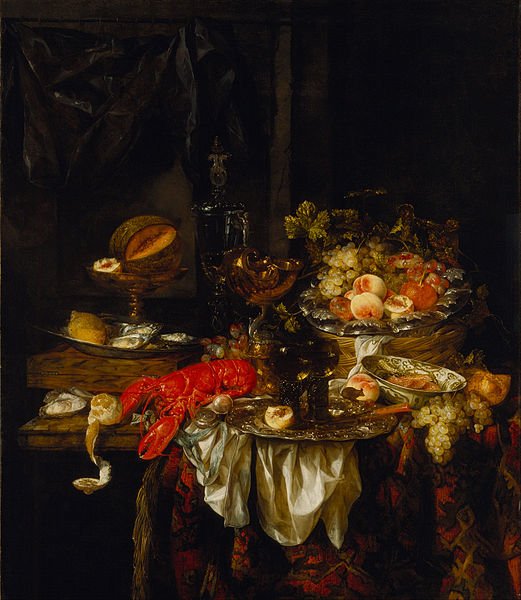
The Abundance Domain governs plenty, food, generous hospitality, recovery and the return of life. Its rules come from Dominique Crouzet’s third-party D&D 3.x netbook Celtic Druids and the Tuatha de Dannan. It is therefore presented here as a legacy third-party domain, not as an official domain that automatically exists in every later ruleset.
At a Glance
| Divine Sphere | Plenty, food, feasting, recovery, sustenance and renewed life |
|---|---|
| Rules Origin | Third-party D&D 3.x material |
| Source | Celtic Druids and the Tuatha de Dannan, Dominique Crouzet |
| Typical Patron | The Dagda |
| Play Style | Recovery, provisioning, party support and long-duration expedition magic |
| Edition Status | No official same-named PF1e, 5e/2014 or 5.5e/2024 Cleric domain |
Can I Take the Abundance Domain?
Use this domain when your game allows third-party D&D 3.x domains and your cleric serves a power whose portfolio genuinely includes plenty, food, hospitality or life-giving abundance. The established patron here is the Dagda, whose inexhaustible cauldron makes the connection especially strong.
For Pathfinder 1e, 5e/2014 and 5.5e/2024, there is no official same-named Abundance domain represented by these mechanics. Those editions should not receive copied or relabelled tabs merely to fill the page. A later-edition version would need to be built and identified as an adaptation in its own right.
Edition Applicability
Abundance Domain — D&D 3.x Third-Party
Rules status: third-party d20-era material from Celtic Druids and the Tuatha de Dannan. This is the only rules version presented here because no official same-named Pathfinder 1e, 5e/2014 or 5.5e/2024 Cleric domain uses these mechanics.
Granted Power
When resting, you recover hit points faster than normal. After a day that includes light activity, you recover 2 hit points per character level. With complete rest, you recover 3 hit points per character level. The source further states that long-term care using the Heal skill raises these rates to 3 hit points per level with light activity and 4 hit points per level with complete rest.
Rules interaction: this power changes hit points recovered through rest. It does not by itself increase magical healing or other forms of recovery. Where its numbers differ from ordinary 3.x natural healing, use the specific Abundance Domain figures above.
Abundance Domain Spells
| Spell Level | Domain Spell | What It Adds |
|---|---|---|
| 1st | Goodberry | Portable food and small-scale healing. |
| 2nd | Create Food and Water | Sustenance for a group when supplies fail. |
| 3rd | Plant Growth | Rich vegetation and improved agricultural yield. |
| 4th | Minor Creation | Temporary useful goods made from plant matter. |
| 5th | Major Creation | A broader range of temporary nonmagical materials. |
| 6th | Heroes’ Feast | A supernatural banquet that prepares a company for danger. |
| 7th | Regenerate | Restoration after catastrophic bodily injury. |
| 8th | Mage’s Magnificent Mansion | Secure shelter, servants and lavish hospitality beyond ordinary logistics. |
| 9th | Clone | The domain’s final step from plenty into preservation of life itself. |
How the Abundance Domain Plays
This is not primarily a battle-damage domain. Its strength is that it turns scarcity into a problem the party can increasingly ignore. Early spells keep people fed and improve the land; the middle of the progression creates useful materials and supports large groups; the highest levels restore ruined bodies, provide impossible shelter and preserve a life beyond death.
That makes the domain strongest in long expeditions, sieges, famine-struck regions, wilderness travel and campaigns where communities matter. A cleric of Abundance can make a remote camp viable, turn a failed harvest into a political crisis the party can actually solve, or change the consequences of injury and supply loss without replacing the rest of the party’s combat roles.
The Dagda and the Abundance Domain
The Dagda is the domain’s established patron. His cauldron of plenty, authority over fertility and association with life, death and renewal make the spell progression feel like a single divine idea rather than a collection of unrelated support magic. Clerics who receive this domain are expected to understand abundance as circulation: food is shared, hospitality creates obligation, and hoarding plenty while others starve is a failure of sacred duty.
Priests, Rites and Sacred Places
Abundance priests are most visible around storehouses, feast halls, orchards, cattle grounds, communal ovens and places where travellers can be fed. Their rites mark the opening of granaries, the first cutting of a harvest, recovery after sickness or battle, and the great meals that bind a household, warband or settlement together.
Their sacred places do not need to be monumental temples. A hall whose fire never goes out, a cauldron used to feed every guest, a spring that never fails in drought, or a field repeatedly restored after war can all serve as centres of devotion when the community recognises them as places where scarcity has been overcome.
What Are Abundance Priests Doing Now?
They are keeping settlements alive through shortages, organising communal stores, blessing fields and herds, feeding displaced people, repairing the consequences of war and challenging rulers who turn necessary reserves into private hoards. Their miracles are practical enough to make them politically important: anyone who can feed a garrison, restore a harvest or keep an expedition supplied can alter the balance of power without drawing a sword.
Related Domains and Character Options
For adjacent divine themes, compare the Community Domain, Healing Domain, Fertility Domain and Plant Domain. Return to the Cleric Domains hub for the wider domain list, or the Cleric class page for the class rules that use domains.
Rules Sources and Licensing
The Abundance Domain’s granted power and nine-spell progression derive from Dominique Crouzet’s Celtic Druids and the Tuatha de Dannan, a third-party D&D 3.x source. The domain is not presented here as official Wizards of the Coast or Paizo rules. Individual linked spell pages identify their own rules provenance and licensing where applicable.
Keep this reference growing
If this page helped with your reading or game, you can support its upkeep or explore the curated books.
Explore the Bookshop — epics, classics and stories behind imagined worlds.