
Community Domain
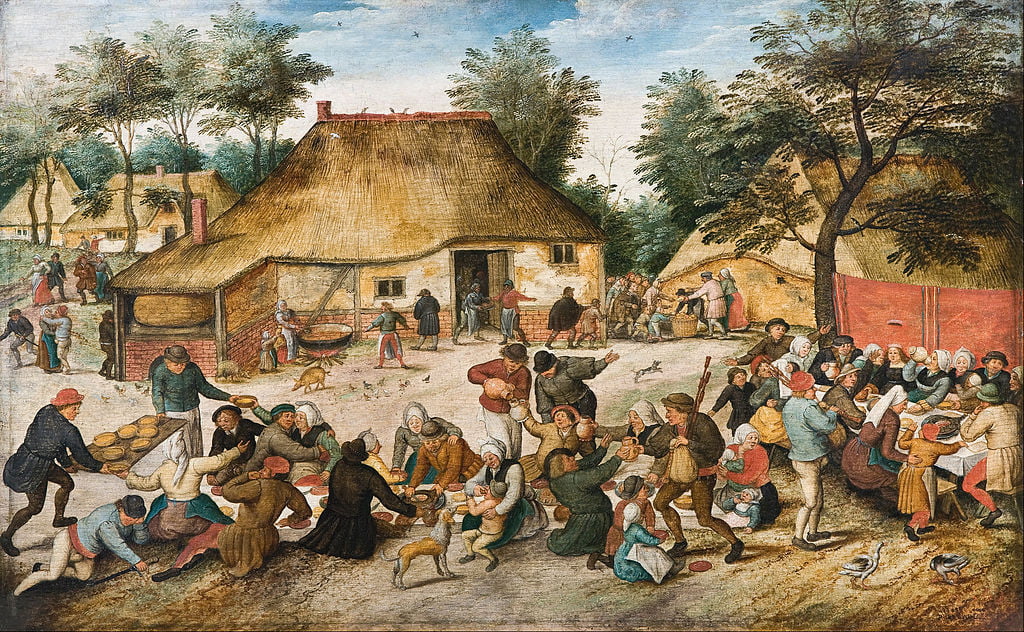
Community turns many lives into something stronger than one. Clerics of this domain bless households, reconcile neighbours, strengthen shared purpose, protect gatherings and make sure that no one who belongs to the circle has to face danger alone.
At a Glance
| Divine Sphere | Community, household, fellowship, shared duty, hospitality, civic bonds and mutual aid |
|---|---|
| Typical Role | Support cleric, mediator, communal healer and keeper of group cohesion |
| Core Strengths | Helping allies resist danger, reinforcing group saves, removing lesser conditions and keeping a party functioning as one unit |
| Primary Ability | Wisdom; Charisma is useful for clerics who also serve as negotiators, civic priests or household mediators |
| Sacred Imagery | Joined hands and hearth flame |
| Typical Patrons | Hestia, Demeter, Athena, Quirinus, the Lares and the Penates |
| Best For | Players who want their cleric to make the whole group more resilient rather than dominate the battlefield alone |

Community Domain Mechanics
The Community Domain exists officially in Pathfinder 1e and D&D 3.5e, but not as an official Cleric subclass in either 5e/2014 or 5.5e/2024. The first two panels therefore present deliberately balanced compatible adaptations, while the Pathfinder and 3.5e panels preserve their own published mechanics.
Community Domain — D&D 5.5e / 2024-Compatible
Rules status: compatible adaptation. The 2024 Cleric gains its subclass at 3rd level, so the domain is built around 3rd-, 6th- and 17th-level subclass features and leaves the base class’s Divine Order and Blessed Strikes progression untouched.
| Cleric Level | Community Domain Feature |
|---|---|
| 3rd | Community Domain Spells, Common Cause, Channel Divinity: Gather the Hearth |
| 6th | Unity |
| 17th | Hearth Without Walls |
Common Cause
As a Bonus Action, choose a number of willing creatures you can see within 30 feet equal to your Proficiency Bonus; you may include yourself. For 10 minutes, those creatures form a communal bond. While a bonded creature is within 30 feet of at least one other bonded creature, it can add 1d4 to one ability check or saving throw it makes on its turn, after rolling but before the outcome is resolved. A creature can gain this benefit only once per turn. You can create the bond a number of times equal to your Wisdom modifier, with a minimum of once, and regain all uses after a Long Rest.
Channel Divinity: Gather the Hearth
As a Magic action, spend one use of Channel Divinity and choose a number of creatures you can see within 30 feet up to your Wisdom modifier, with a minimum of one creature. Each chosen creature gains Temporary Hit Points equal to 2d6 + your Wisdom modifier and may immediately end either the Charmed or Frightened condition on itself.
Unity
At 6th level, when a creature affected by your Common Cause within 30 feet fails a saving throw, you can use your Reaction to add your Wisdom modifier to that saving throw, potentially turning the failure into a success. You can use Unity a number of times equal to your Proficiency Bonus and regain all expended uses after a Long Rest.
Hearth Without Walls
At 17th level, creatures affected by your Common Cause gain Resistance to Psychic damage while they are within 30 feet of another bonded creature, and they have Advantage on saving throws against the Charmed and Frightened conditions. In addition, when you use Gather the Hearth, each affected creature may immediately move up to 10 feet without provoking Opportunity Attacks. The movement must end closer to another affected creature than it began.
5.5e / 2024-Compatible Domain Spells
| Cleric Level | Always-Prepared Spells |
|---|---|
| 3rd | Aid, Bless, Sanctuary, Warding Bond |
| 5th | Beacon of Hope, Sending |
| 7th | Guardian of Faith, Resilient Sphere |
| 9th | Greater Restoration, Telepathic Bond |
Community Domain — D&D 5e / 2014-Compatible
Rules status: compatible adaptation. There is no official 2014 Community Domain, so this version uses the normal 1st-, 2nd-, 6th-, 8th- and 17th-level domain progression and is deliberately benchmarked against established support-oriented Cleric domains.
| Cleric Level | Community Domain Feature |
|---|---|
| 1st | Domain Spells, Community Skill, Common Cause |
| 2nd | Channel Divinity: Gather the Hearth |
| 6th | Unity |
| 8th | Potent Spellcasting |
| 17th | Hearth Without Walls |
Community Skill
You gain proficiency in either Insight or Persuasion. If you already have proficiency in both, choose another Wisdom- or Charisma-based skill in which you are not proficient.
Common Cause
As an Action, choose a number of willing creatures you can see within 30 feet equal to your Proficiency Bonus, including yourself if desired. For 10 minutes, while a bonded creature remains within 30 feet of another bonded creature, it can add 1d4 to one ability check or saving throw on its turn. A creature can add the die only once per turn. You can use Common Cause a number of times equal to your Wisdom modifier, with a minimum of once, and regain all uses when you finish a Long Rest.
Channel Divinity: Gather the Hearth
Starting at 2nd level, as an Action, present your holy symbol and choose a number of creatures you can see within 30 feet up to your Wisdom modifier. Each gains Temporary Hit Points equal to 2d6 + your Wisdom modifier and may end either the Charmed or Frightened condition on itself.
Unity
At 6th level, when a creature affected by Common Cause within 30 feet fails a saving throw, you can use your Reaction to add your Wisdom modifier to that saving throw. You can do so a number of times equal to your Proficiency Bonus and regain all uses after a Long Rest.
Potent Spellcasting
At 8th level, add your Wisdom modifier to the damage you deal with any Cleric cantrip.
Hearth Without Walls
At 17th level, creatures affected by Common Cause have Advantage on saving throws against being Charmed or Frightened while within 30 feet of another bonded creature, and they gain Resistance to Psychic damage for the same duration.
5e / 2014-Compatible Domain Spells
| Cleric Level | Domain Spells |
|---|---|
| 1st | Bless, Sanctuary |
| 3rd | Aid, Warding Bond |
| 5th | Beacon of Hope, Sending |
| 7th | Guardian of Faith, Resilient Sphere |
| 9th | Greater Restoration, Telepathic Bond |
Community Domain — Pathfinder 1e
Pathfinder’s Community Domain centres on removing lesser burdens from companions and allowing allies to share the cleric’s ability to resist a danger affecting the whole group.
Calming Touch
As a standard action, touch one creature. The touch heals 1d6 points of nonlethal damage + 1 point per Cleric level and removes the fatigued, shaken and sickened conditions. It does not remove more severe versions of those conditions. You can use Calming Touch a number of times per day equal to 3 + your Wisdom modifier.
Unity
At 8th level, when a spell or effect targets you and one or more allies within 30 feet, you can use Unity as an immediate action. Each affected ally may choose to use your saving throw result in place of its own; that choice must be made before the saving throws are rolled. You can use Unity once per day at 8th level, plus one additional time per day for every four Cleric levels beyond 8th.
Pathfinder 1e Community Domain Spells
| Spell Level | Domain Spell |
|---|---|
| 1st | Bless |
| 2nd | Shield Other |
| 3rd | Prayer |
| 4th | Imbue with Spell Ability |
| 5th | Telepathic Bond |
| 6th | Heroes’ Feast |
| 7th | Refuge |
| 8th | Mass Cure Critical Wounds |
| 9th | Miracle |
Community Domain — D&D 3.5e
The 3.5e Community Domain is an additional SRD domain. Its granted power is social and calming rather than a progressive chain of combat features.
Granted Power
You can use Calm Emotions as a spell-like ability once per day. You also gain a +2 competence bonus on Diplomacy checks.
D&D 3.5e Community Domain Spells
| Spell Level | Domain Spell |
|---|---|
| 1st | Bless |
| 2nd | Status |
| 3rd | Prayer |
| 4th | Greater Status |
| 5th | Telepathic Bond |
| 6th | Heroes’ Feast |
| 7th | Refuge |
| 8th | Sympathy |
| 9th | Mass Heal |
How the Community Domain Plays
A Community cleric is at their best when the party stays connected. The domain does not reward the lone champion nearly as much as it rewards a group that coordinates movement, shares risk and keeps enough people standing to act together. Its strongest moments often happen when several allies are threatened by the same effect or when one character’s failure would break the group’s plan.
In Combat
- Stay within supporting distance. Most Community features become stronger when allies remain close enough to benefit from the same bond, save support or restorative effect.
- Protect the group’s weak point. Unity-style abilities are most valuable when an area spell, fear effect or other shared threat targets several party members at once.
- Use support before damage. Blessings, bonds and condition removal frequently prevent more lost actions than an extra attack would create.
- Think in turns, not individuals. The domain is strongest when one character’s action makes several other characters more effective.
Outside Combat
Community clerics naturally become mediators, hosts, witnesses, household priests, civic organisers, keepers of common stores, marriage celebrants, advisers to councils and protectors of customs that allow neighbours to trust one another. Their magic is useful whenever a group needs to communicate, reconcile, endure hardship or act as one body.
Who Grants the Community Domain?
Community is broader than simple kindness. It includes household continuity, shared food, civic identity, neighbourhood obligations, common defence and the expectation that belonging creates duties as well as benefits.
- Hestia — the clearest household and hearth patron, binding domestic life, hospitality and the centre around which a household gathers.
- Demeter — associated through grain, shared food, agricultural labour and the survival of settled communities.
- Athena — associated through civic order, skilled cooperation and the defence of the organised community.
- Quirinus — a major Roman patron of the citizen body and civic community.
- The Lares — guardians of household, crossroads and local communal identity.
- The Penates — divine powers of household stores, continuity and the food on which domestic life depends.
Priests, Temples and Rites
Community priests are often found where people gather rather than where rulers display power. Their sacred spaces may be hearth rooms, public halls, granaries, market shrines, village meeting places, communal kitchens, civic sanctuaries or household altars.
- Shared meals turn food into a visible sign that those present accept responsibility for one another.
- Reconciliation rites create a formal moment in which feuding households, guilds or neighbours can end a dispute without appearing weak.
- Household blessings mark births, marriages, adoptions, new homes, common stores and the return of absent family members.
- Common oaths bind councils, watches, work crews and neighbourhoods to a shared task rather than to one individual patron.
What Are Community Priests Doing Now?
The domain appears differently according to the culture and deity behind it. There is no single universal Community priesthood.
- Among followers of Hestia, clergy preserve hearth customs, hospitality and the continuity of households whose members may be scattered by war, trade or travel.
- Priests of Demeter are closely tied to harvest labour, grain stores and the practical question of whether a settlement can feed itself through the next season.
- In Rome, Quirinus, the Lares and the Penates connect community with citizenship, household continuity, neighbourhood identity and common stores.
- Followers of Athena approach the domain through civic competence: a community survives because people organise, build, deliberate and defend it intelligently.
Sacred Places and Communal Practice
A Community Domain sacred place is defined less by grandeur than by repeated shared use. The meaningful centre may be a hearth that is never allowed to go cold, a hall where disputes are settled, a granary opened in hard winters, a crossroads shrine watched by neighbouring households or a civic gathering place where decisions are witnessed publicly.
The most important ritual question is often not “who owns this place?” but “who is responsible for keeping it functioning?” Community clergy make those obligations visible.
Historical and Mythological Context
Ancient Mediterranean religion repeatedly linked divine protection with household, hearth, food stores and civic identity. Hestia’s hearth was a religious centre of domestic life; Roman household religion gave the Lares and Penates enduring roles in family and communal continuity; and Quirinus could be understood in relation to the organised citizen body. The Community Domain works best when those different forms of belonging remain distinct rather than collapsing into a vague idea of friendliness.
Related Domains and Character Options
Community overlaps with other supportive domains without replacing them. Protection prevents and redirects harm; Healing restores what has already been lost; Peace centres reconciliation and the ending of conflict; Law emphasises order and binding structure. Community is specifically about the strength created by belonging, shared obligation and coordinated action.
- Cleric class — base divine spellcasting and progression.
- Cleric Domains — browse the wider domain collection.
- Protection Domain — neighbouring support domain focused on preventing harm.
- War Domain — contrasting martial domain focused on battle, leadership and victory.
- Magic — spells and wider magical traditions.
Rules Sources and Licensing
- D&D 5.5e / 2024-compatible: this adaptation follows the 2024 Cleric subclass levels and base-class structure described in the 2024 Basic Rules. Community-specific features are original compatible material.
- D&D 5e / 2014-compatible: this adaptation follows the 2014 Cleric’s domain progression and is benchmarked against support-oriented 5e Cleric design; Community-specific features are original compatible material.
- Pathfinder 1e: Calming Touch, Unity and the Community spell list follow the Pathfinder Roleplaying Game Core Rulebook reference.
- D&D 3.5e: the granted power and spell list follow the 3.5 SRD Additional Domains.
Keep this reference growing
If this page helped with your reading or game, you can support its upkeep or explore the curated books.
Explore the Bookshop — epics, classics and stories behind imagined worlds.