
Aberrations — Alien Minds, Impossible Bodies and Things That Should Not Be

Aberrations are creatures whose bodies, minds or origins sit outside ordinary natural expectations.
An aberration may have impossible anatomy, alien instincts, psychic abilities, parasitic reproduction or a history that begins somewhere beyond the familiar world. The category is broad: some aberrations are animals only in the loosest sense, some are ancient civilisations in monstrous form, and some are intelligent beings whose bodies simply refuse to follow the rules that govern other life.
At a Glance
Start Here — Meet the Aberrations
Six very different creatures show how varied aberrations can be. Choose an illustration to explore that monster’s rules, lore and encounters.
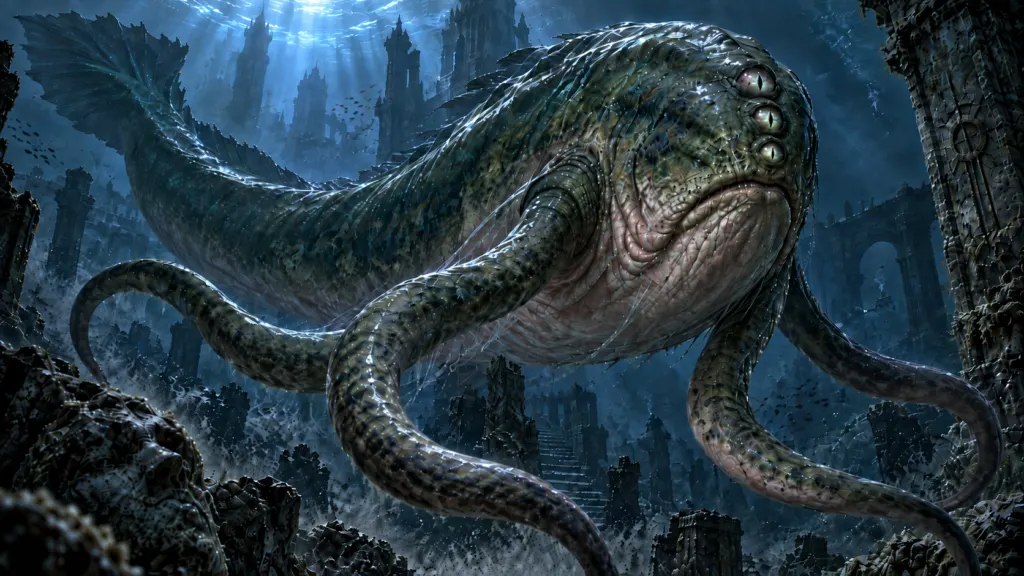
Aboleth
Ancient aquatic telepaths whose memories, slave systems and drowned cities make them one of the defining intelligent aberration lineages.
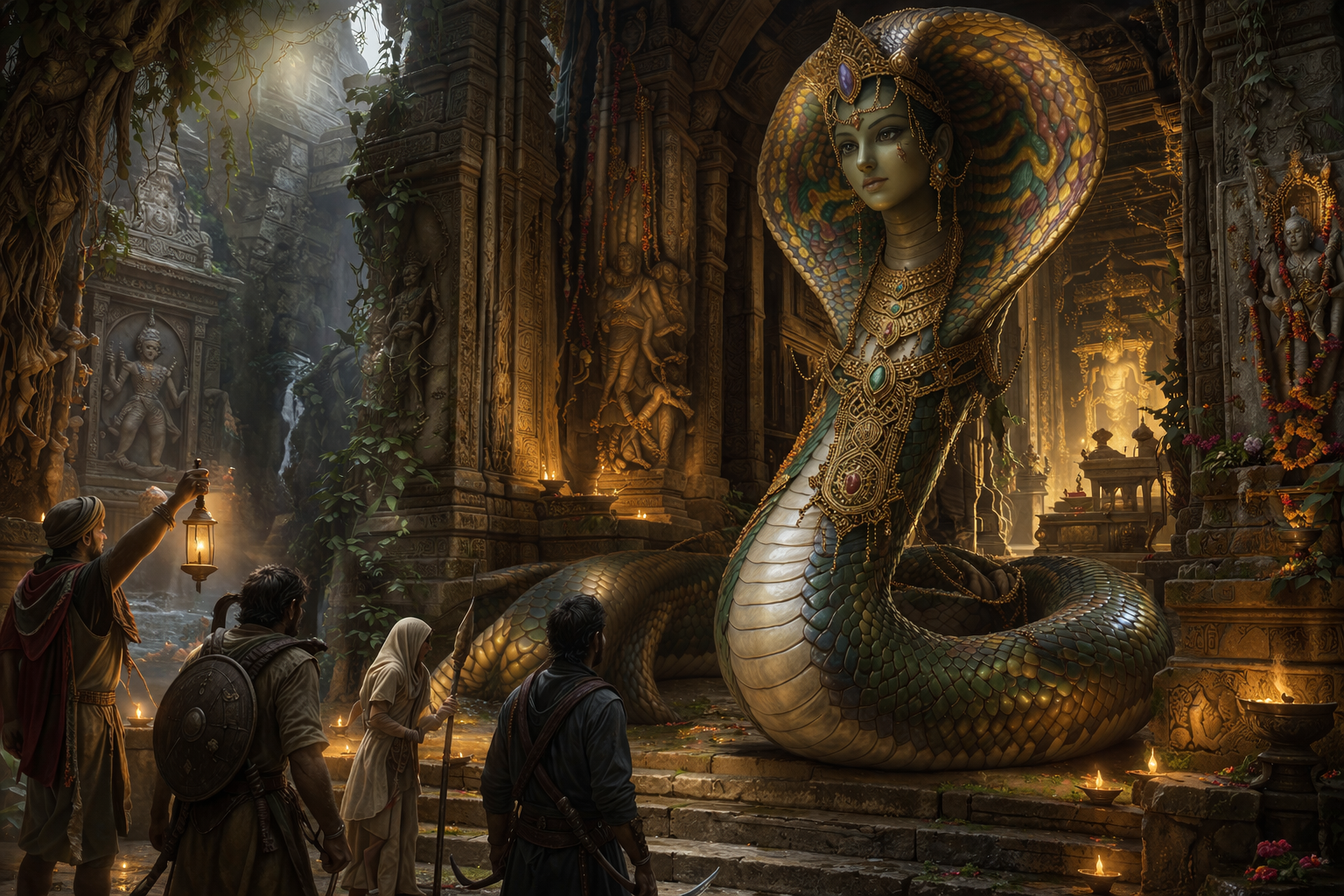
Nagas
Guardian naga pictured
Serpent guardians, sorcerers, rulers and predators. The Naga hub links Dark, Guardian, Lunar, Royal, Spirit and Water Nagas.

Dakwa / Froghemoth
A colossal swamp ambusher with four grasping tentacles, a long tongue and a nervous system disrupted by electricity.
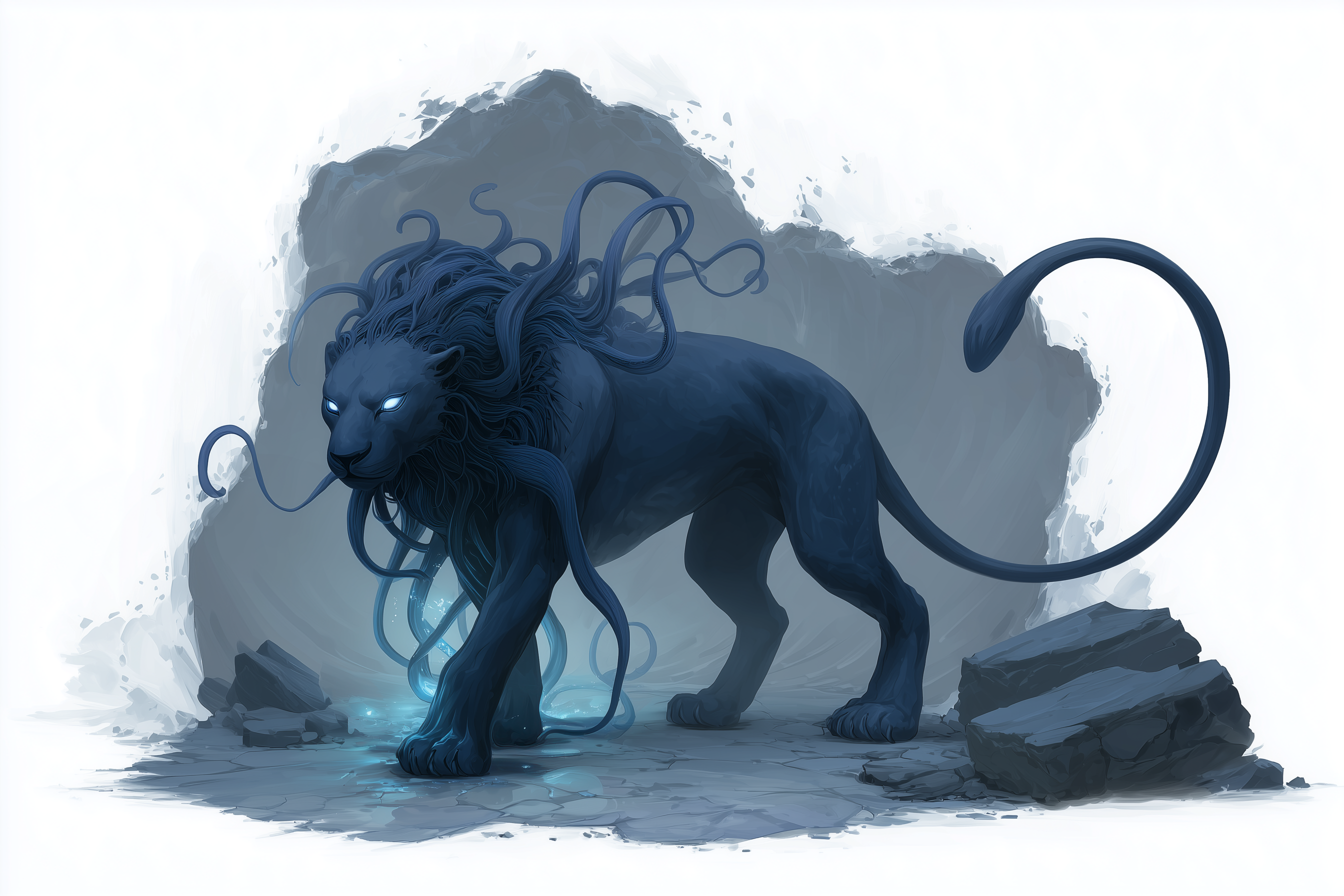
Akata
A void-borne predator whose hibernation cocoons survive catastrophe and whose parasitic bite creates Void Zombies.
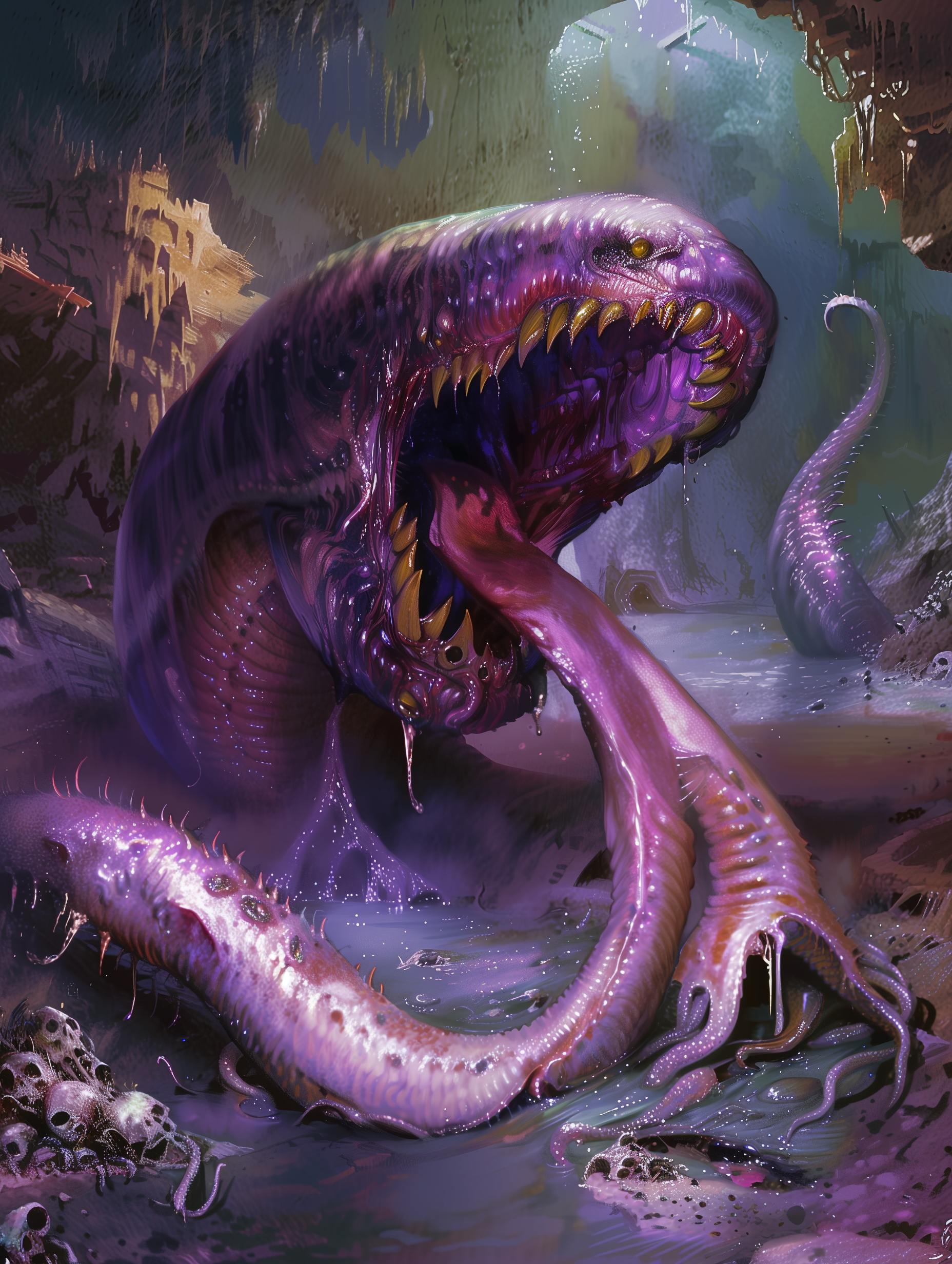
Neothelid
A colossal psychic worm associated with catastrophic illithid reproduction in one tradition and ancient subterranean horror in another.

Cloaker
A living cloak-shaped ambusher that attaches to prey while subsonic moans and phantasms disrupt everyone nearby.
More Aberrations
Fire Vampire
Living stellar flame that feeds on vitality, passes through solid matter and gathers around the presence of Cthugha.
Athach
A three-armed giant-kin brute with a venomous bite, rock-throwing strength and an obsession with glittering treasure.
Metamorph
An adaptive flesh-harvester that learns from injury, rewrites its own anatomy and converts victims into nutrient matter.
Greog
An intelligent aberration with a mixed legacy and modern rules presentation, useful for stranger high-threat encounters.
Chuul
An armoured aquatic grappler that seizes prey in massive pincers and paralyses captured victims with its mouth-tentacles.
Grick
A patient cave ambusher, almost invisible against rough stone. Four tentacles conceal a hooked beak, and ordinary weapons struggle to wound it.
Gibbering Mouther
A many-mouthed mass whose babble confuses prey, blinding spittle punishes distance and amorphous body absorbs the fallen.
Otyugh
An intelligent refuse-eater that can be bargained with, but whose barbed tentacles and diseased bite make poor diplomacy dangerous.
Roper
A stone-mimicking deep-cavern predator that snares targets from extreme reach and reels them into its jaws.
Lurking Rays
A complete predator family: juvenile Executioner’s Hoods, ceiling-gliding Lurkers Above and intelligent floor-mimicking Trappers.
The Aboleth Hierarchy
The aboleth pages form their own internal caste structure. Start with the Aboleth, then move upward through the Greater Aboleth, Noble Aboleth and Aboleth Ruler. Each has a different social role rather than simply being a larger version of the previous creature.
The Naga Family
The Naga Bestiary now separates six major varieties: Dark Naga, Guardian Naga, Lunar Naga, Royal Naga, Spirit Naga and Water Naga.
How Aberrations Behave
“Alien” should not mean random. Good aberration encounters give the creature a logic that is understandable once enough evidence is found. An aboleth values memory and control. An akata values hosts. A froghemoth values food and territory. A metamorph values biological adaptation. The logic may be disturbing, but it should remain consistent enough for players to learn from it.
Running Aberrations
Show the rules of the creature before initiative. Strange tracks, impossible wounds, missing memories, repeated dreams, biological residue or changes in local animal behaviour should tell observant characters what kind of problem they are approaching. Then let the monster’s unusual mechanics reward anyone who paid attention.
Aberrations work particularly well when their weaknesses are as distinctive as their attacks: salt water against an akata, electricity against a froghemoth, disease against a metamorph, or breaking a telepathic command network before confronting an aboleth ruler.
Rules Note
Older d20 rules give the Aberration type its own Hit Die, attack progression, saving throw progression, skill list and proficiency rules. Modern fifth-edition games handle those details inside each creature’s individual stat block instead. For that reason, the monster entries are the authoritative place to check rules rather than assuming one edition’s type rules apply to another.
Related Bestiary Paths
Explore the Far Realm for one source of aberrant influence, or return to the World Bestiary for the full creature index.
For an unusual aerial encounter, investigate the Crawfordsville Monster (Crawvil), a headless, undulating creature of American folklore.
Mind Hunters
For psychic encounters, compare the Mind Flayer, the brain-hunting Intellect Devourer and the ethereal Thought Eater. The curious Flumph offers a very different kind of telepathic encounter.
Ambush Predators
Watch the darkness for a Cloaker, the cavern ceiling for a Lurker Above, and unattended treasure for an Ethereal Filcher.
The Far Unknown
For a larger cosmic mystery, follow the Flying Polyp, Elder Thing and Spawn of Yog-Sothoth.
Folklore and Strange Sightings
These encounters begin as a rumour told by frightened witnesses. Meet Iku-Turso in northern waters, the uncanny Nasnas of Arabian folklore, or the elusive Yowie of the Australian ranges.
Keep this reference growing
If this page helped with your reading or game, you can support its upkeep or explore the curated books.
Explore the Bookshop — epics, classics and stories behind imagined worlds.