
Akata — Void-Borne Parasite Beast
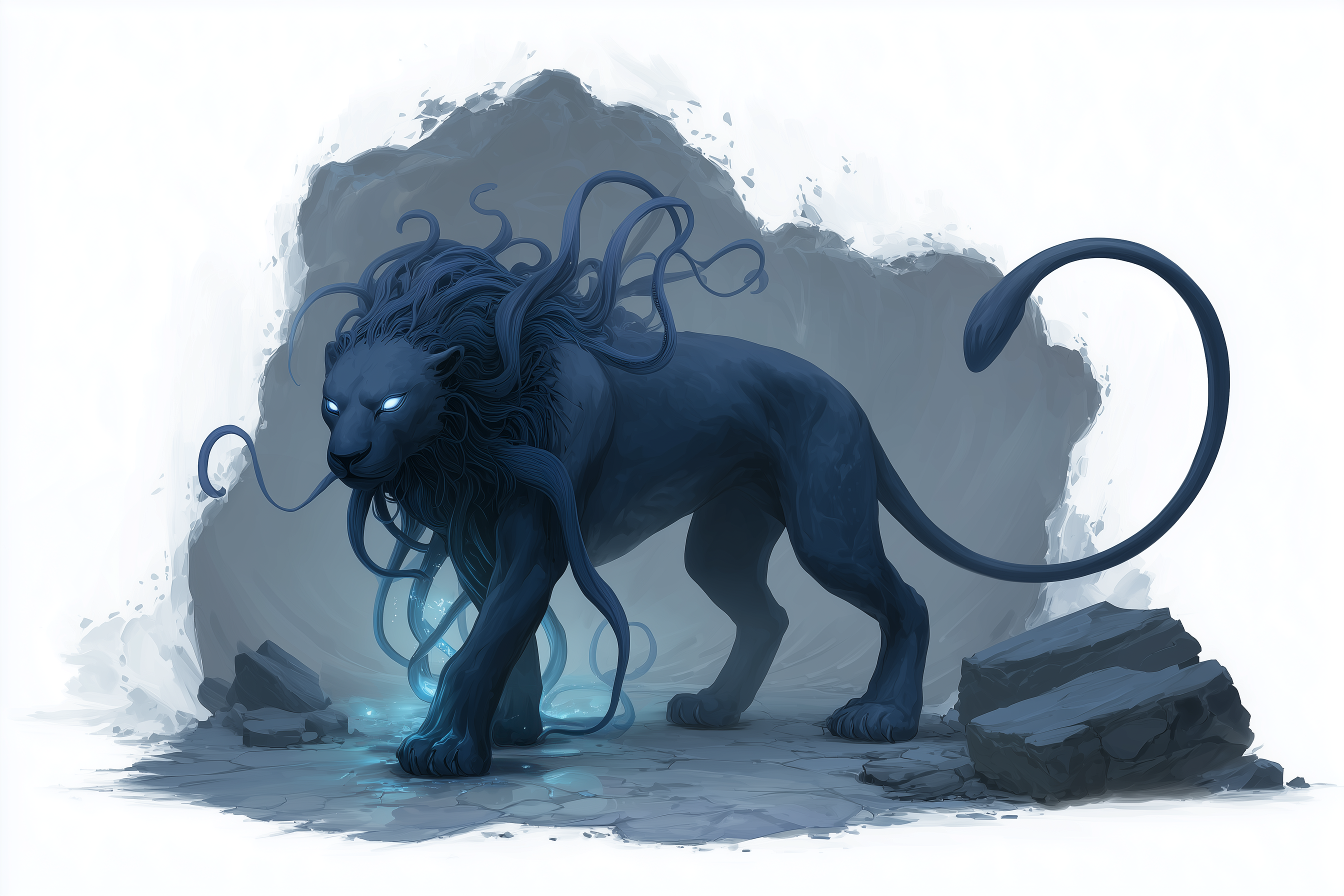
A deaf, lion-like aberration from the void whose bite plants parasitic young and turns dead humanoids into violent incubators.
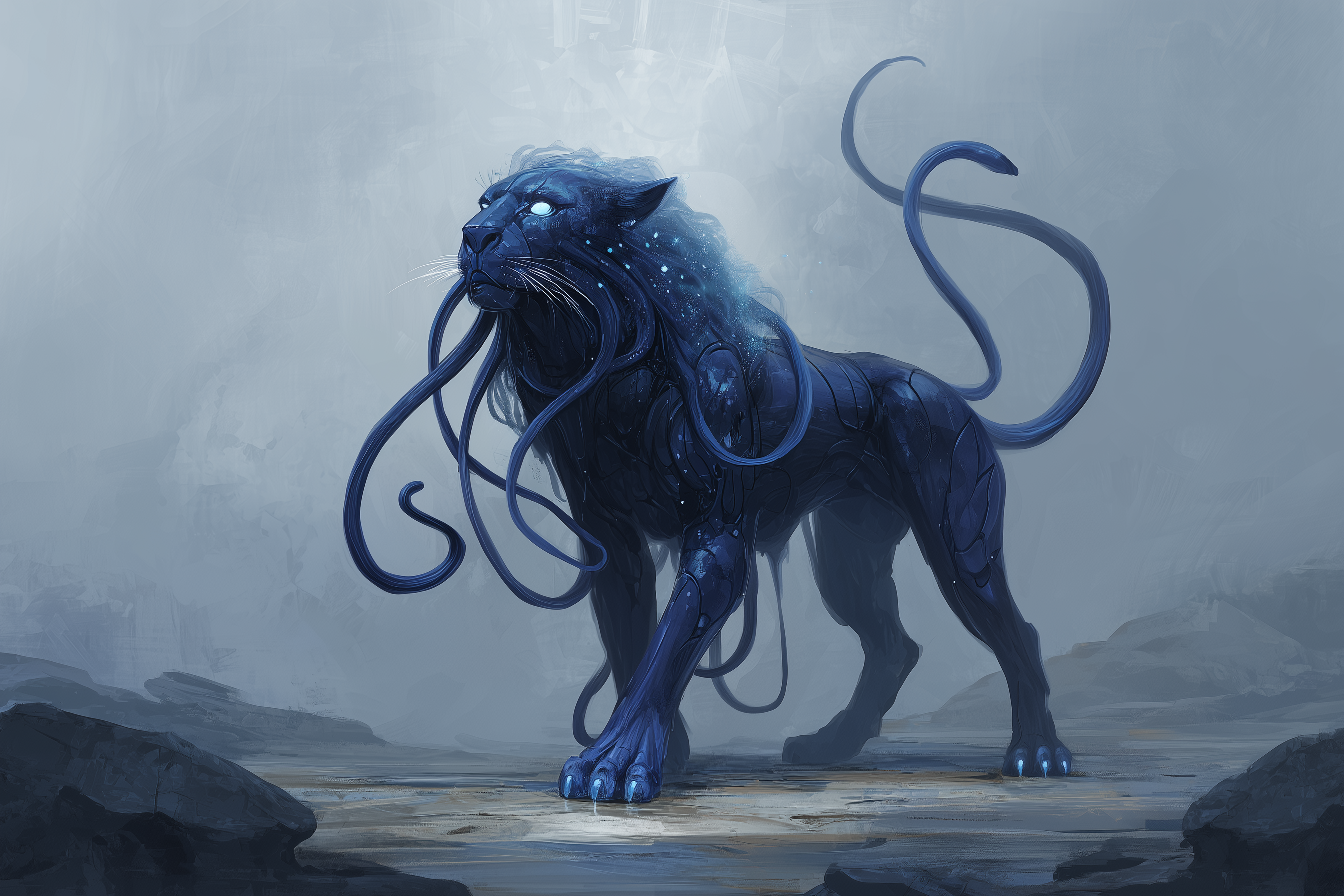
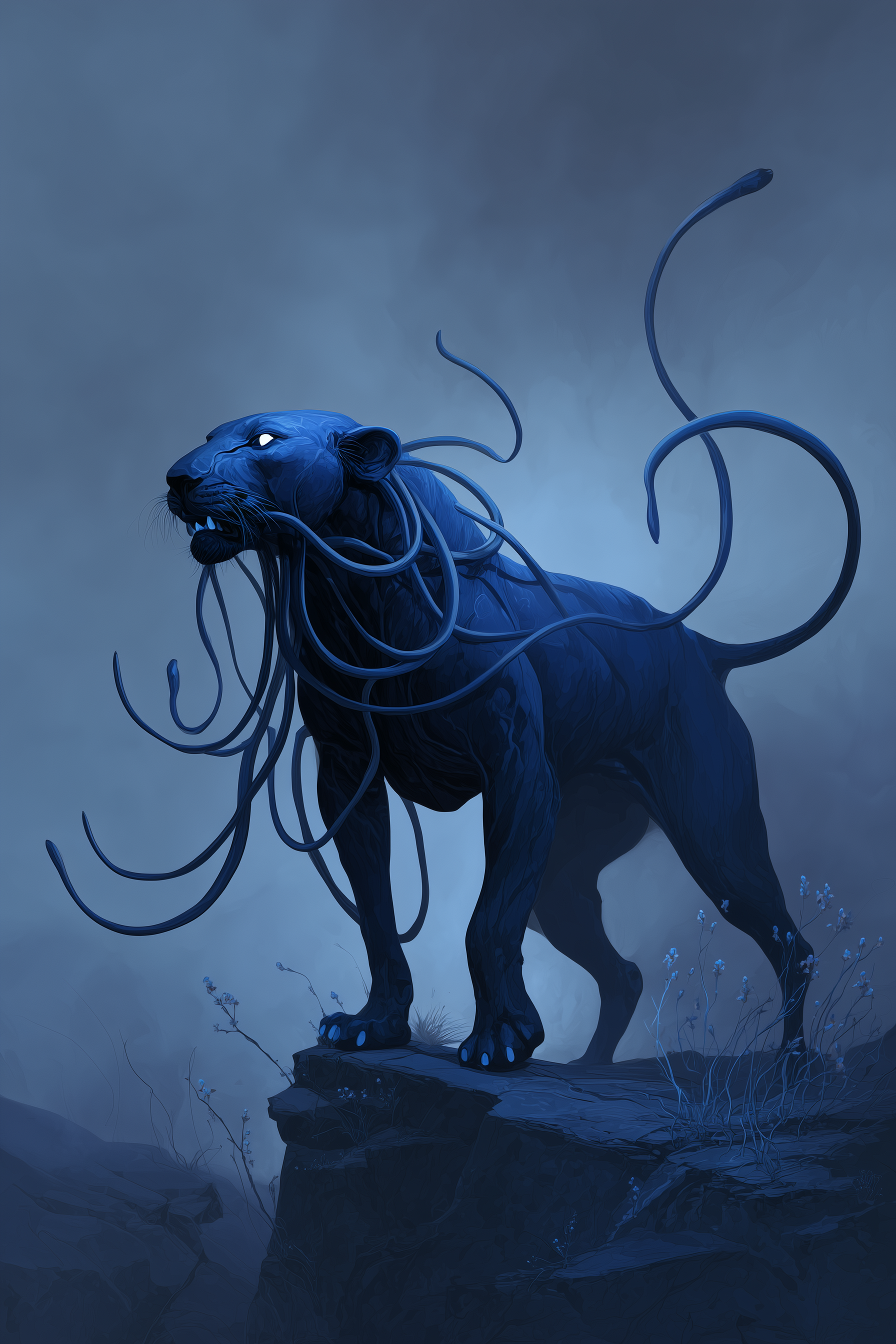
An akata is a compact alien predator shaped like a hairless blue lion, but its resemblance to any terrestrial beast ends at the head. Thick tentacles writhe where a mane should be, two longer appendages trail from the haunches, and its mouth carries microscopic larval young. Akatas survive planetary catastrophe by sealing themselves inside metallic cocoons, drifting through space on fragments of dead worlds until impact, heat or nearby life wakes them.
At a Glance
Run It Tonight
Start with the cocoon, not the monster. A metallic husk lies half-buried where no forge could have made it. Once awakened, the akata does not roar—it cannot hear and has no reason to signal. It sprints for exposed humanoids, bites to spread larvae, and lets the infection create the next phase of the encounter after the fight is supposedly over.
Rules by Edition
Akata
Medium Aberration, Unaligned
AC 14; Initiative +2 (12)
HP 45 (7d8 + 14)
Speed 40 ft., Climb 20 ft.
14 (+2)
15 (+2)
15 (+2)
3 (−4)
12 (+1)
6 (−2)
Skills Acrobatics +4, Stealth +6
Resistances Fire
Immunities Cold, Poison; Deafened, Poisoned
Senses Darkvision 120 ft., Scent 30 ft.; Passive Perception 11
Languages —
CR 2 (450 XP); PB +2
Traits
Deaf. The akata cannot hear and is immune to effects that require hearing.
No Breath. The akata does not need to breathe.
Salt-Water Vulnerability. A direct splash of salt water deals 3 (1d6) Acid damage to the akata. If it starts its turn immersed in salt water, it takes 14 (4d6) Acid damage.
Hibernation Cocoon. Outside combat, the akata can seal itself inside a metallic cocoon. The cocoon has AC 17, 60 Hit Points, Hardness represented by Resistance to all damage except Force and Acid, and immunity to Fire and Bludgeoning damage. The akata inside does not age or need food or water. It wakes when living prey comes within 10 feet or the cocoon suffers extreme heat, emerging after 1d4 minutes.
Actions
Multiattack. The akata makes one Bite and two Tentacle attacks.
Bite. Melee Attack Roll: +4, reach 5 ft. Hit: 7 (1d10 + 2) Piercing damage. If the target is a Humanoid, it must succeed on a DC 13 Constitution saving throw or contract Void Death.
Tentacle. Melee Attack Roll: +4, reach 10 ft. Hit: 5 (1d6 + 2) Bludgeoning damage, and the target can be pulled 5 feet toward the akata if it is Medium or smaller.
Tentacular Lash (Recharge 5–6). Each creature within 10 feet makes a DC 13 Dexterity saving throw. On a failure, it takes 10 (3d6) Bludgeoning damage and has the Prone condition. On a success, it takes half damage only.
Void Death
An infected Humanoid makes a DC 13 Constitution saving throw at the end of each Long Rest. On a failure, it takes 7 (2d6) Necrotic damage and gains one failed disease save. Two consecutive successes end the disease. Three total failures kill the creature, which rises 2d4 hours later as a Void Zombie unless the body is destroyed or the infection is cured first by lesser restoration, remove disease, heal or comparable magic.
Akata
Medium aberration, unaligned
Armor Class 14 (natural armor)
Hit Points 45 (7d8 + 14)
Speed 40 ft., climb 20 ft.
14 (+2)
15 (+2)
15 (+2)
3 (−4)
12 (+1)
6 (−2)
Skills Acrobatics +4, Stealth +6
Damage Resistances fire
Damage Immunities cold, poison
Condition Immunities deafened, poisoned
Senses darkvision 120 ft., passive Perception 11
Languages —
Challenge 2 (450 XP)
Traits
Deaf. The akata cannot hear and is immune to effects that require hearing.
No Breath. The akata does not breathe.
Salt-Water Vulnerability. A splash of salt water deals 3 (1d6) acid damage; immersion deals 14 (4d6) acid damage at the start of each of the akata’s turns.
Hibernation Cocoon. The akata can enter indefinite stasis inside a hardened metallic cocoon. Treat the cocoon as AC 17 with 60 hit points, immunity to fire and bludgeoning damage, and resistance to other mundane damage.
Actions
Multiattack. The akata makes one bite and two tentacle attacks.
Bite. Melee Weapon Attack: +4 to hit, reach 5 ft., one target. Hit: 7 (1d10 + 2) piercing damage. A Humanoid target must succeed on a DC 13 Constitution saving throw or contract Void Death.
Tentacle. Melee Weapon Attack: +4 to hit, reach 10 ft., one target. Hit: 5 (1d6 + 2) bludgeoning damage, and a Medium or smaller creature can be pulled 5 feet toward the akata.
Tentacular Lash (Recharge 5–6). Each creature within 10 feet must make a DC 13 Dexterity saving throw, taking 10 (3d6) bludgeoning damage and falling prone on a failure, or half damage on a success.
Void Death
An infected Humanoid makes a DC 13 Constitution saving throw at the end of each long rest. On a failure it takes 7 (2d6) necrotic damage. Two consecutive successes cure the disease; three failures kill the creature, which rises 2d4 hours later as a Void Zombie.
Akata CR 1
XP 400
N Medium aberration
Init +6; Senses darkvision 120 ft., scent; Perception +1
Defense
AC 13, touch 12, flat-footed 11 (+2 Dex, +1 natural)
hp 15 (2d8+6)
Fort +3, Ref +2, Will +4
Defensive Abilities no breath; Immune cold, disease, poison; Resist fire 30
Weaknesses deaf, vulnerable to salt water
Offense
Speed 40 ft., climb 20 ft.
Melee bite +2 (1d6+1 plus void bite), 2 tentacles −3 (1d3)
Statistics
Str 12, Dex 15, Con 16, Int 3, Wis 12, Cha 11
Base Atk +1; CMB +2; CMD 14 (18 vs. trip)
Feats Improved Initiative
Skills Acrobatics +6 (+10 jumping), Climb +9, Stealth +10; Racial Modifiers +8 Climb
Special Abilities
Deaf (Ex). Akatas cannot hear and are immune to spells and effects that rely on hearing.
Hibernation (Ex). An akata can enter indefinite stasis inside a fibrous cocoon that hardens to near-metal. The cocoon has hardness 10 and 60 hp and is immune to fire and bludgeoning damage. It opens in 1d4 minutes after living prey comes within 10 feet or extreme heat awakens the occupant.
Salt Water Vulnerability (Ex). A splash of salt water deals 1d6 damage; full immersion deals 4d6 damage per round.
Void Bite (Ex). A Humanoid bitten by the akata can contract Void Death.
Void Death. Bite—injury; Fort DC 12; onset 1 hour; frequency 1/day; effect 1d2 Dex and 1d2 Con damage; cure 2 consecutive saves. A Humanoid that dies while infected rises as a Void Zombie 2d4 hours later.
Ecology
Environment any
Organization solitary, pair or pack (3–30)
Treasure standard
Akata
Medium Aberration
Hit Dice 2d8+6 (15 hp)
Initiative +6
Speed 40 ft. (8 squares), climb 20 ft.
Armor Class 13 (+2 Dex, +1 natural), touch 12, flat-footed 11
Base Attack/Grapple +1/+2
Attack bite +2 melee (1d6+1 plus void bite)
Full Attack bite +2 melee (1d6+1 plus void bite) and 2 tentacles −3 melee (1d3)
Special Attacks void bite
Special Qualities darkvision 120 ft., scent, no breath, cold immunity, disease immunity, poison immunity, fire resistance 30, hibernation, deafness, salt-water vulnerability
Saves Fort +3, Ref +2, Will +4
Abilities Str 12, Dex 15, Con 16, Int 3, Wis 12, Cha 11
Skills Climb +9, Hide +10, Jump +10, Move Silently +6
Feats Improved Initiative
Environment any
Organization solitary, pair or pack (3–30)
Challenge Rating 1
Treasure standard
Alignment usually neutral
Hibernation (Ex)
The akata can enter indefinite hibernation inside a cocoon with hardness 10 and 60 hp, immune to fire and bludgeoning damage. It emerges 1d4 minutes after sensing nearby life or extreme heat.
Salt-Water Vulnerability (Ex)
A splash of salt water deals 1d6 damage to an akata; full immersion deals 4d6 damage per round.
Void Bite (Ex)
A Humanoid bitten by the akata can contract Void Death: injury; Fortitude DC 12; onset 1 hour; frequency 1/day; effect 1d2 Dexterity and 1d2 Constitution damage; cure 2 consecutive saves. A Humanoid that dies while infected rises as a Void Zombie 2d4 hours later.
Behaviour
Akatas are not evil schemers. They behave like alien predators with a reproductive cycle built into the attack. They hunt in packs, use scent and vibration rather than hearing, and keep pressure on Humanoids because only those bodies can incubate their larvae.
They do not retreat because they value honour or hate their prey; they simply have poor threat assessment and a reproductive drive that rewards contact. A pack whose cocoons or newly infected hosts are threatened becomes particularly relentless.
Signs Before Initiative
- A metallic cocoon lies embedded in stone without any seam, hinge or maker’s mark.
- Predator tracks appear around a ruin, but no growls, cries or warning calls are ever heard.
- Local animals avoid a site even though the akatas themselves do not react to noise.
- Victims carry bite wounds followed by fever, weakness and strange movement beneath the skin.
- Fresh corpses vanish from graves and return hours later with abnormal tongues or feeding tendrils.
- Sea spray or spilled brine leaves chemical-looking burns on tracks and shed tissue.
If Violence Starts
Akatas close quickly, bite Humanoids whenever possible and use their tentacles to pull targets away from allies. A pack should not spread attacks evenly: once one target is wounded or isolated, several akatas converge to maximise the chance of infection.
Their deafness is tactically important. Thunder, shouted commands and sound-based magic may fail completely, but visual distractions, scent, vibration and terrain still work normally.
Counterplay
Salt water is the decisive weakness. Brine, sea water and improvised saline traps damage akatas far more efficiently than ordinary weapons. This gives coastal settlements an excellent folk defence and gives inland parties a reason to carry salt once they understand the threat.
After the fight, the real priority is diagnosis. Void Death turns a victory into a delayed outbreak if infected characters or NPCs are ignored. Cure the disease, isolate victims, and destroy or secure any corpse that dies while infected.
Void Zombies
A Humanoid killed by Void Death rises as a Void Zombie, an undead incubator animated by the larval akata inside. In PF1e, apply the legacy Void Zombie variant to a fast zombie: increase its Speed, add a secondary tongue attack and blood drain, and remove the normal staggered limitation. In fifth edition, use the site’s Zombie as the base and add a 10-foot tongue attack that deals piercing damage and drains Strength or imposes equivalent weakening.
Void Zombies instinctively protect active akatas, cocoons and infection sites. Destroying the zombie does not automatically mean the larva inside is harmless.
Origins and Spread
Akatas come from a dead world whose fragments carried dormant cocoons into space. Their shells can survive impact, fire and centuries without food. An apparently ordinary meteorite can therefore be an unopened nest.
Once awakened, the population grows through infected Humanoids rather than conventional breeding. When prey disappears, survivors return to hibernation and wait for another civilisation to arrive.
Using an Akata in an Encounter
The fallen star. Villagers quarry strange metal from a fresh crater. The “ore” is a cluster of intact cocoons.
The silent kennel. Guards swear something is stalking the walls, but bait bells and noise traps never trigger.
The second outbreak. The party kills every akata in a ruin, then an infected survivor dies during the journey home.
The brine line. An isolated settlement has survived for generations by maintaining salt-water trenches around an ancient impact site. Drought has broken the barrier.
Related Creatures
Browse the Aberration Bestiary for other alien life, compare dormant-world threats such as the Mi-Go, or return to the World Bestiary.
Rules Source
The Pathfinder 1e akata appears in Pathfinder Roleplaying Game Bestiary 2. Its defining mechanics are hibernation, deafness, no-breath physiology, salt-water vulnerability and Void Death infection.
Rules Sources and Licensing
The Pathfinder 1e block preserves the open-game Akata mechanics formerly used on this page. The D&D 3.5e block is a compatibility conversion of that rules chassis. The 5e/2014 and 5.5e/2024 blocks are original compatibility adaptations and are not official Akata statistics for those editions.
Pathfinder Roleplaying Game Bestiary 2, © 2010 Paizo Publishing, LLC.