
War Domain
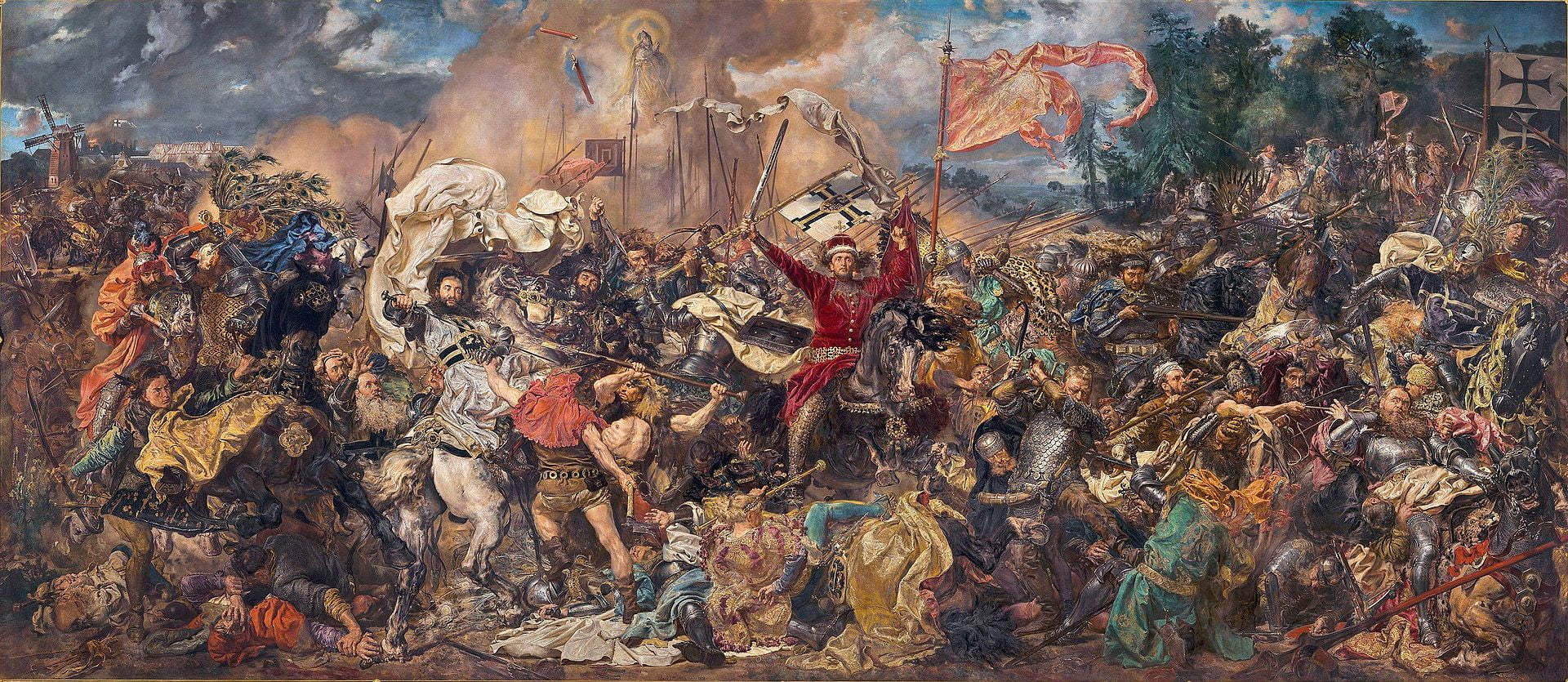
War is more than fury. It is courage, discipline, terror, sacrifice, command, endurance and the terrible moment when belief has to survive contact with steel. War Domain clerics carry divine authority onto the battlefield, strengthening decisive attacks, supporting allies and standing where the fighting is hardest.
At a Glance
| Divine Sphere | War, battle, martial courage, victory, strategy and armed defence |
|---|---|
| Typical Role | Front-line support cleric, battle leader and resilient divine combatant |
| Core Strengths | Reliable attacks, martial pressure, battlefield support and defensive resilience |
| Primary Ability | Wisdom; Strength or Dexterity also matters for weapon-focused builds |
| Sacred Imagery | Spear and shield |
| Common Patrons | Ares, Athena, Tyr, Badbh and other established gods of battle, strategy, courage or martial duty |
| Best For | Players who want a cleric who can stand close to the front line without giving up full divine spellcasting |

War Domain Mechanics
The War Domain exists in several rulesets, but it does not work the same way in each one. Use only the section for the edition you are playing. Do not combine feature levels, spell lists, action economy or granted powers across editions.
D&D 5.5e / 2024 War Domain
In the revised rules, the War Domain is a Cleric subclass chosen at 3rd level. Martial weapon and heavy-armour access come from the Cleric’s 1st-level Divine Order choice rather than from the War Domain itself. A weapon-focused cleric will usually want the Protector option. See the Cleric class for the base-class progression.
| Cleric Level | War Domain Feature |
|---|---|
| 3rd | War Domain Spells, Guided Strike, War Priest |
| 6th | War God’s Blessing |
| 17th | Avatar of Battle |
Guided Strike
When you or a creature within 30 feet misses with an attack roll, you can spend one use of Channel Divinity to add +10 to that roll, potentially turning the miss into a hit. If you use the feature for another creature, doing so uses your Reaction. This makes the feature especially valuable when an ally is making one unusually important attack.
War Priest
As a Bonus Action, you can make one attack with a weapon or make an Unarmed Strike. You can use this Bonus Action a number of times equal to your Wisdom modifier, with a minimum of one use. All expended uses return after a Short or Long Rest.
War God’s Blessing
At 6th level, you can spend one use of Channel Divinity to cast Shield of Faith or Spiritual Weapon without spending a spell slot. When cast this way, the spell does not require Concentration and lasts for 1 minute. It ends early if you cast that same spell again, become Incapacitated, or die.
Avatar of Battle
At 17th level, you gain Resistance to Bludgeoning, Piercing and Slashing damage. Unlike the 2014 feature, this is not restricted to nonmagical weapon damage.
5.5e / 2024 War Domain Spells
| Cleric Level | Always-Prepared Spells |
|---|---|
| 3rd | Guiding Bolt, Magic Weapon, Shield of Faith, Spiritual Weapon |
| 5th | Crusader’s Mantle, Spirit Guardians |
| 7th | Fire Shield, Freedom of Movement |
| 9th | Hold Monster, Steel Wind Strike |
Key 2024 change: the subclass is less dependent on heavy armour being granted by the domain itself, gains a more flexible War Priest attack, can support allies with Guided Strike from the moment the subclass is chosen, and uses War God’s Blessing to create slot-free, concentration-free battlefield magic.
D&D 5e / 2014 War Domain
The 2014 War Domain begins at 1st level and is built around martial proficiencies, limited bonus-action weapon attacks and Channel Divinity that makes crucial attacks far more reliable.
| Cleric Level | War Domain Feature |
|---|---|
| 1st | Bonus Proficiencies, War Priest |
| 2nd | Channel Divinity: Guided Strike |
| 6th | Channel Divinity: War God’s Blessing |
| 8th | Divine Strike |
| 17th | Avatar of Battle |
Bonus Proficiencies
You gain proficiency with martial weapons and heavy armour.
War Priest
When you take the Attack action, you can make one weapon attack as a Bonus Action. You can do this a number of times equal to your Wisdom modifier, with a minimum of one use, and regain all uses after a Long Rest.
Channel Divinity: Guided Strike
Starting at 2nd level, after making an attack roll you can spend Channel Divinity to add +10 to the roll. You decide after seeing the roll but before the result is declared.
Channel Divinity: War God’s Blessing
At 6th level, when another creature within 30 feet makes an attack roll, you can use your Reaction and spend Channel Divinity to add +10 to that roll. As with Guided Strike, you use it after the roll is seen but before the outcome is resolved.
Divine Strike
At 8th level, once on each of your turns when you hit with a weapon attack, you can deal an extra 1d8 damage of the weapon’s type. The extra damage becomes 2d8 at 14th level.
Avatar of Battle
At 17th level, you gain Resistance to Bludgeoning, Piercing and Slashing damage from nonmagical weapons.
5e / 2014 War Domain Spells
| Cleric Level | Always-Prepared Spells |
|---|---|
| 1st | Divine Favor, Shield of Faith |
| 3rd | Magic Weapon, Spiritual Weapon |
| 5th | Crusader’s Mantle, Spirit Guardians |
| 7th | Freedom of Movement, Stoneskin |
| 9th | Flame Strike, Hold Monster |
Pathfinder 1e War Domain
Pathfinder’s War Domain is not the 2014 War Cleric subclass. It is a cleric domain with two granted powers and a nine-level domain spell list.
Battle Rage
As a standard action, you can touch a creature and grant it a morale bonus on melee weapon damage rolls equal to half your cleric level, with a minimum bonus of +1. The bonus lasts for 1 round. You can use Battle Rage a number of times per day equal to 3 + your Wisdom modifier.
Weapon Master
At 8th level, as a swift action, you can gain the benefit of one combat feat for a number of rounds per day equal to your cleric level. The rounds need not be consecutive, and you can choose a different eligible feat each time you activate the power. You must still meet the feat’s prerequisites.
Pathfinder 1e War Domain Spells
| Spell Level | Domain Spell |
|---|---|
| 1st | Magic Weapon |
| 2nd | Spiritual Weapon |
| 3rd | Magic Vestment |
| 4th | Divine Power |
| 5th | Flame Strike |
| 6th | Blade Barrier |
| 7th | Power Word Blind |
| 8th | Power Word Stun |
| 9th | Power Word Kill |
D&D 3.5e War Domain
The 3.5e War Domain is much simpler than Pathfinder’s version. It does not grant Battle Rage, Weapon Master, Aura of Fury or a sequence of new abilities at higher cleric levels.
Granted Power
You gain Weapon Focus with your deity’s favoured weapon. If that favoured weapon is martial and you are not already proficient with it, you also gain the appropriate Martial Weapon Proficiency for that weapon.
D&D 3.5e War Domain Spells
| Spell Level | Domain Spell |
|---|---|
| 1st | Magic Weapon |
| 2nd | Spiritual Weapon |
| 3rd | Magic Vestment |
| 4th | Divine Power |
| 5th | Flame Strike |
| 6th | Blade Barrier |
| 7th | Power Word Blind |
| 8th | Power Word Stun |
| 9th | Power Word Kill |
How the War Domain Plays
A War cleric is still a full divine spellcaster. The domain rewards entering dangerous parts of the battlefield, but it does not turn the character into a Fighter with a cleric spell list. Your strongest turns often combine positioning, concentration, healing, control and one carefully chosen attack rather than simply swinging a weapon every round.
In Combat
- Make important attacks count. Guided Strike is strongest when failure would waste a powerful attack, spell attack or ally’s limited-use ability.
- Use martial pressure without abandoning spellcasting. War Priest gives you another way to spend a Bonus Action, but healing, Spiritual Weapon and other spells can compete for the same action.
- Stay close enough to support the line. The domain is most effective when you can threaten enemies while still seeing and reaching allies.
- Do not mistake toughness for invulnerability. Armour and resistance help, but concentration and Wisdom remain central to the class.
Outside Combat
War priests make excellent military chaplains, judges of battlefield conduct, advisers to captains, keepers of oaths, heralds, weapon-blessers and negotiators during truces. A War Domain character can therefore matter before and after a battle as much as during it.
Who Grants the War Domain?
The domain belongs to more than one idea of war. Some patrons embody fury and slaughter; others strategy, lawful duty, courage, defence, sovereignty or the judgement that follows battle.
- Ares — raw battle, martial ferocity and the violent pressure of combat.
- Athena — disciplined warfare, strategy, civic defence and intelligent command.
- Tyr — war joined to justice, oath, law and personal courage.
- Badbh — battle frenzy, violent omen, strife and the terror surrounding war.
- Thrym — giant war-hosts, conquest, strength and brutal martial power.
The wider Cleric Domains index connects the War Domain to additional deities and neighbouring divine spheres.
Priests, Temples and Rites
War priests rarely serve only inside quiet sanctuaries. Their sacred spaces are often attached to armouries, fortified halls, city gates, training grounds, royal camps, memorial fields or shrines where warriors swear service before a campaign.
- Before battle: priests bless standards, weapons and armour; hear vows; settle disputes; read omens; and name the dead they expect to honour afterward.
- During battle: they carry sacred symbols into the line, rally frightened soldiers, protect champions and make public examples of divine favour.
- After battle: they oversee victory rites, prisoner oaths, funerary duties, division of honours, cleansing of weapons and judgement of cowardice, betrayal or sacrilege.
The exact tone depends on the patron. A temple of Athena should not feel like a shrine of Ares, and a priest of Tyr should not conduct war exactly as a devotee of Badbh.
What Are War Priests Doing Now?
War Domain clergy are active wherever armies, raiders, mercenaries and threatened communities gather. Their loyalties are divided by patron and region rather than united into one universal priesthood.
- In Greece and the Balkans, followers of Ares and Athena interpret the same conflicts through very different ideas of courage, discipline and victory.
- Across the Union of Midgard, priests tied to Tyr and other northern war powers accompany assemblies, royal musters, feuds and war-hosts.
- In the Irish mythic tradition, the war powers gathered in the Celtic Pantheon appear through omens, champions, rival claims and battlefields where sovereignty is at stake.
- In Italy and Rome, older Roman martial cults remain part of the divine landscape, linking warfare with civic identity, victory and command.
Relics and Magic Items
War Domain relics should change the meaning of a battle rather than merely add another damage die. The Magic Items and Artifacts collection is the main route into existing enchanted equipment.
- The Spear of Ares is already established on the Ares page as a divine artifact.
- Justicar, Tyr’s favoured divine weapon, links martial power with judgement and lawful authority on the Tyr page.
- Weapons, standards, shields and armour belonging to defeated cults make stronger adventure relics when recovering them changes who can claim divine or political legitimacy.
Using the War Domain in Adventures
- The Broken Standard. A sacred war banner is captured during a retreat. Its loss is being treated as proof that the patron god has abandoned the army, and three factions want the adventurers to recover it for different reasons.
- The Unfinished Truce. Two war priests have sworn to witness a ceasefire, but one disappears before the oath is sealed. If the party cannot find them, both armies will treat the absence as treachery.
- The Champion Who Cannot Lose. A celebrated warrior survives impossible duels because a hidden cleric repeatedly turns failed attacks into hits. Discovering the source of the divine aid matters more than defeating the champion.
- The Shrine Beneath the Gate. A city plans to demolish an old martial shrine during repairs. Soldiers claim the gate has never fallen while the shrine stands, while civic leaders insist the priests are exploiting fear.
- The Wrong God Won. After victory, signs of divine favour appear at the altar of a rival war deity. The army’s commanders want the evidence suppressed before discipline collapses.
- The Weapon of Surrender. A defeated ruler’s ceremonial sword is both a political symbol and a divine relic. Returning, destroying or consecrating it could decide whether the war actually ends.
Historical and Mythological Context
War gods are not interchangeable. Greek tradition already distinguishes the violent battle-force of Ares from Athena’s association with strategy, civic defence and disciplined warfare. Northern tradition gives Tyr a different emphasis again, connecting battle with law, oath and sacrifice. Irish war powers such as Badbh and the Morrígan bring omen, fate, sovereignty and the terror surrounding battle into the same divine sphere.
For further mythological reading, compare the site’s Hellenic Pantheon, Asgardian Pantheon and Celtic Pantheon. For a classical-source-focused overview of Ares and his roles, see Theoi’s Ares reference.
Related Domains and Character Options
War overlaps with several neighbouring divine ideas without replacing them. Protection is about keeping others safe; Strength about physical might; Destruction about ruin; and Retribution about answering injury or wrongdoing. War is the broadest battlefield domain: command, weapons, courage, victory and the organised practice of conflict.
- Cleric class — base progression and divine spellcasting.
- Cleric Domains — browse the wider domain collection.
- The Bastion — a prestige class whose prerequisites can include the War Domain.
- Magic — spells, domains, schools, rituals and magic items.
Rules Sources and Licensing
- 5.5e / 2024: War Domain mechanics are summarised and paraphrased from the 2024 Player’s Handbook. See D&D Beyond’s 2024 Cleric comparison for the published changes.
- 5e / 2014: War Domain mechanics are summarised from the 2014 Player’s Handbook and associated official clarifications.
- Pathfinder 1e: War Domain powers and spell progression are based on the Pathfinder Roleplaying Game Core Rulebook material available through the Pathfinder SRD.
- D&D 3.5e: War Domain granted power and domain spells are based on the 3.5 System Reference Document.
Keep this reference growing
If this page helped with your reading or game, you can support its upkeep or explore the curated books.
Explore the Bookshop — epics, classics and stories behind imagined worlds.