
Divine Magic • Core Spell Reference
Freedom of Movement
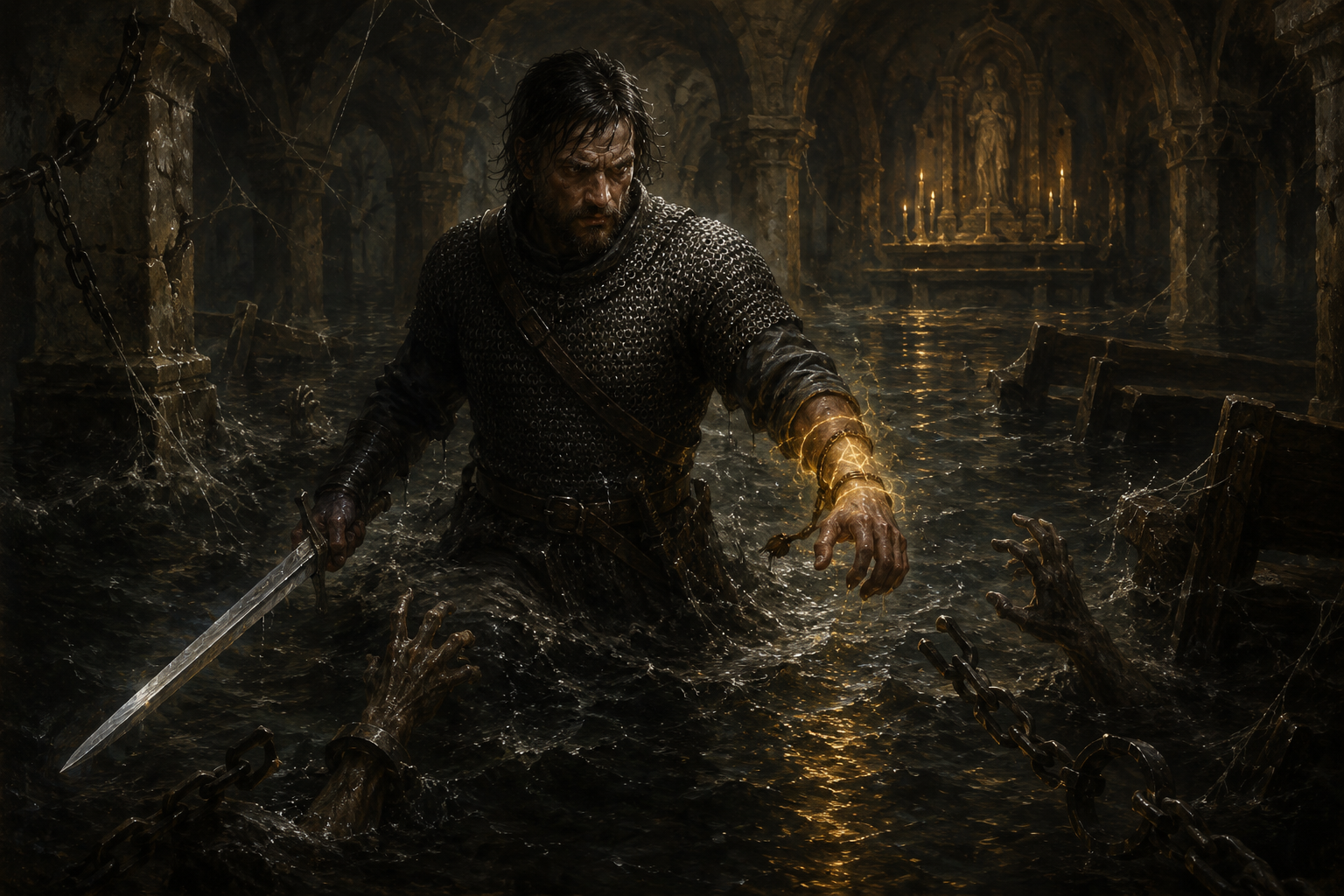
Choose your edition before using the spell. Its level, casting procedure, targets, effects, and limits follow the rules in the selected panel.
Freedom of Movement at a Glance
| 5.5e (2024) | Level 4 |
|---|---|
| 5e (2014) | Level 4 |
| Pathfinder 1e | Level 4 |
| D&D 3.5e | Level 4 |
| Browse | Cleric spells • Cleric class |
Spell Rules
Freedom of Movement — 5.5e (2024)
Cleric spell level 4. Edition source.
| Spell | Level 4 Abjuration (Bard, Cleric, Druid, Ranger) |
|---|---|
| Casting Time | Action |
| Range | Touch |
| Components | V, S, M (a leather strap) |
| Duration | 1 hour |
You touch a willing creature. For the duration, the target’s movement is unaffected by Difficult Terrain, and spells and other magical effects can neither reduce the target’s Speed nor cause the target to have the Paralyzed or Restrained conditions. The target also has a Swim Speed equal to its Speed. In addition, the target can spend 5 feet of movement to automatically escape from nonmagical restraints, such as manacles or a creature imposing the Grappled condition on it.
Using a Higher-Level Spell Slot. You can target one additional creature for each spell slot level above 4.
Freedom of Movement — 5e (2014)
Cleric spell level 4. Edition source.
| Spell | 4th-level abjuration |
|---|---|
| Casting Time | 1 action |
| Range | Touch |
| Components | V, S, M (a leather strap, bound around the arm or a similar appendage) |
| Duration | 1 hour |
You touch a willing creature. For the duration, the target’s movement is unaffected by difficult terrain, and spells and other magical effects can neither reduce the target’s speed nor cause the target to be paralyzed or restrained. The target can also spend 5 feet of movement to automatically escape from nonmagical restraints, such as manacles or a creature that has it grappled. Finally, being underwater imposes no penalties on the target’s movement or attacks.
Freedom of Movement — Pathfinder 1e
Cleric spell level 4. Edition source.
| School | abjuration |
|---|---|
| Level | bard 4, cleric 4, druid 4, ranger 4 |
| Casting Time | 1 standard action |
| Components | V, S, M (a leather strip bound to the target), DF |
| Range | personal or touch |
| Target | you or creature touched |
| Duration | 10 min./level |
| Saving Throw | Will negates (harmless) |
| Spell Resistance | yes (harmless) |
This spell enables you or a creature you touch to move and attack normally for the duration of the spell, even under the influence of magic that usually impedes movement, such as paralysis, solid fog, slow, and web. All combat maneuver checks made to grapple the target automatically fail. The subject automatically succeeds on any combat maneuver checks and Escape Artist checks made to escape a grapple or a pin.
The spell also allows the subject to move and attack normally while underwater, even with slashing weapons such as axes and swords or with bludgeoning weapons such as flails, hammers, and maces, provided that the weapon is wielded in the hand rather than hurled. The freedom of movement spell does not, however, grant water breathing.
Freedom of Movement — D&D 3.5e
Cleric spell level 4. Edition source.
| School | Abjuration |
|---|---|
| Level | Brd 4, Clr 4, Drd 4, Luck 4, Rgr 4 |
| Components | V, S, M, DF |
| Casting Time | 1 standard action |
| Range | Personal or touch |
| Target | You or creature touched |
| Duration | 10 min./level |
| Saving Throw | Will negates (harmless) |
| Spell Resistance | Yes (harmless) |
This spell enables you or a creature you touch to move and attack normally for the duration of the spell, even under the influence of magic that usually impedes movement, such as paralysis, solid fog, slow, and web. The subject automatically succeeds on any grapple check made to resist a grapple attempt, as well as on grapple checks or Escape Artist checks made to escape a grapple or a pin.
The spell also allows the subject to move and attack normally while underwater, even with slashing weapons such as axes and swords or with bludgeoning weapons such as flails, hammers, and maces, provided that the weapon is wielded in the hand rather than hurled. The freedom of movement spell does not, however, allow water breathing.
Material Component: A leather thong, bound around the arm or a similar appendage.
Why This Spell Is Dangerous in the World
Freedom of Movement is dangerous because it defeats captivity.
A noble under this spell cannot easily be seized by guards. A priest can walk through a binding circle of roots. A drowned knight can fight beneath a harbour chain. A courier can pass through magical mud, webs, nets, and grasping dead hands while assassins watch their ambush fail.
The spell changes the value of prisons, naval warfare, monster lairs, and battlefield control. It makes certain forms of law enforcement, enslavement, execution, and ritual restraint unreliable unless the captors understand magic and prepare accordingly.
In the hands of adventurers, it saves lives. In the hands of tyrants, spies, cultists, assassins, and oath-breakers, it makes binding them much harder.
Historical and Mythic Context
Freedom of Movement belongs to an old magical idea: the blessed traveller, the sea-protected warrior, and the body that cannot be bound. It is not merely a convenience spell. It answers a deep fear in late medieval adventure: the fear that a person can be stopped, dragged under, webbed, pinned, drowned, or made helpless before courage matters.
In mythic terms, the spell stands near gods and spirits of passage. Hermes, protector of travellers and divine messenger, offers the clearest parallel: movement as sacred permission, not just physical speed. The protected creature does not become faster by brute force. It becomes difficult for the world to deny its passage.
The underwater part of the spell connects it to older sea powers. Poseidon, god of the sea, represents the sea as a divine realm rather than ordinary terrain. A creature under Freedom of Movement briefly fights as though water has stopped being an enemy. It can swing steel beneath the surface, cross drowned halls, and resist the sea’s usual claim on motion, though it still must breathe.
The spell also has a more elusive mythic flavour. Proteus, the old man of the sea, is bound to the idea of what cannot easily be held. His mythic power of escape and change makes him a useful image for the spell’s deeper meaning. Freedom of Movement is not shapeshifting, but it carries a related dramatic force: the body slips the meaning of capture. Rope, claw, current, web, fog, and grip all fail to define the protected creature.
In a campaign world, this makes the spell socially dangerous. A kingdom can build prisons, stocks, drowned cells, ritual bindings, execution chains, and harbour cages, but abjuration introduces doubt. If the prisoner is protected, if the leather thong is hidden, if the priest speaks before the guards notice, then the law’s physical grip may fail. That is why rulers, jailers, slavers, inquisitors, sea-lords, and monster-hunters all care about this spell.
Rules Sources and Licensing
This work includes material from the System Reference Document 5.2.1 and/or 5.1 by Wizards of the Coast LLC. The original documents are available at D&D Beyond and are licensed under CC BY 4.0. Presentation and formatting have been changed.
The Pathfinder and 3.5 spell mechanics and their tables are Open Game Content under the Open Game License v1.0a. Artwork and original setting prose are excluded from that designation.
Open Game License v1.0a and copyright notices
Permission to copy, modify and distribute the files collectively known as the System Reference Document (“SRD”) is granted solely through the use of the Open Gaming License, Version 1.0a.
This material is being released using the Open Gaming License Version 1.0a and you should read and understand the terms of that license before using this material.
The text of the Open Gaming License itself is not Open Game Content. Instructions on using the License are provided within the License itself.
The following items are designated Product Identity, as defined in Section 1(e) of the Open Game License Version 1.0a, and are subject to the conditions set forth in Section 7 of the OGL, and are not Open Content: Dungeons & Dragons, D&D, Player’s Handbook, Dungeon Master, Monster Manual, d20 System, Wizards of the Coast, d20 (when used as a trademark), Forgotten Realms, Faerûn, proper names (including those used in the names of spells or items), places, Red Wizard of Thay, the City of Union, Heroic Domains of Ysgard, Ever-Changing Chaos of Limbo, Windswept Depths of Pandemonium, Infinite Layers of the Abyss, Tarterian Depths of Carceri, Gray Waste of Hades, Bleak Eternity of Gehenna, Nine Hells of Baator, Infernal Battlefield of Acheron, Clockwork Nirvana of Mechanus, Peaceable Kingdoms of Arcadia, Seven Mounting Heavens of Celestia, Twin Paradises of Bytopia, Blessed Fields of Elysium, Wilderness of the Beastlands, Olympian Glades of Arborea, Concordant Domain of the Outlands, Sigil, Lady of Pain, Book of Exalted Deeds, Book of Vile Darkness, beholder, gauth, carrion crawler, tanar’ri, baatezu, displacer beast, githyanki, githzerai, mind flayer, illithid, umber hulk, yuan-ti.
All of the rest of the SRD is Open Game Content as described in Section 1(d) of the License.
More information on the Open Game License can be found at www.wizards.com/d20.
The terms of the Open Gaming License Version 1.0a are as follows:
OPEN GAME LICENSE Version 1.0a
The following text is the property of Wizards of the Coast, Inc. and is Copyright 2000 Wizards of the Coast, Inc (“Wizards”). All Rights Reserved.
1. Definitions: (a)”Contributors” means the copyright and/or trademark owners who have contributed Open Game Content; (b)”Derivative Material” means copyrighted material including derivative works and translations (including into other computer languages), potation, modification, correction, addition, extension, upgrade, improvement, compilation, abridgment or other form in which an existing work may be recast, transformed or adapted; (c) “Distribute” means to reproduce, license, rent, lease, sell, broadcast, publicly display, transmit or otherwise distribute; (d)”Open Game Content” means the game mechanic and includes the methods, procedures, processes and routines to the extent such content does not embody the Product Identity and is an enhancement over the prior art and any additional content clearly identified as Open Game Content by the Contributor, and means any work covered by this License, including translations and derivative works under copyright law, but specifically excludes Product Identity. (e) “Product Identity” means product and product line names, logos and identifying marks including trade dress; artifacts; creatures characters; stories, storylines, plots, thematic elements, dialogue, incidents, language, artwork, symbols, designs, depictions, likenesses, formats, poses, concepts, themes and graphic, photographic and other visual or audio representations; names and descriptions of characters, spells, enchantments, personalities, teams, personas, likenesses and special abilities; places, locations, environments, creatures, equipment, magical or supernatural abilities or effects, logos, symbols, or graphic designs; and any other trademark or registered trademark clearly identified as Product identity by the owner of the Product Identity, and which specifically excludes the Open Game Content; (f) “Trademark” means the logos, names, mark, sign, motto, designs that are used by a Contributor to identify itself or its products or the associated products contributed to the Open Game License by the Contributor (g) “Use”, “Used” or “Using” means to use, Distribute, copy, edit, format, modify, translate and otherwise create Derivative Material of Open Game Content. (h) “You” or “Your” means the licensee in terms of this agreement.
2. The License: This License applies to any Open Game Content that contains a notice indicating that the Open Game Content may only be Used under and in terms of this License. You must affix such a notice to any Open Game Content that you Use. No terms may be added to or subtracted from this License except as described by the License itself. No other terms or conditions may be applied to any Open Game Content distributed using this License.
3.Offer and Acceptance: By Using the Open Game Content You indicate Your acceptance of the terms of this License.
4. Grant and Consideration: In consideration for agreeing to use this License, the Contributors grant You a perpetual, worldwide, royalty-free, non-exclusive license with the exact terms of this License to Use, the Open Game Content.
5.Representation of Authority to Contribute: If You are contributing original material as Open Game Content, You represent that Your Contributions are Your original creation and/or You have sufficient rights to grant the rights conveyed by this License.
6.Notice of License Copyright: You must update the COPYRIGHT NOTICE portion of this License to include the exact text of the COPYRIGHT NOTICE of any Open Game Content You are copying, modifying or distributing, and You must add the title, the copyright date, and the copyright holder’s name to the COPYRIGHT NOTICE of any original Open Game Content you Distribute.
7. Use of Product Identity: You agree not to Use any Product Identity, including as an indication as to compatibility, except as expressly licensed in another, independent Agreement with the owner of each element of that Product Identity. You agree not to indicate compatibility or co-adaptability with any Trademark or Registered Trademark in conjunction with a work containing Open Game Content except as expressly licensed in another, independent Agreement with the owner of such Trademark or Registered Trademark. The use of any Product Identity in Open Game Content does not constitute a challenge to the ownership of that Product Identity. The owner of any Product Identity used in Open Game Content shall retain all rights, title and interest in and to that Product Identity.
8. Identification: If you distribute Open Game Content You must clearly indicate which portions of the work that you are distributing are Open Game Content.
9. Updating the License: Wizards or its designated Agents may publish updated versions of this License. You may use any authorized version of this License to copy, modify and distribute any Open Game Content originally distributed under any version of this License.
10. Copy of this License: You MUST include a copy of this License with every copy of the Open Game Content You Distribute.
11. Use of Contributor Credits: You may not market or advertise the Open Game Content using the name of any Contributor unless You have written permission from the Contributor to do so.
12. Inability to Comply: If it is impossible for You to comply with any of the terms of this License with respect to some or all of the Open Game Content due to statute, judicial order, or governmental regulation then You may not Use any Open Game Material so affected.
13. Termination: This License will terminate automatically if You fail to comply with all terms herein and fail to cure such breach within 30 days of becoming aware of the breach. All sublicenses shall survive the termination of this License.
14. Reformation: If any provision of this License is held to be unenforceable, such provision shall be reformed only to the extent necessary to make it enforceable.
15. COPYRIGHT NOTICE
Open Game License v 1.0a Copyright 2000, Wizards of the Coast, Inc.
System Reference Document Copyright 2000-2003, Wizards of the Coast, Inc.; Authors Jonathan Tweet, Monte Cook, Skip Williams, Rich Baker, Andy Collins, David Noonan, Rich Redman, Bruce R. Cordell, John D. Rateliff, Thomas Reid, James Wyatt, based on original material by E. Gary Gygax and Dave Arneson.
Pathfinder Roleplaying Game Core Rulebook. © 2009, Paizo Publishing, LLC; Author: Jason Bulmahn, based on material by Jonathan Tweet, Monte Cook, and Skip Williams. END OF LICENSE
Keep this reference growing
If this page helped with your reading or game, you can support its upkeep or explore the curated books.
Explore the Bookshop — epics, classics and stories behind imagined worlds.