
Evocation • Divine Battle Blessing
Divine Power
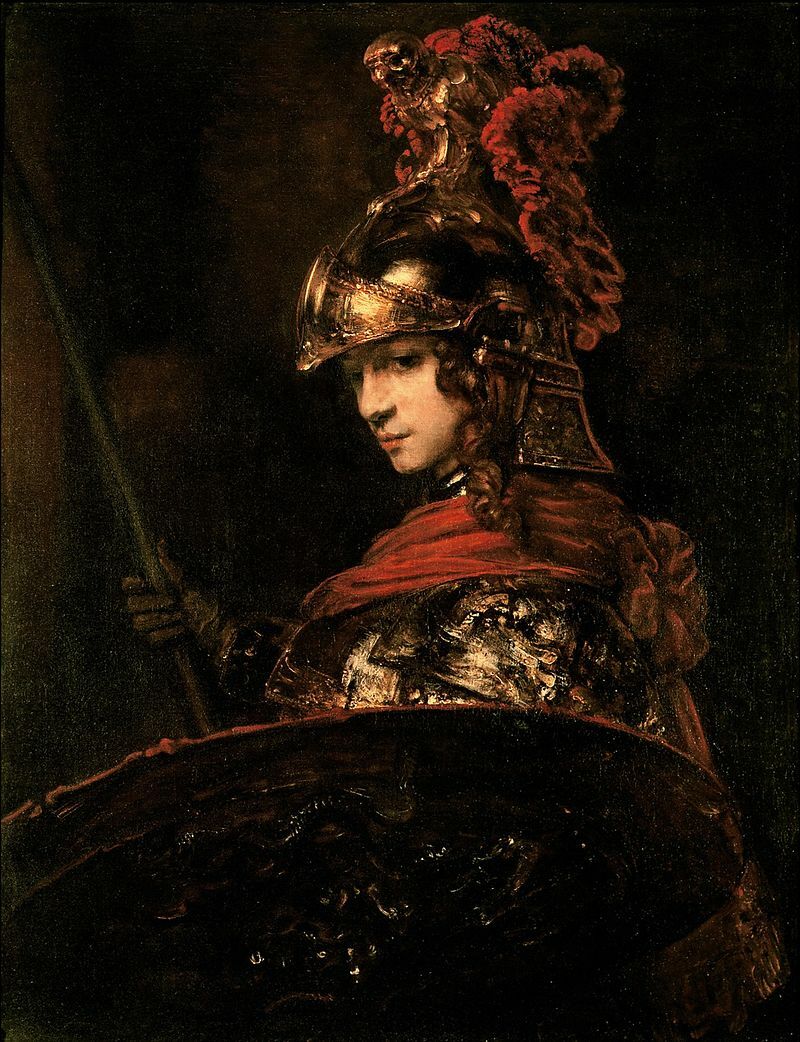
Divine Power fills a warrior-priest with the might to stand in the foremost ranks. In Pathfinder 1e, the spell grants a growing luck bonus, temporary hit points and an additional full-attack strike. In D&D 3.5e, it instead raises the caster’s base attack bonus to their character level, grants +6 Strength and adds temporary hit points. It does not use these mechanics in fifth edition.
Divine Power at a Glance
| 5.5e / 2024 | No spell with this name in SRD 5.2.1; no direct conversion provided |
|---|---|
| 5e / 2014 | No spell with this name in the 2014 core rules |
| Pathfinder 1e | Evocation, Cleric 4: +1 luck bonus per 3 caster levels (maximum +6); 1 temporary hp per level; one extra full-attack strike |
| D&D 3.5e | Evocation, Cleric 4, War domain 4: base attack bonus equals character level; +6 enhancement to Strength; 1 temporary hp per level |
Legacy quick facts: Personal range; 1 standard action; V, S, DF; duration 1 round per caster level. Pathfinder’s extra attack does not stack with the extra attack from Haste or a speed weapon. This spell is not automatically on a Witch spell list in either legacy edition.
Spell Rules
Divine Power — 5.5e / 2024
Status: Divine Power is not a named spell in SRD 5.2.1. Do not import the legacy base-attack, Strength or extra-attack mechanics into 5.5e.
Divine Power — 5e / 2014
Status: Divine Power is not a named core 2014 spell. Use the edition’s own combat buffs.
Divine Power — Pathfinder 1e
Cleric 4 (also available through the War domain where applicable). Pathfinder 1e spell source.
| School | evocation |
|---|---|
| Level | cleric 4 |
| Casting Time | 1 standard action |
| Components | V, S, DF |
| Range | personal |
| Target | you |
| Duration | 1 round/level |
Calling upon the divine power of your patron, you imbue yourself with strength and skill in combat. You gain a +1 luck bonus on attack rolls, weapon damage rolls, Strength checks, and Strength-based skill checks for every three caster levels you have (maximum +6). You also gain 1 temporary hit point per caster level. Whenever you make a full-attack action, you can make an additional attack at your full base attack bonus, plus any appropriate modifiers. This additional attack is not cumulative with similar effects, such as haste or weapons with the speed special ability.
Divine Power — D&D 3.5e
Cleric 4 and War domain 4. D&D 3.5e SRD spell source.
| School | Evocation |
|---|---|
| Level | Clr 4, War 4 |
| Components | V, S, DF |
| Casting Time | 1 standard action |
| Range | Personal |
| Target | You |
| Duration | 1 round/level |
Calling upon the divine power of your patron, you imbue yourself with strength and skill in combat. Your base attack bonus becomes equal to your character level (which may give you additional attacks), you gain a +6 enhancement bonus to Strength, and you gain 1 temporary hit point per caster level.
What Changed?
- Pathfinder 1e: +1 luck bonus per three caster levels (maximum +6), temporary hit points, and one extra full-attack strike that does not stack with Haste or a speed weapon.
- D&D 3.5e: base attack bonus becomes character level; +6 enhancement to Strength and temporary hit points replace Pathfinder’s luck/extra-strike framework.
- 5.5e / 2024 and 5e / 2014: this spell is not part of the named core spell lists, so no unsupported conversion has been introduced.
- Witch eligibility: neither legacy core spell list automatically makes Divine Power a Witch spell; the Games Master must authorize any non-core access.
Using Divine Power in Play
Divine Power is a short-duration self-buff for a spellcaster entering weapon combat. Cast it immediately before a decisive melee rather than spending its rounds while travelling or negotiating.
Related Magic
Haste — important Pathfinder extra-attack non-stacking rule · Divine Favor — another short-lived martial blessing · Athena’s Blessing — thematically related magic · Divination — a different form of divine magic
Worked Example: Blessing Before the Charge
Pathfinder 1e, caster level 9: a cleric casts Divine Power as a standard action. For the next 9 rounds, the cleric gains a +3 luck bonus on attack rolls, weapon damage rolls, Strength checks and Strength-based skill checks (one point per three caster levels), plus 9 temporary hit points. When making a full-attack action, the cleric may make one extra attack at the full base attack bonus, with appropriate modifiers. That extra strike does not stack with Haste’s additional strike or a speed weapon’s extra attack.
D&D 3.5e, a single-class 9th-level cleric: a cleric who ordinarily has base attack bonus +6/+1 instead uses +9/+4 while the spell lasts. The spell also gives +6 enhancement to Strength (usually +3 to the Strength modifier if the character has no competing enhancement bonus), 9 temporary hit points and a 9-round duration. The 3.5e effect does not grant Pathfinder’s scaling luck bonus or a separately specified extra strike.
Counterplay and Rulings
- Casting: the spell targets the caster only; it does not empower a companion or an entire army.
- Duration: one round per caster level. Count rounds during preparation and movement as well as during the fight.
- Pathfinder stacking: the extra full-attack strike cannot combine with an extra strike from Haste or a speed weapon. Luck bonuses follow the edition’s stacking rules.
- D&D 3.5e stacking: the +6 Strength is an enhancement bonus; it does not add to an existing enhancement bonus to Strength. Base attack bonus becomes character level, not caster level.
- Dispelling: an enemy capable of dispelling an active magical effect can remove Divine Power under the chosen edition’s rules.
- Edition boundary: fifth edition does not gain base attack bonus, 3.5e’s Strength bonus or Pathfinder’s extra full-attack strike simply because another buff has a similar theme.
Mythical Context
In Book 5 of Homer’s Iliad, Athena grants Diomedes exceptional courage and martial power. A radiance shines from his helm and shield as he drives into the Trojan ranks, and the goddess later restores his confidence and strength. The scene provides a classical model for a warrior receiving a patron’s blessing in battle. It is a mythological parallel, not a source of spell bonuses or a claim that the ancient Greeks used these rules.
Historical Context
A Romano-British limestone altar excavated at Kings Stanley depicts a warrior deity, probably Mars, holding a spear and shield. The surviving carved object records the presence of martial divine imagery in Roman Britain. Worshippers sought protection and favour from war deities, but the archaeological record does not establish that strength, attacks or endurance were supernaturally increased.
British Museum: Romano-British altar, probably depicting Mars (1805,0704.1) · The Metropolitan Museum: Greek vase showing Athena with spear and armour
Rules Sources and Licensing
The Pathfinder and 3.5 spell mechanics and their tables are Open Game Content under the Open Game License v1.0a. Artwork and original setting prose are excluded from that designation.
Open Game License v1.0a and copyright notices
Permission to copy, modify and distribute the files collectively known as the System Reference Document (“SRD”) is granted solely through the use of the Open Gaming License, Version 1.0a.
This material is being released using the Open Gaming License Version 1.0a and you should read and understand the terms of that license before using this material.
The text of the Open Gaming License itself is not Open Game Content. Instructions on using the License are provided within the License itself.
The following items are designated Product Identity, as defined in Section 1(e) of the Open Game License Version 1.0a, and are subject to the conditions set forth in Section 7 of the OGL, and are not Open Content: Dungeons & Dragons, D&D, Player’s Handbook, Dungeon Master, Monster Manual, d20 System, Wizards of the Coast, d20 (when used as a trademark), Forgotten Realms, Faerûn, proper names (including those used in the names of spells or items), places, Red Wizard of Thay, the City of Union, Heroic Domains of Ysgard, Ever-Changing Chaos of Limbo, Windswept Depths of Pandemonium, Infinite Layers of the Abyss, Tarterian Depths of Carceri, Gray Waste of Hades, Bleak Eternity of Gehenna, Nine Hells of Baator, Infernal Battlefield of Acheron, Clockwork Nirvana of Mechanus, Peaceable Kingdoms of Arcadia, Seven Mounting Heavens of Celestia, Twin Paradises of Bytopia, Blessed Fields of Elysium, Wilderness of the Beastlands, Olympian Glades of Arborea, Concordant Domain of the Outlands, Sigil, Lady of Pain, Book of Exalted Deeds, Book of Vile Darkness, beholder, gauth, carrion crawler, tanar’ri, baatezu, displacer beast, githyanki, githzerai, mind flayer, illithid, umber hulk, yuan-ti.
All of the rest of the SRD is Open Game Content as described in Section 1(d) of the License.
More information on the Open Game License can be found at www.wizards.com/d20.
The terms of the Open Gaming License Version 1.0a are as follows:
OPEN GAME LICENSE Version 1.0a
The following text is the property of Wizards of the Coast, Inc. and is Copyright 2000 Wizards of the Coast, Inc (“Wizards”). All Rights Reserved.
1. Definitions: (a)”Contributors” means the copyright and/or trademark owners who have contributed Open Game Content; (b)”Derivative Material” means copyrighted material including derivative works and translations (including into other computer languages), potation, modification, correction, addition, extension, upgrade, improvement, compilation, abridgment or other form in which an existing work may be recast, transformed or adapted; (c) “Distribute” means to reproduce, license, rent, lease, sell, broadcast, publicly display, transmit or otherwise distribute; (d)”Open Game Content” means the game mechanic and includes the methods, procedures, processes and routines to the extent such content does not embody the Product Identity and is an enhancement over the prior art and any additional content clearly identified as Open Game Content by the Contributor, and means any work covered by this License, including translations and derivative works under copyright law, but specifically excludes Product Identity. (e) “Product Identity” means product and product line names, logos and identifying marks including trade dress; artifacts; creatures characters; stories, storylines, plots, thematic elements, dialogue, incidents, language, artwork, symbols, designs, depictions, likenesses, formats, poses, concepts, themes and graphic, photographic and other visual or audio representations; names and descriptions of characters, spells, enchantments, personalities, teams, personas, likenesses and special abilities; places, locations, environments, creatures, equipment, magical or supernatural abilities or effects, logos, symbols, or graphic designs; and any other trademark or registered trademark clearly identified as Product identity by the owner of the Product Identity, and which specifically excludes the Open Game Content; (f) “Trademark” means the logos, names, mark, sign, motto, designs that are used by a Contributor to identify itself or its products or the associated products contributed to the Open Game License by the Contributor (g) “Use”, “Used” or “Using” means to use, Distribute, copy, edit, format, modify, translate and otherwise create Derivative Material of Open Game Content. (h) “You” or “Your” means the licensee in terms of this agreement.
2. The License: This License applies to any Open Game Content that contains a notice indicating that the Open Game Content may only be Used under and in terms of this License. You must affix such a notice to any Open Game Content that you Use. No terms may be added to or subtracted from this License except as described by the License itself. No other terms or conditions may be applied to any Open Game Content distributed using this License.
3.Offer and Acceptance: By Using the Open Game Content You indicate Your acceptance of the terms of this License.
4. Grant and Consideration: In consideration for agreeing to use this License, the Contributors grant You a perpetual, worldwide, royalty-free, non-exclusive license with the exact terms of this License to Use, the Open Game Content.
5.Representation of Authority to Contribute: If You are contributing original material as Open Game Content, You represent that Your Contributions are Your original creation and/or You have sufficient rights to grant the rights conveyed by this License.
6.Notice of License Copyright: You must update the COPYRIGHT NOTICE portion of this License to include the exact text of the COPYRIGHT NOTICE of any Open Game Content You are copying, modifying or distributing, and You must add the title, the copyright date, and the copyright holder’s name to the COPYRIGHT NOTICE of any original Open Game Content you Distribute.
7. Use of Product Identity: You agree not to Use any Product Identity, including as an indication as to compatibility, except as expressly licensed in another, independent Agreement with the owner of each element of that Product Identity. You agree not to indicate compatibility or co-adaptability with any Trademark or Registered Trademark in conjunction with a work containing Open Game Content except as expressly licensed in another, independent Agreement with the owner of such Trademark or Registered Trademark. The use of any Product Identity in Open Game Content does not constitute a challenge to the ownership of that Product Identity. The owner of any Product Identity used in Open Game Content shall retain all rights, title and interest in and to that Product Identity.
8. Identification: If you distribute Open Game Content You must clearly indicate which portions of the work that you are distributing are Open Game Content.
9. Updating the License: Wizards or its designated Agents may publish updated versions of this License. You may use any authorized version of this License to copy, modify and distribute any Open Game Content originally distributed under any version of this License.
10. Copy of this License: You MUST include a copy of this License with every copy of the Open Game Content You Distribute.
11. Use of Contributor Credits: You may not market or advertise the Open Game Content using the name of any Contributor unless You have written permission from the Contributor to do so.
12. Inability to Comply: If it is impossible for You to comply with any of the terms of this License with respect to some or all of the Open Game Content due to statute, judicial order, or governmental regulation then You may not Use any Open Game Material so affected.
13. Termination: This License will terminate automatically if You fail to comply with all terms herein and fail to cure such breach within 30 days of becoming aware of the breach. All sublicenses shall survive the termination of this License.
14. Reformation: If any provision of this License is held to be unenforceable, such provision shall be reformed only to the extent necessary to make it enforceable.
15. COPYRIGHT NOTICE
Open Game License v 1.0a Copyright 2000, Wizards of the Coast, Inc.
System Reference Document Copyright 2000-2003, Wizards of the Coast, Inc.; Authors Jonathan Tweet, Monte Cook, Skip Williams, Rich Baker, Andy Collins, David Noonan, Rich Redman, Bruce R. Cordell, John D. Rateliff, Thomas Reid, James Wyatt, based on original material by E. Gary Gygax and Dave Arneson.
Pathfinder Roleplaying Game Core Rulebook. © 2009, Paizo Publishing, LLC; Author: Jason Bulmahn, based on material by Jonathan Tweet, Monte Cook, and Skip Williams. END OF LICENSE
Keep this reference growing
If this page helped with your reading or game, you can support its upkeep or explore the curated books.
Explore the Bookshop — epics, classics and stories behind imagined worlds.