
Law Domain
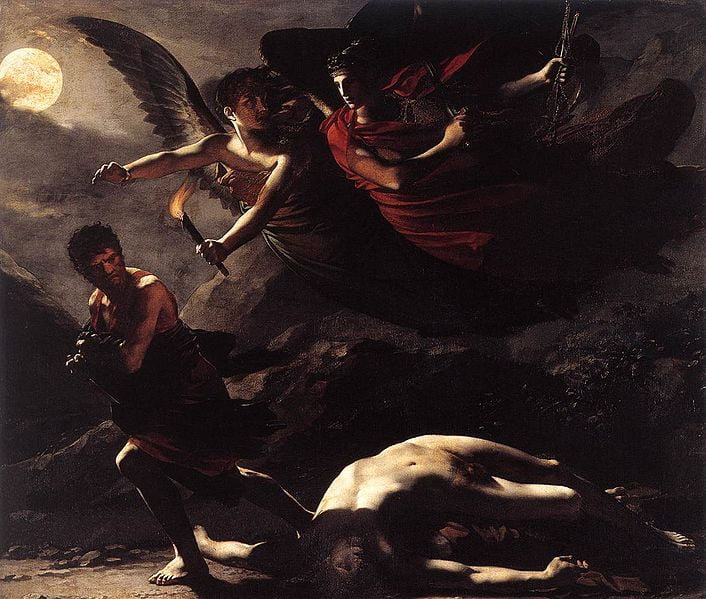
The Law Domain represents supernatural order, binding codes, disciplined purpose and resistance to chaotic forces. Pathfinder 1e and D&D 3.5e share the name but not the same granted powers or 2nd-level domain spell, so their mechanics remain edition-separated.
At a Glance
| Divine Sphere | Order, law, discipline, binding codes and resistance to supernatural chaos |
|---|---|
| Typical Role | Reliability support and anti-chaos specialist in Pathfinder; law-descriptor caster in 3.5e |
| Published Rules | Pathfinder 1e and D&D 3.5e |
| Modern D&D Status | No official same-named Law Domain in 2014 or 2024 D&D. |
| Eligibility | Pathfinder alignment-domain rules require a cleric choosing Law to have a matching alignment. |
Edition Applicability
The Law Domain is a published alignment domain in Pathfinder 1e and D&D 3.5e. It is not an official same-named Cleric subclass in D&D 5e/2014 or the 2024 rules, so no modern rules panel is added merely for symmetry.
Law Domain — Pathfinder 1e
Rules status: published Pathfinder 1e Core Rulebook domain.
Touch of Law
As a standard action, touch one willing creature. For 1 round it treats each attack roll, skill check, ability check and saving throw as though the natural d20 roll were an 11. Uses per day equal 3 + your Wisdom modifier.
Staff of Order
At 8th level, touch a weapon to give it the axiomatic special weapon quality for a number of rounds equal to half your Cleric level. You can use this once per day at 8th level, plus one additional time per day for every four Cleric levels beyond 8th.
Pathfinder 1e Law Domain Spells
| 1st | Protection from Chaos |
|---|---|
| 2nd | Align Weapon (law only) |
| 3rd | Magic Circle against Chaos |
| 4th | Order’s Wrath |
| 5th | Dispel Chaos |
| 6th | Hold Monster |
| 7th | Dictum |
| 8th | Shield of Law |
| 9th | Summon Monster IX (law spell only) |
Law Domain — D&D 3.5e
Rules status: published D&D 3.5e SRD domain.
Granted Power
You cast spells with the law descriptor at +1 caster level.
D&D 3.5e Law Domain Spells
| 1st | Protection from Chaos |
|---|---|
| 2nd | Calm Emotions |
| 3rd | Magic Circle against Chaos |
| 4th | Order’s Wrath |
| 5th | Dispel Chaos |
| 6th | Hold Monster |
| 7th | Dictum |
| 8th | Shield of Law |
| 9th | Summon Monster IX (cast as a law spell only) |
How the Law Domain Plays
Pathfinder’s Touch of Law is about reliability: it can turn a risky roll into a predictable result, while Staff of Order supports weapon users against chaotic foes. D&D 3.5e instead gives a caster-level bonus to law-descriptor spells.
Who Should Grant the Law Domain?
Use Law where a deity’s established portfolio genuinely centres on order, oaths, judgement, civilisation, hierarchy or binding cosmic rules. Law does not automatically mean kindness, justice or good intentions; those concepts may overlap, but they are not interchangeable.
Priests, Temples and Rites
Law-domain cults might enforce contracts, preserve measured ritual, arbitrate disputes, guard borders or defend a cosmic order. Their institutions should reflect the patron culture rather than importing a generic religious hierarchy.
What Are Law Priests Doing Now?
Law priests are settling contested oaths, authenticating contracts, hunting oath-breakers empowered by magic, containing chaotic incursions and deciding whether an ancient rule still serves the order it was created to protect.
Related Domains and Character Options
Rules Sources and Licensing
- Pathfinder 1e: published Core Rulebook domain; its 2nd-level spell is Align Weapon (law only).
- D&D 3.5e: published SRD domain; its 2nd-level spell is Calm Emotions.
- Edition rule: these lists are deliberately not merged.
Keep this reference growing
If this page helped with your reading or game, you can support its upkeep or explore the curated books.
Explore the Bookshop — epics, classics and stories behind imagined worlds.