
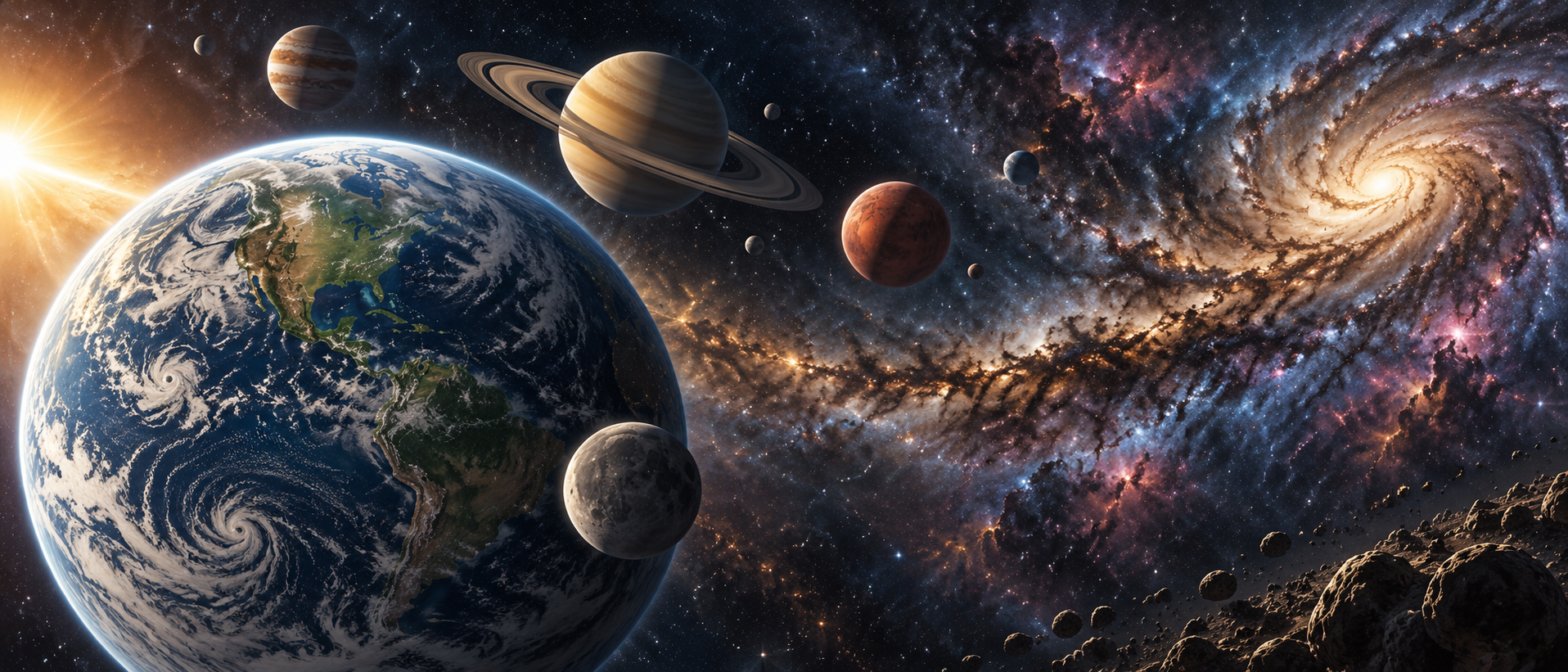
At a Glance
- Present
- 1454 CE
- Realm
- Earth and other inhabited worlds of the Material Plane
- Passage
- Aetherships, ancient planetary portals, rare magic and living void-travellers
- Six earthly rivals
- Ming China, Bohemia, Kemet, the Ninefold Dominion, France and Majapahit
- Greatest challenge
- A reliable return with breathable air, provisions, a course and a living crew
An imperial captain refuses to surrender a chart that has been altered during her voyage. In Prague, two astronomical observations disagree by the breadth of an inhabited world. A catfolk gatekeeper closes an ancient doorway on the Nile, and a hobgoblin officer in occupied Constantinople orders a confiscated engine to be awakened. Six powers are beginning to fight over roads older than their kingdoms.
What Is Happening Right Now?
Copies of an ancient star map have appeared in three ports and two royal courts. Every copy leads towards a crossing from Earth to another world, but the departure dates differ. A surviving traveller insists the passage works. Each court holds a piece of the truth: a vessel, a gate key, precise observations, an engineer, a landing site or the means to secure a crew’s return. None can command the entire route.
Most people will never see an aethership. A ship launched across the void may take years or generations to return, and portals have their own keepers and conditions. Elsewhere, older inhabited planets have their own rulers, history, trade and wars. An earthly king cannot claim sovereignty merely because one of his captains has arrived.
The Six Great Programmes
Ming China — The Imperial Celestial Fleet
The most established public secret: a small number of guarded aetherships, supplied by shipyards, precision craftsmen and imperial navigators. The court’s maritime expeditions have taught officers how to provision and return from distant journeys. In 1454, rival factions demand the log of a vessel that has returned with an unfamiliar route added to its chart.
Bohemia — The Prague Celestial Project
Kepler, Copernicus and Tycho Brahe make measurements that can decide whether an experimental vessel finds an intended world or disappears. Ladislaus the Posthumous and George of Poděbrady’s officers compete for the instruments and the prestige. Two royal seals order one ship to two destinations.
Kemet — The Celestial Temples
Catfolk temple astronomers maintain planetary gates and observatories left by earlier ages. Their strength lies in knowing which door may be opened safely, when and by whom. A sealed crossing now carries a return signal from an expedition long believed lost.
Ninefold Dominion — The Celestial War Command
Since conquering Constantinople in 1453, hobgoblin commanders have seized observatories, portal controls and lost celestial machines. They can occupy a workshop and compel a specialist, but cannot necessarily reproduce its devices. A stolen component may determine whether the gate beneath the city opens or stays sealed.
France — Richelieu’s Secret Celestial Office
The Cardinal obtains foreign instruments and navigators through bribery, secret workshops and Blue Guard arrests. He commands no great fleet, but has spies who might deliver the plans for one. His pursuit of the heavens unfolds while the true Charles VII remains imprisoned and a sentient wax double wears his crown.
Majapahit — The Star-Sea Navigators
Island navigators, merchant houses and competing court patrons join celestial instruments to traditions of sea travel. Rather than one imperial fleet, several ventures seek repeatable passages and profitable exchanges. A ship has returned with its cargo intact and no surviving crew.
Others Who Sail the Void
Dwarven engineers forge pressure-tight joints and containment vessels; gnomish inventors perfect instruments and dangerous propulsion experiments. English agents buy foreign observations. Atlantean custodians guard devices whose original makers vanished long ago. These interests may have independent vessels, stations or gates but do not automatically serve a single crown.
Earth is a newcomer to an ancient sky. Elder Things maintain remnants of interplanetary stations; Mi-Go scientists keep their own mines and biological laboratories. Fraal refugees on Earth search for the route home, while Yithian minds can travel through time without a physical voyage. These peoples have distinct loyalties, not a secret agreement to rule earthly kingdoms.
Other Peoples, Other Purposes
Dwarven Workshops and the Prospectors
A dwarven company is likely to begin with a problem it can work: a pressure-tight vessel, a forge that survives beyond Earth, an ore that cannot be found at home, or a contract to maintain another nation’s ships. Some would prospect the Moon’s rocks or visit the asteroid belt; others would refuse a venture that cannot guarantee air, fuel and wages for the workers. A spaceborne mine needs ventilation, secure stores, replacement tools and a way to get its cargo to buyers. Dwarven experience with deep tunnels and strong doors is useful, but does not make a lunar shaft breathable.
Gnome Artificers and Their Rivals
Gnome workshops favour small experimental engines, alchemical materials, carefully fitted gears and the study of strange machinery. A few might build orbital test vessels while others sell life-support instruments to Ming or Bohemian patrons. Salvaging a failed apparatus near the Moon could be worth more to a workshop than building a colony. Competition exists between masters, guilds and courts; not every gnome agrees to risk a family or a fortune on an unproved device.
Elven Custodians of Old Routes
Some elves preserve unusually long records, careful sky observations and memories of passages whose earthly termini have fallen into ruin. An elven journey may seek a lost settlement, a family record or an older world’s embassy rather than territory. An ancient road might be a true passage through physical space or a crossing through another plane; the two must not be confused. An elven court with no surviving gate may be no more capable of a voyage than its human neighbours.
Halfling Traders and Households
Halfling communities are not a single trading nation. Those experienced in horticulture, river shipping and distant family networks might be valued for managing food, preserving seed, keeping small settlements supplied and maintaining a refuge over many seasons. A workable lunar garden needs sealed shelter, water, air and light; skill with plants does not overcome vacuum. Others may never wish to leave Earth, and any permanent settlement will have its own leaders and obligations.
Orc Hosts and the Great Northern Frontier
The independent orc successor powers of the steppe have commanders, traders and skilled craftspeople as well as raiders. A warlord might acquire a celestial passage as a prize, seek an experienced captive navigator or bargain for a vessel to impress rivals. Another leader may spend his wealth on horses and frontier wars instead. Their dealings with the Ming are complicated by Yingzong’s captivity. The orc hosts do not serve the hobgoblin Ninefold Dominion.
Giants and the Inheritance of the Titans
Giants descend from the Titans, and a few possess the strength, furnaces, magical knowledge or surviving works to attempt things small peoples cannot. An ancient monumental gateway, a colossal vessel or a remote ruin might draw one giant ruler far from Earth. Such undertakings are exceptional, expensive and tied to the ambitions of particular giant lineages; no great empire of uniform starships follows simply from their size.
Most expeditions belong to a particular kingdom, temple, guild or trading house and carry their own people, supplies, loyalties and customs. A crew drawn from several unrelated cultures needs a specific, convincing history behind it; it is not the ordinary pattern of voyages in 1454. Independent peoples may meet, trade, fight or negotiate, but no common interplanetary society joins them by default.
The History of the Celestial Roads
- Before Earth: Worlds with native histories and long-standing routes already exist in physical space.
- Earth’s ancient ages: Extraterrestrial colonies leave buried records and passageways; some survive only as sealed instruments.
- Kemet’s early kingdoms: Catfolk custodians preserve certain planetary gates, while other crossings become forbidden or forgotten.
- 1368: The Ming dynasty rises in China; maritime logistics and astronomy later support its guarded celestial service.
- 1405–1433: Great Ming oceanic expeditions prove the importance of supplies, records, diplomacy and reliable return voyages.
- 1453: The Ninefold Dominion seizes Constantinople and confiscates archives and devices that may govern older star routes.
- 1454: Earthly rivals seek the same lost passage. Some own ships, others possess portals, recovered machines, charts or informants.
Crossing the Void
Aetherships carry their crews and cargo but need breathable air, food, water, pressure protection, reliable navigation and repairs; the longest journeys can outlast a generation. Planetary portals shorten distance but are fixed, keyed, guarded and not always stable. Exceptional magic may carry people from world to world where ordinary long-range spells cannot. Living vessels can make interplanetary passage a bargain with an intelligence rather than a paid voyage.
Why the Powers Sail
There is no common design for a celestial vessel. A court commissions ships to carry envoys and uphold prestige; a merchant syndicate wants cargo that will repay the voyage; an astronomer wants to measure a world directly; an engineer needs an experiment; an ancient gatekeeper may have no desire to travel at all. Knowledge, wealth and political power decide who can attempt a crossing. A village whose harvest has failed is unlikely to spare its carpenters for a voyage to the Moon.
The Ming imperial workshops build from the experience of great timber ships, joined compartments, skilled shipwrights and huge provisioning networks, adding magical propulsion, sealed chambers and instruments that can follow a changing celestial bearing. Prague’s astronomers work with brass sighting instruments, astronomical tables, geared models, alchemical materials and bespoke enchantments. Kemet’s catfolk custodians need not imitate either: a fixed stone threshold and its celestial keys may reach a distant sanctuary in a heartbeat, but only if the custodian knows its destination and can reopen it.
The Ninefold Dominion prefers instruments it can seize, troops it can train and predictable routes between fortified positions. Majapahit’s navigators draw on experienced pilots, shifting winds and currents at sea, seasonal routes, maritime diplomacy and the patronage of rival merchant houses. France under Richelieu seeks information first: stolen plans, a captured navigator or a gate key may be more useful than a half-built ship in a secret Paris cellar. None of these paths automatically gives its practitioners modern machines or a universal understanding of the physical heavens.
Where They Sail, and What They Seek
The Moon — The Nearest Proving Ground
For newly constructed aetherships the Moon is the most practical nearby objective. A successful landing proves that a hull can protect its people, a navigator can find the moving destination and the engine can still carry them home. Its exposed ground has no breathable air. Frozen water may exist in permanently shadowed polar ground, but finding a usable deposit, extracting it and keeping equipment working in extreme cold are three different problems.
Who goes? Ming pilots seek observations and an emergency place of return; Prague’s court wants measurements no earthly observatory can make; dwarven expeditions may examine accessible minerals and the stone beneath the surface; Kemet’s gatekeepers may inspect an old sealed threshold. No single empire commands the Moon, and the existence of an ancient room under a crater does not establish a publicly accessible settlement.
The price of reaching it. A ship that arrives with no air to spare, no means of landing or no reserve for departure has failed, even if the captain survives to draw the view. The small Three-Marks Refuge is a guarded Ming naval outpost in an older chamber near the southern polar highlands. Its eight assigned crewmen belong to one imperial expedition, and its water recovery is unreliable. It is not a neutral port or a shared station for rival powers.
Mars — The Red Prize
Mars has mountains, deep canyons, ancient watercourses, cold deserts and a thin atmosphere that cannot sustain ordinary unprotected breathing. A distant red light in the earthly sky is not a ready-made province. Its ruins, possible hidden refuges and the accounts associated with John Carter invite investigation, yet none of those stories entitles a new captain to assume the world is empty or helpless.
Who goes? The Ming court considers a carefully supplied embassy and survey; Prague’s astrologers and astronomers seek proof of ancient surface changes; elven custodians and other long-lived travellers may search for a road once known to their ancestors. Merchants ask whether a real cargo could repay the voyage, but a bag of ordinary red sand cannot. A fleet that returns with trustworthy routes and friendly contacts may bring home something more valuable than ore.
Venus — The Unforgiving Veil
Venus is a bright guide in Earth’s sky, but below its clouds its surface is desperately hot and the air presses hard enough to crush ordinary vessels. The higher atmosphere is less extreme, though corrosive clouds, hostile conditions and the difficulty of remaining aloft persist. A court may sponsor a protected observatory in the upper cloud layers; it should not quietly acquire cities upon the ground without an extraordinary explanation.
Who goes? Prague’s scholars value the chance to measure the bright planet directly. Alchemists seek atmospheric samples and unusual reactions, while adventurers may be paid to retrieve an instrument from a failed survey. The wise captain plans to stay above the clouds and return before the protecting enchantment falters.
The Asteroid Belt — The Specialists’ Gamble
Farther from Earth, rocky bodies and the larger world now called Ceres attract prospectors and salvagers. An ordinary seam of iron will seldom pay for an interplanetary voyage. A rare magical mineral, an irreplaceable alloy, an ancient wreck or a sealed extraterrestrial machine might. Dwarven expeditions may bring their own mining and ventilation traditions, while independent gnome workshops develop instruments, compact engines and experiments for entirely different ventures. They do not automatically form one joint expedition.
The Mi-Go already possess interests beyond Earth. Their mining grounds and laboratories are not unclaimed merely because human astronomers have not mapped them. A prospective claim could be a commercial opening, a diplomatic incident or a trap.
The Outer Moons — Extraordinary Expeditions
Some surviving charts point to the icy moons of distant giants. A few records describe deep oceans beneath ice; others mark silent stations or living visitors of unknown age. Such distances are beyond the work of an ordinary new aethership. A powerful ancient gateway, a far more capable vessel or the help of an older spacefaring people may be necessary. Earthly scholars in 1454 cannot be expected to know the number and nature of these moons from ordinary naked-eye observation: their knowledge comes from disputed observations, extraordinary artefacts or travellers who have already been there.
Other Stars — The Ancient Roads
Even the nearest stars are many years of travel at light’s speed. Sailors who understand an earthly compass do not gain a short passage between stars. Here the surviving gateways, old celestial charts and exceptional vessels of nonhuman civilisations become decisive. The Fraal have their own reason to seek a homeward passage, while the Elder Things remember journeys whose origin lies before the present kingdoms. Such encounters are meetings between societies, not empty lands waiting to be planted with earthly banners.
What Each Traveller Can Bring Home
Ming envoys might return with a proven course, a treaty, a translated record or a useful plant whose safe cultivation still requires study. Prague scholars might bring a set of measured positions that exposes a mistake in every copied chart. Kemet’s custodians might recover a missing stone key or discover why a gate was sealed. Majapahit merchants might establish a repeatable exchange with an independent port, giving its rulers a reason to honour the route. Dwarven and gnomish craftsmen might return with one unusual material or instrument that advances their work. Dominion officers may seek a fortress, hostages or a weapon; Richelieu’s agents may prefer the report and the means to keep everyone else from reading it.
Not every prize is merchandise. A living pilot, a diplomatic agreement or a reliable method of keeping a crew alive can be worth far more than an exotic jewel. Nor can the needs of a distant outpost be reduced to treasure: every additional inhabitant requires air, water, warmth, shelter, repairs and food.
The Voyage That Must Come Home
A sea captain can look for wind; a captain in the void cannot fill ordinary canvas sails without an atmosphere. Propulsion must come from an actual force, a working magical engine, a living vessel or a special passage. Astrolabes, astronomical tables and sighting instruments can assist with observation, but planetary motion makes the destination a moving target. Enchanted compasses must be given a meaningful magical reference; a maritime magnet does not point unerringly towards Mars.
Every expedition prepares for departure, passage, landing and return. The enclosed ship must retain breathable air and pressure, carry enough food and drink, manage waste and keep its people warm. It must have the means to enter and leave a world’s gravity. An ancient gate bypasses much of the distance but introduces a different weakness: the other threshold may be guarded, disabled, flooded, buried or open onto a lethal exterior. Exceptional spellwork may bridge worlds without providing an escape from the far side.
The result is an uneven celestial frontier. One temple has maintained a fixed crossing for centuries while the richest European court experiments with a single prototype. A commercial pilot may know a safe route the best astronomer cannot calculate. A powerful archmage can cross alone but cannot carry a hundred hungry settlers. There is no reason for the people of 1454 to adopt the same machinery, costumes or assumptions merely because they share the stars.
Three Journeys to Begin Tonight
The Chart with Two Destinations
A Prague course and a Kemetite temple record point to the same place. One calls it a landing station; the other records it as sealed. Both charts are authentic, but one bears a different departure date.
The Captured Navigator
A Dominion commander offers a prisoner in exchange for the key to a vessel stolen from Constantinople. Richelieu’s buyers await the key in the next port.
The Silent Return
A Majapahit ship arrives with sealed cargo but no crew. Its log contains the handwriting of a sailor who died before it departed.
Travel, Diplomacy and Law
Earth’s royal letters grant no authority over peoples of other worlds. Each expedition needs permission where it lands, interpreters where it trades, and a credible way to depart. A forgotten station might be sacred ground or a guarded border; a blank space on a chart does not mean an uninhabited planet.
Continue Exploring
Space Atlas · Solar System · Outer Space Terrain · Older Worlds · Timeline · Factions
History and Sources
The founding of the Ming state, maritime voyages, Bohemian political rivalry and the 1453 conquest of Constantinople form the historical framework of this world. The specific celestial offices and their competition belong to its continuous alternate history. The Space Atlas and Outer Space Terrain describe physical space, portals and aetherships.
Physical astronomy: NASA — water and ice on the Moon · NASA/JPL — Mars conditions · NASA — Venus conditions · NASA/JPL — Europa. These describe the underlying physical worlds, not knowledge automatically available to an astronomer of 1454.
Keep this reference growing
If this page helped with your reading or game, you can support its upkeep or explore the curated books.
Explore the Bookshop — epics, classics and stories behind imagined worlds.