
Bestiary • Planar Creatures
Outsiders — Planar Creatures & Extraplanar Beings
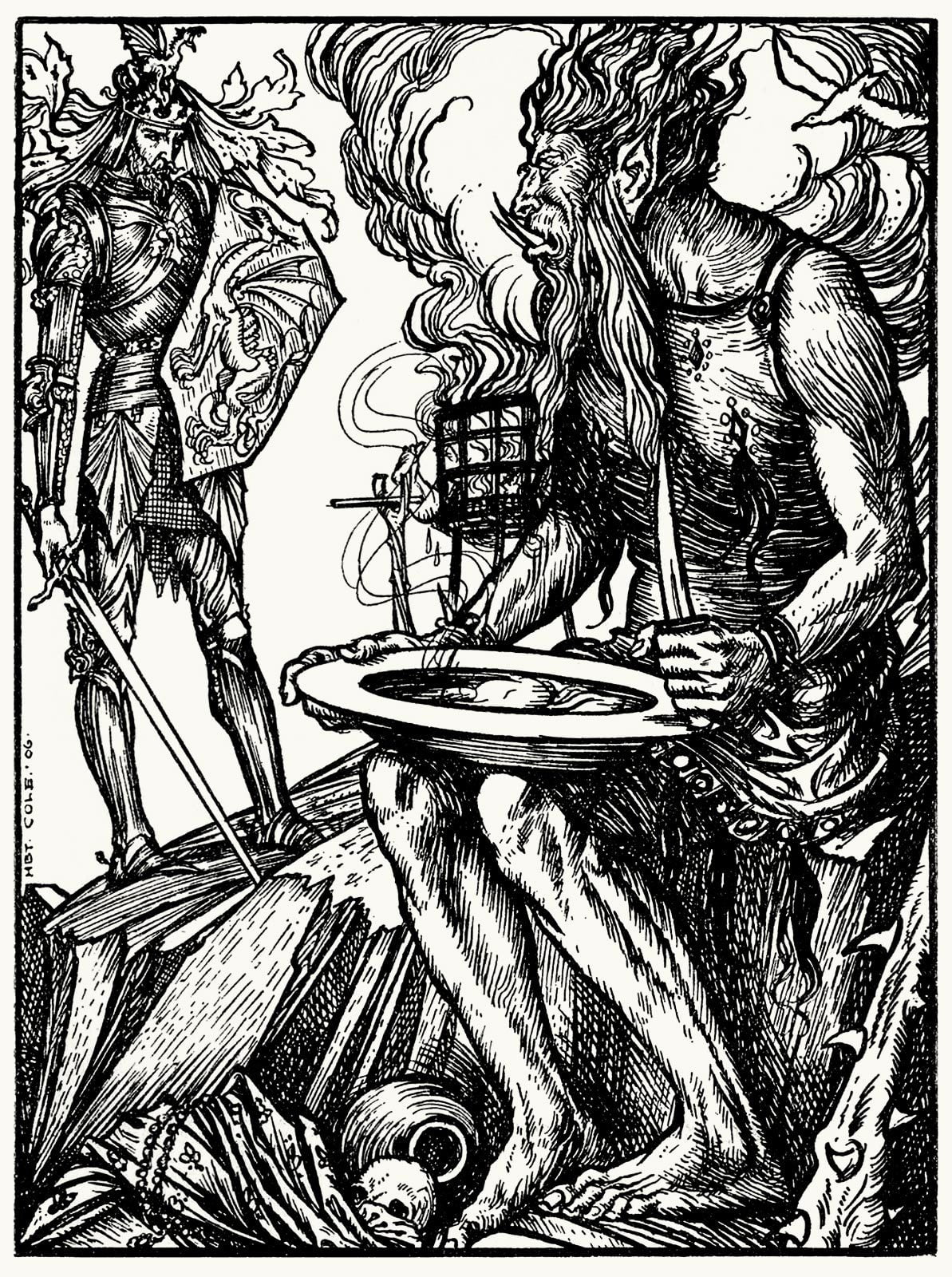
Outsiders are beings whose nature is bound to planes beyond the ordinary mortal world. Some are born from celestial, infernal, elemental or conceptual realms; others are transformed until body and planar essence are no longer easily separated. This hub gathers the site’s established outsider families and notable individual creatures in one place.
At a Glance
What Makes an Outsider?
Planar Nature
An outsider’s existence is tied to another plane, planar force or supernatural order rather than ordinary mortal biology alone.
Many Origins
Celestial beings, fiends, elementals, inevitables, genies and other planar creatures can all fall within this broad family.
Different Rules
Statistics differ by edition. Individual entries separate their 5.5e, 5e, Pathfinder 1e and 3.5e mechanics where those versions exist.
Campaign Role
Outsiders can be patrons, invaders, judges, messengers, predators, summoned servants, planar rulers or powers with agendas spanning worlds.
Major Outsider Families
Outsiders encompass celestial, fiendish, elemental, cosmic and other planar powers, each with distinct cultures, hierarchies and agendas.
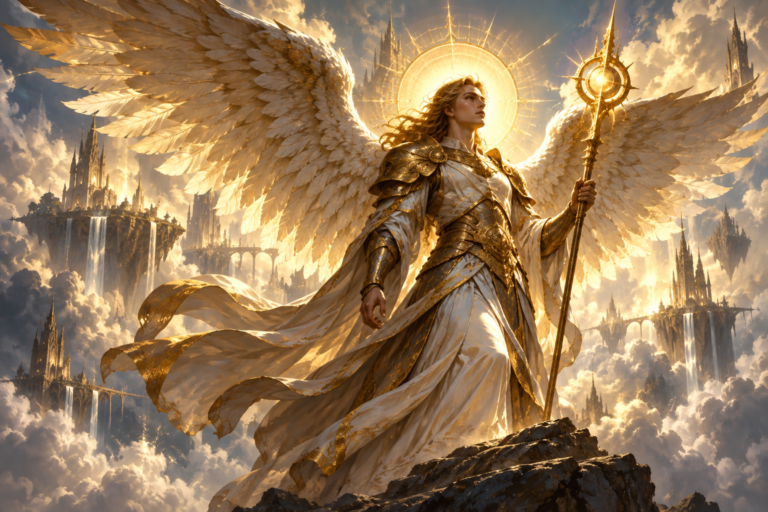
Angels
Celestial messengers, guardians and powerful servants of higher realms.
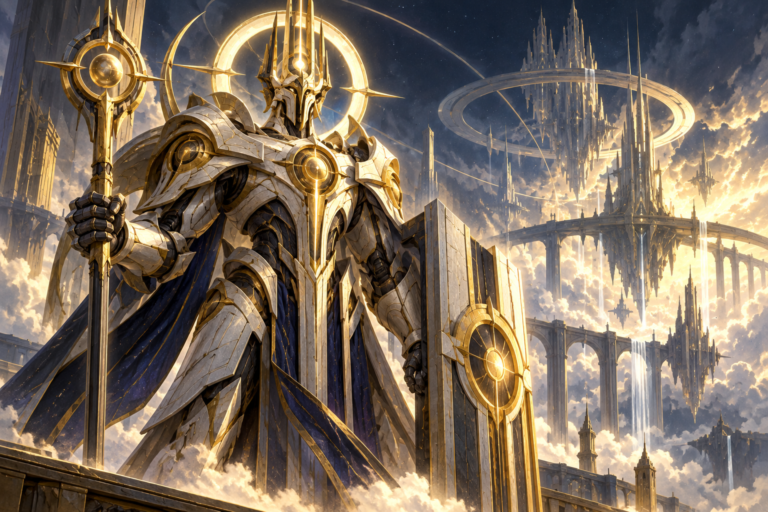
Archons
Ordered celestial beings associated with protection, law and strongly structured divine realms.
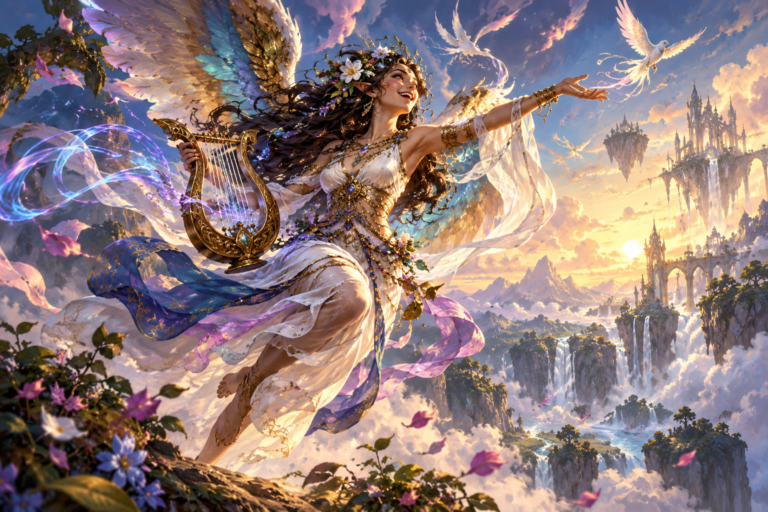
Azatas
Free-spirited celestial outsiders shaped by beauty, liberty and untamed good.
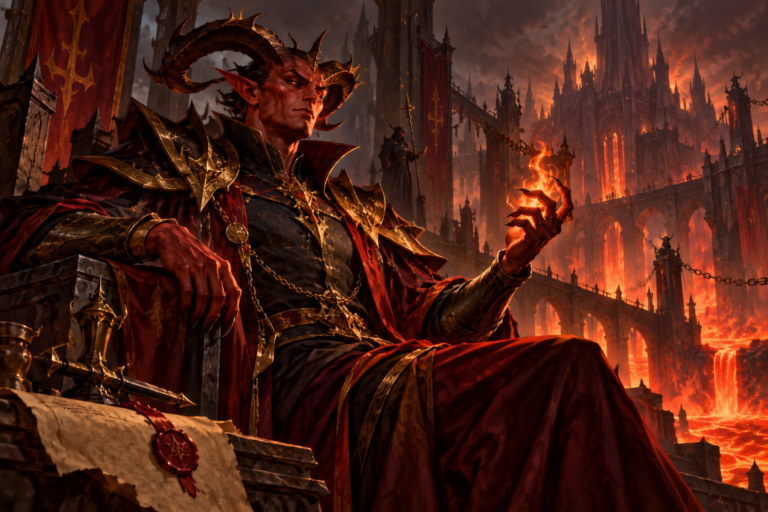
Devils
Infernal outsiders bound to hierarchy, temptation, contracts and disciplined evil.
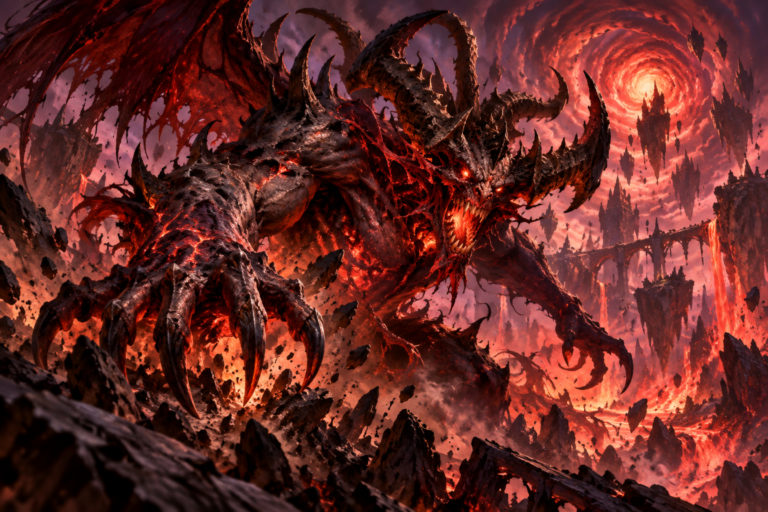
Demons
Destructive fiends associated with chaos, corruption and the Abyss.
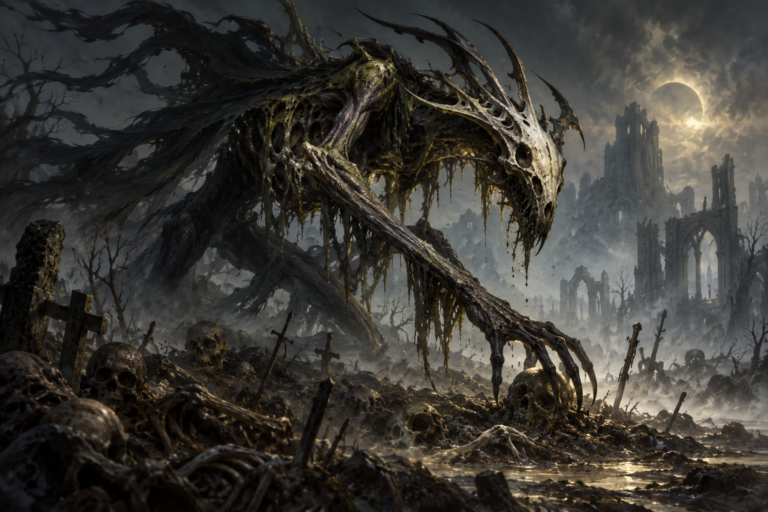
Daemons
Predatory fiends whose traditions centre on death, ruin and the destruction of mortal life.
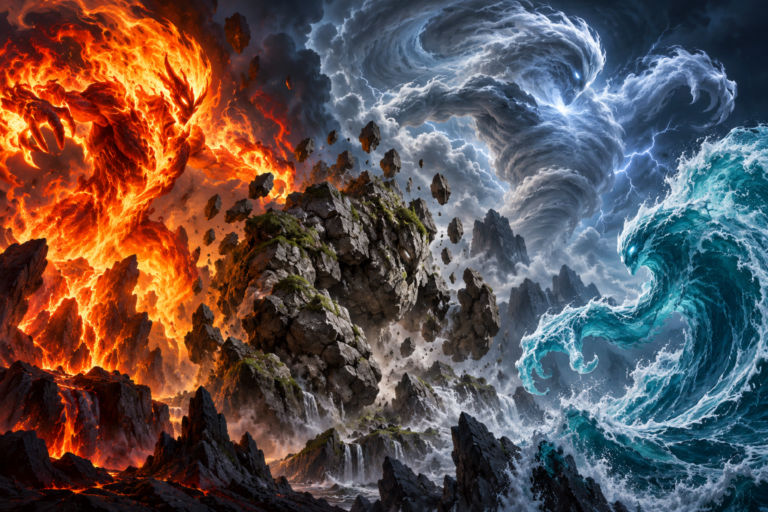
Elementals
Beings of living fire, earth, air, water and other elemental forces.
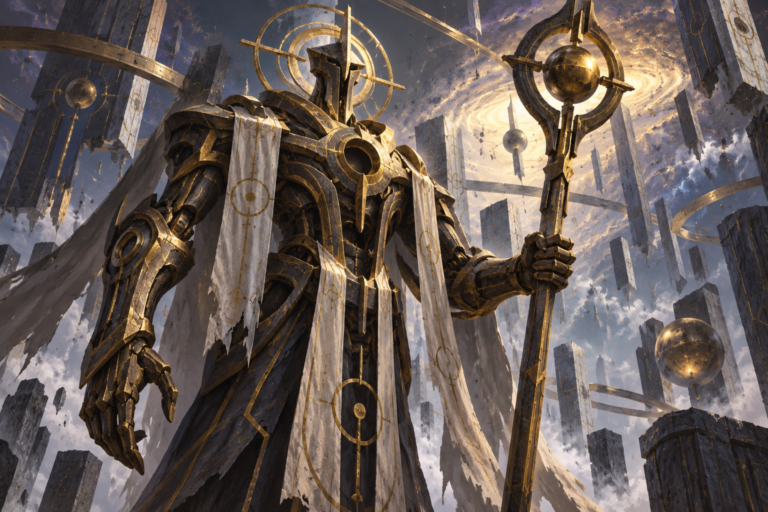
Inevitables
Construct-like planar enforcers created to uphold cosmic laws and inescapable principles.
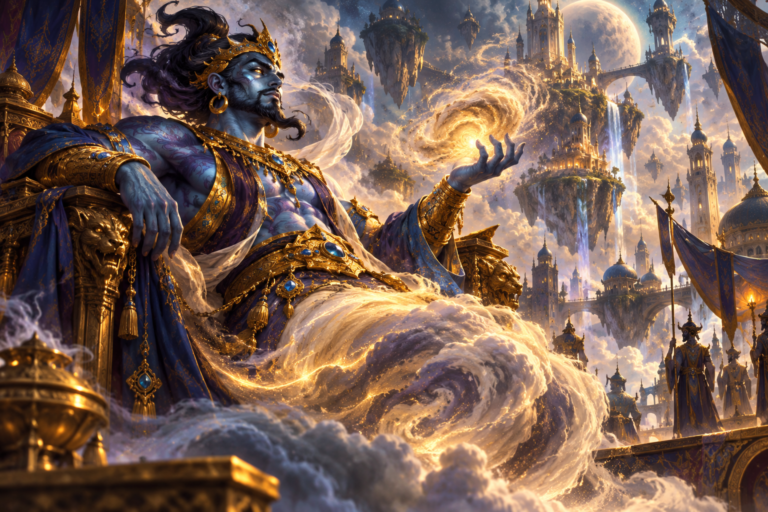
Genies
Powerful elemental peoples with courts, rivalries and long histories across the Inner Planes.
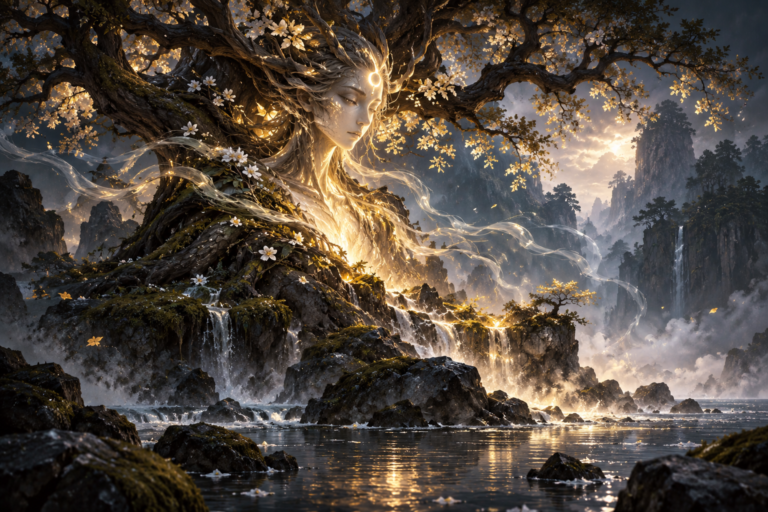
Kami
Spirits bound to sacred places, natural features, objects and supernatural obligations.
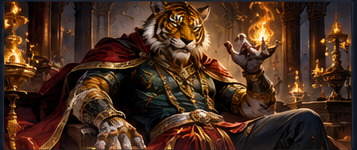
Rakshasas
Shape-changing supernatural beings with strong ties to illusion, appetite, power and reincarnating evil.
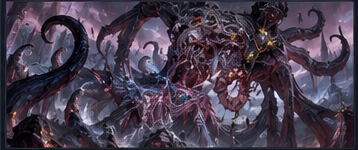
Qlippoth
Ancient horrors of the Abyss predating many demonic powers.
Elemental Powers
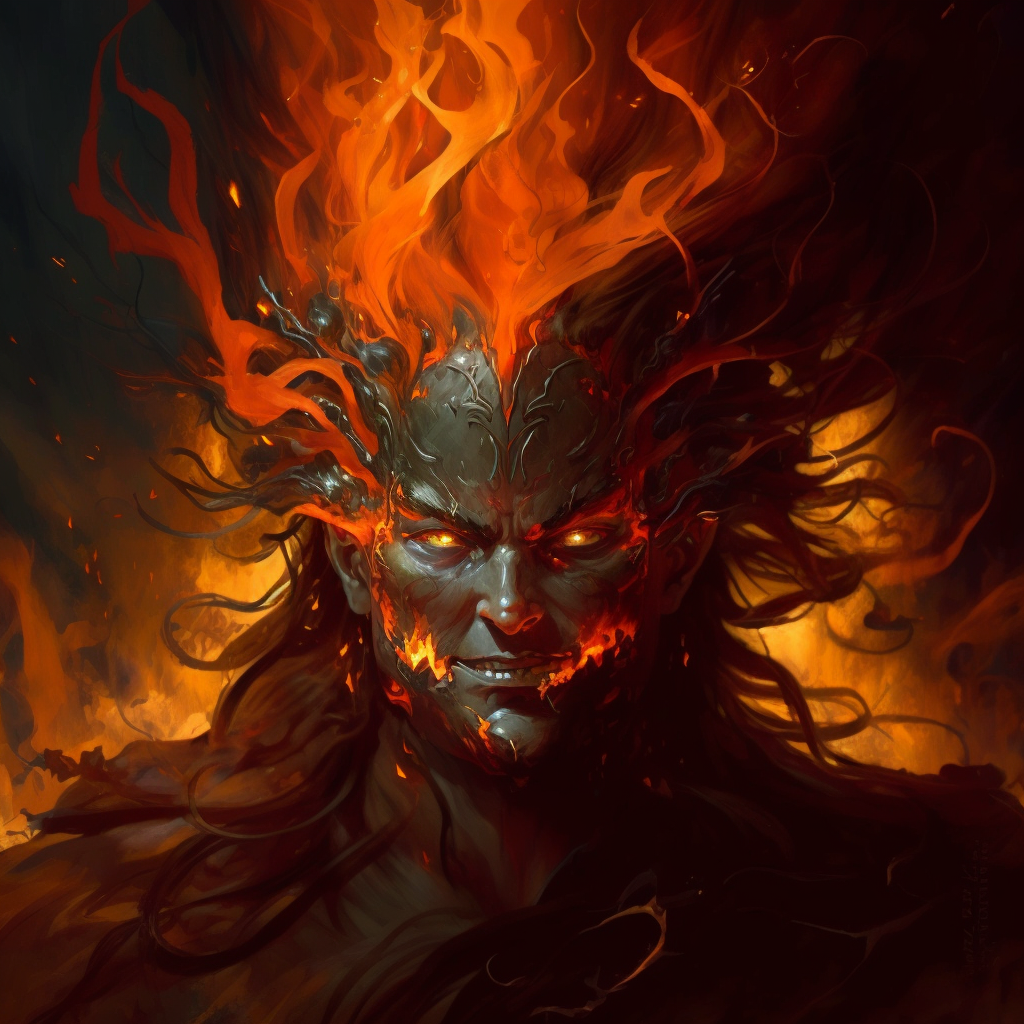
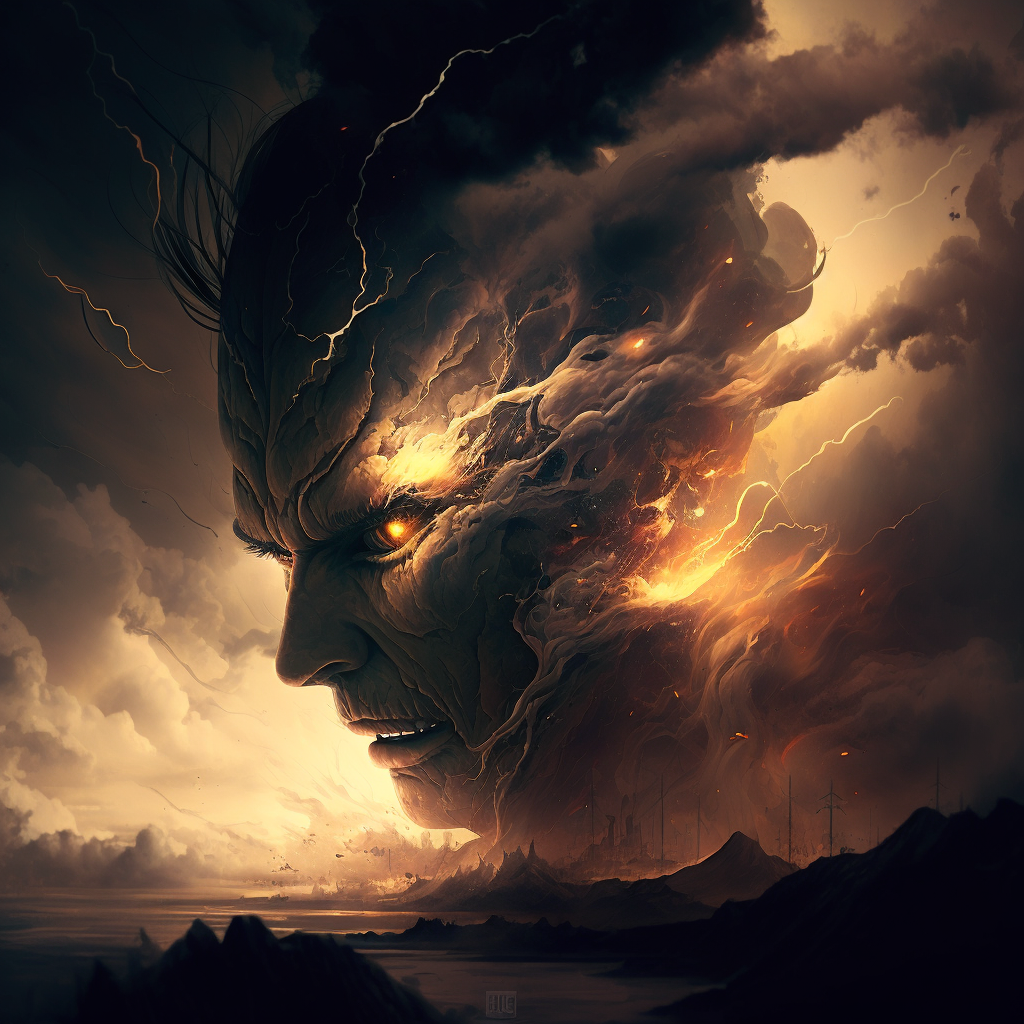
Princes of Elemental Evil
Some outsiders are not ordinary members of an elemental species but vast rulers whose identities are inseparable from hostile elemental dominions. These beings belong with the Outsider bestiary rather than within mortal pantheons.
Celestial & Benevolent Powers
Notable Celestial Outsiders
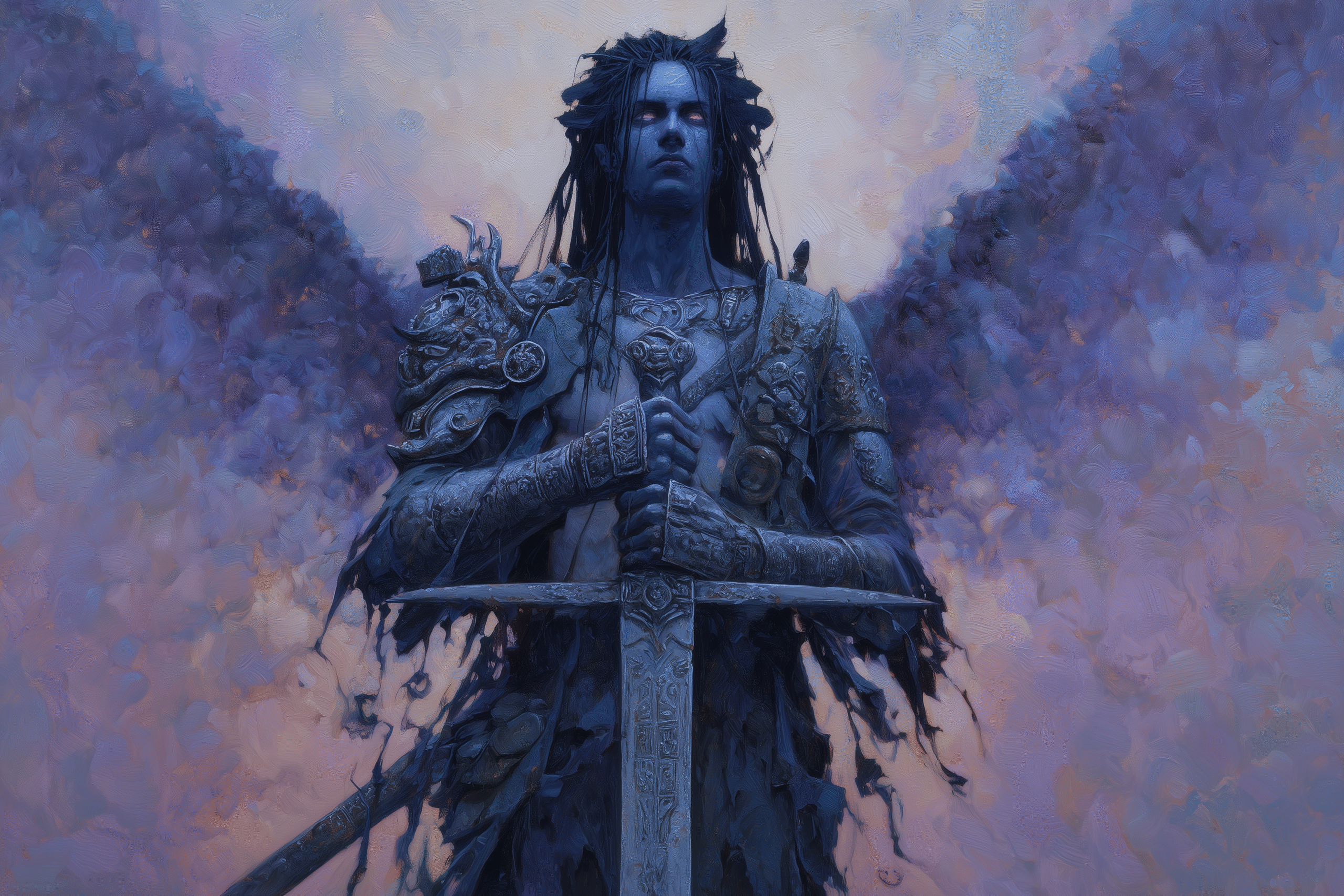
Aasimar
Lightborn mortals carrying celestial ancestry or planar influence.
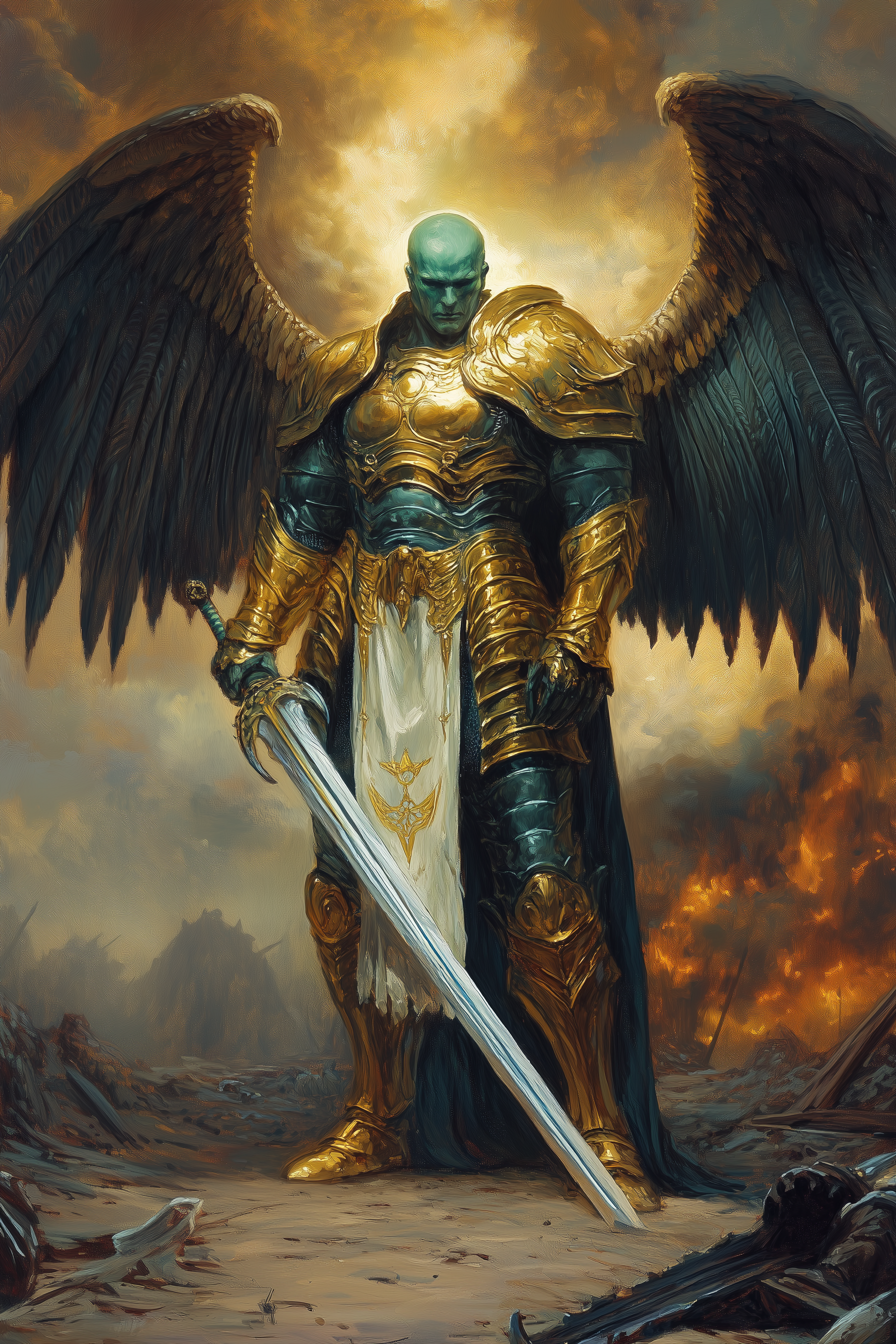
Planetar
A mighty angelic warrior and agent of divine causes.
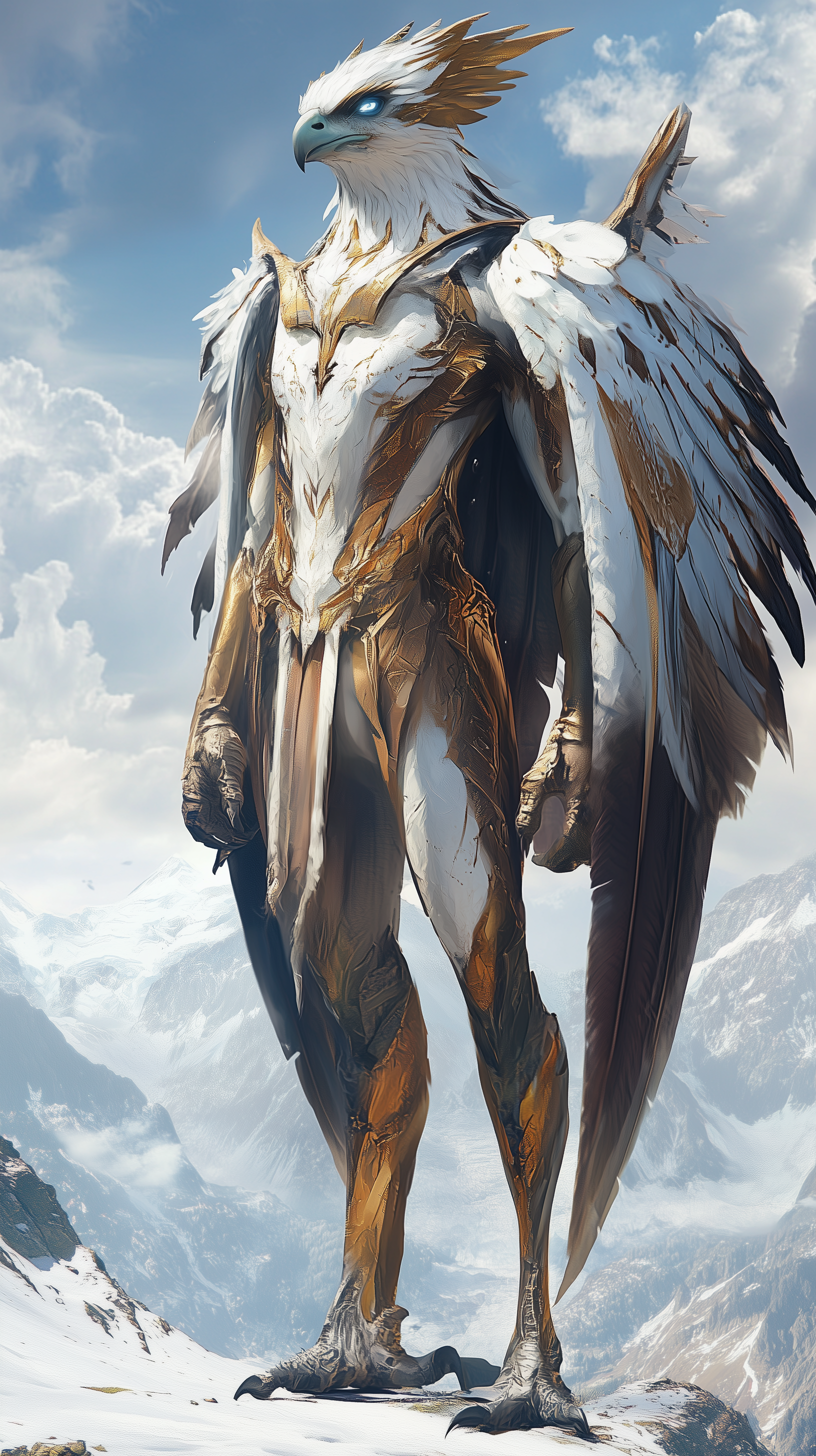
Avoral Agathion
A winged celestial outsider of keen sight and swift intervention.
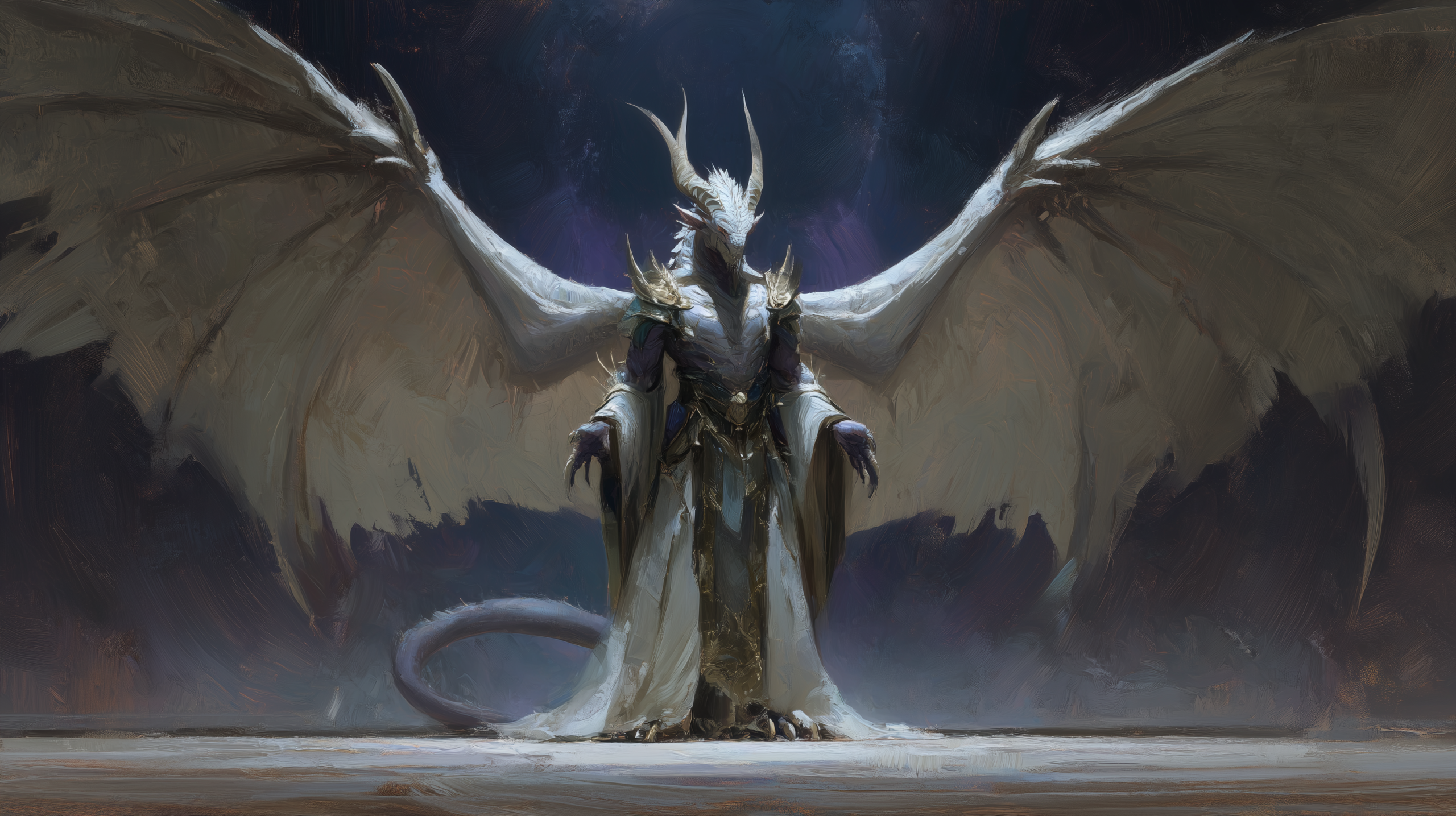
Draconal
Celestial dragon-lords associated with wisdom and breath.
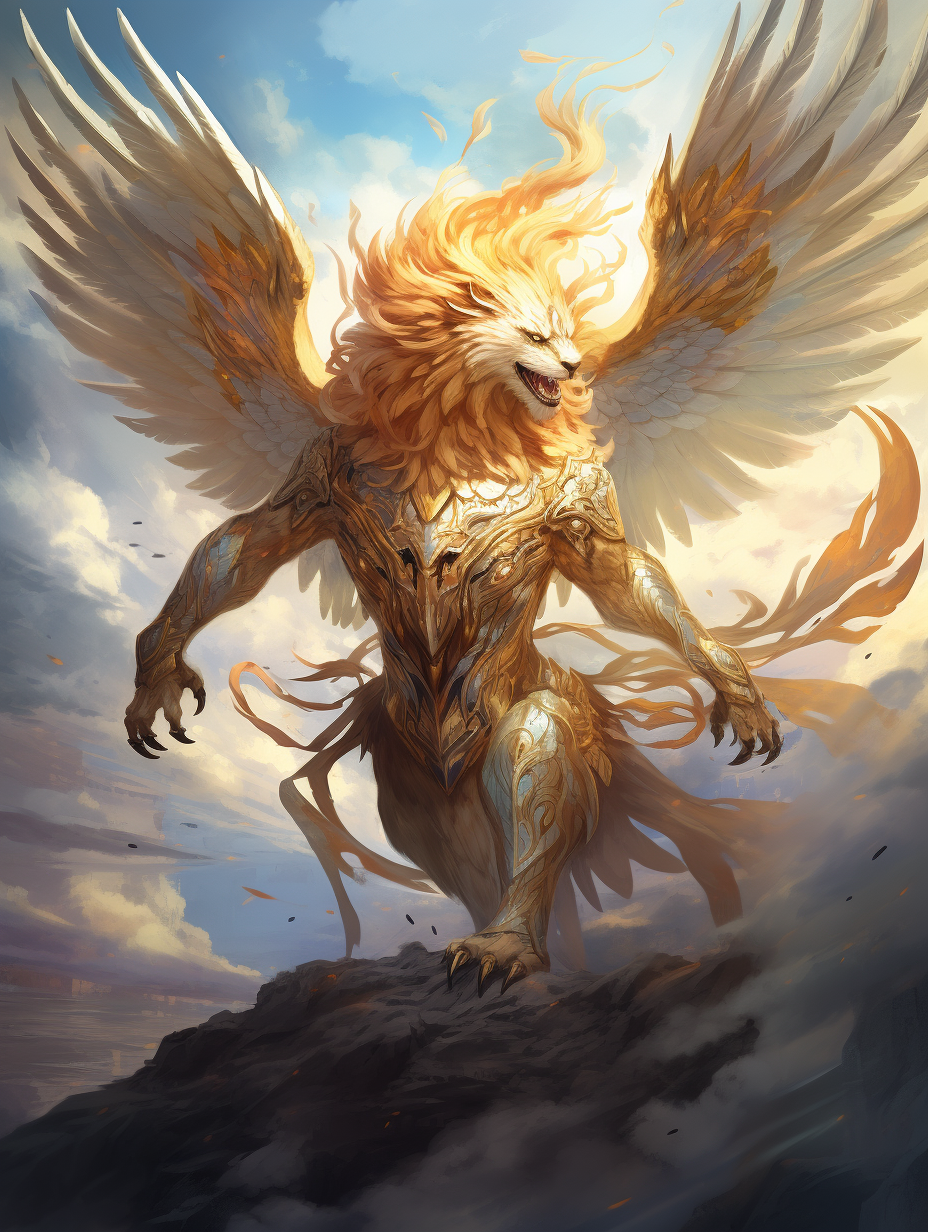
Leonal
Lion-like celestial champion and protector.
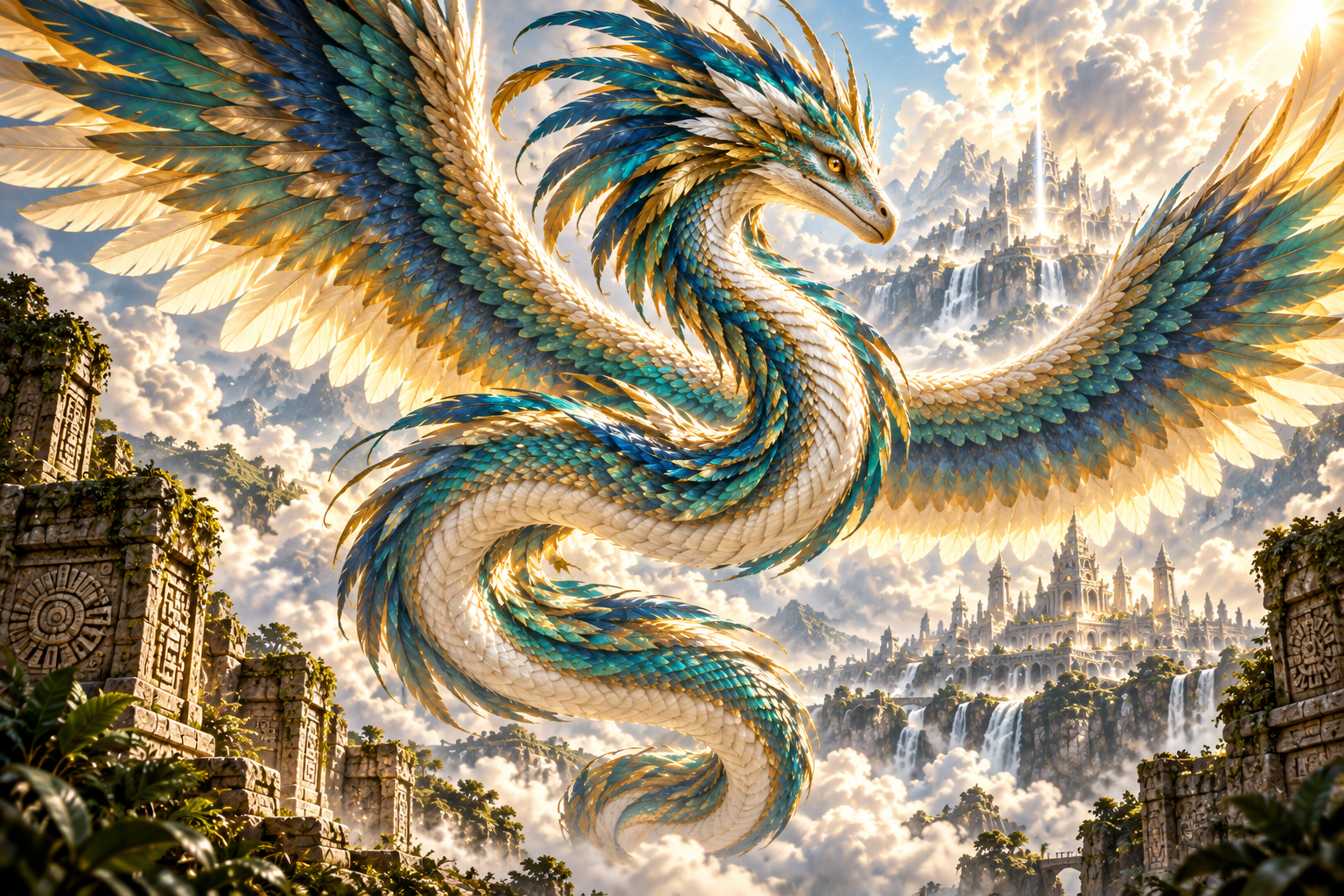
Couatl
Winged serpentine outsider associated with prophecy, guardianship and sacred knowledge.
Beyond the Great Families
Other Notable Outsiders
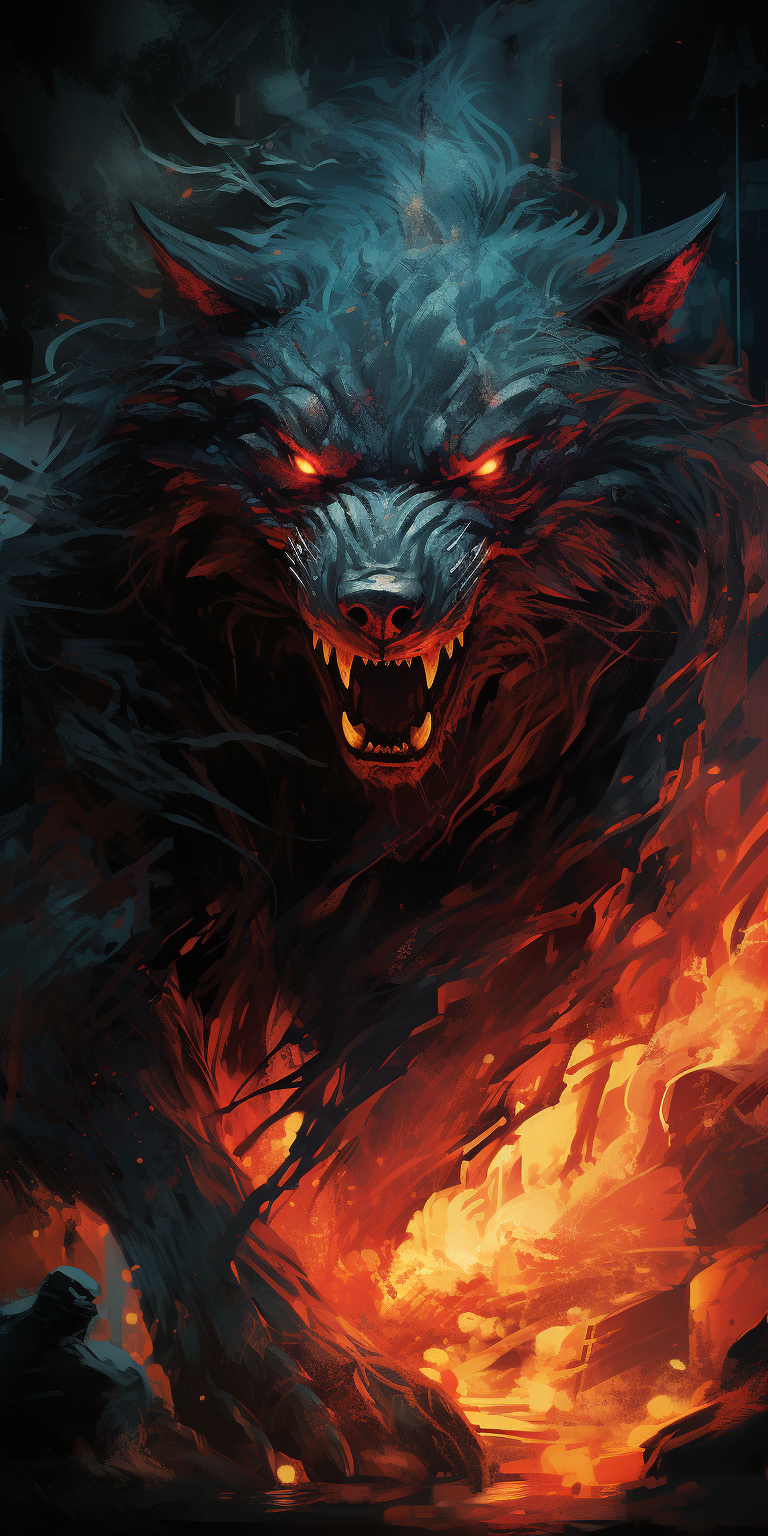
Barghest
A shape-changing fiend and predatory outsider.
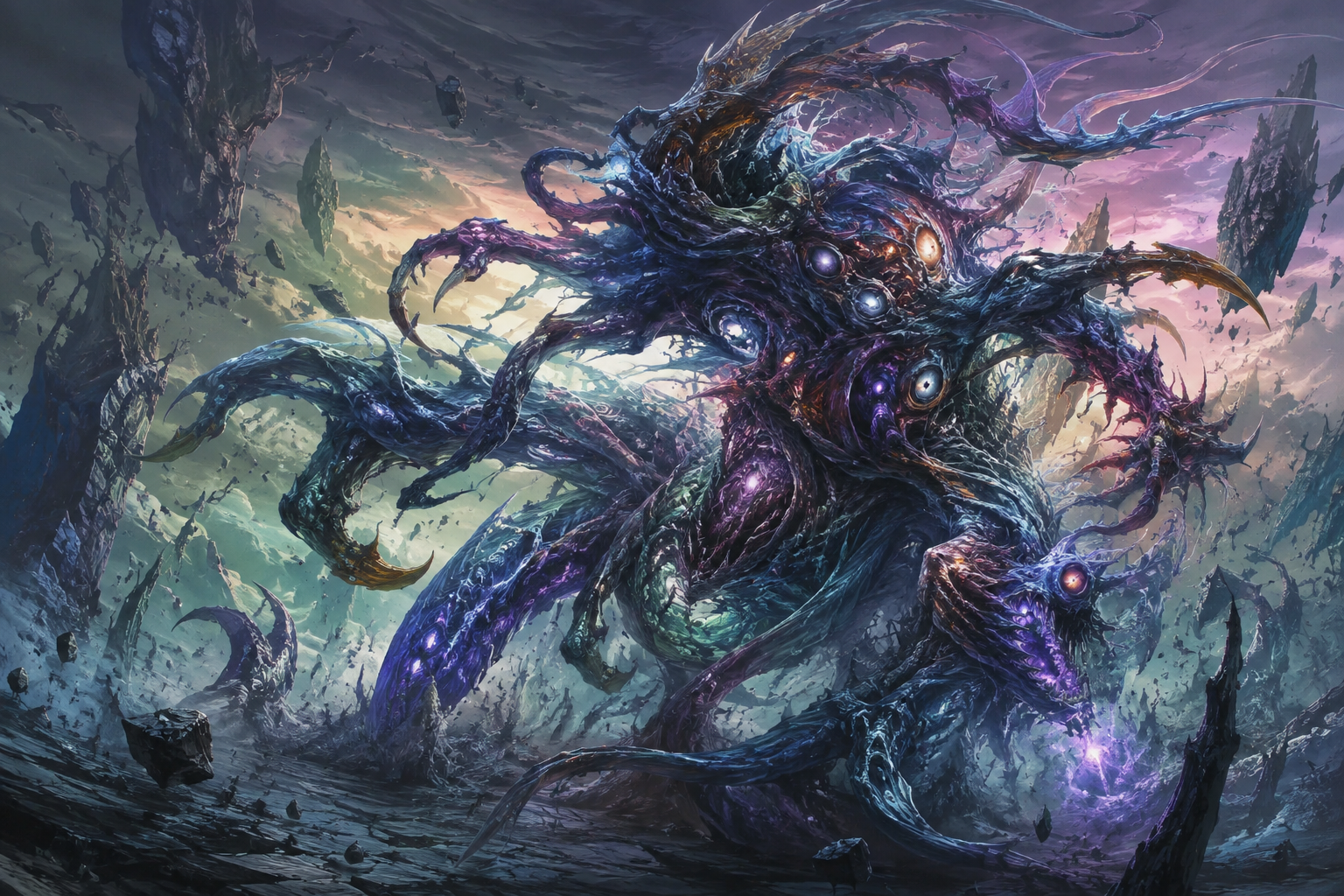
Chaos Beast
A mutable horror whose body reflects the instability of Limbo.
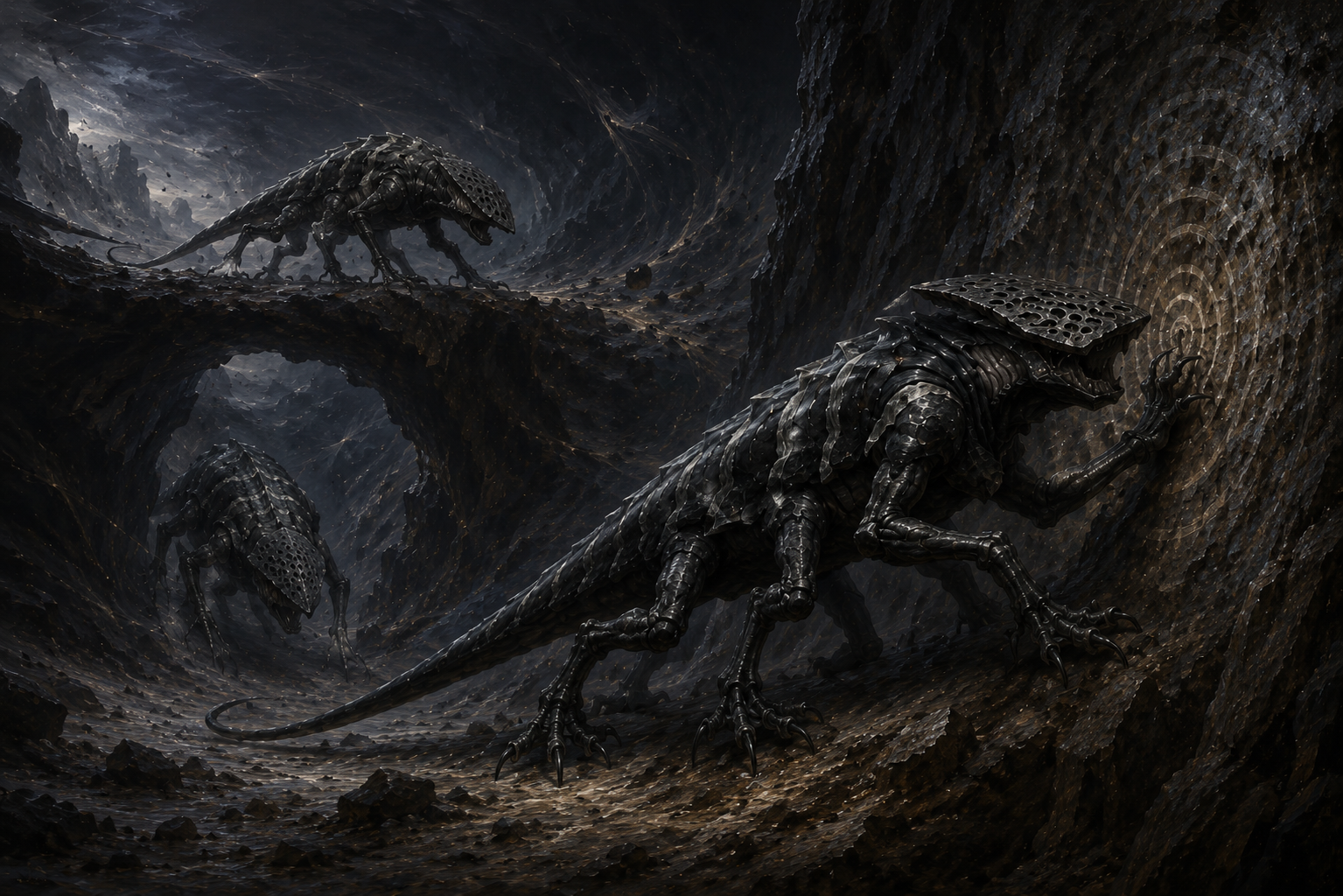
Howler
A pack predator of Pandemonium.
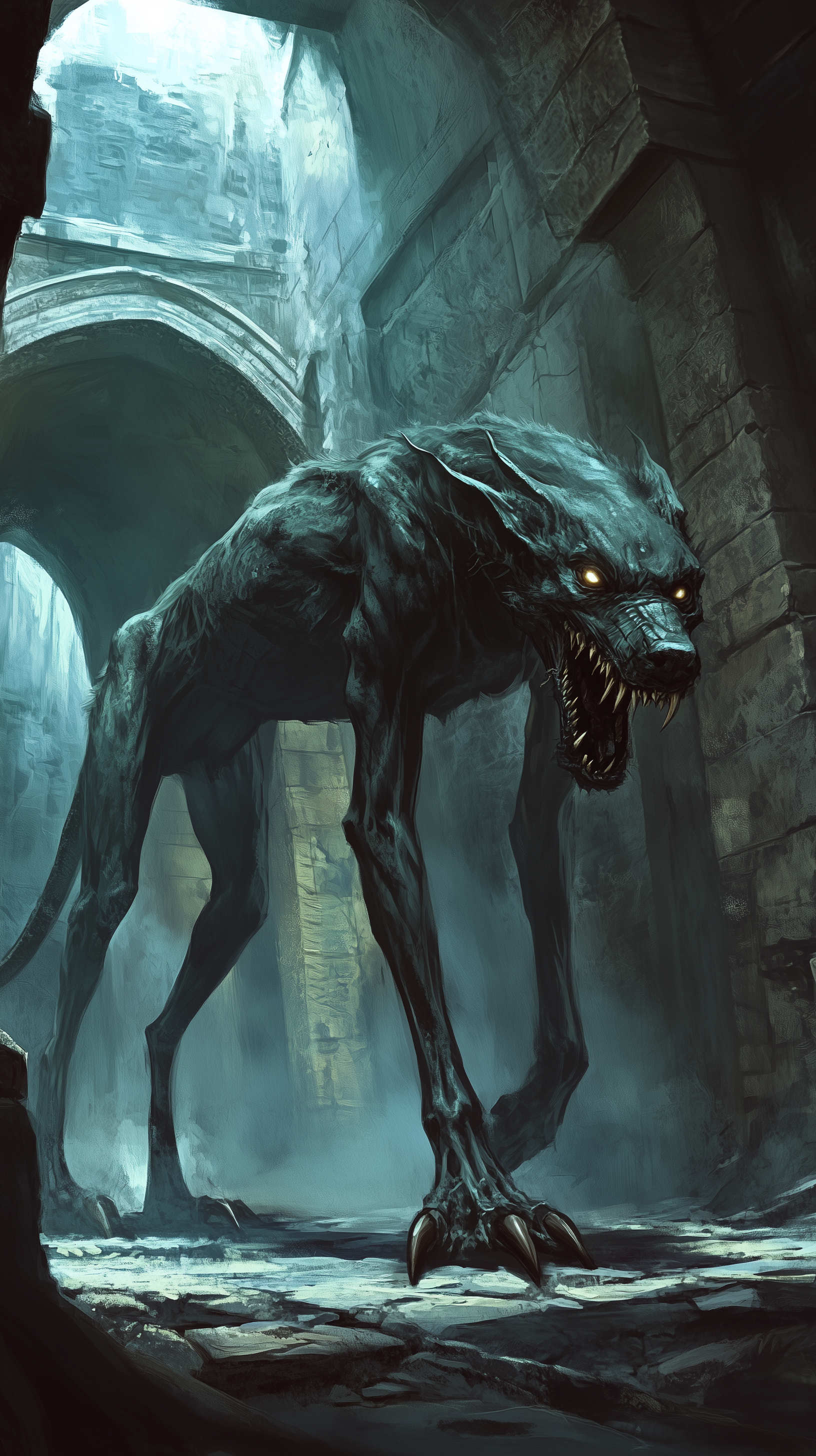
Hound of Tindalos
A supernatural hunter whose pursuit reaches through impossible angles and time.
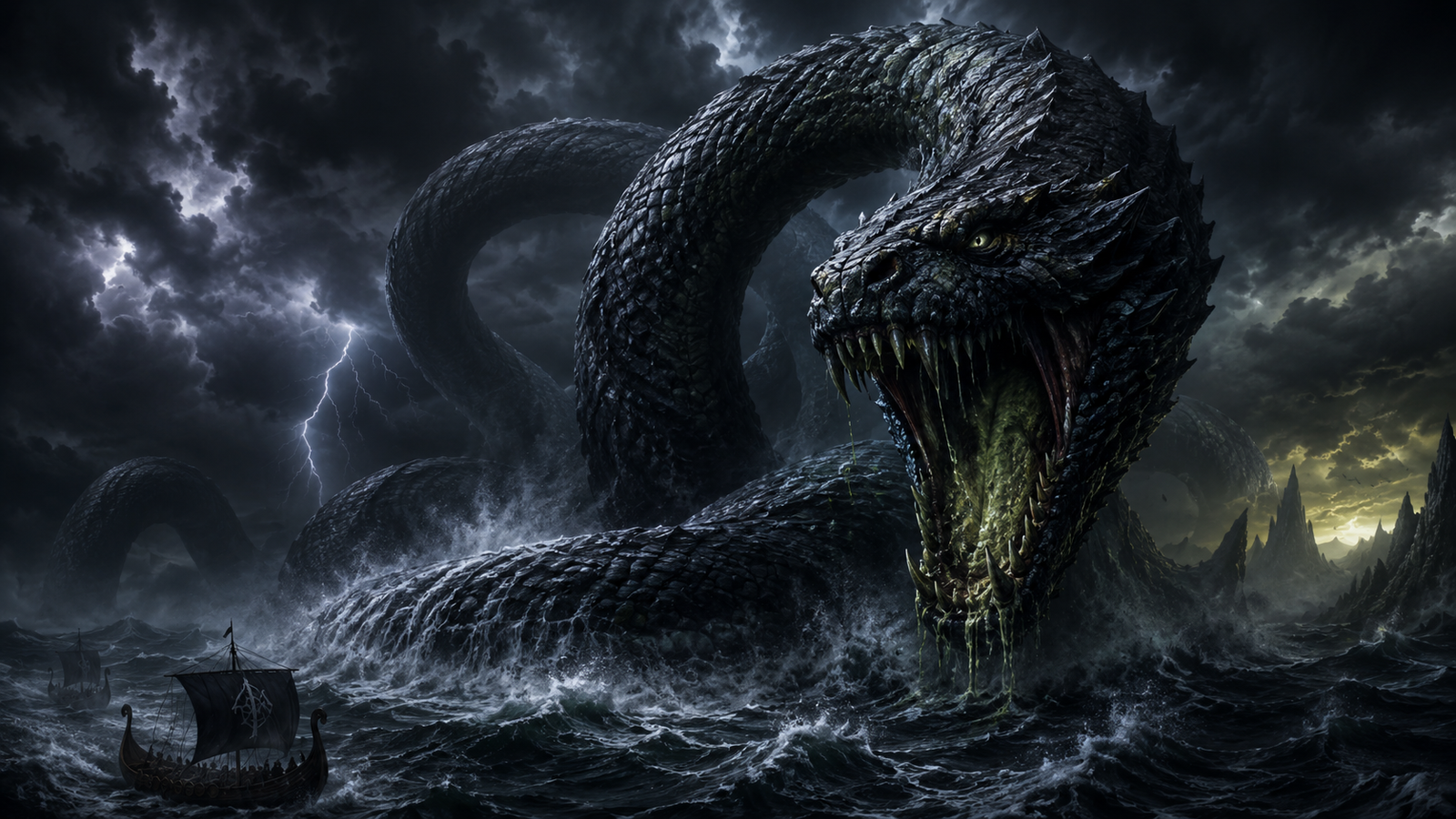
Jörmungandr
The World Serpent, a singular outsider whose fate is bound to the northern cosmic order.
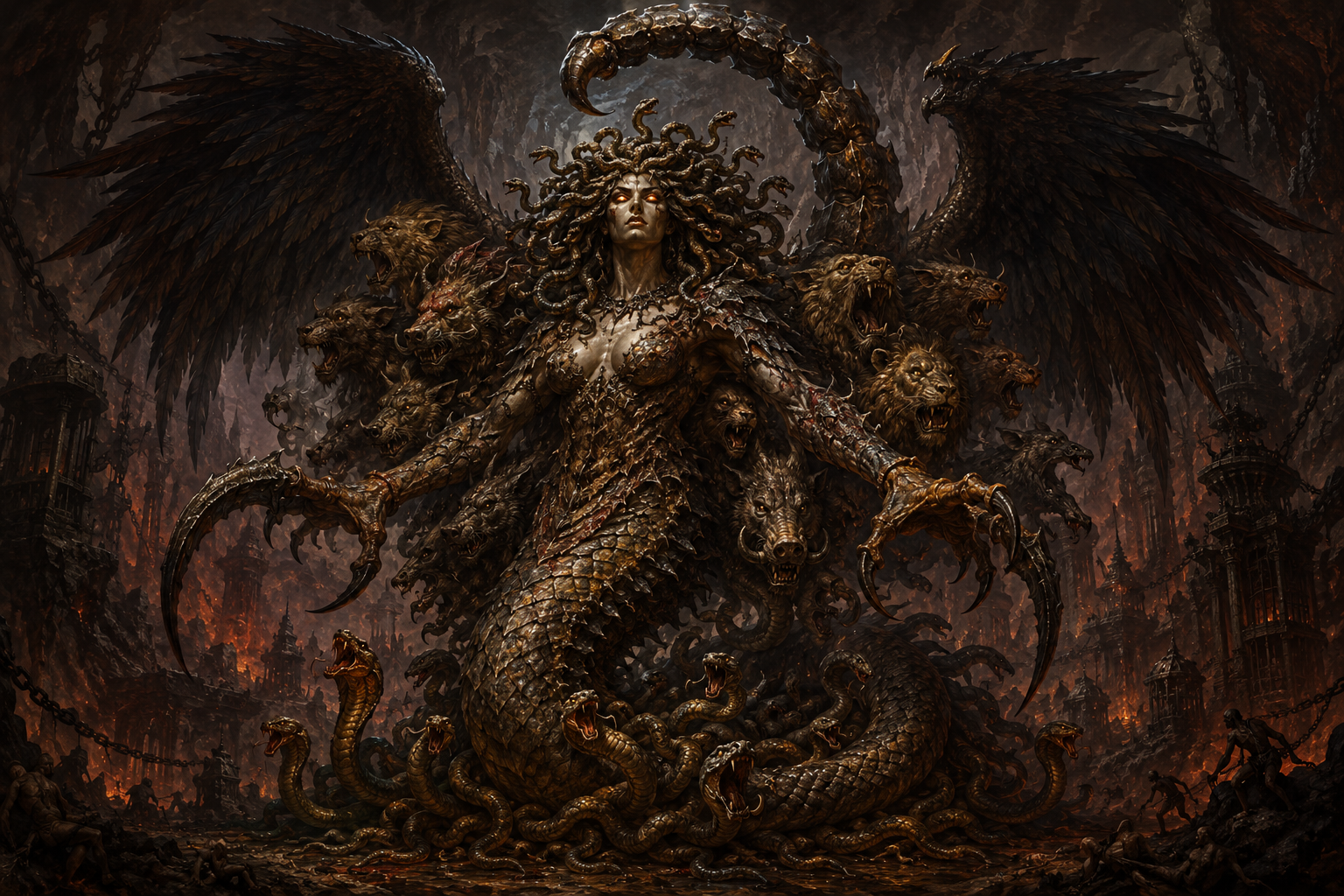
Campe
A primordial jailer associated with Tartarus and the earliest divine wars.
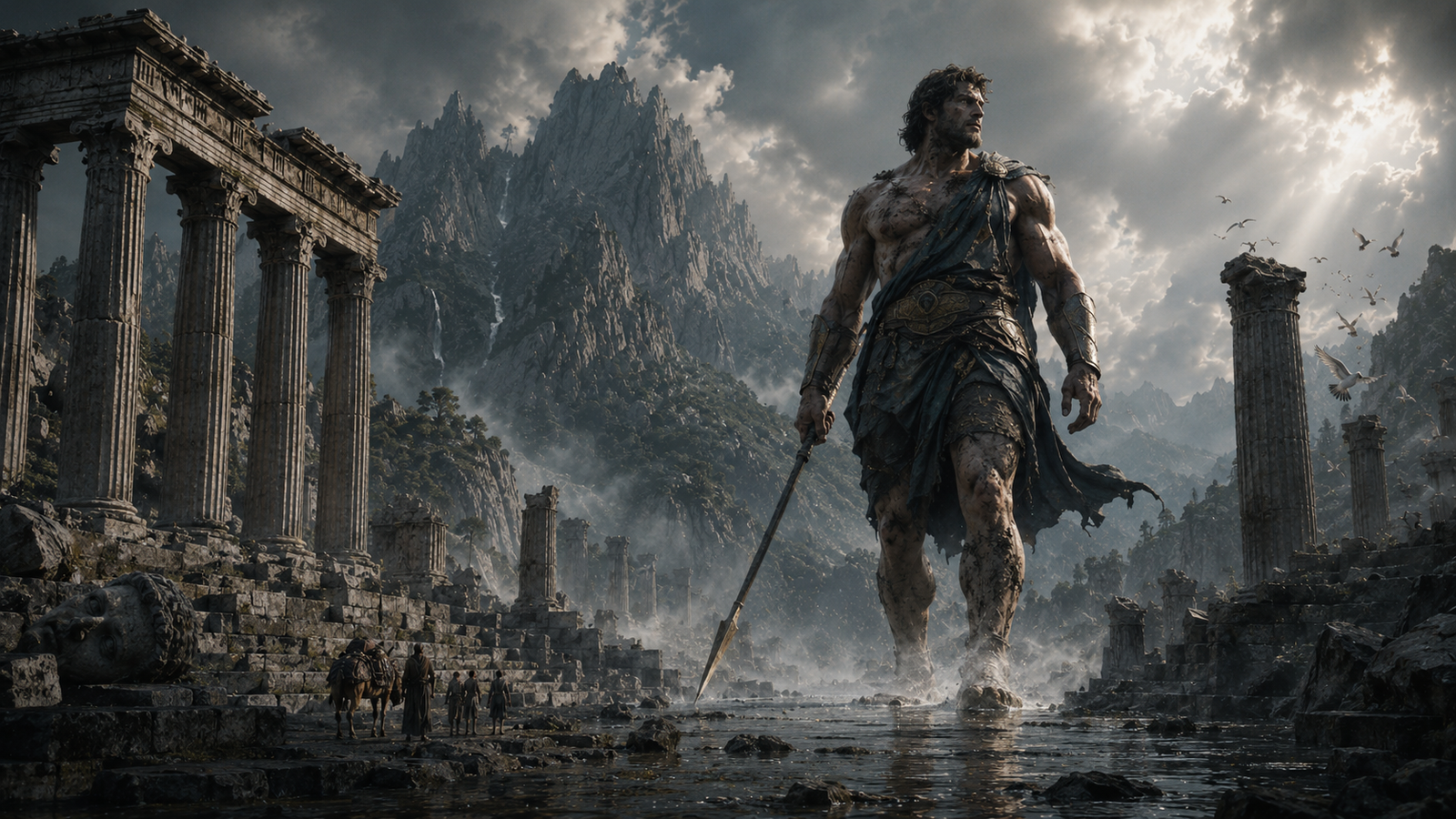
Elder Titan
A primordial titan whose power reaches beyond mortal scale.
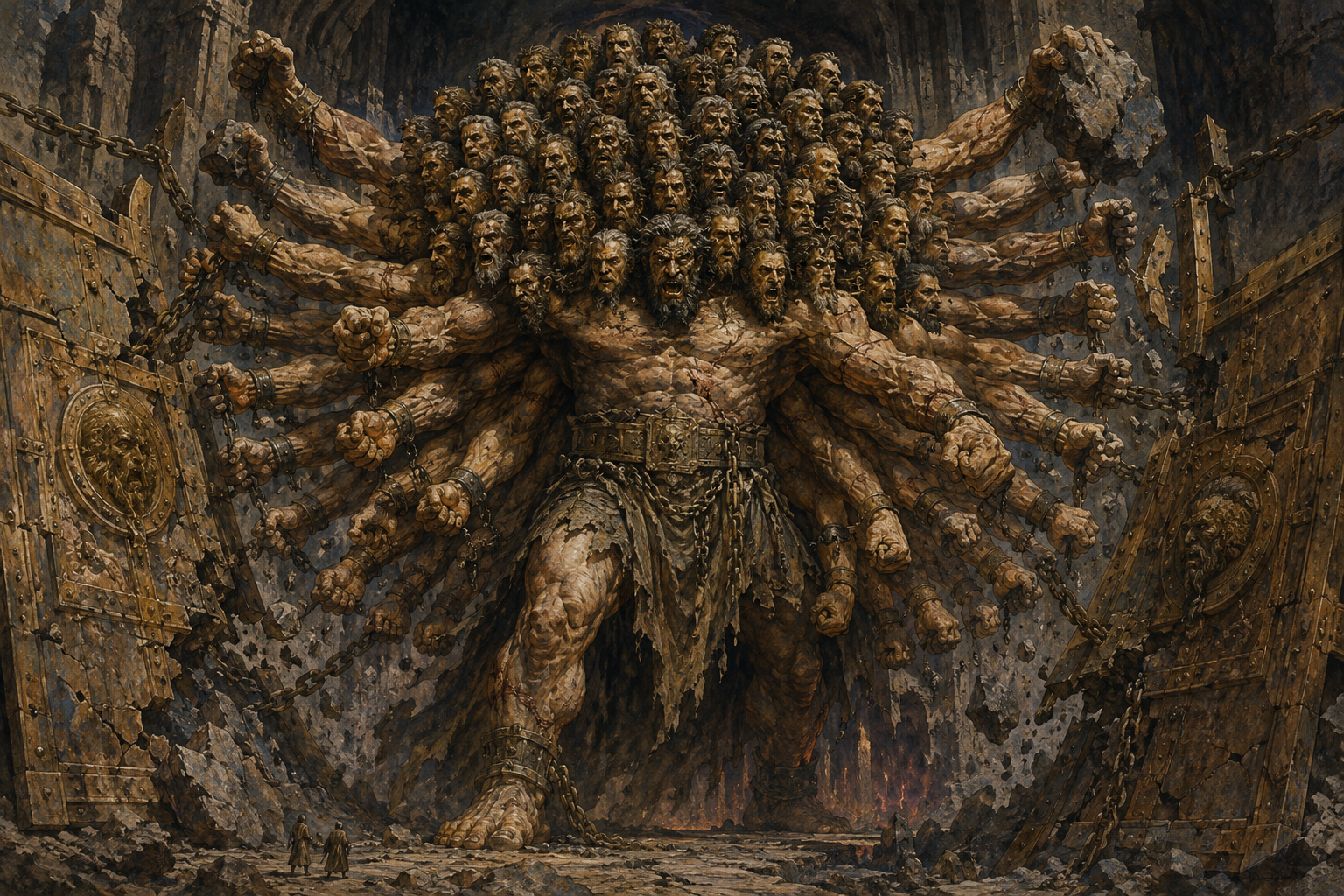
Hecatoncheires
The hundred-handed wardens of Tartarus.
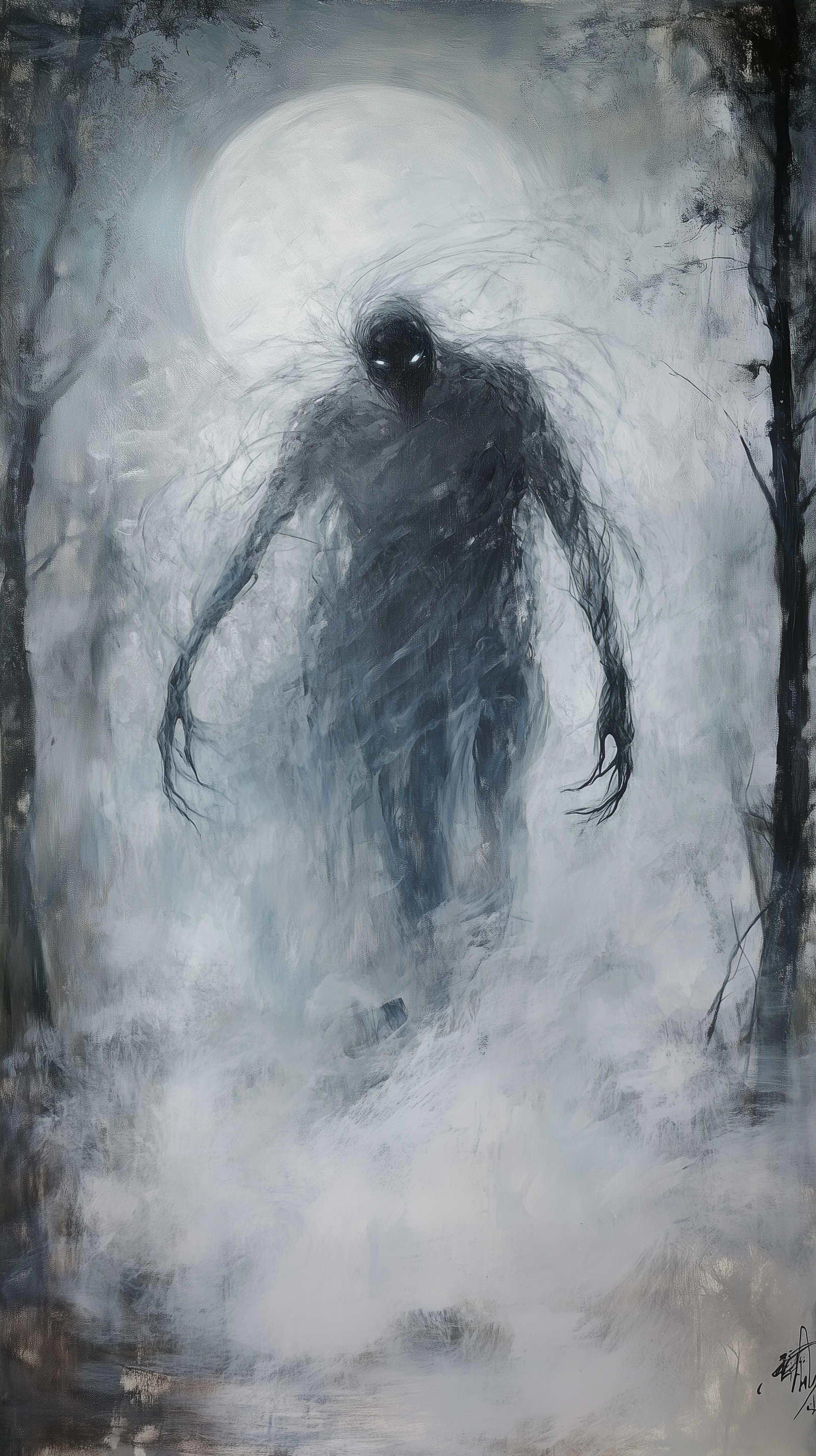
Invisible Stalker
An unseen planar hunter commonly bound through summoning magic.
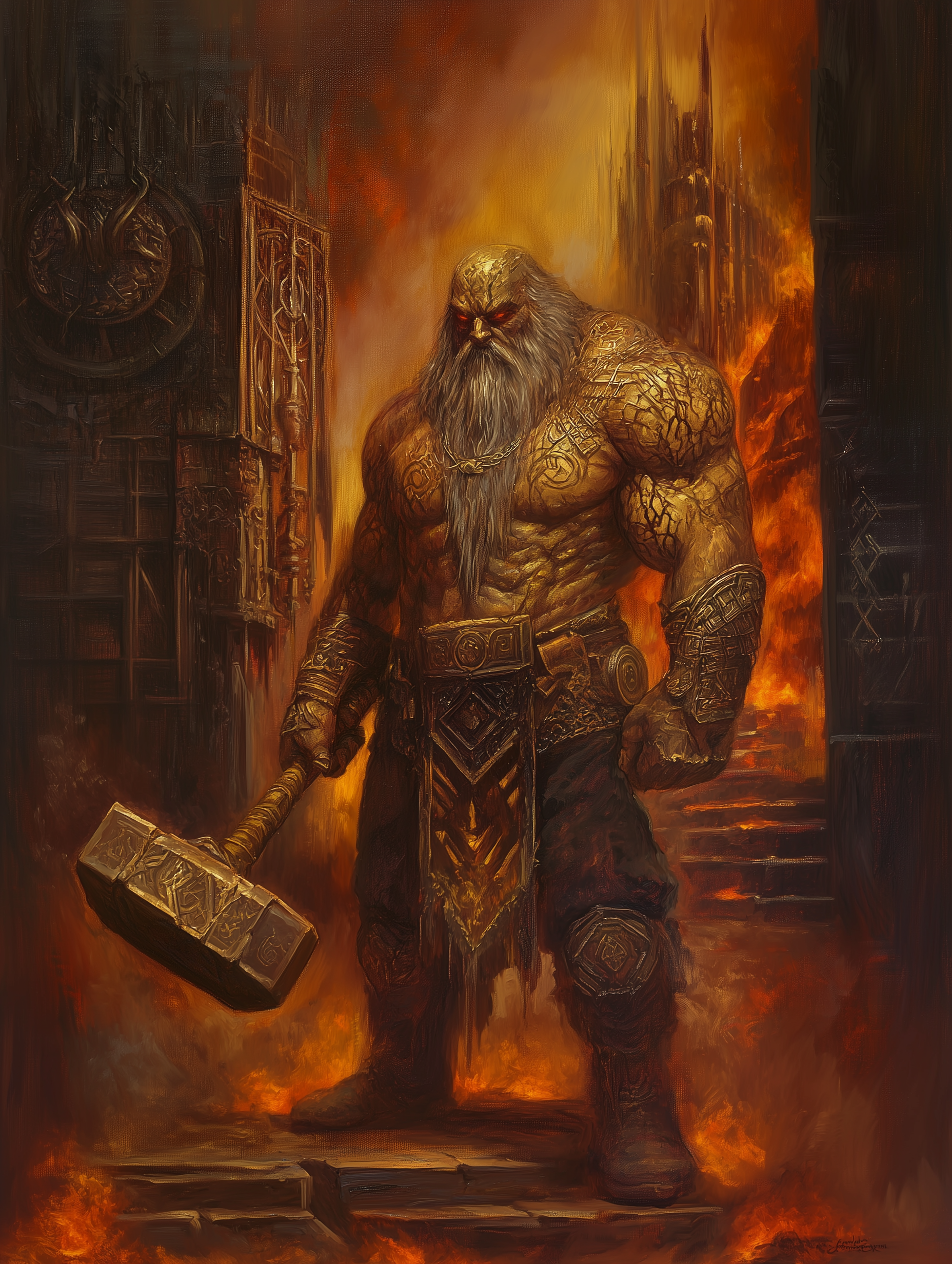
Azer
Fire-touched planar smiths and keepers of living flame.
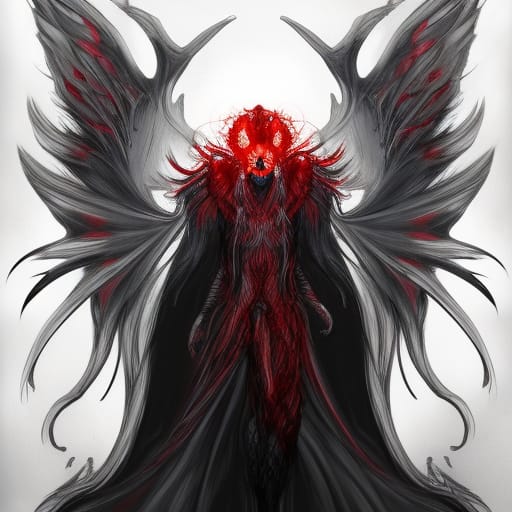
Belker
A smoky air outsider that hunts within choking vapours.
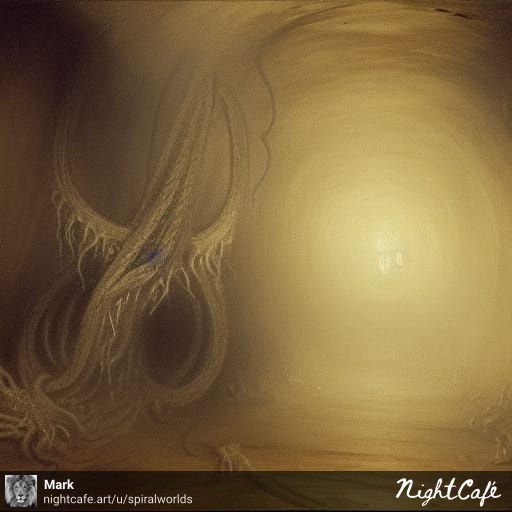
Mihstu
A hostile air outsider formed from violent currents and vaporous substance.
Myth, Folklore & Literature
Older Traditions Behind the Outsiders
The beings gathered here do not come from one historical tradition. Their older roots range across Japanese sacred landscapes, South Asian epic, Mesoamerican feathered-serpent imagery, northern European myth, Greek accounts of primordial powers, Arabian and Persian spirit traditions, English folklore and twentieth-century weird fiction. Those traditions remain distinct even when their creatures meet within the same planar bestiary.
Kami and Sacred Places
Japanese traditions encompass an immense variety of kami, including powers associated with particular places and features of the natural world. Historical accounts of shrine practice describe mountains, rivers, seas, rocks and other features as objects or locations of veneration.
Feathered Serpents
Feathered-serpent imagery has a deep Mesoamerican history. At Teotihuacan, monumental serpent forms combined feathers, rattlesnake imagery and marine symbols; related imagery later appeared across Mesoamerica. That archaeological tradition gives useful historical context for the winged-serpent imagery associated here with the couatl.
See the Metropolitan Museum of Art’s Teotihuacan feathered serpent →
Rakshasas in South Asian Epic
Rakshasas belong to much older South Asian narrative traditions and appear prominently in the great Sanskrit epics. Their portrayals are varied rather than uniform: rulers, warriors, shape-changers and supernatural antagonists all appear within the tradition.
View the British Museum’s Ramayana painting of Rama, Ravana and a rakshasa →
Jörmungandr and the Norse World
In Norse myth Jörmungandr lies in the ocean around Midgard, so vast that the serpent encircles the world. Stories of Thor fishing for the serpent and their final confrontation place the World Serpent within a wider cosmic struggle between gods, giants and destructive forces.
Explore the Viking mythological world at Sweden’s History Museum →
Campe, Titans and the Hundred-Handers
Greek myth places the Hundred-Handers, Titans and the jailer Campe inside the oldest divine conflicts. In the surviving mythographic tradition, Zeus kills Campe, frees the imprisoned allies of the gods and later appoints the Hundred-Handers as guardians of the defeated Titans in Tartarus.
Genies and Jinn Traditions
Genie stories descend from much broader Arabic and Persian traditions concerning jinn: supernatural beings associated with invisibility, transformation, extraordinary movement and encounters with human society. Later folktales and literary collections reshaped those traditions again for new audiences.
Read the Encyclopaedia Iranica overview of genie traditions →
The Barghest of Northern England
The barghest belongs to northern English black-dog folklore, especially traditions recorded in Yorkshire and neighbouring counties. Older accounts describe a terrifying nocturnal hound whose appearance could be treated as an omen of death.
Read the historical Encyclopaedia Britannica account of the barghest →
The Hounds of Tindalos
Unlike the ancient and folkloric beings above, the Hounds of Tindalos have a known modern literary origin. Frank Belknap Long introduced them in the March 1929 issue of Weird Tales, after which they became part of the wider tradition of twentieth-century cosmic horror.
Read the Encyclopedia of Science Fiction entry on Frank Belknap Long →
At the Table
Using Outsiders in Play
Outsider encounters are strongest when the creature’s plane and purpose matter. A devil bargains because hierarchy and contract are weapons. An inevitable pursues a violation because that duty defines it. An elemental prince is not simply a larger elemental; it brings the politics and catastrophes of an entire planar power structure into the campaign.
Summoning, banishment, planar travel, sacred wards and extraplanar alliances should therefore connect to the creature’s actual entry rather than relying on one universal set of assumptions. Edition mechanics belong on the individual monster pages, where stat blocks can remain separate and rules-accurate.