
Barghest — Soul-Eating Fiend and Goblin-Wolf Shapeshifter
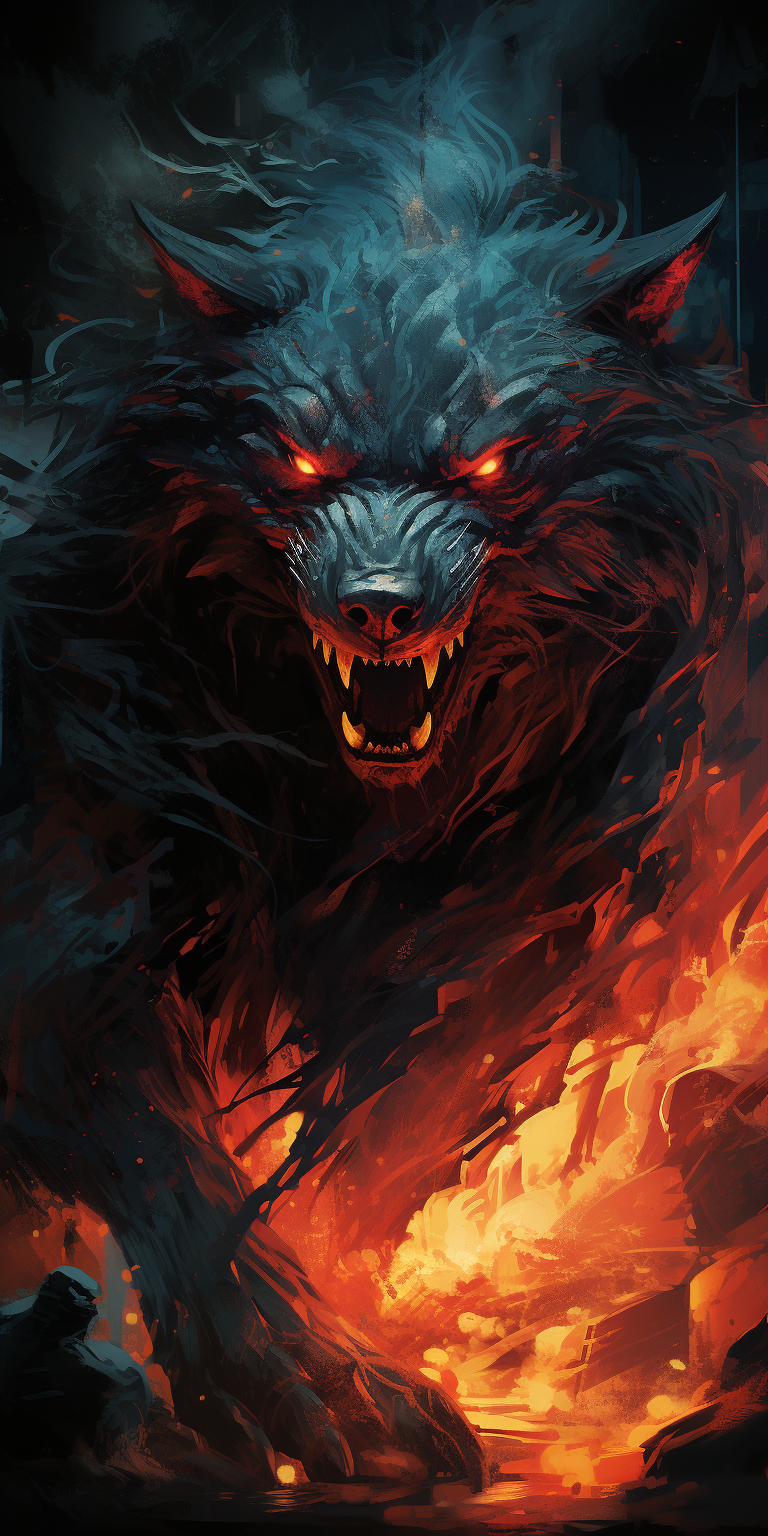
It wears a goblin’s face by day. By night it devours the dead—and takes the soul with the flesh.
The barghest is a lupine fiend that changes shape, stalks lone travellers and hides among goblins. Its wolfish jaws, long grasping forelimbs and unnatural intelligence betray the predator beneath either disguise. It kills for more than meat: its consumption of a body can deny that victim a return from death.
Barghests prefer deception, goblin servants and well-chosen ambush ground to equal combat. An older fiend that has fed on enough victims becomes a greater barghest, a monster powerful enough to rule an entire band.
At a Glance
What the Barghest Does
The barghest watches a road long before attacking. It tests a guard with a familiar voice, recruits goblins with fear and moves along paths that give it an escape. A lone scout may glimpse a huge wolf; a sentry may meet a goblin that knows far too much.
Warning Behaviour
Hounds refuse to follow a scent. Goblin lookouts will not name their leader. The grave of a recent casualty has been opened without spades, and the prints beside it change from wolf to goblin halfway through the woods.
If Violence Starts
It uses spellcraft to divide prey, then strikes an isolated victim. If faced with a stronger opponent, it escapes and returns for the corpse when the party moves on. Guarding the dead is as important as guarding the living.

Run It Tonight — The Missing Watchman
Three goblins offer safe passage through a wood but insist the lamps be extinguished. The next watchfire is still warm yet its guard is missing. His voice calls from the trees, and tracks run from wolf paws to naked goblin feet. The barghest has killed him and needs a few minutes alone with the body to complete its feeding.
Choices. Recover the body, bargain with frightened goblins, lure the fiend into a clearing, block its tunnel or pursue the false voice. Consequence. The corpse may be rescued intact; otherwise, its soul becomes a separate problem. Give fair warnings of this danger before the battle ends.
Tactics and Counterplay
Approach: conceal its identity, spread goblin scouts and choose a victim at the edge of the group. First exchange: use control magic or fear, then bite and claw. Retreat: slip into the trees rather than die for pride. Counterplay: watch over corpses, turn goblins against their master, expose its disguises and prevent its escape.
Only the fifth-edition conversions include the large sustained-fire banishment mechanic; do not silently add it to Pathfinder 1e or 3.5e.
Game Statistics — Four Editions
The same monster appears in all four rulesets, including its greater form. Only the mechanics change. Fifth-edition conversions are original, unofficial and suited to playtesting; the PF1e and 3.5e panels retain their distinct SRD advancement systems.
Barghest — Soul Hunter
CR 4 in each edition. A lone predator or hidden master of goblin scouts.
Barghest
Large Fiend (shapechanger), Neutral Evil — original 2024-compatible encounter conversion
AC 16 (natural armor) · Initiative +2 (12)
HP 90 (12d10+24)
Speed 50 ft. (30 ft. in goblin guise)
18 (+4)
15 (+2)
14 (+2)
13 (+1)
12 (+1)
14 (+2)
Saving Throws Dex +4, Wis +3, Cha +4
Skills Deception +4, Intimidation +4, Perception +5, Stealth +4
Damage Resistances Cold, Fire, Lightning
Damage Immunities Poison
Condition Immunities Poisoned
Senses Darkvision 60 ft.; Passive Perception 15
Languages Common, Goblin, Infernal
CR 4 (1,100 XP); PB +2
Traits
Change Shape. The barghest assumes a goblin guise or its wolf-fiend form once each turn without an action. The goblin form is Small. Other statistics except size and speed are unchanged; equipment does not transform; death restores the true form.
Keen Smell. Advantage on Wisdom (Perception) checks relying on smell.
Soul Feeding. After killing a Humanoid the barghest can spend 1 minute consuming its body, provided death occurred within the last 10 minutes. The corpse is destroyed and the soul is trapped for 24 hours. During that period, an otherwise valid revival attempt succeeds only on 11–20 on a d20; success frees the soul. Killing the barghest also releases the soul before digestion. After 24 hours, ordinary mortal resurrection cannot recover it. Feeding grants no combat healing or extra actions.
Fire Banishment. If it starts its turn in ongoing flames at least 10 feet wide or high, it must succeed on a DC 15 Charisma save or be banished to its native lower plane. Brief fiery blasts are insufficient.
Actions
Multiattack. One Bite and one Claw in true form; two Claws in goblin guise.
Bite. Melee Attack Roll: +6 to hit, reach 5 ft. Hit: 13 (2d8+4) Piercing damage.
Claw. Melee Attack Roll: +6 to hit, reach 5 ft. Hit: 11 (2d6+4) Slashing damage.
Devourer’s Howl (Recharge 5–6). Each hostile creature that hears it within 20 feet makes a DC 14 Wisdom save or becomes Frightened until the end of its next turn.
Bonus Actions
Shadow Stalk. In dim light or darkness, the barghest takes the Hide action.
Spellcasting
Innate Magic. Charisma, save DC 12; at will: levitate, minor illusion; 1/day each: suggestion, dimension door. No material components; standard concentration rules apply.
Unofficial, original 2024-compatible conversion. It is not a reproduced official monster block.
Barghest
Large fiend (shapechanger), Neutral Evil — original 2014-style encounter conversion
Armor Class 16 (natural armor)
Hit Points 90 (12d10+24)
Speed 50 ft. (30 ft. in goblin guise)
18 (+4)
15 (+2)
14 (+2)
13 (+1)
12 (+1)
14 (+2)
Saving Throws Dex +4, Wis +3, Cha +4
Skills Deception +4, Intimidation +4, Perception +5, Stealth +4
Damage Resistances Cold, Fire, Lightning
Damage Immunities Poison
Condition Immunities Poisoned
Senses Darkvision 60 ft.; Passive Perception 15
Languages Common, Goblin, Infernal
Challenge 4 (1,100 XP); PB +2
Traits
Change Shape. The barghest assumes a goblin guise or its wolf-fiend form as an action. The goblin form is Small. Other statistics except size and speed are unchanged; equipment does not transform; death restores the true form.
Keen Smell. Advantage on Wisdom (Perception) checks relying on smell.
Soul Feeding. After killing a Humanoid the barghest can spend 1 minute consuming its body, provided death occurred within the last 10 minutes. The corpse is destroyed and the soul is trapped for 24 hours. During that period, an otherwise valid revival attempt succeeds only on 11–20 on a d20; success frees the soul. Killing the barghest also releases the soul before digestion. After 24 hours, ordinary mortal resurrection cannot recover it. Feeding grants no combat healing or extra actions.
Fire Banishment. If it starts its turn in ongoing flames at least 10 feet wide or high, it must succeed on a DC 15 Charisma save or be banished to its native lower plane. Brief fiery blasts are insufficient.
Actions
Multiattack. One Bite and one Claw in true form; two Claws in goblin guise.
Bite. Melee Weapon Attack: +6 to hit, reach 5 ft. Hit: 13 (2d8+4) Piercing damage.
Claw. Melee Weapon Attack: +6 to hit, reach 5 ft. Hit: 11 (2d6+4) Slashing damage.
Devourer’s Howl (Recharge 5–6). Each hostile creature that hears it within 20 feet makes a DC 14 Wisdom save or becomes Frightened until the end of its next turn.
Bonus Actions
Shadow Stalk. In dim light or darkness, the barghest takes the Hide action.
Spellcasting
Innate Magic. Charisma, save DC 12; at will: levitate, minor illusion; 1/day each: suggestion, dimension door. No material components; standard concentration rules apply.
Unofficial, original 2014-compatible conversion. It is not a reproduced official monster block.
Barghest — CR 4
LE Medium outsider (evil, extraplanar, lawful, shapechanger); Pathfinder 1e
XP 1,200; Init +6; Senses darkvision 60 ft., scent; Perception +11
Defense
AC 17, touch 12, flat-footed 15 (+2 Dex, +5 natural); hp 45 (6d10+12); Fort +6, Ref +7, Will +7; DR 5/magic
Offense
Speed 30 ft.; Melee bite +10 (1d6+4), 2 claws +10 (1d4+4); Special Attacks feed
Spell-Like Abilities (CL 6th): at will—blink, levitate, misdirection; 1/day—charm monster (DC 16), crushing despair (DC 16), dimension door
Statistics
Str 19, Dex 15, Con 15, Int 14, Wis 14, Cha 14; Base Atk +6; CMB +10; CMD 22 (24 vs. trip)
Feats Combat Reflexes, Improved Initiative, Great Fortitude
Skills Acrobatics +11, Bluff +11, Diplomacy +11, Intimidate +11, Perception +11, Sense Motive +11, Stealth +11, Survival +11
Languages Goblin, Infernal; SQ change shape (goblin or wolf, polymorph)
Ecology
Environment any; Organization solitary or cult (one plus goblin tribe); Treasure standard
Special Abilities
Feed (Su). Once monthly, the barghest may consume a nonevil humanoid corpse as a full-round action and gain a growth point. Every point gives +1 on attacks, combat manoeuvre checks, saves and skills, plus 5 maximum hit points. Every two points increase its caster level and CR by 1. At four points it sheds its skin and becomes a greater barghest, losing all growth points.
Tactics
Open with debilitating magic, exploit goblin help and use blink to leave an unfavourable fight.
Barghest — CR 4
Medium Outsider (Evil, Extraplanar, Lawful, Shapechanger); D&D 3.5e SRD
Hit Dice 6d8+6 (33 hp)
Initiative +6
Speed 30 ft. (6 squares)
Armor Class 18 (+2 Dexterity, +6 natural), touch 12, flat-footed 16
Base Attack/Grapple +6/+9
Attack Bite +9 melee (1d6+3)
Full Attack Bite +9 melee (1d6+3) and 2 claws +4 melee (1d4+1)
Space/Reach 5 ft./5 ft.
Special Attacks Spell-like abilities, feed
Special Qualities Change shape, damage reduction 5/magic, Darkvision 60 ft., Scent
Saves Fort +6, Ref +7, Will +7
Abilities Strength 17, Dexterity 15, Constitution 13, Intelligence 14, Wisdom 14, Charisma 14
Skills Bluff +11, Diplomacy +6, Disguise +2 (+4 acting), Hide +11*, Intimidate +13, Jump +12, Listen +11, Move Silently +10, Search +11, Sense Motive +11, Spot +11, Survival +11 (+13 following tracks)
Feats Combat Reflexes, Improved Initiative, Track
Environment An evil-aligned plane
Organization Solitary or pack (3-6)
Challenge Rating 4
Treasure Double standard
Alignment Always lawful evil
Advancement Special (see below)
Level Adjustment –
Spell-Like Abilities
Standard. At will—blink, levitate, misdirection (DC 14), rage (DC 15); 1/day—charm monster (DC 16), crushing despair (DC 16), dimension door. Caster level equals HD.
Special Abilities
Feed (Su). After killing a humanoid, the barghest may consume flesh and life force as a full-round action, destroying the body. A wish, miracle or true resurrection has only a 50% chance to restore the victim. Three corpses with at least the barghest’s current Hit Dice or levels grant it another Hit Die and +1 Strength, Constitution and natural armour, plus normal gains. At 9 HD it becomes a greater barghest.
Change Shape (Su). Standard action to become a goblin or wolf. Goblin form may use equipment but not natural attacks; wolf form keeps Bite but not Claws.
Pass Without Trace (Ex). In wolf form the fiend may use pass without trace as a free action. It also receives a +4 circumstance bonus on Hide in wolf form. Its natural weapons count as magical, lawful and evil when overcoming damage reduction.
Knowledge (the Planes)
DC 16 identifies the goblin-wolf outsider; DC 21 reveals its alternate shapes and DR; DC 26 reveals its magic; DC 31 exposes the feeding and greater barghest transformation. Original site lore thresholds retained.
Greater Barghest — Devourer
Born from feeding, strong enough to lead a goblin tribe. Its Challenge Rating differs by ruleset: 6 / 6 / 7 / 5.
Greater Barghest
Large Fiend (shapechanger), Neutral Evil — original 2024-compatible encounter conversion
AC 17 (natural armor) · Initiative +3 (13)
HP 123 (13d10+52)
Speed 50 ft. (30 ft. in goblin guise)
20 (+5)
16 (+3)
18 (+4)
15 (+2)
14 (+2)
16 (+3)
Saving Throws Dex +6, Con +7, Wis +5, Cha +6
Skills Deception +6, Intimidation +6, Perception +8, Stealth +6
Damage Resistances Cold, Fire, Lightning
Damage Immunities Poison
Condition Immunities Poisoned
Senses Darkvision 60 ft.; Passive Perception 18
Languages Common, Goblin, Infernal
CR 6 (2,300 XP); PB +3
Traits
Change Shape. The barghest assumes a goblin guise or its wolf-fiend form once each turn without an action. The goblin form is hulking; the beast is like a dire wolf. Other statistics except size and speed are unchanged; equipment does not transform; death restores the true form.
Keen Smell. Advantage on Wisdom (Perception) checks relying on smell.
Soul Feeding. After killing a Humanoid the barghest can spend 1 minute consuming its body, provided death occurred within the last 10 minutes. The corpse is destroyed and the soul is trapped for 24 hours. During that period, an otherwise valid revival attempt succeeds only on 11–20 on a d20; success frees the soul. Killing the barghest also releases the soul before digestion. After 24 hours, ordinary mortal resurrection cannot recover it. Feeding grants no combat healing or extra actions.
Fire Banishment. If it starts its turn in ongoing flames at least 10 feet wide or high, it must succeed on a DC 15 Charisma save or be banished to its native lower plane. Brief fiery blasts are insufficient.
Actions
Multiattack. One Bite and two Claws in true form; two Claws in goblin guise.
Bite. Melee Attack Roll: +8 to hit, reach 5 ft. Hit: 16 (2d10+5) Piercing damage.
Claw. Melee Attack Roll: +8 to hit, reach 5 ft. Hit: 12 (2d6+5) Slashing damage.
Terror of the Pack (Recharge 5–6). Each hostile creature that hears it within 30 feet makes a DC 15 Wisdom save or becomes Frightened for 1 minute, repeating the save at the end of each turn.
Bonus Actions
Shadow Stalk. In dim light or darkness, the barghest takes the Hide action.
Spellcasting
Innate Magic. Charisma, save DC 14; at will: levitate, minor illusion; 1/day each: suggestion, dimension door, invisibility. No material components; standard concentration rules apply.
Unofficial, original 2024-compatible conversion. It is not a reproduced official monster block.
Greater Barghest
Large fiend (shapechanger), Neutral Evil — original 2014-style encounter conversion
Armor Class 17 (natural armor)
Hit Points 123 (13d10+52)
Speed 50 ft. (30 ft. in goblin guise)
20 (+5)
16 (+3)
18 (+4)
15 (+2)
14 (+2)
16 (+3)
Saving Throws Dex +6, Con +7, Wis +5, Cha +6
Skills Deception +6, Intimidation +6, Perception +8, Stealth +6
Damage Resistances Cold, Fire, Lightning
Damage Immunities Poison
Condition Immunities Poisoned
Senses Darkvision 60 ft.; Passive Perception 18
Languages Common, Goblin, Infernal
Challenge 6 (2,300 XP); PB +3
Traits
Change Shape. The barghest assumes a goblin guise or its wolf-fiend form as an action. The goblin form is hulking; the beast is like a dire wolf. Other statistics except size and speed are unchanged; equipment does not transform; death restores the true form.
Keen Smell. Advantage on Wisdom (Perception) checks relying on smell.
Soul Feeding. After killing a Humanoid the barghest can spend 1 minute consuming its body, provided death occurred within the last 10 minutes. The corpse is destroyed and the soul is trapped for 24 hours. During that period, an otherwise valid revival attempt succeeds only on 11–20 on a d20; success frees the soul. Killing the barghest also releases the soul before digestion. After 24 hours, ordinary mortal resurrection cannot recover it. Feeding grants no combat healing or extra actions.
Fire Banishment. If it starts its turn in ongoing flames at least 10 feet wide or high, it must succeed on a DC 15 Charisma save or be banished to its native lower plane. Brief fiery blasts are insufficient.
Actions
Multiattack. One Bite and two Claws in true form; two Claws in goblin guise.
Bite. Melee Weapon Attack: +8 to hit, reach 5 ft. Hit: 16 (2d10+5) Piercing damage.
Claw. Melee Weapon Attack: +8 to hit, reach 5 ft. Hit: 12 (2d6+5) Slashing damage.
Terror of the Pack (Recharge 5–6). Each hostile creature that hears it within 30 feet makes a DC 15 Wisdom save or becomes Frightened for 1 minute, repeating the save at the end of each turn.
Bonus Actions
Shadow Stalk. In dim light or darkness, the barghest takes the Hide action.
Spellcasting
Innate Magic. Charisma, save DC 14; at will: levitate, minor illusion; 1/day each: suggestion, dimension door, invisibility. No material components; standard concentration rules apply.
Unofficial, original 2014-compatible conversion. It is not a reproduced official monster block.
Greater Barghest — CR 7
LE Large outsider (evil, extraplanar, lawful, shapechanger); Pathfinder 1e
XP 3,200; Init +6; Senses darkvision 60 ft., scent; Perception +16
Defense
AC 20, touch 11, flat-footed 18 (+2 Dex, +9 natural, −1 size); hp 85 (9d10+36); Fort +9, Ref +10, Will +10; DR 10/magic
Offense
Speed 40 ft.; Melee bite +14 (1d8+6), 2 claws +14 (1d6+6)
Spell-Like Abilities (CL 9th): at will—blink, invisibility sphere, levitate, misdirection; 1/day—charm monster (DC 18), crushing despair (DC 18), dimension door, mass bull’s strength, mass enlarge person
Statistics
Str 23, Dex 15, Con 19, Int 18, Wis 18, Cha 18; Base Atk +9; CMB +16; CMD 28 (32 vs. trip)
Feats Combat Casting, Combat Reflexes, Improved Initiative, Great Fortitude, Lightning Reflexes
Skills Acrobatics +14, Bluff +16, Climb +15, Diplomacy +16, Intimidate +16, Perception +16, Sense Motive +16, Stealth +10, Survival +16, Swim +15
Languages Common, Goblin, Infernal; SQ change shape (goblin or wolf, polymorph)
Ecology
Environment any; Organization solitary or cult (one plus goblin tribe); Treasure standard
Tactics
Rule the goblins through fear, spread out its enemies with spells and strike when it can isolate a victim. It is a separate creature, not a temporary power-up.
Greater Barghest — CR 5
Large Outsider (Evil, Extraplanar, Lawful, Shapechanger); D&D 3.5e SRD
Hit Dice 9d8+27 (67 hp)
Initiative +6
Speed 40 ft. (8 squares)
Armor Class 20 (-1 size, +2 Dexterity, +9 natural), touch 11, flat-footed 18
Base Attack/Grapple +9/+18
Attack Bite +13 melee (1d8+5)
Full Attack Bite +13 melee (1d8+5) and 2 claws +8 melee (1d6+2)
Space/Reach 10 ft./5 ft.
Special Attacks Spell-like abilities, feed
Special Qualities Change shape, damage reduction 10/magic, Darkvision 60 ft., Scent
Saves Fort +9, Ref +8, Will +10
Abilities Strength 20, Dexterity 15, Constitution 16, Intelligence 18, Wisdom 18, Charisma 18
Skills Bluff +16, Climb +17, Concentration +15, Diplomacy +8, Disguise +4 (+6 acting), Hide +10*, Intimidate +18, Jump +21, Listen +16, Move Silently +14, Sense Motive +16, Spot +16 Survival +16 (+18 following tracks), Tumble +16
Feats Combat Casting, Combat Reflexes, Improved Initiative, Track
Environment An evil-aligned plane
Organization Solitary or pack (3-6)
Challenge Rating 5
Treasure Double standard
Alignment Always lawful evil
Advancement Special (see below)
Level Adjustment –
Spell-Like Abilities
Standard. At will—blink, levitate, misdirection (DC 14), rage (DC 15); 1/day—charm monster (DC 16), crushing despair (DC 16), dimension door. Caster level equals HD.
Greater additions. At will—invisibility sphere; 1/day—mass bull’s strength, mass enlarge person. Save DC 14 + spell level.
Special Abilities
Feed (Su). After killing a humanoid, the barghest may consume flesh and life force as a full-round action, destroying the body. A wish, miracle or true resurrection has only a 50% chance to restore the victim. Three corpses with at least the barghest’s current Hit Dice or levels grant it another Hit Die and +1 Strength, Constitution and natural armour, plus normal gains. A greater barghest may grow as far as 18 HD.
Change Shape (Su). Standard action to become a Large goblin-like creature or a dire wolf. Goblin form may use equipment but not natural attacks; wolf form keeps Bite but not Claws.
Pass Without Trace (Ex). In wolf form the fiend may use pass without trace as a free action. It also receives a +4 circumstance bonus on Hide in wolf form. Its natural weapons count as magical, lawful and evil when overcoming damage reduction.
Weapon Combat. A greater barghest can use a magic two-handed weapon in place of claws, attacking at +13/+8 and making a secondary bite at +8.
Growth and Ecology
Pathfinder 1e: a barghest earns growth points from feeding, and becomes greater on reaching four points. D&D 3.5e: it advances in Hit Dice by consuming suitable humanoids, becoming greater at 9 HD. Fifth edition: the original conversions emphasise stolen souls and present the greater form as a different encounter. Never combine the three progression rules.
A barghest can dominate a tribe without admitting what it truly is. Its lair holds hidden routes, victims’ keepsakes and the signs of repeated feasts; its power rests on what goblins are afraid to reveal.
Choosing a Barghest for Your Game
| Ruleset | Barghest | Greater Barghest | Feeding rule |
|---|---|---|---|
| D&D 5.5e / 2024 | CR 4 | CR 6 | Soul feeding; original conversion |
| D&D 5e / 2014 | CR 4 | CR 6 | Soul feeding; original conversion |
| Pathfinder 1e | CR 4 | CR 7 | Growth points |
| D&D 3.5e | CR 4 | CR 5 | Hit Dice gained from feeding |
Use the standard fiend as an ambush threat; use its greater form as a commander whose goblins and prisoners complicate a direct fight. Challenge Ratings cannot be compared numerically across rulesets.
GM Checklist — Run the Hunt
- Give the party a clear objective: rescue the missing watchman or recover the body before the fiend feeds.
- Show at least two fair clues: changing tracks, missing corpses, frightened goblin servants, or a dark watchfire.
- Let players choose how to engage: hunt, bargain, set a watch, cut off a tunnel, or protect the grave.
- Run combat with the selected edition only; do not apply PF growth points and 3.5e Hit Dice feeding at once.
- Resolve the corpse and soul before wrapping up the encounter. Any surviving goblins know where the fiend goes next.
Looking for the right companions or rivals? Compare the Goblin, Worg, and Dire Wolf. The Outsiders collection offers stronger planar threats.
Encounter Builder
Scout: one barghest and frightened goblin watchers beside a ravine, with tracks and an unused fire as clues. Lair: a broken watchtower with three ways in, one concealed way out and a body hidden in its lowest room. Greater threat: a goblin camp demands tribute in captives. Rescue, negotiation and battle are equally possible approaches.
Treasure: stolen travel gear, a tribal chief’s tribute, a map of safe routes and messages identifying the next victims. The barghest’s greatest prize is prey, not gold.
Rumours and Adventure Hooks
- The Unburied. A healer asks adventurers to recover a watchman’s remains.
- The Honest Goblin. A goblin scout offers its master’s true name in exchange for sanctuary.
- The Empty Pyre. A village’s funeral fire is dismantled overnight and the body vanishes.
- The Second Skin. A wolf hide hangs in the chief’s tent, though nobody hunted a wolf.
- The Pact’s Debt. A lower-plane agent offers payment to recover a trapped soul.
- Five Names. A goblin list contains five villagers, each with a date of disappearance.
Mythical and Historical Context
The barghest or barguest of northern English tradition is a black spectral hound associated with Yorkshire, the neighbourhood of York, Troller’s Gill and omens of death. The folklore apparition is not the same as the goblin-devouring fiend of the fantasy game: the latter borrows a name and canine terror, but has a different invented origin and feeding mechanics.
William Henderson collected the northern spirit-hound material in Notes on the Folk-Lore of the Northern Counties of England and the Borders (1866). Compare the Black Dog and Black Shuck for spectral hounds, not for other editions of this fiend.
Related Monsters, Places and Spells
Outsiders bestiary · Goblins · Worgs · Dire Wolves · Dimension Door · Crushing Despair · Pass Without Trace · England

Barghest FAQ
Is a barghest undead, fey or a fiend?
It is a fiend in both fifth-edition conversions and an outsider in Pathfinder 1e and D&D 3.5e. The folklore black dog is a separate supernatural tradition, not a reason to change this monster to undead or fey.
Can a barghest become a goblin?
Yes. It assumes a goblin guise to infiltrate camps or command goblin servants. The exact change-shape action and attack options depend on which edition tab you are using.
How does a barghest become a greater barghest?
In Pathfinder 1e it gains growth points from eligible feeding and transforms at four. In D&D 3.5e it advances by consuming suitable humanoids until it reaches 9 Hit Dice. In the fifth-edition conversions the greater creature has a separate complete stat block.
Can someone devoured by a barghest be resurrected?
That is one of the monster’s defining dangers. The edition-specific feeding power determines which magic can restore the dead; read the selected rules panel before deciding the outcome. A party that protects a corpse may deny the fiend its reward altogether.
Rules Sources and Credits
D&D 3.5e: Barghest and Greater Barghest SRD, Open Game Content under OGL v1.0a. The existing 3.5e statistics, both sizes and lore thresholds are retained and reorganised.
Pathfinder 1e: Barghest and Greater Barghest.
Fifth edition: original unofficial 2014- and 2024-compatible conversions; not an official reproduced monster block. Encounter balance merits table playtesting.
Illustration: All three original Barghest illustrations remain clickable at full size, with their original Midjourney attribution preserved. Optional viewing: Barghest lore video.
Keep this reference growing
If this page helped with your reading or game, you can support its upkeep or explore the curated books.
Explore the Bookshop — epics, classics and stories behind imagined worlds.