
Worg — Intelligent Pack Hunter
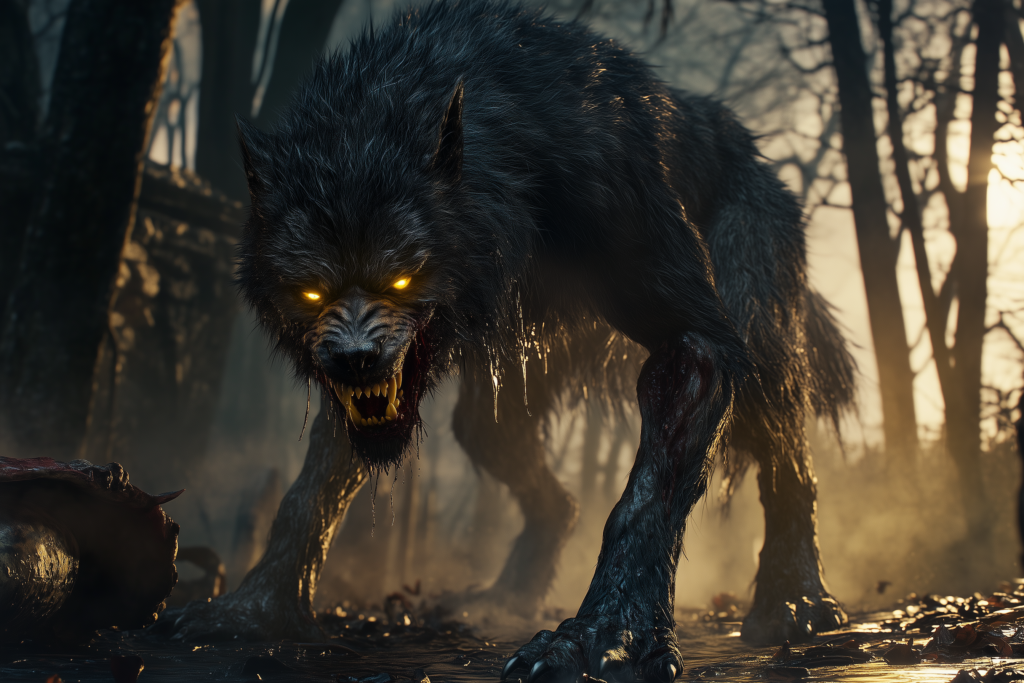
The wolf on the ridge calls out in Goblin. Its companions stop chasing the mule and circle behind the travellers. They are not animals waiting for commands: they have chosen their ground and are negotiating over who gets to leave.
Worgs are intelligent, speaking predators related to winter wolves, but smaller and without freezing breath. They can keep grudges, remember patrol routes, and make bargains with riders who treat them as partners rather than livestock.
At the Table
- Sign: Heavy wolf tracks stop at the same crossroads on successive nights; nearby goblin footprints never seem to lead the way.
- Want: A meal, secure hunting ground, or payment for carrying a goblin patrol.
- Avoid fighting: Offer passage terms, protect the weakest traveller, or threaten to reveal its den to a rival pack.
- First combat move: One Worg threatens the rear while another bites an exposed victim, giving the rider or packmate an opening in 2024; in 2014 it may knock the victim down.
Worg Game Statistics — Four Editions
Choose the rules for your game. The 2024 Worg no longer uses the 2014 knockdown attack; Pathfinder and 3.5e have distinct Medium-sized stat blocks and trip mechanics.
Worg — D&D 2024
Large Fey, Neutral Evil · CR 1/2 (100 XP); PB +2. Standard SRD 5.2.1 Worg.
AC 13; Initiative +1 (11); HP 26 (4d10 + 4); Speed 50 ft.
| STR | DEX | CON | INT | WIS | CHA |
|---|---|---|---|---|---|
| 16 (+3) | 13 (+1) | 13 (+1) | 7 (−2) | 11 (+0) | 8 (−1) |
Skills Perception +4; Senses Darkvision 60 ft., passive Perception 14; Languages Goblin, Worg.
Actions
Bite. Melee Attack Roll: +5, reach 5 ft., one target. Hit: 7 (1d8 + 3) Piercing damage. The next attack roll against that target before the start of the Worg’s next turn has Advantage.
Habitat and Treasure
Forest, grassland, hill and planar (Feywild); standard treasure none. The 2024 type is Fey, not Monstrosity. The Bite helps the next attacker; it does not automatically knock the victim Prone.
Worg — D&D 2014
Large Monstrosity, Neutral Evil · CR 1/2 (100 XP). Standard 2014 SRD 5.1 Worg.
AC 13 (natural armour); HP 26 (4d10 + 4); Speed 50 ft.
| STR | DEX | CON | INT | WIS | CHA |
|---|---|---|---|---|---|
| 16 (+3) | 13 (+1) | 13 (+1) | 7 (−2) | 11 (+0) | 8 (−1) |
Skills Perception +4; Senses Darkvision 60 ft., passive Perception 14; Languages Goblin, Worg.
Traits
Keen Hearing and Smell. The Worg has Advantage on Wisdom (Perception) checks that rely on hearing or smell.
Actions
Bite. Melee Weapon Attack: +5 to hit, reach 5 ft., one target. Hit: 10 (2d6 + 3) piercing damage. A creature hit must succeed on a DC 13 Strength saving throw or be knocked Prone.
Edition difference: The 2014 bite is harder-hitting and may knock down its target; the 2024 bite deals less damage but sets up a companion’s attack. These are different rules for the same creature.
Worg — Pathfinder 1e
NE Medium Magical Beast · CR 2 (600 XP); Pathfinder RPG Bestiary.
Initiative +2; Senses darkvision 60 ft., low-light vision, scent; Perception +11.
Defense
AC 14, touch 12, flat-footed 12 (+2 Dex, +2 natural); hp 26 (4d10 + 4); Fort +5, Ref +6, Will +3.
Offense
Speed 50 ft.; Melee bite +7 (1d6 + 4 plus trip). Trip (Ex). On a successful bite, the Worg can attempt a free trip combat maneuver against that creature; use its CMB +7, subject to the usual size and trip restrictions.
Statistics
Str 17, Dex 15, Con 13, Int 6, Wis 14, Cha 10; BAB +4, CMB +7, CMD 19 (23 vs. trip).
Feats Run, Skill Focus (Perception); Skills Perception +11, Stealth +9, Survival +5; Languages Common, Goblin.
Ecology
Environment temperate forests and plains; Organization solitary, pair, or pack (3–11); Treasure incidental. It is Medium in Pathfinder, not the Large creature of 5e.
Worg — D&D 3.5e
Medium Magical Beast, Usually Neutral Evil · CR 2; D&D 3.5e SRD.
| Hit Dice | 4d10 + 8 (30 hp) |
|---|---|
| Initiative | +2 |
| Speed | 50 ft. (10 squares) |
| Armor Class | 14 (+2 Dex, +2 natural); touch 12, flat-footed 12 |
| BAB / Grapple | +4 / +7 |
| Attack / Full Attack | Bite +7 melee (1d6 + 4) |
| Space / Reach | 5 ft. / 5 ft. |
| Saves | Fort +6, Ref +6, Will +3 |
| Ability Scores | Str 17, Dex 15, Con 15, Int 6, Wis 14, Cha 10 |
| Special Abilities | Trip (Ex); darkvision 60 ft., low-light vision, scent |
| Advancement | 5–6 HD Medium; 7–12 HD Large; level adjustment +1 (cohort) |
Trip (Ex)
When the Worg hits with its bite, it may attempt a trip as a free action, with a +3 modifier, without making a touch attack or provoking an attack of opportunity. If it fails, its opponent cannot attempt to trip the Worg in return.
Skills and Feats
Skills Hide +4, Listen +6, Move Silently +6, Spot +6, Survival +2 (+6 when tracking by scent); Feats Alertness, Track.
Ecology
Environment temperate plains; Organization solitary, pair, or pack (6–11); Treasure one-tenth coins, half goods, half items; Languages Worg (some also speak Common and Goblin). Use the 3.5e trip rules rather than Pathfinder’s CMB/CMD.
Where Worgs Are Found
Worgs favour wooded frontiers, heathlands, hills and long roads with few guards. A den may lie in a cave, ruined tollhouse or hollow below a ridge. A settled pack learns where carts stop, which bridges travellers cannot avoid and when shepherds bring flocks across the boundary.
The existing campaign lore places them in wild and contested parts of the world, not in one named homeland. Orc Worg Riders show a specific use alongside mounted raiders. In northern tales, some Worg packs claim descent from Fenris Wolf. Their claim matters to those packs, but it does not make every Worg a literal descendant of the god.
Their languages depend on edition and company. In D&D 2024 and 2014 standard Worgs understand Goblin and Worg; Pathfinder Worgs speak Common and Goblin; 3.5e Worgs normally speak their own language and sometimes learn the others. Individual campaign packs may acquire local languages.
Behaviour and Pack Society
Worgs can plan further ahead than ordinary wolves. A pack may let one caravan pass while waiting for another with fewer guards. It can post sentries at the only ford and spread false cries for help to bring travellers off the road.
A confident leader controls the best den and decides when to fight. Leadership changes when another wolf can feed the pack or defeat the old leader; a wounded rival may take followers rather than die fighting. Individual Worgs remember cruelty, especially from goblinoid riders, and will leave or turn against a rider who treats them poorly.
If Violence Starts
Choose the straggler
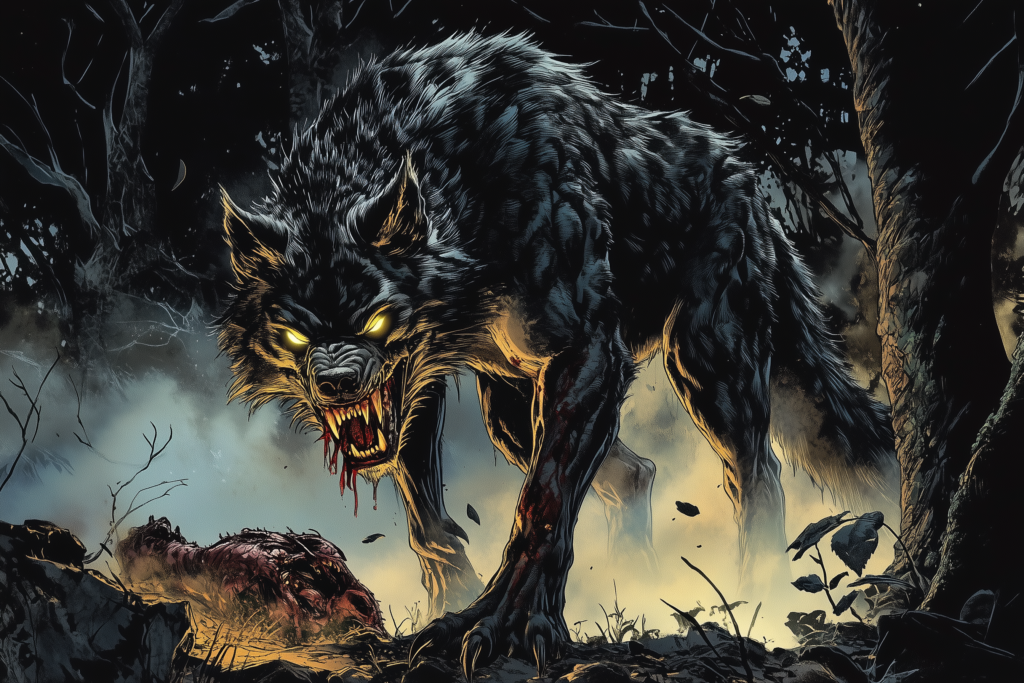
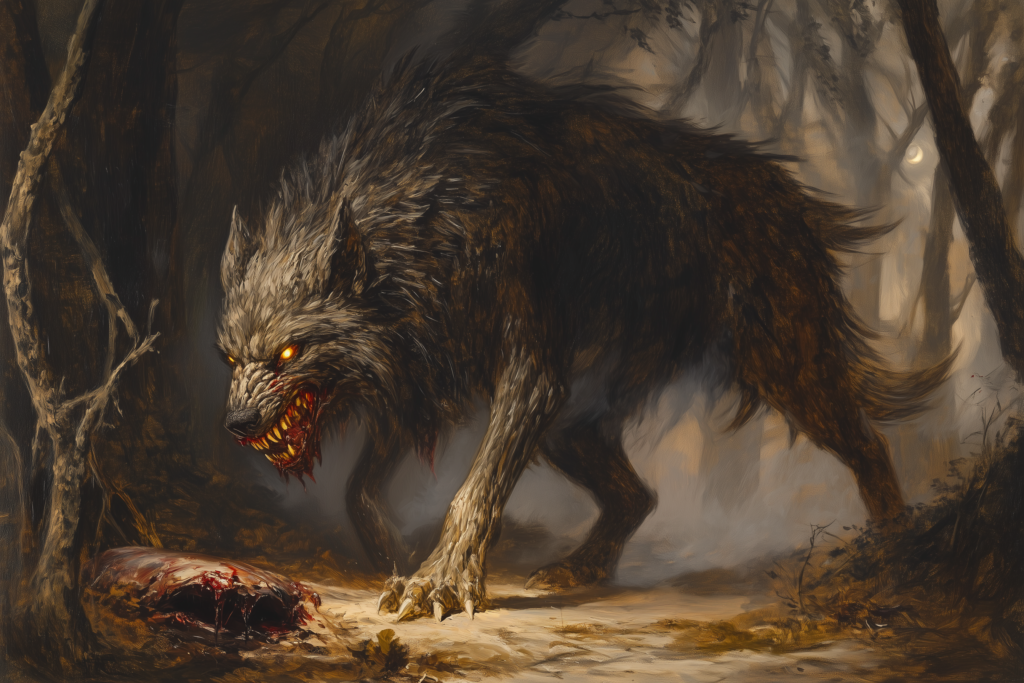
Before biting, one pack member watches from cover while the others try to separate a guard from the caravan. Worgs recognise missile weapons and avoid trading blows with armoured opponents when an easier target is nearby.
Use the right bite
In 2024, the first Worg to land a bite gives the next attack roll against that creature Advantage until its next turn. The rider, not necessarily another Worg, can exploit that opening. In 2014, the target instead gets a DC 13 Strength save to resist being knocked Prone. Pathfinder and 3.5e use different trip procedures.
Withdraw and remember
A pack that loses two members may retreat to its den, harry the same route on the next night or attack the party’s supplies. A Worg that accepts safe passage should honour the bargain while doing so still serves its interests.
Worgs as Mounts and War Beasts
Small goblins and other suitable riders prize Worgs for their speed, stamina and ability to follow spoken plans. A trained pair can scout, charge from cover, turn a patrol or track enemies through broken country. The Worg is a thinking ally; in some partnerships it is clearly the senior decision-maker.
The older equipment reference Ultimate Equipment Guide II (Greg Lynch and J. C. Alvarez, Mongoose Publishing, 2005) gives legacy examples of 1,500 gp for a young Worg and 1,500 gp for training. These are optional historical equipment values, not current SRD prices or a universal market for sentient creatures. Worgs may demand food, status, territory or reciprocal protection rather than accepting purchase as property.
Using Worgs in Play
The Rider Gives the Orders — Apparently
A goblin patrol stops the party at a narrow road. The goblin captain talks first, but the Worg under him keeps answering questions before he does. It will trade the patrol’s help for meat and safe passage. Refusing may lead to a fight the riders did not want.
The Pack That Watches
For two nights, travellers find paw prints beside their camp but lose no animals. The Worgs are counting guards and listening for a destination. A party that speaks to the watcher may discover that its pack is hunting the baggage train behind them, not them.
Children of Fenris
A northern pack shows a broken iron collar as proof that it belongs to the bloodline of Fenris and claims a disputed valley. The collar is real, but proves only that someone once captured a large wolf. The party can settle the land claim, expose a fraud or choose which neighbours to anger.
After the encounter: Surviving Worgs recognise those who spared them, while raiders may return with mounts trained to remember the party’s scent. Den tracks can lead to captured livestock, missing travellers or a rider’s abandoned camp.
Further Viewing
Original page videos retained as links: Worg and Winter Wolf lore and Bared Fangs: Worgs. These are optional supplements rather than needed rules.
Sources and Licensing
The three existing Worg illustrations were retained; artist/licence provenance of the individual uploaded images remains a separate media audit.
D&D 2024 rules attribution: This work includes material from the System Reference Document 5.2.1 (“SRD 5.2.1”) by Wizards of the Coast LLC, available at https://www.dndbeyond.com/srd. The SRD 5.2.1 is licensed under the Creative Commons Attribution 4.0 International License at https://creativecommons.org/licenses/by/4.0/legalcode.
D&D 2014 rules attribution: This work includes material taken from the System Reference Document 5.1 (“SRD 5.1”) by Wizards of the Coast LLC, available at https://dnd.wizards.com/resources/systems-reference-document. The SRD 5.1 is licensed under the Creative Commons Attribution 4.0 International License at https://creativecommons.org/licenses/by/4.0/legalcode.
Edition rule references: 2024 Worg; 2014 Worg; Pathfinder 1e Worg; D&D 3.5e Worg. The two latter stat blocks derive from OGL sources; the license and notices are included below.
Open Game License v1.0a and notices
Open Game Content designation: Edition-native mechanics in the Pathfinder 1e and D&D 3.5e rules panels are derived from their respective open-game sources. Original prose, adventure examples, campaign connections, visual presentation, and artwork are excluded. The D&D 2024 and 2014 panels use separately credited SRD material under CC BY 4.0.
The full Open Game License and its notices are reproduced below; Pathfinder reference licence.
Copyright notice: Open Game License v1.0a © 2000 Wizards of the Coast, Inc.; System Reference Document © 2000 Wizards of the Coast, Inc., authors Jonathan Tweet, Monte Cook and Skip Williams, based on material by E. Gary Gygax and Dave Arneson.
Pathfinder source: Pathfinder Roleplaying Game Bestiary © 2009, Paizo Publishing, LLC; Worg (Bestiary, page 280).
OPEN GAME LICENSE Version 1.0a
The following text is the property of Wizards of the Coast, Inc. and is Copyright 2000 Wizards of the Coast, Inc (“Wizards”). All Rights Reserved.
1. Definitions: (a) “Contributors” means the copyright and/or trademark owners who have contributed Open Game Content; (b) “Derivative Material” means copyrighted material including derivative works and translations (including into other computer languages), potation, modification, correction, addition, extension, upgrade, improvement, compilation, abridgment or other form in which an existing work may be recast, transformed or adapted; (c) “Distribute” means to reproduce, license, rent, lease, sell, broadcast, publicly display, transmit or otherwise distribute; (d) “Open Game Content” means the game mechanic and includes the methods, procedures, processes and routines to the extent such content does not embody the Product Identity and is an enhancement over the prior art and any additional content clearly identified as Open Game Content by the Contributor, and means any work covered by this License, including translations and derivative works under copyright law, but specifically excludes Product Identity; (e) “Product Identity” means product and product line names, logos and identifying marks including trade dress; artifacts; creatures characters; stories, storylines, plots, thematic elements, dialogue, incidents, language, artwork, symbols, designs, depictions, likenesses, formats, poses, concepts, themes and graphic, photographic and other visual or audio representations; names and descriptions of characters, spells, enchantments, personalities, teams, personas, likenesses and special abilities; places, locations, environments, creatures, equipment, magical or supernatural abilities or effects, logos, symbols, or graphic designs; and any other trademark or registered trademark clearly identified as Product identity by the owner of the Product Identity, and which specifically excludes the Open Game Content; (f) “Trademark” means the logos, names, mark, sign, motto, designs that are used by a Contributor to identify itself or its products or the associated products contributed to the Open Game License by the Contributor; (g) “Use”, “Used” or “Using” means to use, Distribute, copy, edit, format, modify, translate and otherwise create Derivative Material of Open Game Content; (h) “You” or “Your” means the licensee in terms of this agreement.
2. The License: This License applies to any Open Game Content that contains a notice indicating that the Open Game Content may only be Used under and in terms of this License. You must affix such a notice to any Open Game Content that you Use. No terms may be added to or subtracted from this License except as described by the License itself. No other terms or conditions may be applied to any Open Game Content distributed using this License.
3. Offer and Acceptance: By Using the Open Game Content You indicate Your acceptance of the terms of this License.
4. Grant and Consideration: In consideration for agreeing to use this License, the Contributors grant You a perpetual, worldwide, royalty-free, non-exclusive license with the exact terms of this License to Use, the Open Game Content.
5. Representation of Authority to Contribute: If You are contributing original material as Open Game Content, You represent that Your Contributions are Your original creation and/or You have sufficient rights to grant the rights conveyed by this License.
6. Notice of License Copyright: You must update the COPYRIGHT NOTICE portion of this License to include the exact text of the COPYRIGHT NOTICE of any Open Game Content You are copying, modifying or distributing, and You must add the title, the copyright date, and the copyright holder’s name to the COPYRIGHT NOTICE of any original Open Game Content you Distribute.
7. Use of Product Identity: You agree not to Use any Product Identity, including as an indication as to compatibility, except as expressly licensed in another, independent Agreement with the owner of each element of that Product Identity.
You agree not to indicate compatibility or co-adaptability with any Trademark or Registered Trademark in conjunction with a work containing Open Game Content except as expressly licensed in another, independent Agreement with the owner of such Trademark or Registered Trademark. The use of any Product Identity in Open Game Content does not constitute a challenge to the ownership of that Product Identity.
The owner of any Product Identity used in Open Game Content shall retain all rights, title and interest in and to that Product Identity.
8. Identification: If you distribute Open Game Content You must clearly indicate which portions of the work that you are distributing are Open Game Content.
9. Updating the License: Wizards or its designated Agents may publish updated versions of this License. You may use any authorized version of this License to copy, modify and distribute any Open Game Content originally distributed under any version of this License.
10. Copy of this License: You MUST include a copy of this License with every copy of the Open Game Content You Distribute.
11. Use of Contributor Credits: You may not market or advertise the Open Game Content using the name of any Contributor unless You have written permission from the Contributor to do so.
12. Inability to Comply: If it is impossible for You to comply with the terms of this License with respect to some or all of the Open Game Content due to statute, judicial order, or governmental regulation then You may not Use any Open Game Material so affected.
13. Termination: This License will terminate automatically if You fail to comply with all terms herein and fail to cure such breach within 30 days of becoming aware of the breach. All sublicenses shall survive the termination of this License.
14. Reformation: If any provision of this License is held to be unenforceable, such provision shall be reformed only to the extent necessary to make it enforceable.
15. COPYRIGHT NOTICE
Open Game License v 1.0a Copyright 2000, Wizards of the Coast, Inc.
System Reference Document. Copyright 2000, Wizards of the Coast, Inc.; Authors Jonathan Tweet, Monte Cook, Skip Williams, based on material by E. Gary Gygax and Dave Arneson.
Pathfinder Roleplaying Game Reference Document. © 2011, Paizo Publishing, LLC; Author: Paizo Publishing, LLC.
Pathfinder Roleplaying Game Core Rulebook. © 2009, Paizo Publishing, LLC; Author: Jason Bulmahn, based on material by Jonathan Tweet, Monte Cook, and Skip Williams.
Pathfinder Roleplaying Game Bestiary. © 2009, Paizo Publishing, LLC; Author: Jason Bulmahn, based on material by Jonathan Tweet, Monte Cook, and Skip Williams.
Worg original encounter examples, page-specific lore synthesis and presentation © 2026 SpiralWorlds. OGL source rules remain credited to their respective licensors.
END OF LICENSE
Keep this reference growing
If this page helped with your reading or game, you can support its upkeep or explore the curated books.
Explore the Bookshop — epics, classics and stories behind imagined worlds.