
Transmutation • Vertical Movement and Control
Levitate
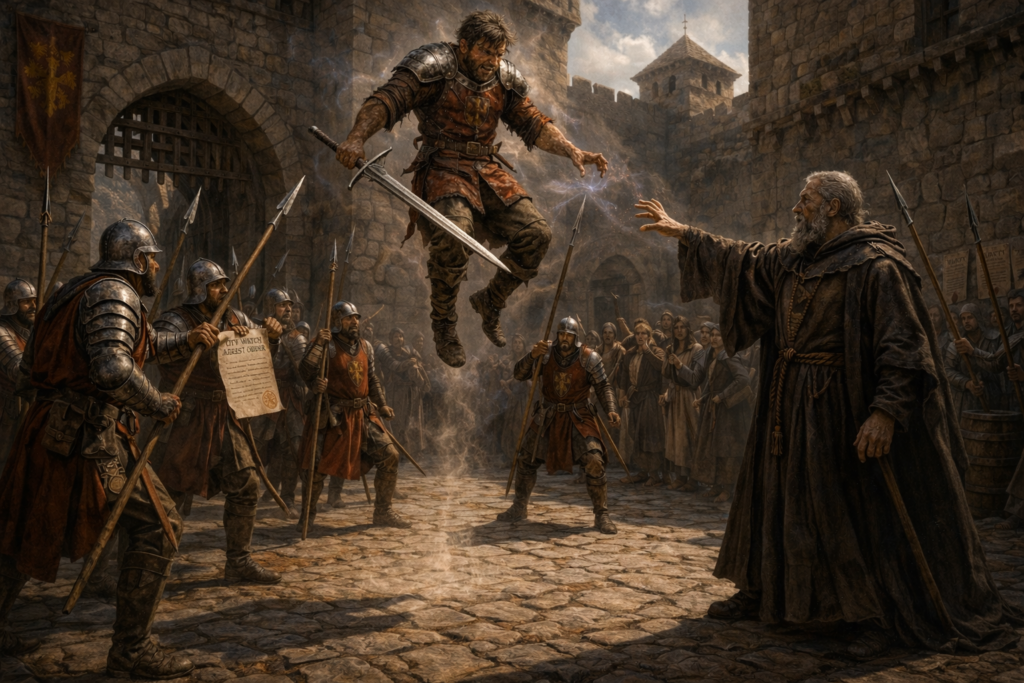
Levitate removes the ground from the equation. In fifth edition it suspends a creature or object vertically; Pathfinder 1e and D&D 3.5e use the older willing-target and weight-limit version. The Witch archive links this spell for legacy play, so keep the edition you are using explicit.
Levitate at a Glance
| 5.5e / 2024 | 2nd-level Transmutation; Sorcerer and Wizard in SRD 5.2.1. Not automatically a Witch spell unless the campaign’s Witch list grants it. |
|---|---|
| 5e / 2014 | 2nd-level Transmutation; Sorcerer and Wizard. |
| Pathfinder 1e | Sorcerer/Wizard 2; willing creature or object, 1 minute/level. |
| D&D 3.5e | Sorcerer/Wizard 2; willing creature or object, 1 minute/level. |
Spell Rules by Edition
Levitate — 5.5e / 2024
| School | Transmutation, level 2 |
|---|---|
| Casting Time | Action |
| Range | 60 feet |
| Components | V, S, M (a metal spring) |
| Target | One creature or loose object you can see |
| Duration | Concentration, up to 10 minutes |
| Saving Throw | Constitution for an unwilling creature |
| Spell Resistance | Not used in this edition |
The target rises vertically up to 20 feet and remains suspended. An object can weigh no more than 500 pounds. A creature can move horizontally only by pushing or pulling against a fixed surface. The caster can alter altitude by up to 20 feet while maintaining the spell. When the spell ends, an airborne target descends gently.
Levitate — 5e / 2014
| School | 2nd-level Transmutation |
|---|---|
| Casting Time | 1 action |
| Range | 60 feet |
| Components | V, S, M (a small leather loop or golden wire bent into a cup shape) |
| Target | One creature or loose object up to 500 pounds |
| Duration | Concentration, up to 10 minutes |
| Saving Throw | Constitution for an unwilling creature |
| Spell Resistance | Not used in this edition |
The target rises up to 20 feet. Horizontal movement requires pulling or pushing against a fixed object. On later turns the caster can use an action to change another target’s altitude by up to 20 feet.
Levitate — Pathfinder 1e
| School | Transmutation |
|---|---|
| Level | Sorcerer/Wizard 2 |
| Casting Time | 1 standard action |
| Components | V, S, F |
| Range | Personal or close (25 ft. + 5 ft./2 levels) |
| Target | You, one willing creature, or one object up to 100 lb./level |
| Duration | 1 minute/level (D) |
| Saving Throw | None |
| Spell Resistance | No |
The subject moves vertically up or down up to 20 feet as a move action and can move horizontally only by pushing or pulling against a fixed object. Attacking while levitating without support imposes the edition’s cumulative instability penalty.
Levitate — D&D 3.5e
| School | Transmutation |
|---|---|
| Level | Sorcerer/Wizard 2 |
| Casting Time | 1 standard action |
| Components | V, S, F |
| Range | Personal or close (25 ft. + 5 ft./2 levels) |
| Target | You, one willing creature, or one object up to 100 lb./level |
| Duration | 1 minute/level (D) |
| Saving Throw | None |
| Spell Resistance | No |
The older spell lets the subject move vertically up or down 20 feet as a move action. Unsupported attacks become increasingly awkward until the creature stabilises against a solid surface.
What Changed?
- 2024: the 500-pound limit applies to objects rather than creatures, and the material component is a metal spring.
- 2014: creature and object targets share the 500-pound limit and the caster normally spends an action to change another target’s altitude.
- PF1e/3.5e: the target is willing, the duration is measured in minutes per level, and unsupported attacks use legacy penalties.
Using Levitate in Play
Levitate is strongest against creatures that rely on the ground: melee bruisers, guards holding a doorway, or anyone standing above a dangerous drop. It is also excellent for rescue, reaching vertical objectives and moving unsecured objects where flight would be excessive.
Counterplay and Related Magic
In fifth edition an unwilling creature can resist with its Constitution save, and concentration can be broken. Dispel Magic can end the ongoing effect under the normal rules. Compare Fly for free aerial movement and Feather Fall for emergency descent.
Rules Sources and Licensing
5.5e / 2024 uses SRD 5.2.1 under CC BY 4.0. The 2014 panel follows SRD 5.1. Pathfinder 1e and D&D 3.5e remain edition-specific legacy references.
Advanced Uses
Deny melee contact: a creature suspended away from walls or ceilings can be removed from effective melee range without being knocked prone or shoved elsewhere. Control vertical terrain: shafts, balconies, bridges, floodwater and pits become dramatically more useful when altitude can be changed without full flight.
Rescue and access: Levitate can lift a companion above hazards, raise an object to a high ledge or create a temporary vertical route where ordinary climbing would be slow or dangerous.
DM Rulings and Edge Cases
Levitate grants vertical movement, not unrestricted flight. Horizontal movement requires a fixed surface to push or pull against unless another effect moves the target. If the target is carrying or attached to something, adjudicate that load using the edition’s normal carrying, object and forced-movement rules.
When concentration ends in fifth edition, use the spell’s own descent rule rather than applying falling damage immediately. Pathfinder 1e and D&D 3.5e use their own ending and movement language.
Levitate in the World
Outside combat, Levitate is valuable to builders, tower keepers, smugglers, siege engineers and ritualists. A spell that quietly changes vertical access can matter more to a city or fortress than a louder battle spell: windows become entrances, wells become routes, and guarded floors can be reached without stairs.
Keep this reference growing
If this page helped with your reading or game, you can support its upkeep or explore the curated books.
Explore the Bookshop — epics, classics and stories behind imagined worlds.