
At a Glance
| Region | County Durham · River Wear peninsula |
|---|---|
| Terrain | Steep sandstone peninsula, looping River Wear, bridges, market and wooded riverbanks |
| Status | Fortified city and seat of the palatine ruler |
| Authority | Robert Neville, high prelate and palatine lord of Durham |
| Work and trade | Market stalls, smiths, cloth and grain traders, boatmen, river mills and pilgrim hostels |

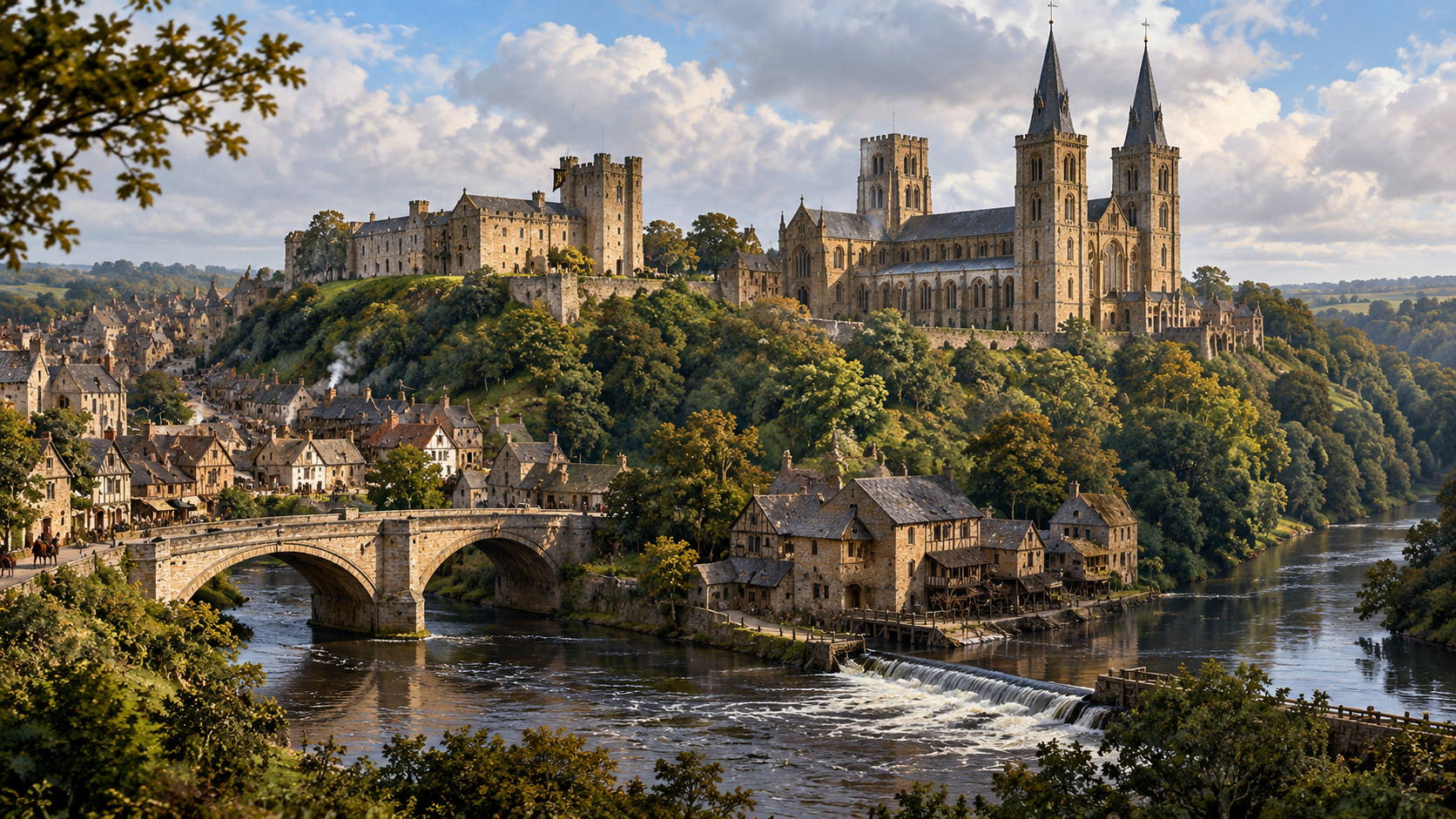
Durham is difficult to approach quietly. The River Wear bends almost all the way round its steep heart, and a great castle and sacred precinct command the heights above the market. Petitioners and soldiers climb the same narrow streets while barges, mills and bridges hold the lower city together. Below the walls, the city is all steep lanes, river mud, hot bread, horses and hammering from the market. A visitor can get lost between the lower bridges and the sacred heights long before meeting anyone from the ruler’s court.
What Is Happening Right Now?
Robert Neville governs from the sacred heights, but most visitors first hear about the river. Water has risen beneath the bridges, flooded the Millstone Cup’s cellar and carried off a sealed packet that a miller had been keeping dry. Fen Talbot needs help before the next rise washes away whatever evidence is left.
A milkmaid’s dun-coloured cow has turned up in the market without its keeper. The beast keeps trying to take the path towards Mount Joy. Durham’s old story says that a dun cow once led the first sacred procession to this river-bound hill. Someone who follows today’s animal may discover where the missing milkmaid went.
Travellers from Northallerton and Darlington bring word of trouble on the northern roads; downriver, the Lambton Worm threatens the farms of the Lower Wear. Neville has soldiers, but the ferrymen, market families and temple healers cannot wait for a court hearing.
Streets, Landmarks and Places to Explore
The Castle and Palace Green
A Norman fortress rises on the peninsula beside the sacred precinct. Wagons creak up towards the gates; guards check arrivals while smiths mend harnesses and servants hurry between the kitchens and the great halls. The open ground around the castle offers a view over the roofs to the Wear far below. Palace Green is a working medieval space, not a later landscaped promenade.
The Great Sacred Precinct
The immense stone complex houses temple orders, scribes, healers and guardians of older relics. Its high walls dominate the skyline; pilgrims and the sick climb to its doors. Durham’s sacred beginnings belong to the Dun Cow, whose path once led a lost procession to the wooded peninsula. The cow’s image still marks painted tokens and local signs. Behind the public halls, relic keepers guard chambers few travellers are allowed to enter.
Market Place and the Lower Boroughs
The market moved away from Palace Green generations ago. The approach to the castle is crowded with cloth sellers, food stalls, carts and apprentices carrying loads up the slope. Follow the side lanes downhill and the noise changes to mill wheels, boatmen and water beating against the bridge piers.
The Wear Bridges and Mills
Old bridges control access to the peninsula; riverside paths drop sharply beneath them. Millers watch the water, and boatmen know the banks from which a sealed chest could be carried ashore unseen.
Where to Eat, Drink, Sleep and Find Help
Accommodation near the castle commands a premium. Porters, river workers and travellers with little coin look to the lower boroughs.
The River Gate — market approach
Moderate to high price; guarded courtyard. Host Joan Heddle serves meat pottage, bread, strong ale and secure stabling. Lawyers, merchants and visiting officials use its upstairs rooms. Joan has given an injured river pilot an attic room; he insists something struck the bridge after sunset and will speak only to visitors willing to check the waterline.
The Millstone Cup — below the bridge
Cheap alehouse and shared beds. Keeper Fen Talbot feeds mill hands, ferrymen and porters with beans, fish and rye loaf. His cellar suffers after floodwater; a clerk left a sealed packet there and never returned.
Temple Hostel, Archive and Armourer
The sacred precinct offers shelter and treatment through its temple hostels, with space limited when the river floods. Its scribes can search old records; the armourers by the castle repair damaged harnesses and fit ironwork for travellers. A visitor who arrives hungry, ill or poorly equipped can find practical help here, though the busiest healers work inside the guarded walls.
People and Powers
Robert Neville, Durham’s high prelate and palatine ruler, can send guards or open sacred stores, but rarely knows first what has happened below the bridges. Joan Heddle of the River Gate hears travellers’ accounts before the court does; Fen Talbot knows the river workers and which cellars flood first. Reeve Margery Wren is organising neighbours to inspect the damaged riverside and wants people willing to enter places the guards will not.
Temple stewards, court scribes, estate guards, merchants and river workers do not act as one faction. The city is the political centre of the county; the Lower Wear is farther downriver, not another name for its streets.
Dangers and Adventure Hooks
- Below the bridge. A river pilot swears something hit the pier at dusk. Inspect the stonework by boat or descend from the steep riverside path before the current rises again; a trapped worker is still missing.
- The river packet. A sealed message vanished in the flood near the Millstone Cup. A miller saw someone carry a wet leather satchel into the lower boroughs. Find the carrier before the contents are sold or lost.
- Follow the dun cow. A milkmaid has not come back from Mount Joy, though her cow has returned to Durham alone. Walk the route remembered in the city’s founding tradition and find out what interrupted her journey.
- The road beyond Durham. A caravan needs escorts to reach Chester-le-Street and the Worm Hill country, where the Lambton Worm raids farms and villagers use milk to draw it away from livestock.
Roads, Bridges and River Travel
The southern approach leads through Darlington, Northallerton, York and onwards to Nottingham. Northward, roads run towards Chester-le-Street and eventually Newcastle; east and down the Wear lie the farms of the Lower Wear and the Worm Hill legend.
Most travellers reach the high city by one of the bridges; the lower paths beside the Wear can become slippery or impassable after rain. Ask millers or boatmen before trying an unfamiliar crossing. Armed groups may be stopped at the castle gates, but ordinary visitors need to know the bridge approaches more than the boundaries of the city’s courts.
Deeper History
Durham’s fortified hilltop, River Wear loop, castle, great sacred complex and market place are real features of its medieval geography. The market was relocated away from Palace Green in the 12th century; Durham remained a seigneurial city with separate jurisdictions under the bishop’s authority. Contemporary records place Robert Neville as bishop from 1438 until 1457. Robert Neville rules as high prelate, while the sacred orders serve the gods and the palatine courts enforce their own laws.
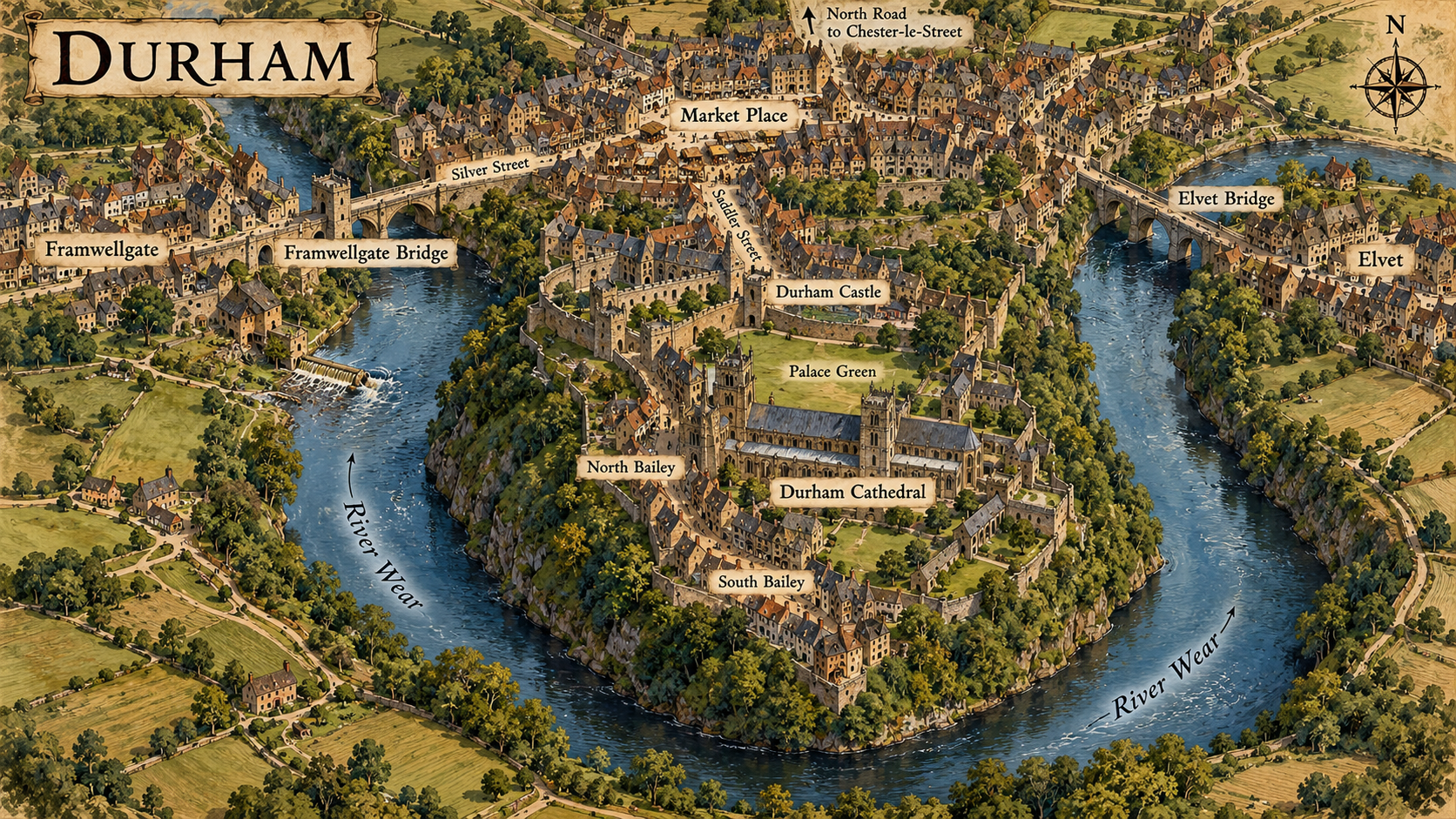
Durham — Illustrated Campaign Map
Use this illustrated reconstruction to find the castle, cathedral, Palace Green, marketplace and the crossings over the River Wear. It is a guide for exploring the city, not a surveyed medieval street plan; individual building positions, dimensions and distances are approximate.
Sources and Onward Routes
The city’s geography and historic structures are grounded in the sources below. The Dun Cow is a real local origin tradition, first recorded in later sources; the version told in this world treats it as a true event. Current incidents and original supporting characters are campaign fiction.
Durham University: urban government · Durham World Heritage Site: Palace Green · Durham University records: Robert Neville · Co-Curate / Newcastle University: the Dun Cow and Durham’s origins
Follow the road: Nottingham · Blyth · Doncaster · York · Northallerton · Darlington · Durham · Lower Wear.
Keep this reference growing
If this page helped with your reading or game, you can support its upkeep or explore the curated books.
Explore the Bookshop — epics, classics and stories behind imagined worlds.