
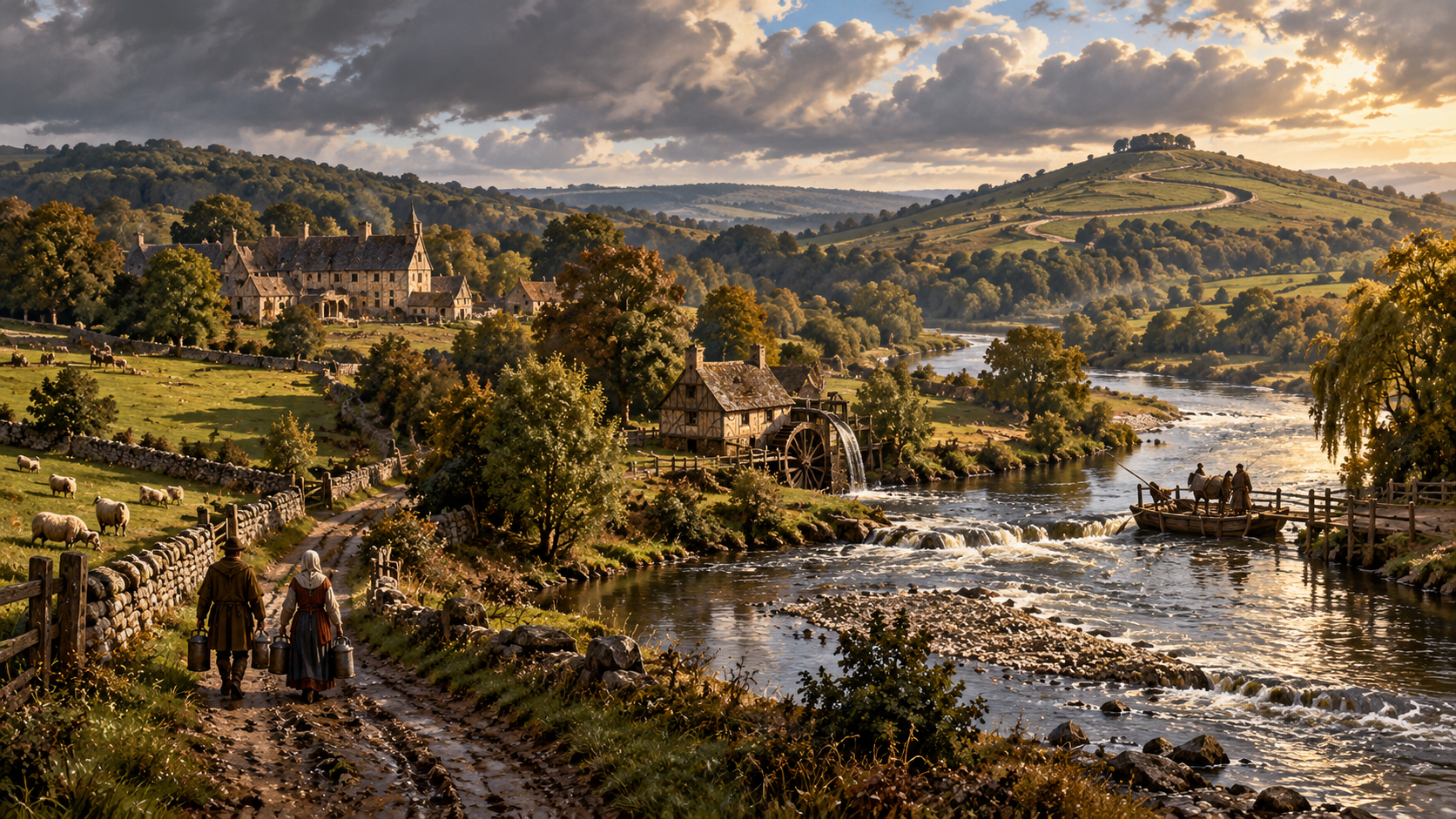
Worm Hill at a Glance
| Region | Lower Wear, near Fatfield, County Durham, England |
|---|---|
| Terrain | Small grassy mound on the north side of the River Wear; open slopes, damp ruts and riverbank pasture |
| Authority | County Durham; surrounding farmland and paths are used by local families, with the Lambton estate influential nearby |
| Present danger | The living Lambton Worm, which coils on the hill and moves between its slopes and the Wear |
| People | John Lambton, his retainers, shepherds and milk drovers |
| Services | None on the exposed hill; food, shelter, smithing and river advice are available in the Lower Wear settlements |
| Adventure | Watch the Worm’s route, rescue a milk team or find ground where its severed flesh cannot rejoin |

Worm Hill is a modest rise with a terrible occupant. The Lambton Worm still coils on its slopes, descends to the River Wear and takes cattle when the milk feeding fails. Villagers learned that a filled trough distracts it; the creature never asked for tribute. From the summit you can watch the river crossing; from the river, the creature can see you coming.
What Is Happening Right Now?
The Worm is alive. Each day the farms send milk towards the creature’s feeding place, hoping it will take the offering rather than their herds. A broken axle, a sick cow or a missing drover can leave the tribute short. The hill offers a good lookout over the approaches, but nobody wants to keep watch alone when the serpent is abroad.
John Lambton plans to face what he once pulled from the river and abandoned in a well. His family’s men want the Worm dead, yet they have also heard the warning from Iseult of the Ford, the witch who knows how to defeat it and demands a dangerous vow of John. The longer John prepares, the more milk, livestock and labour the valley loses.
Explore Worm Hill
The Coiled Slope
Low rings cross the grass. The oldest ridges have settled into the ground; fresher stretches show torn turf and crushed stems. Those recent marks tell a scout which way the Worm last came up from the Wear. The hill gives little cover, so following a track can be more dangerous than finding it.
The Worm Well
Below the hill, towards the river, lies the well where the young Lambton cast away his strange catch. In the old story it grew here until it could escape. The well is a place to investigate the creature’s beginning, not a second monster lair. A visitor may hear a different account from each household.
The Milk-tribute Approach
The cart road serves farms and the river landings; it was never built for frightened teams dragging extra pails. Ruts fill after rain and a stalled wagon blocks everyone behind it. Drovers can say how much milk reached the Worm yesterday, which farms are losing cattle and where the beast crossed the track.
The Hilltop Watch
From the open rise, a watcher can follow the river bends and signal to people below. They may spot disturbed water near the Worm’s favoured rock before anyone on the bank sees the creature. The same open ground leaves a lookout exposed. Smoke, a cloth signal or a runner helps only if the farms have agreed what the warning means.
Shelter, Supplies and Local Help
There is no inn on Worm Hill. It is a grazing landmark, not a settlement, and anyone who stays after dark has brought their own shelter or is watching the creature. The closest organised help lies down the tracks among the farms, mill and ferry of the Lower Wear. These establishments are part of the campaign setting rather than claimed historical businesses.
The Ferry Bell — by the sheltered landing
Guesthouse and eating room; moderate cost. Alys provides hot barley stew, a clean loft, stabling for pack animals and local river news. Her ferryman brother knows which channel runs fast enough to carry the Worm’s severed pieces away. She shelters displaced farm families before paying travellers, even when it costs her a night’s takings.
The Clay Bank — above the mill road
Cheap alehouse and shared lodging. Hob keeps dark ale, coarse bread and smoked fish when catches allow. Millhands and carters bring fresh reports of collapsed riverbanks and frightened herds. The door bolts poorly, but Hob will point out the gravel bank that usually stays firm when a farm wagon has sunk axle-deep.
The Estate Smith and Milk Yard
Across the working farmland, Lambton retainers can direct visitors to the smith who repairs wheels, shoes animals and rivets mail. Iron, skilled labour and guards cost money; John Lambton can sponsor unusual bladed armour if convinced the plan will protect the families delivering tribute. Farmers may trade lodging for help with the morning milking.
People, Fear and the Witch’s Warning
Shepherds need their animals alive. The milk drovers risk the road so children can sleep without hearing the Worm against the byre wall. Lambton retainers can lend horses, metalwork and armed help; they cannot promise the families what happens if John’s plan fails.
The witch, not the Worm, laid down the terrible condition: after killing the creature, John must kill the first living being he meets or his family will bear a curse for nine generations. The threat is a possible use of Bestow Greater Curse, not the serpent’s own power. A careful party might help John avoid harming an innocent person, challenge Iseult’s terms, or rescue threatened families before any fight. The Lambton Worm entry carries the combat rules and the creature’s unusual ability to rejoin its severed flesh.
Dangers, Encounters and Choices
- The cart is late. Find a missing milk team before the Worm leaves the hillside to feed. Rescue the drovers first, or save the tribute before the tracks disappear in rain.
- The river gives a warning. Fresh marks on the slope point towards the water, but someone wants to drive cattle across the nearest ford. Turn the herd back, escort it by another route or prepare an early warning.
- Choose the battlefield. The dry hill gives the Worm firm ground and room to coil. Fast-flowing water could keep separated pieces apart, but the party must learn the local channels from the ferrymen before risking that plan.
- Protect the first meeting. If John slays the Worm, the people waiting to cheer him may unwittingly place themselves at the heart of the witch’s condition. Agree beforehand who will meet him and what can be done without sacrificing a person.
Getting to the Hill
From the farms: Approach by the tracks around Fatfield. In wet weather, milk wagons labour through ruts before reaching the open slope. Cattle can be moved round the hill, but driving them across fresh coil marks risks provoking the Worm. A walker travelling light can use the higher grass where carts cannot pass.
From the Wear: The traditional Worm Well is between the hill and the river. The nearest-looking bank is not necessarily a safe ford. Ask the working ferrymen which channel is deep, where the gravel shifts and whether the current can carry severed flesh clear of the Worm.
Keep clear of the herds: These slopes feed local cattle. Trample the fields or try to use the villagers’ last animals as bait and the families who make the milk tribute will refuse to help you. Ask the drovers which approach is clear before carrying traps or armed companions up the track.
Worm Hill in History and Folklore
This is a real, modest mound on the north bank of the Wear near Fatfield. Its origin remains uncertain: it has been described both as a natural river-gravel feature and as a possibly artificial mound. What gave it its enduring name was the tale of the Worm coiling around it before returning to the river.
The Hill, the Well and the River
Older accounts place the Worm Well between Worm Hill and the Wear. John Lambton’s small catch grew in the well after he abandoned it. In the living present, both John and the beast survive. The worm’s promised defeat, the signal horn and the dreadful meeting that follows belong to the traditional ending; they have not yet happened here, and the players can change the outcome.
Worm Hill or Penshaw Hill?
Penshaw Hill, further across the valley, is also associated with the Worm’s coils. Its surviving earthworks help explain why two places claim the same legend. They are different hills, not evidence for a second resident Worm. Worm Hill near Fatfield remains the creature’s primary hillside in this campaign.
Map and Orientation
Modern geographical locator: The marker below identifies real Worm Hill near Fatfield. It is not a medieval street map or a surveyed plan of the Worm’s movements. Modern bridges, roads and buildings should not be carried into the game world.
Open the map at Worm Hill for exact real-world orientation. The following is a campaign route key, not a measured map.
| Place | How to approach | Why it matters |
|---|---|---|
| Fatfield farm tracks | From the surrounding pasture, onto the open north-bank slope | Milk carts and fleeing herds use the same narrow ground |
| Worm Hill | Grassy exposed rise above the Wear | Scout the coils; signal the farms before the creature moves |
| Worm Well | Near the hill, towards the river | Where the strange catch was abandoned in the old tale |
| River and battle rock | Ask a ferryman before choosing a bank or crossing | Strong water could separate the Worm’s living fragments |
Sources and Onward Routes
The hill, Worm Well and competing Penshaw tradition come from local history and folklore. The milk tribute, John Lambton and the witch’s bargain draw on versions of the Lambton Worm tale. Present-day choices, working relationships and hazards are campaign material, not claims about a documented medieval event.
Sources: Tyne and Wear Historic Environment Record: Worm Hill (HER 7852); Tyne and Wear Historic Environment Record: Penshaw earthworks; National Trust: Lambton Worm walk; Sunderland City Council: Fatfield Circular (PDF).
Continue exploring: The Lower Wear for the river crossings, mill, inns and estate; John Lambton for the family dilemma; the Lambton Worm for encounter and four-edition combat rules; or England for the wider kingdom.
Keep this reference growing
If this page helped with your reading or game, you can support its upkeep or explore the curated books.
Explore the Bookshop — epics, classics and stories behind imagined worlds.