
At a Glance
| Region | County Durham · River Skerne |
|---|---|
| Terrain | Open medieval market place, Skerne crossing, merchants’ rows and nearby farmland |
| Status | Palatine market town and a stop on the road to Durham |
| Authority | High prelate of Durham, local bailiffs and market officers |
| Work and trade | Woollen cloth, dyeing, leather, livestock, grain and road services |

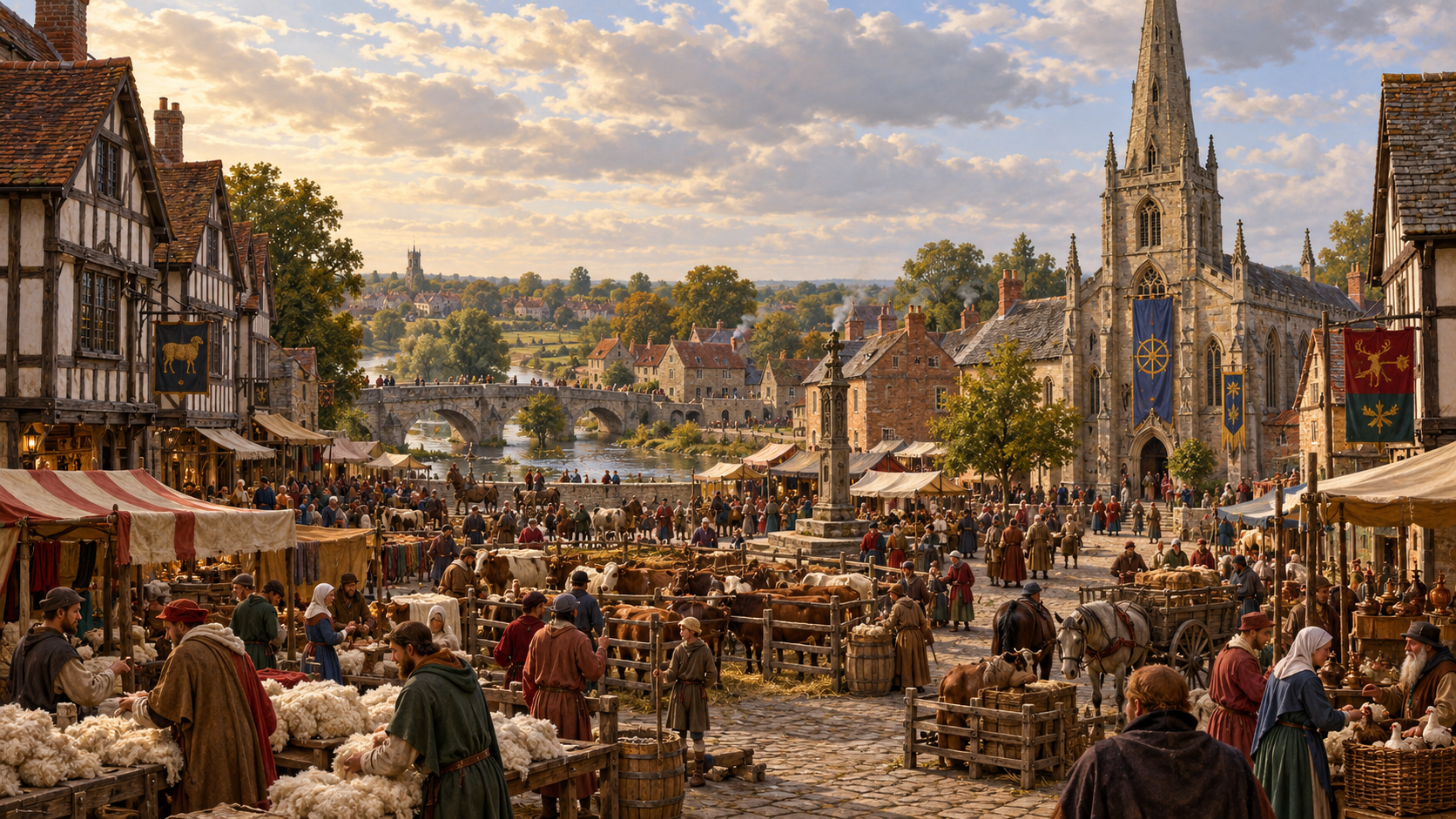
The market at Darlington has a practical answer to almost everything: another horse, a length of rope, a bag of grain, or the name of someone who can lend money. The River Skerne runs beside the town, and the high prelate’s officials take an interest in every stall. Traders can grow wealthy here, but they cannot pretend they are outside Durham’s jurisdiction.
What Is Happening Right Now?
Traders gathering near the market’s toll station disagree over a new charge on dyed cloth. The prelate’s collectors say they are enforcing an old right; dyers insist it was never levied on work completed inside the town. A storekeeper offers the party access to his sealed records, provided they protect his workers.
A courier from Northallerton has been delayed at the Skerne crossing. The letter he carries concerns the upcoming session of the Durham court. Traders cannot decide whether to help him or hope the hearing never takes place.
Streets, Landmarks and Places to Explore
High Row, Tubwell Row and Market Place
The broad market and old streets are central to Darlington’s medieval form. Stalls sell food, hides, cloth and iron. A toll station gives officers a clear view of who trades and who owes money.
The Skerne Crossing
The river creates a natural point of control. Floodwater can leave carts waiting on one bank while lighter riders cross elsewhere. The town depends on upkeep of approaches.
Bondgate and Skinnergate
Street names reflect working trades. Leather workers and dyers are valuable but their yards smell strong and require water. An adventurer buying dyed cloth should know whether its colour will survive a storm.
The Sacred Hall and Prelate’s Manor
A large medieval temple stands by the east side of the old market beside the prelate’s administrative residence. Shrines to the recognised gods stand beside the court rolls and archives of the palatine lord. Clerks here preserve rents, obligations and travellers’ claims.
Where to Eat, Drink, Sleep and Find Help
The market-side inns cost more than beds near the working yards; travellers should bargain before the stalls close.
The Skerne Lantern — market edge
Moderate price, sturdy rooms. Innkeeper Mara Fenwick offers spiced peas, fish when available, clean bedding and a guarded packhorse yard. Cloth buyers and junior officials meet at the long table. Mara keeps a disputed sealed purse for a customer who has not returned.
The Tanner’s Rest — Skinnergate
Cheap, noisy lodging. Keeper Jann sells bread, onion broth, dark ale and hayloft space. Apprentices, dyers and drovers gather here, and most will talk after their shift. A dye worker claims that a steward’s measuring weights have been altered.
Market Smith and Weaver
Metal repairs, cloth mending and pack animals are available on market days. A clerk can copy a toll demand for those who want to contest it legally.
People and Powers
Collectors of the high prelate act under the authority of Durham and have real administrative power. Mara Fenwick keeps peace between buyers and sellers. Oswald Dyehand represents the workers claiming unfair tolls. Individual tavern keepers and Oswald are campaign creations; the palatine control is rooted in the town’s history.
Dangers and Adventure Hooks
- The false weight. A dyer can prove a toll has been overcharged but is afraid the evidence will vanish during the next market.
- River passage. A flooded ford strands people and goods on opposite banks.
- The undelivered summons. A witness to a court case disappears before riding north to Durham.
Travel, Roads and Local Law
South goes toward Northallerton and York; north takes the road to Durham. From Durham, travellers seeking the Lower Wear can continue towards Chester-le-Street and the Fatfield country. The prelate’s officers can levy recognised market dues, but his agents must still justify unusual demands.
Deeper History
Darlington developed around the Skerne crossing, a medieval market place and the bishop of Durham’s secular lordship. A 12th-century grant formalised the market, whose toll station and streets supported trade in wool, dyeing and leather. The later covered market and railways do not belong in this period. Temple officers and palatine administrators continue to compete over market rents and privileges.
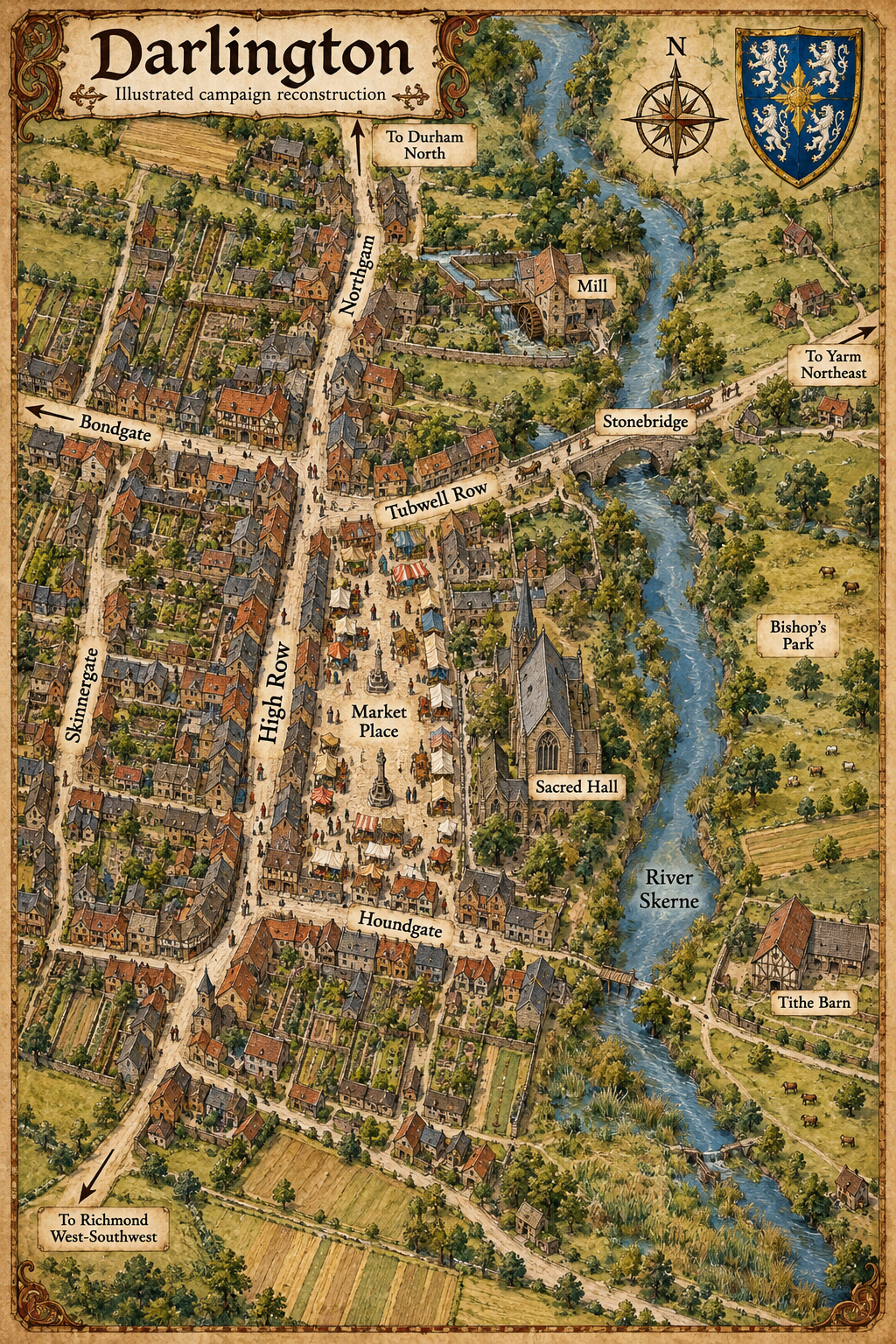
Darlington — Illustrated Campaign Map
Explore the medieval marketplace and the town’s roads towards Durham, Richmond and Yarm. The illustration draws on Darlington’s historic market layout: High Row to the west, Tubwell Row to the north, Houndgate to the south and the sacred precinct to the east, with the River Skerne and mill beyond.
Sources and Onward Routes
The landscape and historical structures are grounded in the references below. The living encounters and original characters are fantasy campaign material.
Darlington market historical study · Durham University research on Darlington’s medieval manor · Darlington Borough Council
Follow the road: Nottingham · Blyth · Doncaster · York · Northallerton · Darlington · Durham · Lower Wear.
Keep this reference growing
If this page helped with your reading or game, you can support its upkeep or explore the curated books.
Explore the Bookshop — epics, classics and stories behind imagined worlds.