
Vesta — Roman Goddess of the Hearth and Sacred Fire
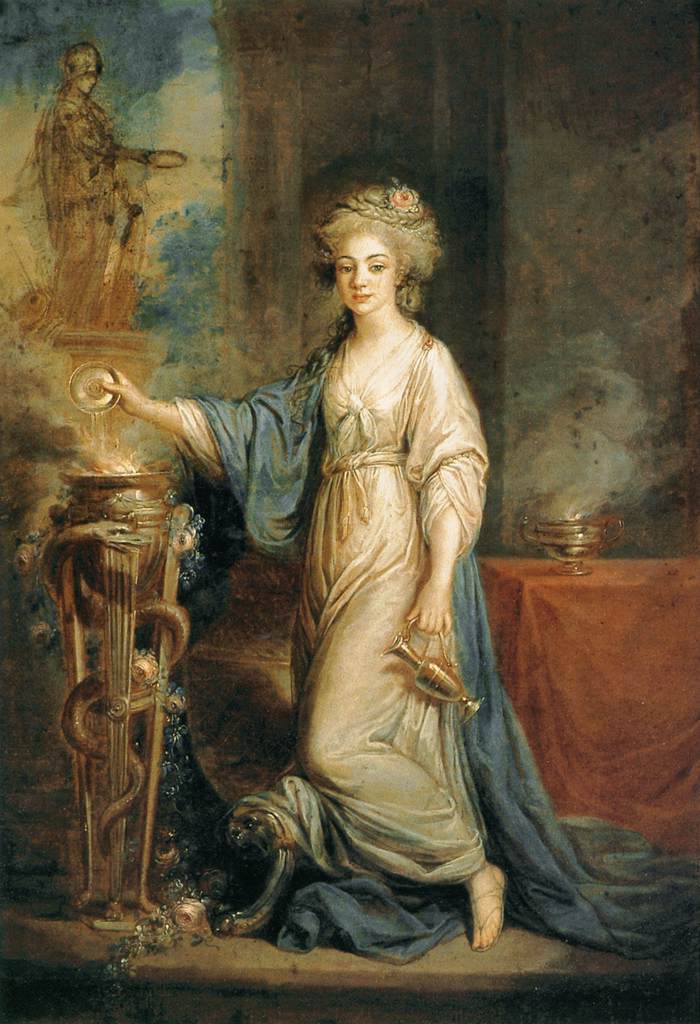
Vesta at a Glance
Tradition
Roman and Italic
Divine standing
Intermediate Deity
Campaign alignment
Lawful Good
Portfolio
Hearth, sacred fire, household continuity, hospitality and the enduring life of the state
Principal servants
The Vestal priestesses and keepers of household hearths
Sacred places
Household hearths, communal kitchens, the public hearth and the round sanctuary in the Roman Forum
Emblems
Living flame, hearth, veil and simple round shrine
Favoured weapon
Staff
Hellenic relationship
Closely identified with Hestia, while the Vestal institution and Roman public hearth remain specifically Roman.
Related Roman powers
Roman Pantheon · Hearth · Sacred Fire · Household · State Continuity
Vesta is the Roman goddess of the hearth, sacred fire and the continuity of household and state. In Rome her public fire was tended by the Vestals, and its extinction was treated as a terrifying sign because the flame represented more than heat: it represented the survival of the civic community itself.
Same Deity, Different Cultural Aspect
Vesta is the Roman aspect of Hestia: one goddess expressed through the Roman public hearth, Vestal priesthood and continuity of household and state. The Hestia page presents the Hellenic aspect. Both pages remain separate and self-canonical because they describe different cults and cultural presentations, not different cosmic beings.
Divine Mechanics
Campaign Divine Tier 36 describes Vesta’s setting-scale power and is not an SRD challenge rating. The rules-facing 5.5e block stays within SRD 5.2.1 CR 30 and ability-score-30 ceilings.
Vesta — 5.5e Rules-Facing Form
Medium Celestial (Deity), Lawful Good
CR 36 (custom epic) · PB +10 · Campaign Divine Tier 36
AC 29 · HP 800 · Speed 40 ft.
| STR | DEX | CON | INT | WIS | CHA |
|---|---|---|---|---|---|
| 22 (+6) | 24 (+7) | 32 (+11) | 28 (+9) | 32 (+11) | 32 (+11) |
Saving Throws Con +21, Int +19, Wis +21, Cha +21
Skills Insight +19, Medicine +19, Perception +19, Persuasion +19, Religion +17
Damage Immunities fire
Damage Resistances cold, psychic, radiant; bludgeoning, piercing and slashing from nonmagical attacks
Condition Immunities Charmed, Frightened, Poisoned
Senses Truesight 120 ft. · Languages all; telepathy 120 ft.
Traits
Legendary Resistance (6/Day). If Vesta fails a saving throw, she can choose to succeed instead.
Magic Resistance. Vesta has Advantage on saving throws against spells and other magical effects.
Public Hearth. Allies within 30 feet of Vesta have Resistance to fire and psychic damage and cannot be forced to leave the area by a hostile effect unless they choose to fail the save.
The Flame Must Continue. The first time each round an ally within 60 feet would drop to 0 Hit Points, it instead drops to 1 Hit Point. A creature can benefit from this trait once per Long Rest.
Divine Spellcasting
Vesta has access to every spell granted by the deity’s portfolio domains in the edition being used: Fire · Protection · Community · Purification. Those spells are always prepared or available to the deity.
Actions
Multiattack. Vesta makes three Hearth Staff attacks.
Hearth Staff. Attack: +21 to hit, reach 10 ft. Hit: 27 (4d8 + 9) bludgeoning plus 22 (4d10) radiant damage.
Fire of the Community (Recharge 5–6). Vesta creates a 60-foot-radius aura for 1 minute. Allies in it regain 18 (4d8) Hit Points at the start of their turns; hostile creatures that willingly enter the aura or start their turn there take 18 (4d8) radiant damage.
Bonus Actions
Share the Flame. One ally within 60 feet gains 20 Temporary Hit Points and Advantage on its next saving throw before the end of its next turn.
Reactions
Bar the Hearth. When a hostile creature enters a space within 20 feet of an ally Vesta can see, she may reduce that creature’s Speed to 0 until the end of the turn unless it succeeds on a DC 29 Charisma save.
Legendary Actions
- Move. Move up to half Speed without provoking Opportunity Attacks.
- Divine Strike. Make one Hearth Staff attack.
- Gather Home (Costs 2). Up to three allies within 90 feet teleport to unoccupied spaces within 15 feet of Vesta.
Vesta — Pathfinder 1e
Campaign epic extension; true deities are not normally given standard PF1e stat blocks.
CR benchmark 30 · hp about 760 · AC about 48 · Primary attack +41 · Primary DC 35 · Good saves +31 · Poor save +26.
Divine expression. Express Vesta through fire immunity, sanctuary, healing, group protection, teleportation to a hearth and resistance to forced displacement.
Spell-Like Abilities. At will—greater dispel magic, sanctuary, status, true seeing; 3/day—heal, heroes’ feast, refuge; 1/day—miracle. Use caster level 30 for the combat benchmark.
Statistics
CR 36 (custom epic) · AC 54 · hp 940 · Fort +37 · Ref +31 · Will +37
Str 22 · Dex 24 · Con 32 · Int 28 · Wis 32 · Cha 32
Base Atk +36 · CMB +42 · CMD 91
Domain Access
Vesta has full access to the deity’s linked portfolio domains in their Pathfinder-facing versions or clearly marked campaign adaptations.
Vesta — D&D 3.5e
Intermediate Deity; Divine Rank 15; Lawful Good Medium Outsider (Extraplanar)
Divine Rank 15 · DR 25/epic · SR 47 · Domain SLA caster level 25.
Divine rules. Divine rank adds to attacks, saves and checks; natural armour is rank + 13; divine AC bonus equals rank; deflection uses Charisma modifier.
Salient Divine Abilities. Alter Reality, Divine Protection, Gift of Life, Divine Shield and rank-appropriate hearth or sanctuary abilities.
Statistics
Challenge benchmark 42. Ability scores may exceed 30 where the deity’s divine nature requires it; Divine Rank remains the primary measure of cosmic authority.
Domain Access
Vesta can use every spell-like ability granted by the deity’s portfolio domains at the caster level determined by Divine Rank.
Vesta in Roman Religion
The public hearth of Rome was tended by the Vestal priestesses, whose duty was to keep the sacred fire alive. Ancient sources treat its extinction as a fearful prodigy because the flame represented the continuity of the civic community.
The sanctuary contained no ordinary cult statue of Vesta. The living fire itself carried the divine presence. That gives Vesta a different visual and religious logic from more anthropomorphic Roman gods: she is less a queen on a throne than the continuity that makes any household or state possible.
What Is Vesta Doing Right Now?
Old Roman political unity has fractured, but households, cities and displaced communities still need a hearth. Vesta is active wherever people preserve continuity through siege, exile, migration or regime change.
She pays little attention to grand claims that are not backed by care. A ruler may call himself heir to Rome, but the kitchens, shelters and public fires that keep ordinary people alive tell Vesta more about whether his state deserves to endure.
Worship in the Campaign Present
Household hearth rites remain common wherever Roman traditions survive. Public cult is rarer but more powerful: communities may maintain a single flame through war and displacement, carrying coals from one settlement to the next rather than allowing the line to break.
Vestal traditions survive through disciplined female priesthoods whose exact organisation varies by region. Their authority comes from continuity, custody and ritual trust rather than from battlefield power.
Domains, Spells and Divine Gifts
Vesta’s clergy favour Life, Protection, Order and Hearth themes. Suitable spells include Sanctuary, Aid, Warding Bond, Beacon of Hope, Aura of Vitality, Heroes’ Feast, Heal and Word of Recall.
Gift: Carry the Hearth
A devotee can keep one ordinary coal burning without fuel for 24 hours if it came from a consecrated household or communal fire.
Gift: Safe Table
Once per long rest, creatures sharing a meal prepared over the devotee’s fire gain Advantage on their next save against Frightened or Exhaustion.
Relics
The First Coal
A coal said to descend from the oldest public hearth. It cannot be extinguished by mundane water or wind and can relight a consecrated fire after catastrophe.
The Veil of the Vestal Maxima
While worn, the bearer cannot be magically compelled to abandon a person, place or duty formally entrusted to their care.
Relationships
Janus governs the doorway; Vesta governs the hearth beyond it. Juno protects lawful status and household bonds; Ceres the food placed on the table; Jupiter the public authority that claims to protect the whole community.
Use Vesta Tonight
The Flame Goes Blue
A city’s sacred fire still burns, but its colour changes the night before a disputed succession.
The Last Coal
Refugees carry one ember from a destroyed town, and three rival rulers want possession of it.
No Statue in the Shrine
Someone installs an idol in a Vesta sanctuary; the sacred fire immediately refuses to burn.
Divine Estate and Regional Effects
Where Vesta’s presence is strong, a major sanctuary can project the following effects across roughly six miles. A small shrine normally manifests only one effect in a smaller area. Unless another divine power contests them, the effects fade over 1d10 days after the sanctuary is abandoned or desecrated.
The Hearth Endures
A properly tended household or civic flame cannot be extinguished by ordinary wind or rain while someone remains to guard it.
Homes Hold Together
Creatures sharing food around a protected hearth gain Advantage on saves against fear and magical effects intended to turn household members against one another.
Impurity Smokes
Poisoned food, cursed offerings and deliberately defiled fuel produce dark smoke before they are consumed.
Deep Dive
Continue through the Roman Pantheon, Hestia Vesta 4, Janus, Juno, Jupiter, Ceres. Follow the cult into Rome and wider Italy, or use the Cleric and Cleric Domains pages for player-facing worship.
Historical Sources and Rules Compatibility
- Temple of Vesta — sacred fire, sanctuary and the absence of an ordinary cult statue.
- Vestal Virgins — priesthood and perpetual fire.
Historical cult material is separated from campaign invention. The 5.5e block respects SRD 5.2.1 numeric ceilings; the higher Campaign Divine Tier is setting-only. Pathfinder 1e deity mechanics are explicitly a campaign epic extension. D&D 3.5e uses divine-rank structure.
Rules licensing. D&D 5.5e terminology derived from the System Reference Document 5.2.1 is used under CC BY 4.0 where applicable. Pathfinder 1e and D&D 3.5e deity statistics on this page are original campaign conversions rather than official published deity stat blocks.