
The Kingdom of Sweden
At a Glance
| Realm | Kingdom of Sweden, rival northern crown within the fractured Union of Midgard |
|---|---|
| Ruler | Charles VIII |
| Capital | Stockholm |
| Political Reach | Sweden and the Finnish territories, with regional nobles, towns and councils retaining substantial influence |
| Key Regions | Svealand, Geatland, mining districts, Baltic coasts, forests and northern territories |
| Faith | Living Asgardian worship, local cults, ancestral rites and Christian institutions |
| Notable Powers | Royal household, great noble families, heroic dynasties, mining interests, Baltic merchants and sacred centres |
| Campaign Themes | Rival kingship, succession, monster hunting, barrow law, mining wealth, sacred politics and Baltic expeditions |
Sweden is the rival northern crown: a kingdom of islands, lakes, forests, mines and old royal landscapes where Charles VIII’s authority is strong enough to matter and contested enough to create constant adventure pressure. Stockholm commands the approaches to the Mälaren world, but Sweden is not a single political or cultural block. Great houses, regional loyalties, sacred centres and distant territories all complicate the king’s rule.
Christian I controls Denmark and Norway, while Charles VIII holds Sweden and Finland. The struggle is larger than a personal rivalry. It asks whether Scandinavian union can exist without one realm dominating the others, which nobles will profit from either answer and what happens when sacred or ancestral claims support different sides.
Sweden’s ancient landscapes are unusually dangerous because memory has physical force. Barrows, dynastic graves, old assembly grounds and sacred sites can still produce witnesses who do not accept the living court’s version of history.
What Is Happening Right Now?
Charles VIII Needs Loyalty to Hold
The crown depends on nobles, towns, regional officers and military households whose support can shift. Messages, marriages, hostage exchanges and rumours therefore carry real strategic weight.
The Dead Still Own Things
Inheritance disputes can become supernatural cases when a draugr or barrow-haunter rises to enforce an older claim. Adventurers may need genealogy and law as much as steel.
Mining Wealth Draws Every Power
Metal wealth attracts royal taxation, merchants, artificers, dwarves and supernatural territorial claims. A new vein can enrich a province or start a war.
Finland Is Not Just a Frontier
The eastern territories have their own languages, sacred powers and local political interests. Swedish officials who treat them as empty borderland create problems the crown later has to solve.
Places to Use in Play
Stockholm
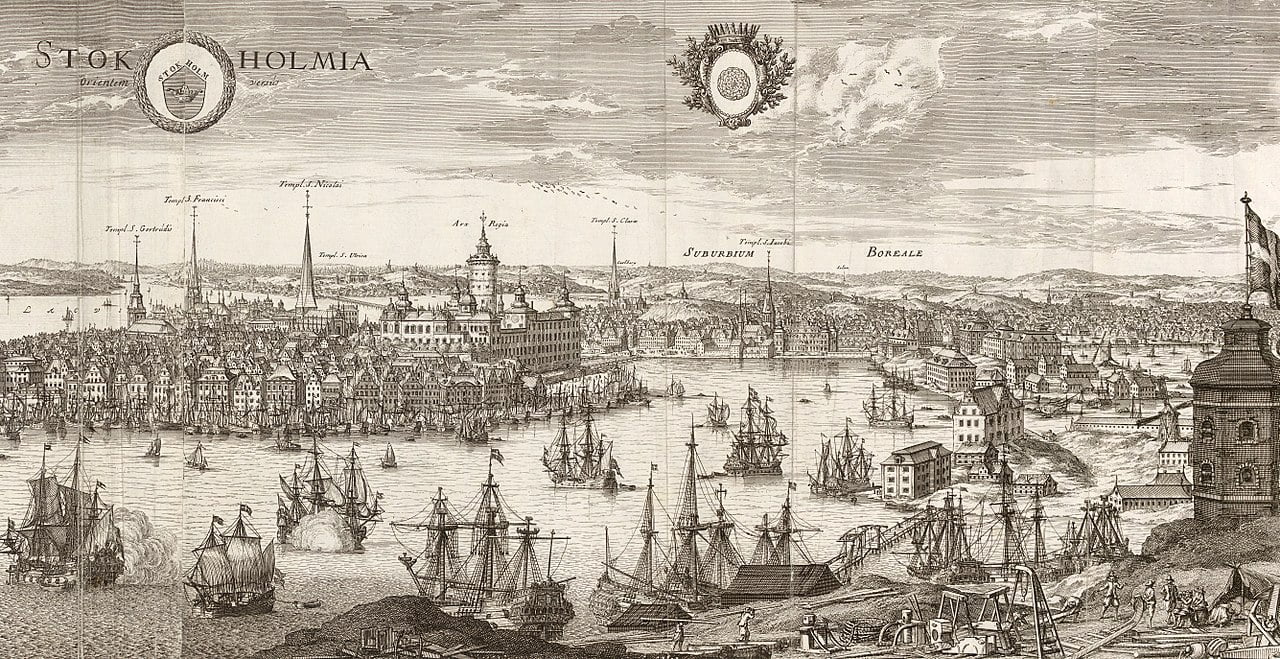
Stockholm is the kingdom’s political and commercial hinge. Control of its waterways matters as much as control of its gates. Royal agents, merchants, noble households and spies crowd the same streets and quays.
Birka
Birka’s great urban trading age is long past. Its harbour landscape, fortifications, graves and buried goods now make it an exceptional archaeological and supernatural adventure site rather than an ordinary functioning city.
Visby
Visby remains a fortified Baltic town shaped by trade, piracy and the memory of greater prosperity. Its walls, warehouses and merchant connections make it ideal for campaigns built around declining privilege, smuggling and contested maritime routes.
Uppsala and the Royal-Sacred World
Royal memory and living divine authority meet around Uppsala. Priests, prophets, noble houses and the crown all understand that a political claim becomes more dangerous when somebody can persuade others that a god has recognised it.
Heroic Houses and Living Legends
Sweden and Geatland contain some of Midgard’s most formidable living heroic traditions.
- Beowulf is a renowned Geatish monster-slayer and ruler whose reputation gives him political weight.
- Dyggvi, Dag the Wise and Agne belong to the Yngling political world, where genealogy and kingship can become immediate causes of conflict.
- Angantyr, Arngrim, Hervor and Heidrek make the Tyrfing-linked dynastic struggle a living political problem rather than a closed saga.
Faith, Magic and Services
The Asgardian Pantheon shapes public life. Freyr matters to prosperity and kingship; Odin to dangerous wisdom, poetry and royal ambition; Týr to oaths and judgement; Thor to protection. Christian institutions also operate in towns and courts, but the older gods remain active powers rather than inherited symbolism.
Stockholm offers court contacts, merchants, armourers, shipwrights and learned specialists. Mining districts attract smiths, rune-workers, artificers and people who understand dwarf craft. Rural sacred sites are more likely to depend on hereditary ritual knowledge and local agreements with spirits or hidden folk.
Dangers, Rumours and Adventure Hooks
- The Barrow Witness. A royal succession case changes when a dead king names an heir nobody expected.
- The Stolen Ore. High-grade metal vanishes from a royal mine without carts, tracks or broken locks.
- The False Envoy. Two delegations arrive in Stockholm carrying identical seals and opposite instructions from Charles VIII.
- The Birka Graves. Treasure hunters open a burial that was meant to remain sealed until a particular bloodline returned.
- The Visby Convoy. Merchants hire the party to protect a Baltic shipment that three different powers insist is contraband.
- The Sacred Election. A priest announces that the gods have rejected a major noble’s oath of loyalty to the king.
Travel and Law
Waterways are central. Coastal sailing, lake routes and rivers connect communities more efficiently than many overland roads. Winter can open frozen routes across lakes and marshes. Forest travel requires local knowledge because supernatural boundaries can matter as much as mapped ones.
Royal law, provincial custom, noble jurisdiction, town privileges, merchant law and sacred obligations overlap. A legal victory in Stockholm may not settle a dispute in a barrow district, mining settlement or nonhuman territory.
The Rival Crown
Sweden’s present political identity is defined by resistance to Christian I’s claim to wider Scandinavian authority. Charles VIII’s supporters present him as protector of Swedish autonomy; his opponents accuse him of concentrating power or endangering commerce. Those arguments are useful in play because both sides possess real interests, powerful allies and the ability to reward adventurers.
The conflict also reaches Finland, the Baltic islands and merchant cities. A party can cross from local monster hunting into high politics simply by discovering that the creature they were hired to kill guards a boundary important to one of the rival crowns.
Explore the Midgard Cluster
Union of Midgard · Denmark · Norway · Finland · Iceland · Greenland · Stockholm · Uppsala · Visby