
Visby
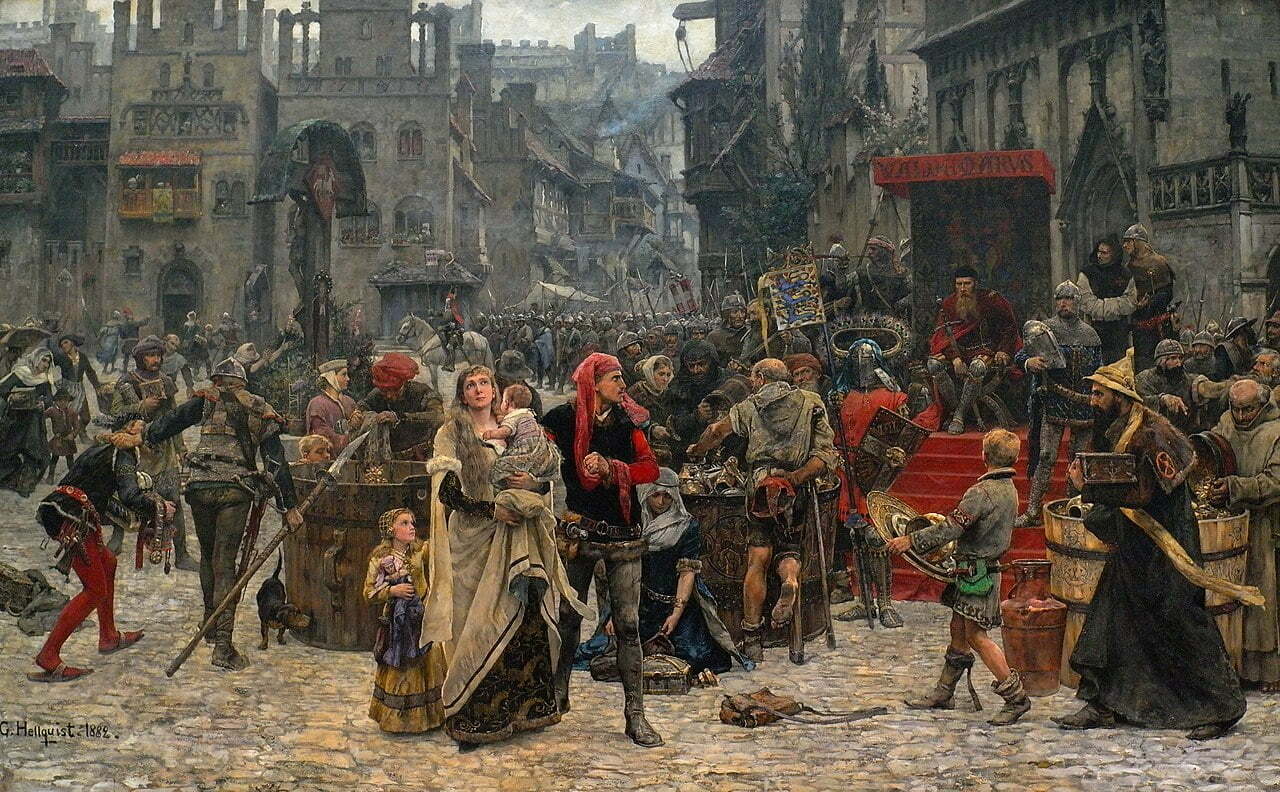
A walled Baltic city of merchants, rival crowns and the shadow of Visborg
At a Glance
| Island | Gotland, in the central Baltic |
|---|---|
| Political Position | Danish-held under Christian I, claimed within the wider struggle with Sweden |
| Type | Fortified merchant city and strategic Baltic port |
| Fortress | Visborg, commanding the harbour and the city from its southwestern edge |
| Major Powers | Danish officers, Gotlandic families, German and Baltic merchants, guilds, shipowners, temple authorities and foreign agents |
| Trade | Grain, fish, hides, timber, wax, metalwork, cloth, salt, luxury goods and information |
| Campaign Themes | Siege politics, merchant intrigue, espionage, piracy, old wealth, contested loyalties and supernatural sea routes |

Visby is a city built for richer days and more dangerous ones. Its great stone wall still encloses warehouses, merchant houses, churches, guild property and narrow streets shaped by centuries of Baltic trade. The city no longer dominates northern commerce as it once did, but decline has made it more politically dangerous rather than less important.
Gotland changed hands in the struggle between Christian I and Charles VIII. The former king Erik of Pomerania surrendered Visborg to Christian in 1449, and Danish power now rests behind the fortress walls. Swedish sympathisers have not disappeared, Gotlandic families remember older rights, and merchants care less about dynastic arguments than about which ruler keeps ships moving.
Visby’s position makes neutrality almost impossible. Danish garrisons watch the harbour, Swedish agents seek friends inside the walls, Hanseatic merchants protect old privileges and pirates know that every convoy passing Gotland is a target worth following.
Explore: Sweden · Denmark · Stockholm · Hanseatic League · Union of Midgard
What Is Happening Right Now?
The Danish Hold Is Recent
Christian I’s possession of Gotland is only a few years old. Officials need reliable garrisons, cooperative merchants and information about anyone corresponding with the Swedish king.
Visborg Watches the City
The fortress protects the harbour but also reminds Visby’s citizens that the crown can look inward as easily as outward. Disputes over stores, billeting and access to the quays are political matters.
Old Merchant Wealth Is Hidden Everywhere
Cellars, warehouses and abandoned religious properties preserve records and goods from richer centuries. A forgotten strongroom can contain coin, relics, contracts or a claim dangerous enough to restart an old feud.
The Baltic Routes Are Violent
Piracy, private war and supernatural hazards make every convoy valuable. Captains arriving late are assumed lost until they appear—or until something wearing their faces walks through a gate.
Run Visby Tonight
The Ring Wall
The towers, gates and dry approaches make Visby one of the strongest urban positions in the Baltic. Guards can close districts quickly, smugglers know forgotten access points and old stones carry marks left by sieges that were never entirely mundane.
Visborg
The castle dominates the harbour and houses the men through whom Danish authority becomes real. Orders, prisoners, weapons, tax records and diplomatic visitors all pass through a fortress built to survive both attack and civic hostility.
Strandgatan and the Merchant Warehouses
Stone warehouses from Visby’s commercial height still line the old trading streets. Some remain rich concerns; others have been subdivided, mortgaged or quietly abandoned. The same building can contain a respectable counting room above and contraband below.
The Harbour
Gotland lies across the routes between Scandinavia, the German ports, Livonia and the eastern Baltic. Pilots, dockworkers and tavern keepers hear news before royal courts do. Anyone hunting a person, cargo or rumour starts here.
People and Powers
| Power | What It Wants | Adventure Pressure |
|---|---|---|
| Danish Officers at Visborg | A secure island, dependable revenue and proof of Swedish interference. | Espionage, escorts, arrests, missing dispatches and counter-smuggling. |
| Gotlandic Families | Local rights, land, access to trade and protection from outside rulers. | Feuds, hidden charters, divided loyalties and rural-city disputes. |
| Hanseatic Merchants | Protected commerce, warehouse rights, predictable tolls and repayment of debts. | Commercial espionage, stolen cargo, convoy protection and sabotage. |
| Swedish Agents | Information, sympathisers and opportunities to weaken Danish control. | Secret meetings, coded letters, extraction missions and false accusations. |
| Temple and Sacred Authorities | Recognition of oaths, sacred property and older obligations beneath changing crowns. | Relics, omens, oath-breaking and disputes no secular court can settle alone. |
Magic, Services and Trade
Visby can outfit a Baltic expedition with armourers, shipwrights, translators, pilots, money changers, physicians, priests, rune-workers and merchants familiar with several legal systems. Rare goods appear unpredictably because the city’s wealth depends upon passing ships rather than a single hinterland.
Magic tied to contracts, navigation and weather has practical value. Merchant houses pay for trustworthy divination when the cost of a lost cargo exceeds the cost of a mage, while captains prefer sea-priests whose warnings have already kept ships alive.
Dangers, Rumours and Adventure Hooks
- The Closed Gate. A gate captain seals part of the city after receiving an order supposedly signed at Visborg; the castle denies sending it.
- The Swedish Chest. Dockworkers discover weapons hidden inside a merchant cargo marked for a respectable German house.
- The Empty Warehouse. A locked warehouse contains no cargo, only fresh seaweed and footprints leading up a stone wall.
- The Old Ledger. A thirteenth-century account book proves that three powerful families owe the same debt to an organisation that still exists.
- The Pirate’s Pardon. A notorious captain claims to possess a valid royal pardon, but both Denmark and Sweden say the seal belongs to the other crown.
- The Bell Beneath Visborg. Soldiers hear a bell under the fortress foundations before every shipwreck.
Travel and Law
Visby is reached primarily by sea. Sailing times depend on weather, convoy practice and the danger of hostile ships. Inside the walls, movement is easy until the gates close; then the city’s fortifications turn neighbourhoods into compartments controlled by whoever holds the nearest tower.
Royal authority, town custom, guild privilege and merchant law overlap. Foreign traders may possess rights that local residents resent, while a Danish military order can collide with an older civic privilege. Adventurers carrying authority from one institution should expect another to challenge it.
Deeper History
Visby rose from a Viking-age harbour into the greatest Baltic trading city of its era. Its stone warehouses, merchant houses and ring wall belong to that commercial peak. Plague, the Danish conquest of 1361, warfare, piracy and changing routes reduced its dominance, but they did not erase the city or its accumulated wealth.
The latest struggle is still fresh. Erik of Pomerania held Visborg after losing his crowns, Swedish forces attempted to take Gotland, and the island passed into Christian I’s hands in 1449. Everyone old enough to remember those events has an opinion about who betrayed whom.
Historical Sources
Historical grounding: UNESCO — Hanseatic Town of Visby · Region Gotland — Medieval Visby.
Explore the Midgard Cluster
Union of Midgard · Sweden · Denmark · Stockholm · Birka · Hanseatic League · Midgard Bestiary
Keep this reference growing
If this page helped with your reading or game, you can support its upkeep or explore the curated books.
Explore the Bookshop — epics, classics and stories behind imagined worlds.