
Glasgow — Cathedral City and the New University
Scotland · Cathedral city · University · Clyde route
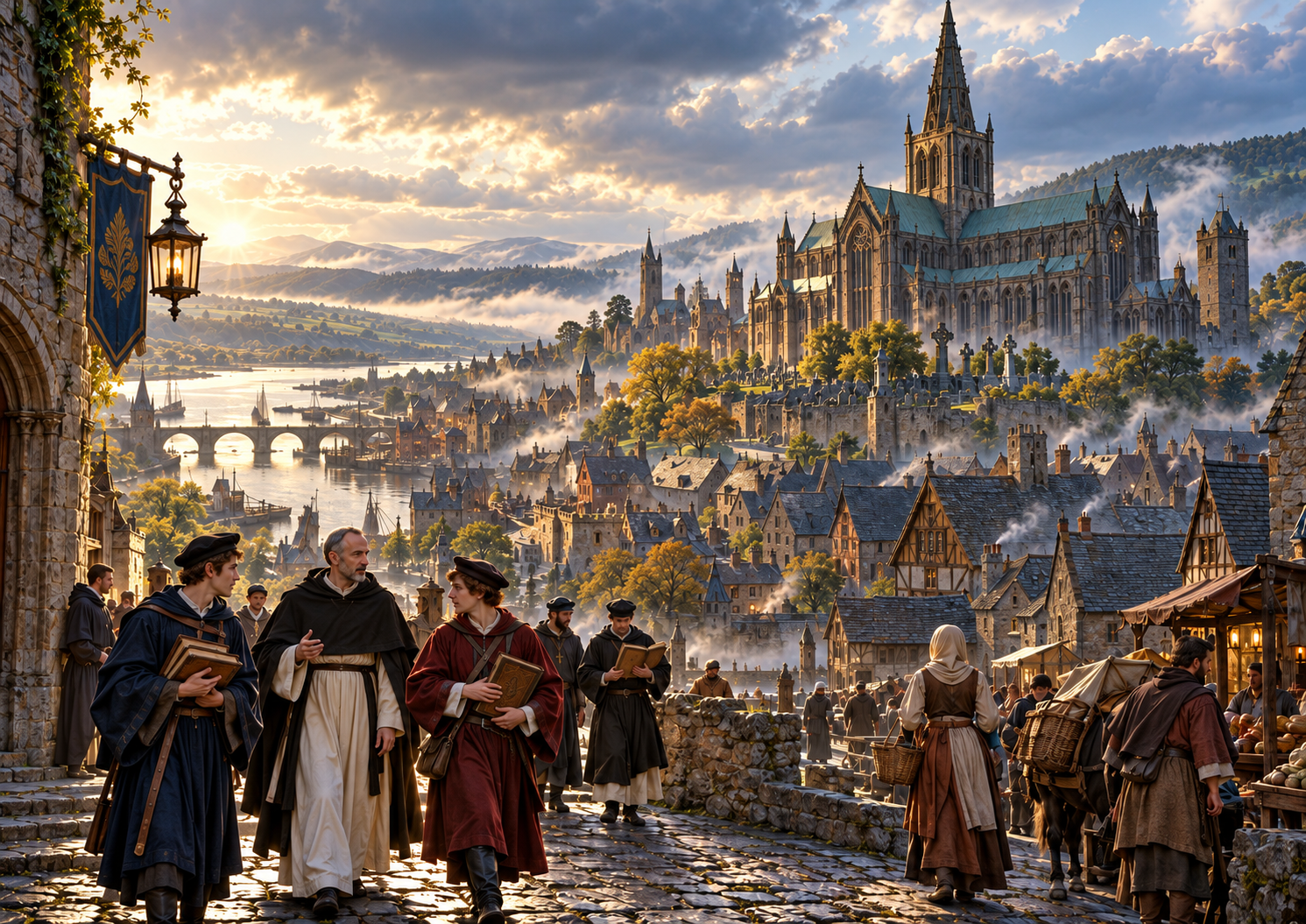
Glasgow is changing faster than most Scottish towns. Its cathedral and the shrine of St Mungo already make it a major religious centre; now the university founded in 1451 is drawing masters, students, clerics, lawyers and ambitious patrons into the same streets.
At a Glance
| Realm | Kingdom of Scotland |
|---|---|
| Character | Cathedral town, pilgrimage centre and newly founded university city |
| Great institutions | Glasgow Cathedral, St Mungo’s shrine and the University of Glasgow |
| Best for | Scholarly mysteries, church politics, relics, legal disputes, student trouble and urban supernatural investigations |
| Routes | Clyde valley, western roads, central Scotland and the approaches to the Highlands |
| Supernatural pressure | Saintly relics, crypts, spirits, magical texts and scholars testing boundaries they do not yet understand |
What Is Happening Right Now?
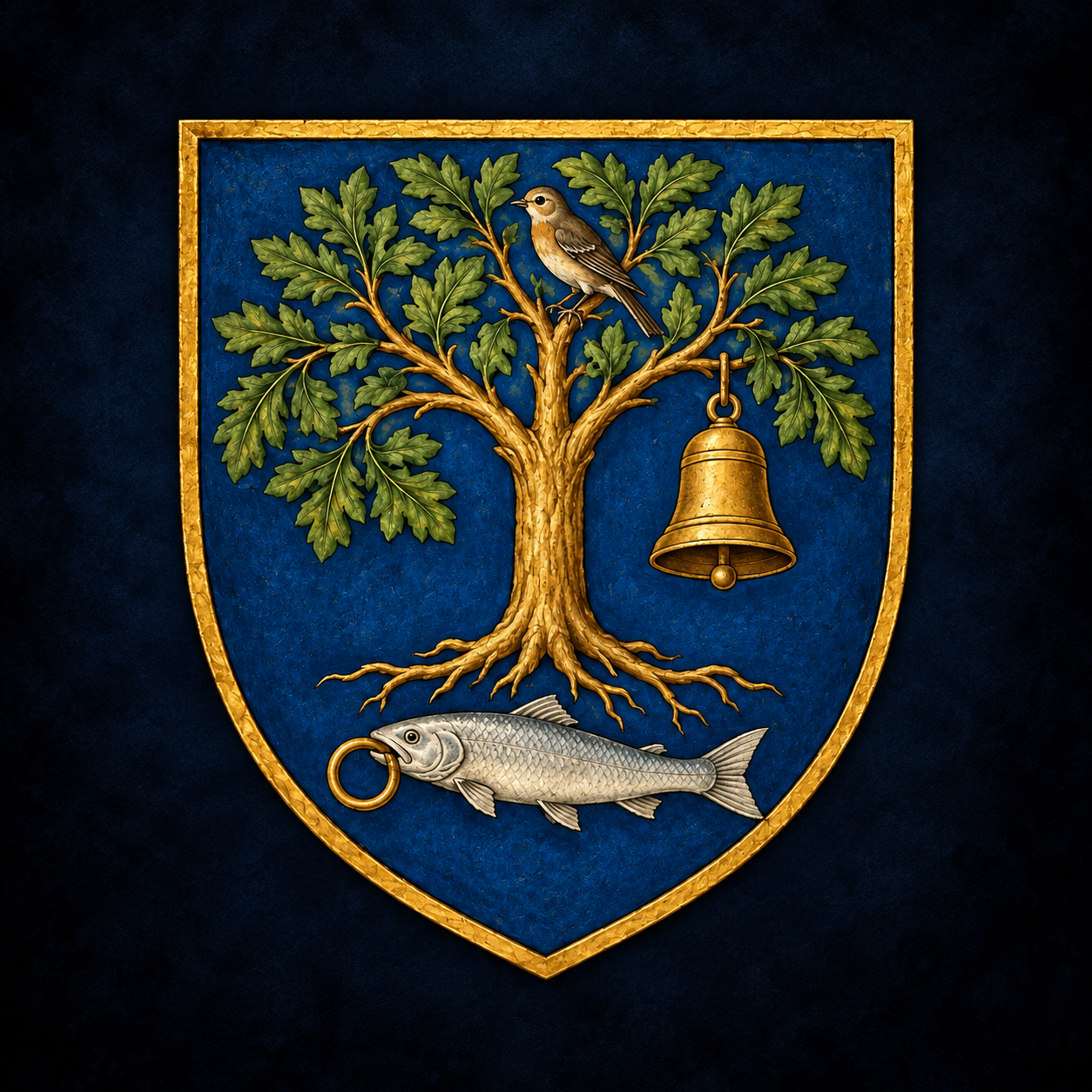
The University of Glasgow is only three years old. Its masters teach in the orbit of the cathedral, and the institution is still small enough that personalities matter. A dispute between two scholars can become a dispute between patrons; a missing manuscript can become a church investigation; a gifted student can attract attention from powers outside the university entirely.
The cathedral anchors the city. Pilgrims come for St Mungo, clergy administer an important diocese, and the lower church holds a sacred geography beneath the visible streets. Glasgow is therefore ideal for adventures where ordinary scholarship, ecclesiastical authority and genuine magic overlap.
Run Glasgow Tonight
The Book That Answers Back
A university master acquires a commentary copied in northern France. Marginal notes begin appearing overnight in a second hand. The answers are correct, but they reveal facts the writer should not know.
The Empty Shrine
A pilgrim swears that St Mungo’s crypt was empty for several minutes during the night office. The clergy deny anything happened. A mason later discovers wet footprints where no door exists.
The Chancellor’s Student
A brilliant law student disappears after claiming to have found a contradiction between a royal charter and an older oath attached to the land beneath the city. Three different patrons want his notes.
People and Powers
The cathedral chapter controls access to sacred spaces, records and clerical authority. Its members are not a single faction.
The university is small, ambitious and vulnerable. Masters need patrons; students need lodging, books and protection; legal privileges can anger townspeople.
Merchants and craftspeople make the city function and often know more about strangers than scholars do.
Royal interests see learned clergy and lawyers as valuable tools in a kingdom where James II is working to strengthen the Crown.
Magic, Relics and Learning
Glasgow is one of the best places in Scotland to put magical knowledge inside institutions rather than wilderness. A spellbook can be evidence in a church court. A relic may genuinely repel a spirit but still be fought over as property. A scholar of natural philosophy may accurately describe a supernatural phenomenon without understanding who caused it.
Use the university as a source of translators, scribes, legal specialists and educated patrons, not as a modern magical academy. Magic remains part of the wider world, but the institution is still learning how to classify what is real.
Travel and Adventure Routes
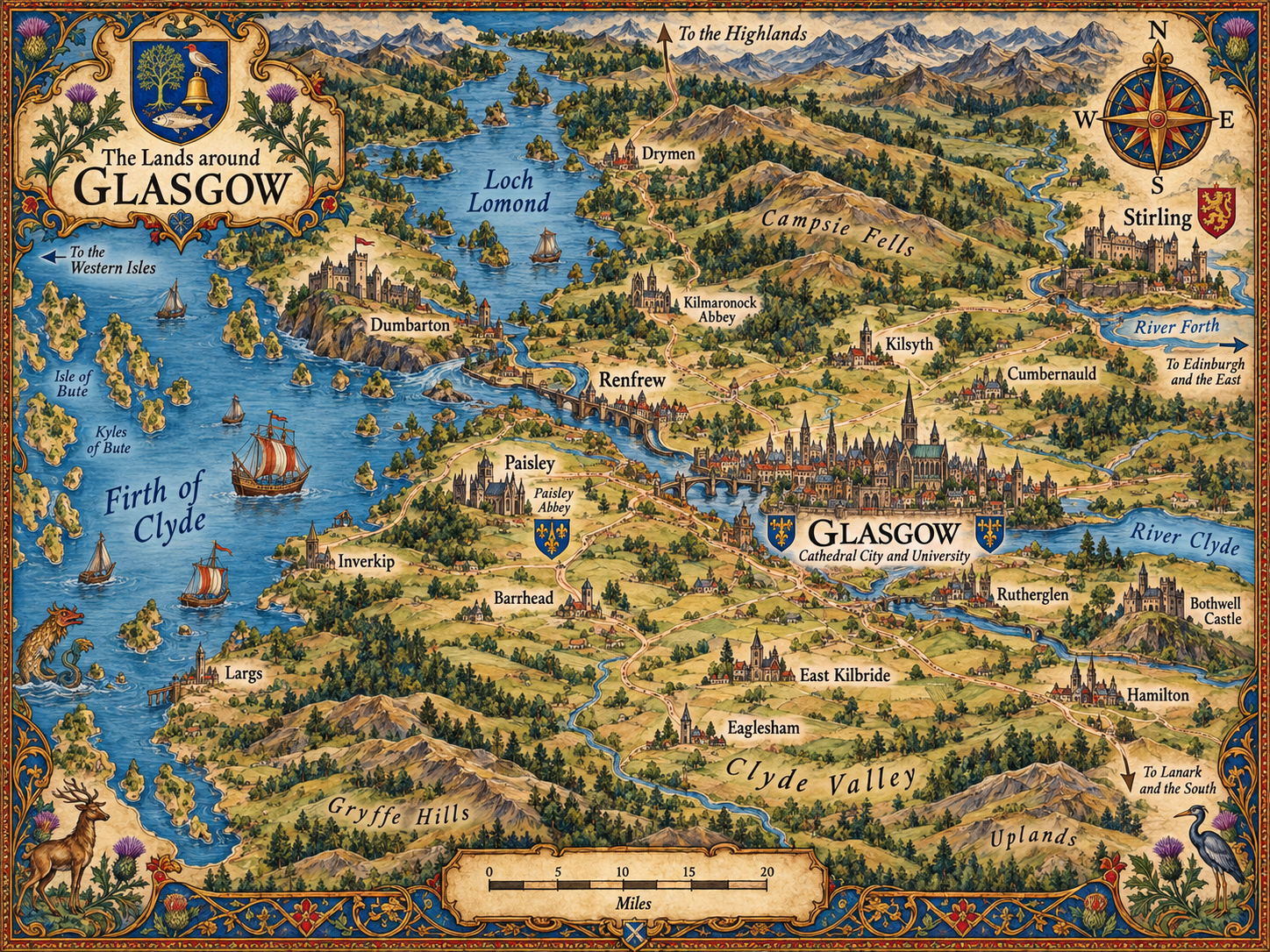
Westward roads eventually pull campaigns toward the Lordship of the Isles. Northward expeditions lead into the Scottish Highlands. Eastward travel links Glasgow with royal politics at Stirling and Edinburgh.
Landmarks & Places to Know
Glasgow Cathedral and the Lower Church
The cathedral is more than a backdrop. Its crypt, tombs, chapels, screens and service spaces create a layered adventure site beneath an active religious institution. Pilgrims seek St Mungo; clergy guard access; masons and servants know passages scholars overlook. A supernatural disturbance here is immediately a problem of faith, reputation and jurisdiction.
The University Rooms
The university is still young enough to feel improvised. Teaching can happen in borrowed or adapted rooms close to ecclesiastical power rather than in a vast purpose-built campus. That makes every manuscript, patron, lodging house and teaching space important. A quarrel between masters can spill directly into cathedral politics or town life.
The Clyde Route
The river connects Glasgow to western travel and trade. Barges, ferries, mills and river landings offer a different social world from cathedral precincts: boatmen, labourers and merchants can move objects and rumours without passing through scholarly hands.
Taverns, Inns & Lodgings
High Street Alehouses
Glasgow’s central drinking houses serve craftsmen, students, servants, merchants and travellers moving through the burgh. They are good places to hear disputes before they reach officials and to find guides, porters or someone willing to carry a message quietly.
Bridge-End Inns
Travellers approaching the Clyde crossing need stabling, food and rooms before or after the road. These inns see drovers, packmen and armed retainers as often as scholars, and their yards are natural places to hire animals or watch who is entering town.
River and Road Lodgings
Cheaper houses gather where traffic leaves the better streets. They offer little privacy but plenty of information: missing cargo, unsafe roads, feuds and rumours from the west usually arrive here before they reach respectable halls.
Services, Knowledge and Useful Contacts
Glasgow is a strong place to obtain scribal work, translations, legal advice, clerical introductions and access to educated witnesses. The university does not function as a magical shop, but its scholars can identify languages, compare manuscripts, debate natural philosophy and recognise when a text belongs to a tradition beyond ordinary learning.
The cathedral adds another layer: relic custodians, clergy, pilgrims and church courts can authenticate claims, provide sanctuary or complicate an investigation. Characters who arrive with a strange object may find three different authorities claiming the right to examine it.
Household Fey and the River
Glasgow’s growth has not driven the old beings away. Brownies still attach themselves to prosperous kitchens, workshops and storehouses, especially where food is left out without ceremony and good work is acknowledged rather than ordered.
Bogles haunt closes, neglected yards and the rougher approaches to the burgh. Along the Clyde, travellers are warned against unfamiliar horses standing quietly at the water’s edge; a kelpie does not need a Highland loch to find prey.
Students and scholars argue over whether these beings belong to folklore, Faerie or natural philosophy. The beings themselves show little interest in the distinction.
Historical Foundation
The University of Glasgow was founded by papal bull in 1451 at the request of James II and through the work of Bishop William Turnbull. The university’s own history records teaching beginning at Glasgow Cathedral. Historic Environment Scotland identifies the cathedral as a major medieval pilgrimage centre housing the tomb and shrine of St Mungo.
University of Glasgow — Our History · Historic Environment Scotland — Glasgow Cathedral
Keep this reference growing
If this page helped with your reading or game, you can support its upkeep or explore the curated books.
Explore the Bookshop — epics, classics and stories behind imagined worlds.