
At a Glance
| Realm | English Crown, across the Channel |
|---|---|
| Region | Calais and its fortified Pale, on the continental shore |
| Authority | Captain of Calais, royal garrison, town officers and Company of the Staple |
| Livelihood | English wool, harbour freight, victuals, customs, moneychanging and military pay |
| Explore | The harbour, English frontier forts and a wreck watched by a living nereid |
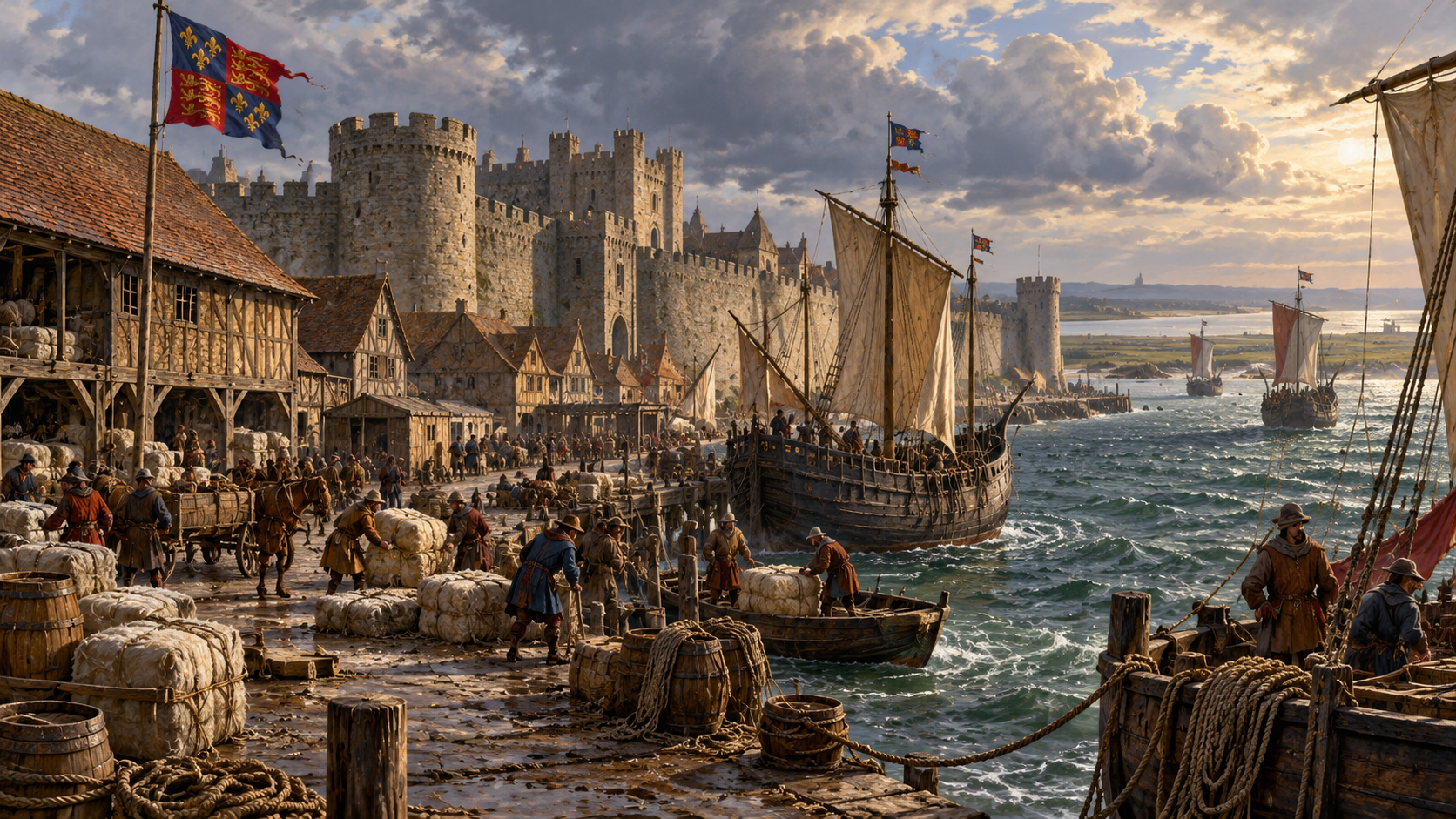
If you have just crossed from Dover, you have not arrived in the Kingdom of France. Calais has English soldiers on its walls, English wool in its warehouses and an English captain deciding which messengers may leave. Outside the landward gates, though, the ruler changes within a short ride. Here a merchant’s account book can carry as much power as a sword.
What Is Happening Right Now?
A ship overdue from Dover has been seen grounded beyond the harbour watch, where the tidal shallows swallow the last of the daylight. A pilot says its crew have been signalling for help; a second lookout swears that a woman has been standing in the water beside the wreck. The harbour master needs a sound boat, warm blankets and volunteers before the tide returns.
At the Staple, English wool factors have gathered beneath the weighing beams while soldiers wait for late pay. Mistress Meryn Bell has fed several of the watch on credit, but says the town cannot survive another week if the garrison goes hungry. The warehouse doors remain open for business. The practical danger is that tired armed men may stop obeying their officers.
Someone has also brought ashore a small silver-bound chest from an older wreck. A sailor who handled it says the waves went entirely quiet. Beyond the harbour the nereid of that lost vessel is moving towards the shoals: her captive veil is inside the chest.
The Streets, Walls and Harbour
The Staple houses and weighing yard
English wool is brought here in sealed packs before it can be sold to continental buyers. Weights, merchant marks, storage keys and receipts matter. A bale delivered without an honest tally can ruin an agent who never touched the cargo. Merchants gather here to compare the exchange value of English and foreign coins.
The castle and town walls
Stone defences enclose a compact town, and a castle protects one end. Guns are now among the garrison’s weapons, but the town has not become a later star-shaped artillery fortress. The captain’s men inspect horses, weapons and carts passing the landward gate. A visitor who insults a sentry may find their merchant companions just as angry as the soldier.
The harbour and Rysbank watch
Cargo moves to and from vessels that depend on the tide. Rope makers, pilots, porters and customs officers work side by side, often in bad weather. Lookouts at the outer harbour watch the coast and passing ships. A cargo can arrive safely yet stay aboard for a day because it cannot be unloaded.
The market and the moneychangers
Soldiers buy food with wages that arrive late; merchants change coin at rates that do not match those used in London or Bruges. The Calais mint closed in 1442, so a visitor should not expect to have any foreign coin freshly reminted at an operating royal mint here. Check both the money and the price before paying.
Roads through the Pale
The English possession includes a belt of land beyond the walls. Guînes and Hammes remain major fortified positions after the Burgundian attack of 1436 damaged other outworks. Small farms, hedges, watercourses and boundary stones complicate the frontier. It is possible to cross from one lord’s jurisdiction to another without seeing a wall.
Where to Sleep, Eat and Find Help
The Wool Key — beside the Staple
Comfortable and expensive. Mistress Meryn Bell has four screened bedchambers, mutton pottage, good ale, bread and a locked cart yard. Factors from London, Hull and Bruges use her upstairs chamber to write contracts. A young clerk left an unsigned copy of the disputed wool tally under a mattress and has not dared return for it.
The Broken Oar — harbour lane
Cheap and crowded. Pell Hook gives sailors pease broth, salt fish, ale and a space on the floor beside the hearth. A few horses can be tied in an open yard; it is not guarded after dark. Sailors, dock labourers and soldiers between paydays drink here. Pell keeps a sealed bundle for a missing boatman whose wife has already come looking.
The Wardens’ Guest Hall — near the sacred precinct
Plain shelter, subject to need. Travellers with letters of introduction may obtain a modest room; poor mariners sometimes find a pallet and a meal. The polytheistic sacred keepers expect visitors to respect the rites and do not offer armed parties a free barracks.
Work you can actually hire
Licensed pilots advise on wind and safe berths, porters move packed wool, a smith repairs horseshoes or rivets, a barber-surgeon treats injuries and a notary can authenticate a contract. A shipmaster’s agreement does not pay the harbour duty; a royal warrant does not settle a private debt.
People Who Can Change Your Journey
Meryn Bell runs the Wool Key inn and knows the harbour’s merchants. She has fed the unpaid watch and will help a castaway without asking his rank. A warm room may be bought for coin; her trust takes more effort.
Aline d’Artois speaks the languages of English soldiers, Picard farmers and Flemish merchants. She can guide travellers out of the Pale and knows which fields flood after rain. Her brother’s farm lies just beyond the English frontier.
Oswin Tey is a garrison clerk whose hands are ink-stained but whose boots are worn from carrying messages to the ramparts. He needs supplies and news of the overdue ship more than another argument in front of the warehouse.
Agnes Flete buys and sells wool for the Company of the Staple. She will advance stores for a rescue crew if someone guarantees their return; she knows every trustworthy porter on the waterfront and a few who are not.
The Living Sea Beyond the Harbour
The channel is inhabited, not merely crossed. A solitary nereid keeps a stretch of shallow water near an older wreck beyond the defended harbour. A merchant ship brought her from southern seas in a chest bound with chain; the vessel struck a shoal and broke. She has not become a native sea goddess of Calais, but she will not leave until the stolen veil that holds part of her life is returned. She is neither the patron spirit of Calais nor a monster that appears beside every vessel. Fishermen who have seen her know that she protects the wreck and objects taken from its timbers. She has no claim over the merchants’ streets.
Last week a sailor recovered a silver-bound chest from that wreck and hid it in a warehouse. He does not know that the chest holds her captive veil. Since then the water beside the harbour has turned strangely still whenever his boat attempts to depart. He thinks his captain has cursed him; the nereid is demanding the stolen object back. The party can negotiate its return, trace the chest’s owner or discover why a wool factor secretly wants what lies inside.
A skilled tide-reader or genuine spellcaster can help with the crossing. A charm sold beside the quay is not automatically effective simply because the seller invokes the sea gods. Weather, seamanship and supernatural choices all have consequences.
Adventures in the English Pale
- Men on the shoal: Find a pilot willing to take a boat out in failing light. The grounded ship’s crew need water, blankets and a rope to reach safer mud before the tide rises. A heroic rescue wins the harbour’s gratitude, but the ship’s owner will also demand that the wool aboard be saved.
- The veil in the chest: Follow the silver-bound coffer from a quay-side labourer to the merchant who bought it. The nereid can speak to those who approach her shoal without weapons; she seeks her lost veil, not a battle with every passing vessel. Returning it may require persuading someone who believes the object is a treasure worth a fortune.
- Supper for the watch: Meryn Bell can obtain grain and broth if the party helps unload a vessel and escort its carts through a restless town. Soldiers who get food remain on watch; soldiers who go hungry may try to take supplies from the next merchant. Aline d’Artois knows whose carts can safely use the landward road.
The Next Stage: Dover or the Mainland
Back across the Channel: From Calais, a ship takes you to Dover when weather and the captain permit. From there the road runs through Canterbury and Rochester to London.
South-west to Boulogne: Leave the English Pale and follow the coast road into the count’s territory. From Boulogne continue towards Montreuil, Abbeville and Amiens; the royal road onward reaches Beauvais and Paris. The Calais garrison cannot protect you throughout this journey.
Alternative landing: Wissant remains a possible shore, but a shipmaster’s decision is not a reliable timetable.
Travel the complete route: London → Rochester → Canterbury → Dover → Calais → Boulogne → Montreuil → Abbeville → Amiens → Beauvais → Paris.
Plan food, beds, weather delays, coin and written safe-conduct for the political frontiers. Historical road distances vary with the path you take.
How the English Pale Came to Exist
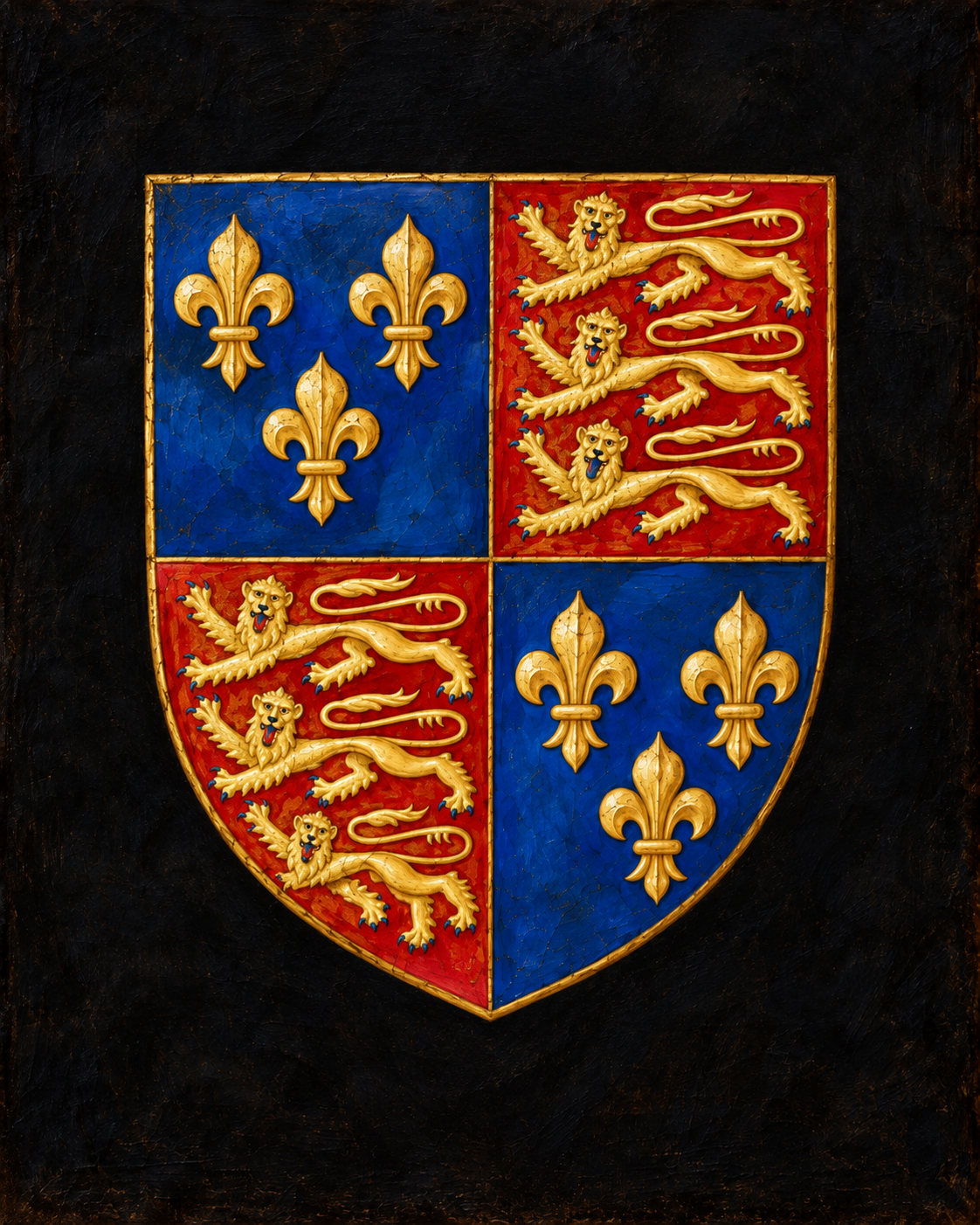
Edward III took Calais in 1347 after a long siege. English settlement, garrison service and maritime trade remade the town. The wool staple moved to Calais in 1363, concentrating English wool exports and taxing commerce to help finance the defence of the port.
Guînes and Hammes remain vital fortresses after the Burgundian siege of 1436, which destroyed several lesser works. The Pale is not the whole county of Picardy; beyond its roads and marshes lie rival rulers’ subjects. The English Crown has lost Normandy and Gascony in the wider war, making the possession of Calais all the more sensitive.
The Calais mint ceased operating in 1442. Currency conversion still matters, but its absence should be felt in daily commerce. The garrison and the wool merchants share an unstable dependence on one another. Their quarrels are the reason this town makes a good adventure, not merely a place to change ships.
Map and Local Geography
This OpenStreetMap locator marks present-day Calais. It is not a reconstruction of the medieval walls, marshes, streets or boundaries of the English Pale.
Sources and Onward Places
The Calais Garrison: finance and supply (Cambridge University Press) · The Calais Garrison: context and the Pale (Cambridge University Press) · The Celys and their World: the Staple and Calais currency (Cambridge University Press) · University of Pennsylvania: Calais and English travellers
The road connects Dover, Montreuil-sur-Mer, Abbeville and Paris. For the wider political setting, see England and Kingdom of France.
Keep this reference growing
If this page helped with your reading or game, you can support its upkeep or explore the curated books.
Explore the Bookshop — epics, classics and stories behind imagined worlds.