
Bard Magic • Spell Reference
Slow Spell
Time Magic • Temporal Drag
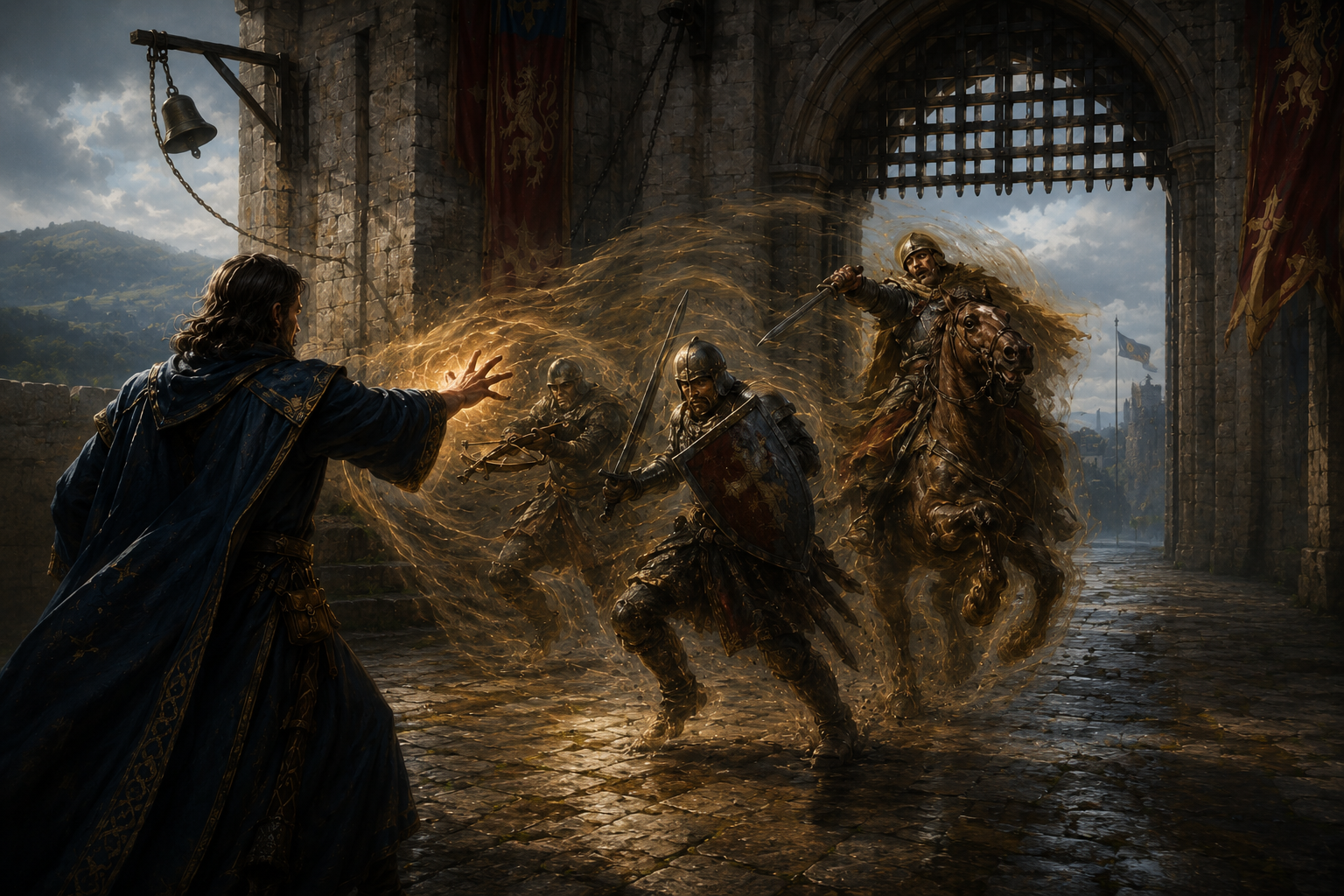
Slow does not merely make a creature sluggish; it breaks the timing that lets it fight, flee, defend, cast, and survive.
The Slow Spell is one of the most useful battlefield-control spells in fantasy roleplaying because it attacks tempo rather than flesh. It does not kill, charm, blind, paralyse, or imprison. Instead, it makes the victim late.
A slowed creature still understands the battle. It sees the sword descending, the gate closing, the spell forming, or the archer drawing the bow. The horror is that the body answers too slowly. Feet drag. Hands rise late. Armour feels heavier. Words take too long to become magic. The world seems to move with cruel precision while the target pushes through invisible molasses.
In play, the Slow Spell is best used against enemies who depend on movement, repeated attacks, reactions, spell timing, or battlefield position. It is especially strong against charging cavalry, pouncing beasts, duelists, elite guards, spellcasters, and monsters that normally overwhelm the party with many attacks.
The spell is dangerous because it leaves the victim present, conscious, and aware. A slowed knight is not removed from the duel; he is humiliated inside it. A slowed commander can still see the battle collapsing. A slowed dragon can still rage, but its full fury arrives too late.
In the world, the Slow Spell is feared because it can decide a moment without leaving obvious wounds. It can turn a fair duel into a scandal, a lawful arrest into a controlled capture, a battlefield charge into a slaughter, or an assassination into something everyone sees but no one stops in time.
Slow at a Glance
| Bard access | Level 3 in 2024, Pathfinder 1e and D&D 3.5e; 2014 access requires an appropriate option or feature. |
|---|---|
| Role | Battlefield control through movement and action limits. |
| Resistance | Wisdom with repeated saves in modern D&D; Will in the legacy games. |
| Key 2024 change | A 25% Somatic-spell failure chance replaces the 2014 action-cast delay. |
| Legacy interaction | Slow counters and dispels Haste in Pathfinder 1e and D&D 3.5e. |
Practical Quick Reference
- Spell Type: Transmutation.
- Core Use: Battlefield control and tempo disruption.
- Best Targets: Fast enemies, multiattack creatures, spellcasters, duelists, cavalry, fleeing enemies, and monsters relying on reactions.
- Save: Mental resistance rather than physical toughness.
- Main Effect: The target moves more slowly, acts less efficiently, defends worse, and loses combat timing.
- Stacking: Multiple Slow Spell effects do not stack.
- Opposed Magic: The Slow Spell counters, suppresses, or interferes with magical speed such as Haste, depending on edition.
Effects
Slow is a tempo-control spell. It wins by reducing what enemies can do during the turns that matter most.
The spell does not need to paralyse or silence a target to change a fight. It makes movement late, attacks fewer, reactions unreliable, spell timing fragile, and battlefield choices harder. A creature affected by Slow may still be dangerous, but it cannot bring its full rhythm to bear.
Spell Rules by Edition
Slow — 5.5e / 2024
Rules source: System Reference Document 5.2.1.
| Level & school | 3rd-level Transmutation |
|---|---|
| Classes | Bard, Sorcerer, Wizard |
| Casting time | Action |
| Range | 120 feet |
| Targets | Up to six creatures of your choice in a 40-foot cube |
| Components | V, S, M (a drop of molasses) |
| Duration | Concentration, up to 1 minute |
| Saving throw | Wisdom; repeated at the end of each affected turn |
You warp the flow of time around up to six creatures of your choice in a 40-foot cube within range. Each target makes a Wisdom saving throw. On a failed save, the creature is slowed for the duration.
While slowed, a creature suffers the following effects:
- Its Speed is halved.
- It takes a -2 penalty to AC and Dexterity saving throws.
- It cannot take Reactions.
- On its turn, it can take either an Action or a Bonus Action, not both.
- If it takes the Attack action, it can make only one attack, even if it would normally make more.
- If it casts a spell with a Somatic component, there is a 25% chance that the spell fails because its gestures are too slow.
At the end of each of its turns, a slowed creature repeats the Wisdom saving throw. On a success, the spell ends on that creature.
Alternative Spell Name: Temporal Drag.
Notes
Slow is strongest against enemies that rely on multiple attacks, reactions, high movement, spell timing, or bonus-action pressure. It is weaker against creatures that already make one major action per turn and do not depend on movement.
A slowed creature is impaired, not helpless. It can still choose intelligently, speak, take cover, retreat, make one dangerous attack, cast a spell, use an item, or try to break the caster’s concentration.
Optional house rule: the following cancellation suggestion is commentary, not an additional 2024 spell rule.
If a creature is affected by both magical acceleration and magical slowing, use the rules of the edition being played. As a simple table ruling, rival speed effects should cancel or suppress each other rather than stack into confusing timing loops.
Slow — 5e / 2014
Rules source: System Reference Document 5.1.
| Level & school | 3rd-level Transmutation |
|---|---|
| Classes | Sorcerer, Wizard (2014 base lists) |
| Casting time | 1 action |
| Range | 120 feet |
| Targets | Up to six creatures of your choice in a 40-foot cube |
| Components | V, S, M (a drop of molasses) |
| Duration | Concentration, up to 1 minute |
| Saving throw | Wisdom; repeated at the end of each affected turn |
You change time around up to six creatures you choose in the cube. Each makes a Wisdom saving throw; failure subjects it to the spell until it ends.
- The target’s speed is halved, and it has a −2 penalty to AC and Dexterity saving throws.
- It cannot take reactions.
- On its turn it can take an action or a bonus action, but not both.
- Regardless of its abilities or magic items, it cannot make more than one melee or ranged attack during its turn.
- When it attempts a spell with a casting time of 1 action, roll 1d20. On 11 or higher, the spell is delayed until its next turn, when it must spend its action to complete the casting. If it cannot, the spell is wasted.
An affected creature makes another Wisdom saving throw at the end of each of its turns. A successful save ends the effect on it.
Slow is absent from the 2014 base Bard list. A Bard needs an applicable optional rule or character feature to gain access; the 2024 Bard list includes it normally.
Slow — Pathfinder 1e
Rules source and expanded class list: Archives of Nethys — Slow.
| School | Transmutation |
|---|---|
| Level | Arcanist 3, Bard 3, Bloodrager 3, Magus 3, Medium 2, Occultist 3, Psychic 3, Red Mantis Assassin 3, Skald 3, Sorcerer 3, Spiritualist 3, Summoner 2, Unchained Summoner 3, Wizard 3 |
| Casting time | 1 standard action |
| Components | V, S, M (a drop of molasses) |
| Range | Close (25 ft. + 5 ft./2 caster levels) |
| Targets | One creature per caster level, no two more than 30 ft. apart |
| Duration | 1 round/level |
| Saving throw | Will negates |
| Spell Resistance | Yes |
In Pathfinder, affected creatures are staggered.
Affected creatures move and act at a drastically reduced rate. A slowed creature can take only a single move action or standard action on its turn, but not both. It cannot take full-round actions.
A slowed creature also takes a -1 penalty on attack rolls, AC, and Reflex saves. Its speed is reduced to half normal, rounded down to the next 5-foot increment. This reduced speed affects jumping distance and other movement-dependent actions normally.
Multiple Slow effects do not stack. Slow counters and dispels Haste.
Notes
This version of Slow is devastating against creatures that depend on full attacks, full-round actions, charges, movement-and-attack turns, or repeated natural attacks. A slowed monster may still be dangerous, but it loses the ability to bring its full turn pressure to bear.
A slowed creature must choose between movement and action. It can move into cover, attack once, draw an item, cast a standard-action spell, open a door, stand up, or take another legal action, but it cannot combine movement and standard action in the usual way.
This makes the spell especially effective against pouncing beasts, elite melee combatants, mounted attackers, hasted foes, and enemies trying to escape.
Slow — D&D 3.5e
Rules source: Revised System Reference Document — Slow.
| School | Transmutation |
|---|---|
| Level | Bard 3, Sorcerer/Wizard 3 |
| Casting time | 1 standard action |
| Components | V, S, M (a drop of molasses) |
| Range | Close (25 ft. + 5 ft./2 caster levels) |
| Targets | One creature per caster level, no two more than 30 ft. apart |
| Duration | 1 round/level |
| Saving throw | Will negates |
| Spell Resistance | Yes |
Affected creatures move and act at a drastically reduced rate. A slowed creature can take only a single move action or standard action on its turn, but not both. It cannot take full-round actions.
A slowed creature also takes a -1 penalty on attack rolls, AC, and Reflex saves. Its speed is reduced to half normal, rounded down to the next 5-foot increment. This reduced speed affects jumping distance and other movement-dependent actions normally.
Multiple Slow effects do not stack. Slow counters and dispels Haste.
Notes
This version of Slow is devastating against creatures that depend on full attacks, full-round actions, charges, movement-and-attack turns, or repeated natural attacks. A slowed monster may still be dangerous, but it loses the ability to bring its full turn pressure to bear.
A slowed creature must choose between movement and action. It can move into cover, attack once, draw an item, cast a standard-action spell, open a door, stand up, or take another legal action, but it cannot combine movement and standard action in the usual way.
This makes the spell especially effective against pouncing beasts, elite melee combatants, mounted attackers, hasted foes, and enemies trying to escape.
What Changes by Edition?
| 2024 | Somatic-component spells have a 25% failure chance. The one-attack restriction applies when taking the Attack action. |
|---|---|
| 2014 | An action-cast spell has a 50% chance to be delayed, with a completion action required next turn. No more than one melee or ranged attack may be made during the target’s turn. |
| Modern action limits | Speed halved, −2 AC and Dexterity saves, no reactions, and an action or bonus action rather than both. Each target repeats its Wisdom save at its turn’s end. |
| Pathfinder 1e and D&D 3.5e | −1 attack rolls, AC and Reflex saves; half speed rounded down to a 5-foot increment; one move or standard action and no full-round action. Duration scales with level, and Slow counters and dispels Haste. |
Modern Slow has no automatic Haste-countering or dispelling clause. The legacy spell does. Use the selected edition’s combined-effect rules; optional cancellation suggestions in the guide are house rulings.
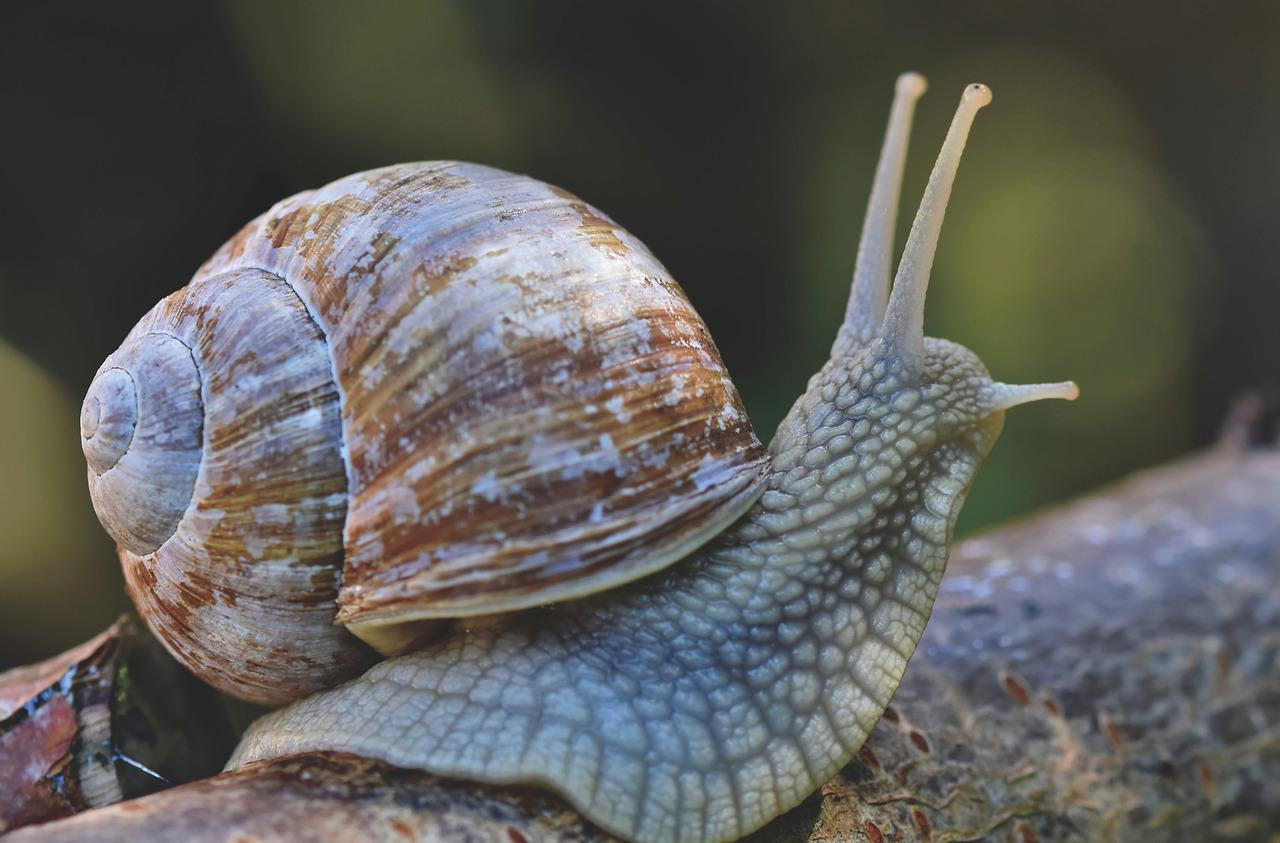
Original 3.0e-labelled text — historical archive
This preserves the older edition label and prose from the page. Use the independently sourced edition panels above for the modern, Pathfinder 1e and D&D 3.5e rules.
‘Spell Slow ‘ – An affected creature moves and attacks at a drastically slowed rate.
This material is Open Game Content, and is licensed for public use under the terms of the Open Game License v1.0a.
Transmutation
Level Bard 3, Sorcerer/Wizard 3
Components V, S, M
Casting Time 1 standard action
Range Close (25 ft. + 5 ft./2 levels)
Targets One creature/level, no two of which can be more than 30 ft. apart
Duration 1 round/level
Saving Throw Will negates
Spell Resistance Yes
A slowed creature can take only a single move action or standard action each turn, but not both (nor may it take full-round actions). Additionally, it takes a -1 penalty on attack rolls, AC, and Reflex saves. A slowed creature moves at half its normal speed (round down to the next 5-foot increment), which affects the creature’s jumping distance as normal for decreased speed.
Multiple slow effects don’t stack. Slow counters and dispels haste.
Material Component A drop of molasses.
Why This Spell Is Dangerous in the World
Slow is dangerous because it ruins timing without leaving obvious wounds.
In a late medieval world of oaths, trials, charges, bells, messengers, gatehouses, executions, and public duels, a few stolen seconds can change law and history. A royal guard reaches the assassin too late. A champion raises his shield after the blade has already passed. A messenger sees the gate closing but cannot reach it in time. A condemned prisoner hears the pardon shouted from the road, but the executioner’s arm has already fallen.
This is why Slow is feared in courts and armies. It can make courage look like cowardice, skill look like clumsiness, and treason look like accident. A duel lost under its influence may become a legal scandal. In public duels, Slow is usually treated as magical interference unless spellcasting is explicitly permitted by the terms of the challenge. A battlefield commander struck by it may lose a formation without ever being visibly harmed. A city watch may find every guard alive and ashamed, each one insisting they saw the crime but could not move quickly enough to stop it.
Unlike a flash of fire or a visible curse, Slow can be subtle. Witnesses may describe nothing more than hesitation, heavy limbs, delayed speech, and movements that came a heartbeat late. That makes it a spell of arrest, assassination, sabotage, humiliation, and controlled violence.
Best Uses in Play
Use Slow when the enemy’s next few turns matter. The best trigger is just before enemies charge, pounce, flee, complete a spell, or begin a multiattack turn.
The spell is strongest when cast before enemies have spent their momentum. If the cavalry has not yet charged, the assassin has not yet reached the prince, the monster has not yet pounced, or the archmage has not yet completed the decisive spell, Slow can change the whole encounter.
It is especially useful against multiattack monsters, duelists, champions, mounted attackers, fleeing enemies, spellcasters, and reaction-based defenders. Against a slow, single-action brute, it may still help, but it rarely shines as brightly as it does against enemies who rely on speed, repeated attacks, or precise timing.
The main danger of misusing Slow is assuming the target is harmless. A slowed enemy may still make one strong attack, cast one decisive spell, drink a potion, shout an order, close a door, trigger a device, or retreat toward reinforcements. In concentration-based editions, enemies who understand what has happened may immediately focus attacks on the caster.
Rules Clarifications and Edge Cases
Does Slow make the target helpless?
No. A slowed creature is impaired, not helpless. It still acts, chooses, speaks, defends, and threatens.
Does Slow stack with itself?
No. Multiple Slow effects do not stack.
Does Slow reduce flying, swimming, climbing, or burrowing speed?
Yes, unless an edition rule says otherwise. The creature’s relevant speed is halved.
Does Slow stop reactions?
In the D&D 5.5e / 2024-compatible version, yes. In older versions, use the exact action rules for that edition.
Does Slow stop legendary or special boss actions?
Use the edition’s exact rules. As a practical ruling, Slow should impair the creature’s ordinary turn economy but should not automatically erase every special boss tool unless the rules specifically say it does.
Can a slowed creature still cast spells?
Yes, but its spellcasting may be delayed, restricted, or made tactically awkward depending on edition.
Does Slow affect mounts and riders separately?
Yes. A mount and rider are separate creatures unless a rule says otherwise. Slowing a mount can ruin a charge even if the rider resists. Slowing the rider can leave the mount moving while the rider cannot act effectively.
Adventure and Worldbuilding Hooks
The Duel That Was Too Slow
A famous knight loses a public duel after seeming to move through water. His house claims magical interference, but no wound, poison, or charm can be proven. The characters must discover whether Slow was cast, who benefited, and whether the duel’s result still stands under local law.
The Molasses Sign
Several guards are found alive after a prison break, each remembering the escape perfectly but unable to move quickly enough to stop it. A sticky drop of molasses on the threshold becomes the only clue linking the crime to a transmutation specialist.
The Bell That Rang Late
A monastery bell meant to warn the valley of invasion rings after the raiders have already passed. The bell-ringer insists he pulled the rope in time. The truth points to a battlefield mage testing Slow as a weapon against alarm systems, messengers, and watchmen.
Related Spells
- Haste: The natural opposite of Slow, used to accelerate movement, attacks, and battlefield tempo.
- Hold Person: A more severe disabling spell that can lock a humanoid in place rather than merely breaking its timing.
- Ray of Enfeeblement: Weakens physical force instead of disrupting action rhythm.
- Bestow Curse: A broader curse spell that can impose lasting penalties, misfortune, or specialised magical afflictions.
- Dispel Magic: The standard answer to an ongoing hostile spell when the caster or effect can be targeted.
Historical and Mythological Reference
Slow belongs to an old human fear: the mind may understand danger while the body fails to answer in time. Battle, law, travel, and public ceremony all depend on timing. A shield must rise before the blow. A bell must ring before the raiders arrive. A messenger must reach the gate before it closes. A champion must strike before the opponent’s blade finds the gap.
The spell’s material component, a drop of molasses, gives the magic a deliberately physical image. Molasses is thick, dark, heavy, and slow to pour. It turns time into texture. The target is not frozen like a statue, but made to move as though the air itself has become syrup. For background on molasses as a dense sugar by-product, see Britannica’s overview of molasses.
Historically, sudden slowness, weakness, hesitation, trembling, stiffness, exhaustion, and failed coordination could be read through many lenses: shock, fear, poison, curse, witchcraft, divine punishment, age, cold, hunger, or bodily imbalance. In a world where magic is real, Slow sits among those terrifying borderline conditions where witnesses can see the victim trying to act but cannot easily tell whether the cause is natural, supernatural, political, or divine.
Mythologically, delay is often as fatal as violence. Heroes arrive after the oath is broken, warnings reach the hall after the murder, and warriors recognise doom a heartbeat before their bodies can answer it. Slow gives that old narrative terror a battlefield form: the victim is not ignorant, asleep, or frozen, but trapped in the terrible space between knowing what must be done and moving too late to do it.
In a late medieval campaign, Slow is therefore more than a combat trick. It is a spell of ruined moments. It can affect duels, executions, cavalry charges, court rescues, battlefield commands, sacred races, ferry crossings, siege alarms, and last-second pardons. Its terror is not that the victim knows nothing. Its terror is that the victim knows exactly what should happen and moves too late to make it happen.
Rules Sources and Licensing
This work includes material taken from the System Reference Document 5.1 (“SRD 5.1”) by Wizards of the Coast LLC and available at https://dnd.wizards.com/resources/systems-reference-document. The SRD 5.1 is licensed under the Creative Commons Attribution 4.0 International License available at https://creativecommons.org/licenses/by/4.0/legalcode.
This work includes material from the System Reference Document 5.2.1 (“SRD 5.2.1”) by Wizards of the Coast LLC, available at https://www.dndbeyond.com/srd. The SRD 5.2.1 is licensed under the Creative Commons Attribution 4.0 International License, available at https://creativecommons.org/licenses/by/4.0/legalcode.
The Pathfinder and 3.5 spell mechanics and their tables are Open Game Content under the Open Game License v1.0a. Artwork and original setting prose are excluded from that designation.
Open Game License v1.0a and copyright notices
Permission to copy, modify and distribute the files collectively known as the System Reference Document (“SRD”) is granted solely through the use of the Open Gaming License, Version 1.0a.
This material is being released using the Open Gaming License Version 1.0a and you should read and understand the terms of that license before using this material.
The text of the Open Gaming License itself is not Open Game Content. Instructions on using the License are provided within the License itself.
The following items are designated Product Identity, as defined in Section 1(e) of the Open Game License Version 1.0a, and are subject to the conditions set forth in Section 7 of the OGL, and are not Open Content: Dungeons & Dragons, D&D, Player’s Handbook, Dungeon Master, Monster Manual, d20 System, Wizards of the Coast, d20 (when used as a trademark), Forgotten Realms, Faerûn, proper names (including those used in the names of spells or items), places, Red Wizard of Thay, the City of Union, Heroic Domains of Ysgard, Ever-Changing Chaos of Limbo, Windswept Depths of Pandemonium, Infinite Layers of the Abyss, Tarterian Depths of Carceri, Gray Waste of Hades, Bleak Eternity of Gehenna, Nine Hells of Baator, Infernal Battlefield of Acheron, Clockwork Nirvana of Mechanus, Peaceable Kingdoms of Arcadia, Seven Mounting Heavens of Celestia, Twin Paradises of Bytopia, Blessed Fields of Elysium, Wilderness of the Beastlands, Olympian Glades of Arborea, Concordant Domain of the Outlands, Sigil, Lady of Pain, Book of Exalted Deeds, Book of Vile Darkness, beholder, gauth, carrion crawler, tanar’ri, baatezu, displacer beast, githyanki, githzerai, mind flayer, illithid, umber hulk, yuan-ti.
All of the rest of the SRD is Open Game Content as described in Section 1(d) of the License.
More information on the Open Game License can be found at www.wizards.com/d20.
The terms of the Open Gaming License Version 1.0a are as follows:
OPEN GAME LICENSE Version 1.0a
The following text is the property of Wizards of the Coast, Inc. and is Copyright 2000 Wizards of the Coast, Inc (“Wizards”). All Rights Reserved.
1. Definitions: (a)”Contributors” means the copyright and/or trademark owners who have contributed Open Game Content; (b)”Derivative Material” means copyrighted material including derivative works and translations (including into other computer languages), potation, modification, correction, addition, extension, upgrade, improvement, compilation, abridgment or other form in which an existing work may be recast, transformed or adapted; (c) “Distribute” means to reproduce, license, rent, lease, sell, broadcast, publicly display, transmit or otherwise distribute; (d)”Open Game Content” means the game mechanic and includes the methods, procedures, processes and routines to the extent such content does not embody the Product Identity and is an enhancement over the prior art and any additional content clearly identified as Open Game Content by the Contributor, and means any work covered by this License, including translations and derivative works under copyright law, but specifically excludes Product Identity. (e) “Product Identity” means product and product line names, logos and identifying marks including trade dress; artifacts; creatures characters; stories, storylines, plots, thematic elements, dialogue, incidents, language, artwork, symbols, designs, depictions, likenesses, formats, poses, concepts, themes and graphic, photographic and other visual or audio representations; names and descriptions of characters, spells, enchantments, personalities, teams, personas, likenesses and special abilities; places, locations, environments, creatures, equipment, magical or supernatural abilities or effects, logos, symbols, or graphic designs; and any other trademark or registered trademark clearly identified as Product identity by the owner of the Product Identity, and which specifically excludes the Open Game Content; (f) “Trademark” means the logos, names, mark, sign, motto, designs that are used by a Contributor to identify itself or its products or the associated products contributed to the Open Game License by the Contributor (g) “Use”, “Used” or “Using” means to use, Distribute, copy, edit, format, modify, translate and otherwise create Derivative Material of Open Game Content. (h) “You” or “Your” means the licensee in terms of this agreement.
2. The License: This License applies to any Open Game Content that contains a notice indicating that the Open Game Content may only be Used under and in terms of this License. You must affix such a notice to any Open Game Content that you Use. No terms may be added to or subtracted from this License except as described by the License itself. No other terms or conditions may be applied to any Open Game Content distributed using this License.
3.Offer and Acceptance: By Using the Open Game Content You indicate Your acceptance of the terms of this License.
4. Grant and Consideration: In consideration for agreeing to use this License, the Contributors grant You a perpetual, worldwide, royalty-free, non-exclusive license with the exact terms of this License to Use, the Open Game Content.
5.Representation of Authority to Contribute: If You are contributing original material as Open Game Content, You represent that Your Contributions are Your original creation and/or You have sufficient rights to grant the rights conveyed by this License.
6.Notice of License Copyright: You must update the COPYRIGHT NOTICE portion of this License to include the exact text of the COPYRIGHT NOTICE of any Open Game Content You are copying, modifying or distributing, and You must add the title, the copyright date, and the copyright holder’s name to the COPYRIGHT NOTICE of any original Open Game Content you Distribute.
7. Use of Product Identity: You agree not to Use any Product Identity, including as an indication as to compatibility, except as expressly licensed in another, independent Agreement with the owner of each element of that Product Identity. You agree not to indicate compatibility or co-adaptability with any Trademark or Registered Trademark in conjunction with a work containing Open Game Content except as expressly licensed in another, independent Agreement with the owner of such Trademark or Registered Trademark. The use of any Product Identity in Open Game Content does not constitute a challenge to the ownership of that Product Identity. The owner of any Product Identity used in Open Game Content shall retain all rights, title and interest in and to that Product Identity.
8. Identification: If you distribute Open Game Content You must clearly indicate which portions of the work that you are distributing are Open Game Content.
9. Updating the License: Wizards or its designated Agents may publish updated versions of this License. You may use any authorized version of this License to copy, modify and distribute any Open Game Content originally distributed under any version of this License.
10. Copy of this License: You MUST include a copy of this License with every copy of the Open Game Content You Distribute.
11. Use of Contributor Credits: You may not market or advertise the Open Game Content using the name of any Contributor unless You have written permission from the Contributor to do so.
12. Inability to Comply: If it is impossible for You to comply with any of the terms of this License with respect to some or all of the Open Game Content due to statute, judicial order, or governmental regulation then You may not Use any Open Game Material so affected.
13. Termination: This License will terminate automatically if You fail to comply with all terms herein and fail to cure such breach within 30 days of becoming aware of the breach. All sublicenses shall survive the termination of this License.
14. Reformation: If any provision of this License is held to be unenforceable, such provision shall be reformed only to the extent necessary to make it enforceable.
15. COPYRIGHT NOTICE
Open Game License v 1.0a Copyright 2000, Wizards of the Coast, Inc.
System Reference Document Copyright 2000-2003, Wizards of the Coast, Inc.; Authors Jonathan Tweet, Monte Cook, Skip Williams, Rich Baker, Andy Collins, David Noonan, Rich Redman, Bruce R. Cordell, John D. Rateliff, Thomas Reid, James Wyatt, based on original material by E. Gary Gygax and Dave Arneson.
Pathfinder Roleplaying Game Core Rulebook. © 2009, Paizo Publishing, LLC; Author: Jason Bulmahn, based on material by Jonathan Tweet, Monte Cook, and Skip Williams. END OF LICENSE
Keep this reference growing
If this page helped with your reading or game, you can support its upkeep or explore the curated books.
Explore the Bookshop — epics, classics and stories behind imagined worlds.