
Artifice Domain
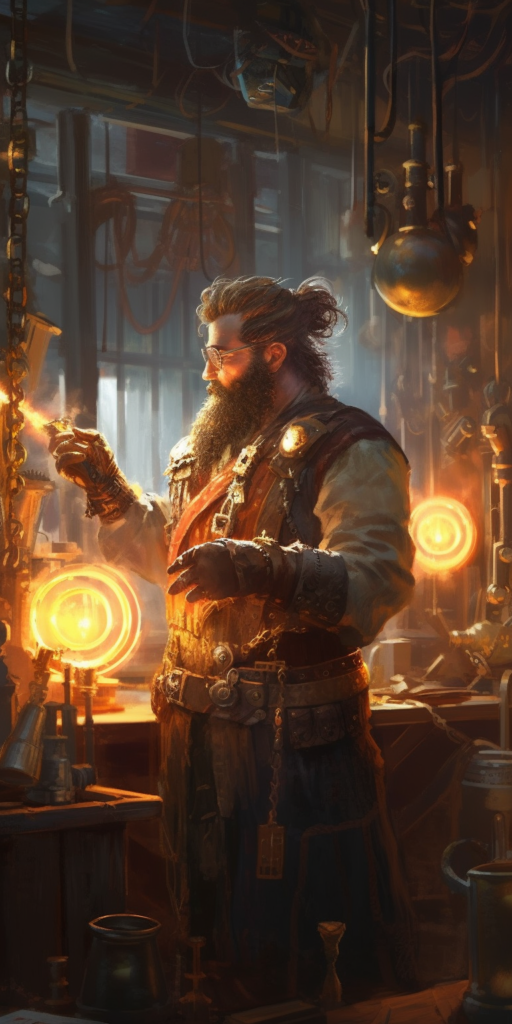
The Artifice Domain treats making, repairing and awakening crafted things as sacred work. Its priests understand tools, workshops, stone, wood, metal and constructs as parts of a divine order in which skilled creation can itself become an act of worship.
At a Glance
| Divine Sphere | Craft, invention, tools, construction, objects, workshops and created things |
|---|---|
| Typical Role | Craft-priest, construct specialist, object breaker and magical maker |
| Published Rules | Pathfinder 1e and D&D 3.5e SRD |
| Modern D&D Status | No official same-named Artifice Domain for either the 2014 or 2024 Cleric |
| Closest 2014 Official Alternative | Forge Domain from Xanathar’s Guide to Everything |
| Typical Patrons | Hephaestus, Athena, Ptah and other deities whose established portfolios genuinely include craft or making |
| Best For | Players who want divine magic to interact directly with objects, constructs and craftsmanship |
Edition Applicability
Do not treat this page as four interchangeable versions of one subclass. Artifice is a published domain in Pathfinder 1e and D&D 3.5e. D&D 5e/2014 instead has the official Forge Domain, while the 2024 Player’s Handbook does not publish an Artifice Domain. No invented 5e or 2024 mechanics are inserted here merely to fill empty edition slots.
Artifice Domain — Pathfinder 1e
Rules status: published Pathfinder 1e Core Rulebook domain.
Artificer’s Touch
You can cast Mending at will, using your Cleric level as the caster level. You can also make a melee touch attack against an object or construct. On a hit, it takes 1d6 damage + 1 for every two Cleric levels you possess. This attack bypasses an amount of damage reduction and hardness equal to your Cleric level. You can use the damaging touch a number of times per day equal to 3 + your Wisdom modifier.
Dancing Weapons
At 8th level, you can touch a weapon and give it the dancing special weapon quality for 4 rounds. You can use this power once per day at 8th level, plus one additional time per day for every four Cleric levels beyond 8th.
Pathfinder 1e Artifice Domain Spells
| 1st | Animate Rope |
|---|---|
| 2nd | Wood Shape |
| 3rd | Stone Shape |
| 4th | Minor Creation |
| 5th | Fabricate |
| 6th | Major Creation |
| 7th | Wall of Iron |
| 8th | Statue |
| 9th | Prismatic Sphere |
Artifice Domain — D&D 3.5e
Rules status: published in the 3.5e SRD Additional Domains.
Granted Power
You gain a +4 bonus on Craft checks. You also cast Conjuration (Creation) spells at +1 caster level. If a character has access to both the Artifice and Creation domains, the combined caster-level bonus for Conjuration (Creation) spells is +3 rather than stacking without limit.
D&D 3.5e Artifice Domain Spells
| 1st | Animate Rope |
|---|---|
| 2nd | Wood Shape |
| 3rd | Stone Shape |
| 4th | Minor Creation |
| 5th | Fabricate |
| 6th | Major Creation |
| 7th | Hardening |
| 8th | True Creation |
| 9th | Prismatic Sphere |
How the Artifice Domain Plays
Artifice rewards a player who notices the physical world around the encounter. Doors, locks, bridges, siege engines, statues, damaged equipment and constructs are not scenery: they are things the domain can repair, reshape, bypass or weaponise.
In Combat
- Against constructs, use the domain’s specialist tools. Pathfinder’s Artificer’s Touch bypasses hardness and part of a construct’s normal protection.
- Think in objects. A shaped wall, repaired mechanism or animated weapon may solve a problem without trading direct damage spell for damage spell.
- Do not mix the spell lists. Pathfinder’s 7th- and 8th-level spells differ from the 3.5e SRD list; choose the panel for the edition being played.
Outside Combat
Artifice clerics inspect damaged fortifications, certify workshops, recover lost manufacturing techniques, bless tools, arbitrate disputes between guilds and temples, and investigate constructs whose makers are dead. Their divine authority often matters most where a community depends on a bridge, mill, forge, dockyard or defensive work continuing to function.
Who Grants the Artifice Domain?
Strong established patrons include Hephaestus, whose cult centres directly on forge and craft; Athena, where skilled making and disciplined craft belong to her sphere; and Ptah, whose creative and artisan associations make him a natural patron of sacred making.
Priests, Temples and Rites
An Artifice temple may look more like a working guildhall than a passive sanctuary. Sacred spaces contain anvils, measuring rods, kilns, carving benches, pattern books and unfinished work. Rites often mark the first use of a tool, the completion of a major civic structure, the repair of an heirloom, or the moment an apprentice is trusted to work without supervision.
What Are Artifice Priests Doing Now?
Artifice clergy are repairing war-damaged infrastructure, examining unfamiliar mechanisms recovered from ruins, deciding whether autonomous constructs count as property or persons, and competing for access to rare materials and old workshops. In cities, their influence can run through guild politics; on the frontier, a single priest-engineer may be the person keeping an entire fort, bridge or water system alive.
Historical and Mythological Context
Divine craft is broader than “technology.” Mythic smiths and maker-gods connect skill with social order, beauty, weapons, architecture, ritual objects and the dangerous ability to make something that did not previously exist. An Artifice priest should therefore reflect the craft culture of the patron rather than behave like a generic inventor.
Related Domains and Character Options
Rules Sources and Licensing
- Pathfinder 1e: Artificer’s Touch, Dancing Weapons and the Pathfinder spell list follow the Pathfinder Roleplaying Game Core Rulebook reference.
- D&D 3.5e: the Craft bonus, caster-level benefit and spell list follow the 3.5 SRD Additional Domains.
- D&D 5e / 2014: no same-named Artifice Domain is presented here as official. The published Forge Domain is the nearest official cleric option for a sacred smith/craft concept.
- D&D 5.5e / 2024: no official Artifice Domain appears among the 2024 Player’s Handbook Cleric subclasses, so this page does not fabricate a 2024 rules panel.
Keep this reference growing
If this page helped with your reading or game, you can support its upkeep or explore the curated books.
Explore the Bookshop — epics, classics and stories behind imagined worlds.